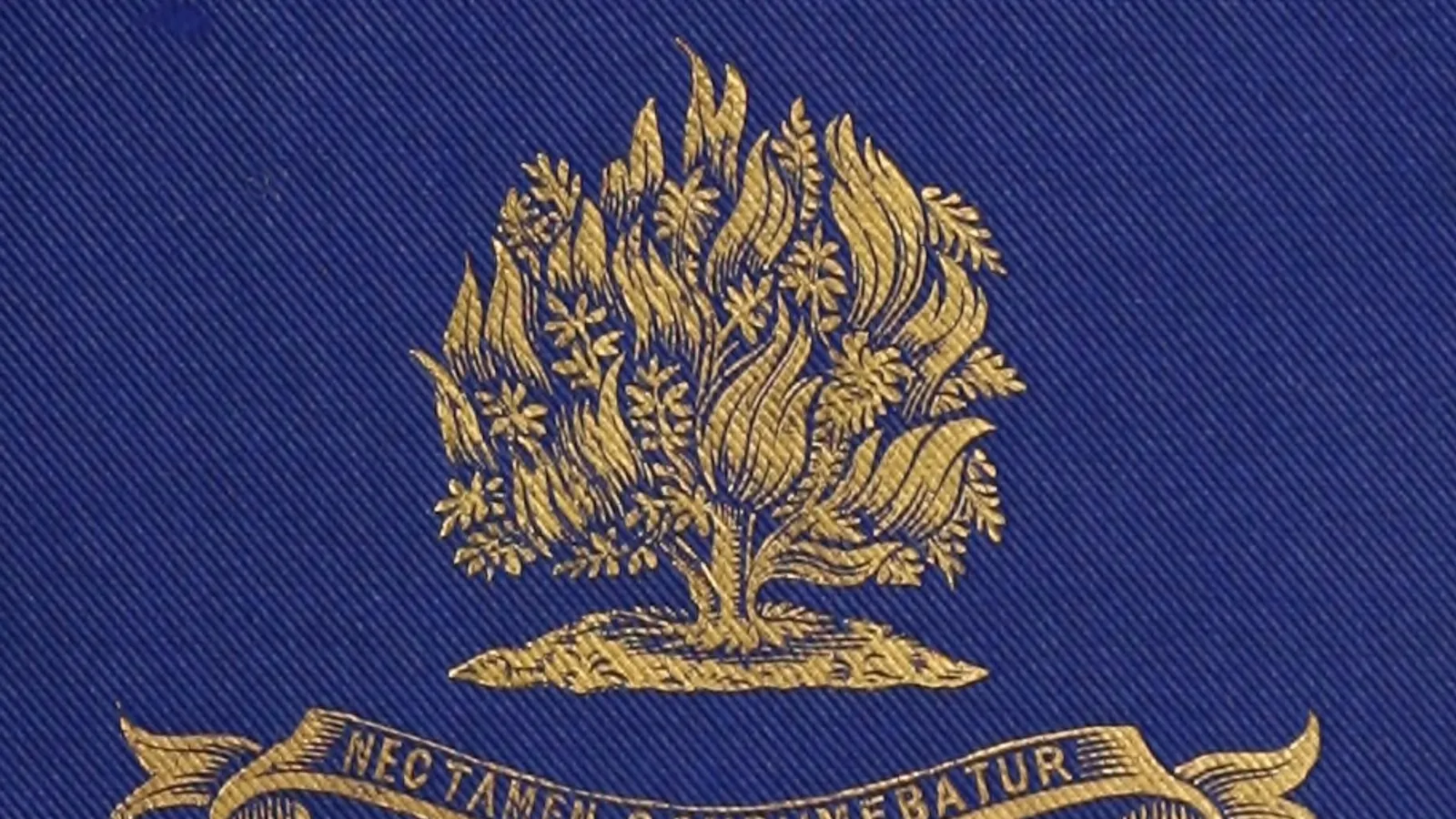

The Free Church of Scotland
Contents
Legend/Myth Opener
It is sometimes assumed that "the Free Church of Scotland" refers to one continuous, unchanged institution from 1843 to the present day. In fact the body founded in the 1843 Disruption underwent a major transformation in 1900, when most of it merged into the United Free Church of Scotland; the smaller "Free Church of Scotland" that exists today, still strong in parts of the Highlands and Islands, is the continuing minority that declined to join that union — a genuinely distinct institutional lineage from the 1843–1900 body, even though it carries the same name.
TL;DR
- established The Free Church of Scotland was founded on 18 May 1843 by roughly 450–470 ministers who left the Church of Scotland in the Disruption (see the separate "Disruption of 1843" card), because this founding event and its scale are extensively documented in contemporary and scholarly sources.
- established In its first decades the new denomination carried out an extraordinarily rapid, largely voluntarily funded programme of church, manse, and school building across Scotland, because financial and construction records from the period document hundreds of new buildings within a few years.
- established In 1900, most of the Free Church united with the United Presbyterian Church to form the United Free Church of Scotland, because this union and its scale are documented in both denominations' own records and later union history (the 1929 reunion with the Church of Scotland that followed is covered in a separate card in this series).
- established A minority that did not enter the 1900 union continued under the name "Free Church of Scotland," experiencing a dramatic and immediate collapse in formal membership before rebuilding over subsequent decades, because contemporary records of the continuing church document both the 1900 membership drop and its subsequent gradual growth.
- established The continuing Free Church of Scotland remains active today and is notably strong in parts of the Highlands and Islands, and experienced a further internal split in 2000, because both its ongoing Highland/Hebridean presence and the 2000 split are documented in the denomination's own records and independent reporting.
Key Facts
- Category
- Detail
- Key Date(s)/Origin
- Founded 18 May 1843 (the Disruption); united with the United Presbyterian Church in 1900 to form the United Free Church of Scotland; continuing minority Free Church of Scotland persists from 1900 to present; further internal split in 2000 produced the separate "Free Church of Scotland (Continuing)"
- Key Figures/Bodies
- Dr Thomas Chalmers (first Moderator, 1843); the Free Church General Assembly; Rev Colin Bannatyne (elected Moderator of the continuing minority church after the 1900 union)
- Key Source
- Free Church of Scotland historical archives and sustentation fund records; denominational records of the 1900 union and its membership figures
- Status Today
- The continuing Free Church of Scotland (since 1900) remains an active Presbyterian denomination, with particular strength in parts of the Highlands and Islands; distinct from the 1843–1900 body and from the United Free Church lineage that later rejoined the Church of Scotland in 1929
- Scale at 1900 Split
- Free Church communicant membership fell from roughly 300,000 just before 1900 to around 4,000 in the continuing church immediately after, reflecting how few ministers and members declined to join the union
- Cross-reference
- See "Disruption of 1843" (founding event) and the series card on the 1929 reunion (the United Free Church's later merger back into the Church of Scotland) for the surrounding institutional history
A Note on Claims and Evidence
This article applies a three-tier framework. Documented claims — the 1843 founding, the scale and speed of the early building campaign, the 1900 union and the continuing church's dramatic initial membership collapse, and the 2000 internal split — rest on denominational records, contemporary reporting, and the Free Church of Scotland's own published historical material, all broadly consistent across sources. traditional claims in this article are limited to general characterisations of the continuing church's regional strength and cultural significance in the Highlands and Islands, which are well supported by observation and denominational data but involve some degree of generalisation across different communities and periods. No significant legend/myth-tier claims specific to the institution's own history are treated here beyond popular conflation of the pre-1900 and post-1900 "Free Church of Scotland" as a single unchanged body, addressed in the Caveats section.
Timeline
The Free Church of Scotland is founded at the Disruption, with Thomas Chalmers elected its first Moderator (see the "Disruption of 1843" card for the full founding event).
Rapid, largely voluntarily funded building of several hundred new churches, manses, and schools, alongside the founding of New College, Edinburgh, to train ministers.
The Free Church grows into one of Scotland's largest Presbyterian denominations, developing extensive educational, missionary, and social institutions in parallel with the continuing Church of Scotland and other Presbyterian bodies such as the United Presbyterian Church.
The great majority of the Free Church unites with the United Presbyterian Church to form the United Free Church of Scotland, reflecting a broader late-19th-century movement toward Presbyterian reunion; a minority declines to join.
The dissenting minority, after being unable to gain admission to the main Free Assembly Hall, holds its own Assembly proceedings and elects Rev Colin Bannatyne as Moderator, continuing under the name "Free Church of Scotland"; formal communicant membership of this continuing church falls from roughly 300,000 (the pre-union Free Church total) to approximately 4,000.
The continuing Free Church rebuilds gradually, reaching around 25 ministers and over 60 congregations by 1901, with a sustentation fund expanding substantially in these years, and growing to roughly 91 ministers and 170 congregations across 12 presbyteries by 1925, concentrated especially in Gaelic-speaking Highland and Hebridean areas.
The United Free Church of Scotland (formed from most of the 1843 Free Church and the United Presbyterian Church) unites with the Church of Scotland, forming the modern, reunified Church of Scotland — a separate major event covered in its own card elsewhere in this series.
The continuing Free Church of Scotland experiences gradual decline in common with most mainstream Scottish denominations, while remaining a significant presence in parts of the Highlands and Islands.
Internal controversy, including disciplinary action connected to allegations and disputes involving theologian Donald Macleod and the public response of figures such as Rev Maurice Roberts, creates lasting internal tension within the denomination.
A group of ministers (reported as around 22) is removed from their pulpits amid this internal conflict, and a portion of the denomination's ministerial strength (estimated at roughly 20 percent) subsequently forms the separate "Free Church of Scotland (Continuing)."
The Free Church of Scotland (since 1900) continues as an active denomination with particular strength in the Highlands and Islands, operating alongside the smaller, separately constituted Free Church of Scotland (Continuing).
Details
Founding and Early Growth (1843–1900)
The Free Church of Scotland was constituted on 18 May 1843 by ministers and elders who walked out of the Church of Scotland's General Assembly over the Church's loss of effective spiritual independence from civil courts, principally in matters of ministerial appointment (see the separate "Disruption of 1843" card for the full account of this founding event and its causes). From its first weeks the new denomination faced an urgent practical problem: its ministers had forfeited their church buildings and manses, and its newly affiliated congregations needed premises, clergy training, and funding almost immediately. The response, organised substantially around the financial thinking of the Free Church's first Moderator, Thomas Chalmers, was a remarkably fast and extensive voluntary building and fundraising campaign: several hundred new churches, manses, and parish schools were constructed within just a few years, funded very largely through congregational giving and a centrally coordinated sustentation fund intended to support ministers more evenly regardless of their individual congregation's wealth. New College, Edinburgh, opened in November 1843 specifically to train Free Church ministers. Over the following decades the Free Church grew into one of the largest and most institutionally significant Presbyterian denominations in Scotland, developing substantial educational and missionary work (including overseas missions) and becoming a major competitor, alongside the Church of Scotland and the United Presbyterian Church, for the religious allegiance of Scots across the later 19th century.
The 1900 Union and the Continuing Minority
By the final decades of the 19th century, a broader movement toward Presbyterian reunion had gathered momentum, reflecting both practical cooperation between denominations with increasingly similar doctrine and polity, and a sense that denominational fragmentation weakened Scottish Presbyterianism's wider influence. In 1900 the great majority of the Free Church united with the United Presbyterian Church (itself formed from earlier 19th-century Presbyterian secessions) to create the United Free Church of Scotland, a large new denomination that would, in turn, unite with the Church of Scotland in 1929 (covered in a separate card in this series). A minority within the Free Church, however, strongly opposed union, for reasons rooted partly in doctrinal conservatism (including continued commitment to the established church principle as historically understood by the 1843 founders, and to strict subscription to the Westminster Confession of Faith) and partly in resistance to what they saw as doctrinal drift within parts of the uniting churches. When the main body proceeded with union in 1900, this minority found itself excluded from the principal Free Assembly Hall and instead convened its own Assembly, electing Rev Colin Bannatyne as Moderator and continuing under the name "Free Church of Scotland." The scale of the split was dramatic in relative terms: formal communicant membership collapsed from roughly 300,000 across the pre-union Free Church to approximately 4,000 in the continuing body — illustrating just how small a proportion of the original 1843 denomination chose to remain outside the 1900 union, even though that small proportion went on to sustain a genuine, continuing institutional existence.
Rebuilding and Highland Strength
Despite its dramatically reduced numbers in 1900, the continuing Free Church of Scotland did not disappear; it rebuilt steadily over the following decades, drawing particular strength from Gaelic-speaking Highland and Hebridean communities where commitment to traditional Presbyterian doctrine and worship, including strict Sabbath observance (see the separate "Scottish Sabbath" card) and traditional psalm-singing worship practice, remained especially strong. By 1901 the continuing church counted around 25 ministers and over 60 congregations; its sustentation fund grew substantially in the early 1900s, and by 1925 it had expanded to roughly 91 ministers and 170 congregations across 12 presbyteries — still a fraction of the pre-1900 Free Church's scale, but a genuine and sustainable institutional base, heavily concentrated in parts of the Highlands and Islands, especially Lewis, Harris, and other Hebridean communities, where it has remained one of the most visible and influential religious institutions into the present day.
Later History, Internal Tension, and the 2000 Split
Like most mainstream Scottish denominations, the continuing Free Church of Scotland experienced gradual numerical decline across the later 20th century as broader patterns of secularisation and social change affected religious attendance and affiliation throughout Scotland. The denomination also experienced significant internal conflict in the 1980s and 1990s, centred on disciplinary disputes connected to allegations and controversy involving the prominent theologian Donald Macleod; when minister Rev Maurice Roberts publicly reiterated certain accusations and criticised the church's handling of the matter, he was formally suspended for contumacy (persistent defiance of ecclesiastical authority), a dispute that exposed and deepened wider internal tensions within the church. These tensions came to a head in January 2000, when a group of ministers — commonly reported as around 22 — were removed from their pulpits; a portion of the denomination's ministerial strength, estimated at roughly a fifth of the pre-dispute total, subsequently left to form a separate body, the Free Church of Scotland (Continuing), distinct from the Free Church of Scotland (since 1900) discussed in this article.
Present-Day Status
The Free Church of Scotland (since 1900) remains an active, organised Presbyterian denomination today, retaining a presbyterian structure of kirk sessions, presbyteries, and a General Assembly broadly analogous to the Church of Scotland's own governance (see the separate "Kirk Session" card), while maintaining theological distinctiveness, including continued strict subscription to the Westminster Confession and, among many of its congregations, traditional unaccompanied psalm-singing worship. It continues to be particularly strong, both numerically and culturally, in parts of the Highlands and Islands — notably Lewis and Harris — where it remains one of the most prominent institutional expressions of the region's continuing, if diminished, Sabbatarian and traditional Presbyterian culture (see the separate "Scottish Sabbath" card for the related ferry and amenity disputes of the 2000s and 2010s, in which Free Church leaders and members were frequently prominent voices). The denomination's institutional lineage is thus distinct both from the larger body that entered the 1900 union (and later the 1929 reunion with the Church of Scotland) and from the smaller Free Church of Scotland (Continuing) that split away in 2000.
Who joined, and what they built
The historian Stewart J. Brown summarises the scale of 1843: about a third of the ministers and perhaps half the lay membership left the established Church. The Free Church was strongest in two places. In the Lowland towns and cities, following Allan MacLaren's research, a rising entrepreneurial middle class found in Free Church evangelicalism an expression of "a dynamic new Scotland" against the older landed and mercantile elite. In the Highlands, membership was bound up with both Calvinism and opposition to the landlord class.
Within five years, through private donations alone, the Free Church had built some 730 churches, 400 manses and 500 schools, and was putting up New College on the Mound in Edinburgh. At the same time, as T. M. Devine has shown, it provided more famine relief than any other Scottish denomination during the potato failures of the later 1840s, sparing the western Highlands and Islands massive deaths. Brown asks how it raised the money during arguably the worst economic downturn of the century, a question he says still needs research. Later in the century the Free Church joined the United Presbyterians in campaigning to disestablish the Church of Scotland, but the campaign's sectarian rancour alienated much of the public and it failed.
The Free Church and Gaelic
established The Free Church became the main church of Gaelic worship. According to the historical geographer Charles Withers, in Gaelic in Scotland 1698–1981 (1984), 101 of the 201 Gaelic-speaking ministers in Scotland joined it in 1843, and in Harris, the Uists and Barra so many people left the established Church that the new congregations had nowhere to meet, because landowners refused them sites. In 1844 its Gaelic Committee reported 41 Highland congregations without a minister. By 1877, 750 people attended the Free Church's Gaelic services in Stornoway, against 44 at the Gaelic service of the established Church.
established Its Highlands and Islands committees followed Gaelic speakers wherever they went to work: to the men building the North of Scotland Railway, to about 400 Highland fishermen at Buckie in July 1862, to Skye labourers on waterworks in Midlothian in 1876, and as late as the 1920s to the herring fishing at Great Yarmouth and Lowestoft.
shared The church's attitude to the language was mixed. Its schools, like others, used Gaelic mainly as a route to English, and in 1876 its General Assembly recommended that Gaelic "should not be hunted to extinction but should be permitted to decay gradually". Withers sees the Free Church's preaching as one of the main reasons Gaelic survived longer as a language of worship than of everyday life.
Did You Know?
- Within five years of 1843 the Free Church had built some 730 churches, 400 manses and 500 schools from private donations.
- The Free Church of Scotland's communicant membership collapsed from roughly 300,000 to around 4,000 almost overnight when the great majority of the denomination joined the 1900 union — meaning the "continuing" Free Church that exists today descends from a very small minority of the original 1843 body.
- Despite starting 1900 with only around 25 ministers, the continuing Free Church had rebuilt to roughly 91 ministers and 170 congregations by 1925, a genuinely rapid institutional recovery.
- The sustentation fund pioneered by Thomas Chalmers in 1843, designed to support ministers evenly regardless of their congregation's wealth, remained a defining financial feature of the Free Church tradition for decades afterward.
- The "Free Church of Scotland" name has, confusingly, applied to at least two genuinely distinct institutional bodies since 1843: the large denomination active from 1843 to 1900, and the much smaller continuing church active since 1900.
- A further split within the post-1900 Free Church in January 2000, triggered by internal disciplinary disputes, produced a separate denomination, the Free Church of Scotland (Continuing).
- The 1843 Free Church's early building campaign is considered one of the most rapid voluntary construction efforts in 19th-century British religious history, producing hundreds of new churches within just a few years.
- New College, Edinburgh, founded by the Free Church within months of its 1843 formation, remains a significant institution in Scottish theological education today, though its institutional affiliations have changed considerably since 1843.
- The continuing Free Church of Scotland's strength in Lewis and Harris connects it directly to some of the most recent Sabbatarian controversies in Scotland, including the 2000s dispute over Sunday ferry sailings to Stornoway (see the "Scottish Sabbath" card).
FAQ
1Is today's Free Church of Scotland the same institution founded in 1843?
Not exactly — it is a direct institutional descendant, but the body most people associate with "the 1843 Free Church" largely ceased to exist as a separate denomination in 1900, when it united with the United Presbyterian Church; today's Free Church of Scotland descends from the small minority that declined to join that union.
2What happened to the Free Church in 1900?
Most of it united with the United Presbyterian Church to form the United Free Church of Scotland; a minority refused to join and continued under the original name, with communicant membership collapsing from roughly 300,000 to around 4,000 as a result.
3What happened to the United Free Church of Scotland?
It united with the Church of Scotland in 1929, forming the modern reunified Church of Scotland — this event is covered in a separate card elsewhere in this series.
4Why did some ministers refuse to join the 1900 union?
Reasons included doctrinal conservatism, continued commitment to the established-church principle as the 1843 founders had understood it, strict subscription to the Westminster Confession of Faith, and concern about doctrinal direction within parts of the uniting churches.
5Where is the Free Church of Scotland strongest today?
It remains particularly strong in parts of the Highlands and Islands, notably Lewis and Harris, where it has long been a prominent institutional presence.
6What was the 2000 split about?
Internal disciplinary and governance disputes, connected to earlier controversy involving theologian Donald Macleod and subsequent disciplinary action against other ministers, led to roughly 22 ministers being removed from their pulpits in January 2000, after which a portion of the church's ministerial strength left to form the separate Free Church of Scotland (Continuing).
7Is the Free Church of Scotland (Continuing) the same as the Free Church of Scotland?
No — they are two distinct, separately governed denominations today, both descending ultimately from the 1843 Disruption but having split from each other in 2000.
8Does the Free Church of Scotland still have bishops or a single head?
No — it retains Presbyterian church government (kirk sessions, presbyteries, and a General Assembly), with no bishops and no single head, consistent with the broader Scottish Presbyterian tradition.
9Did the Free Church build a lot of new churches after 1843?
Yes — several hundred new churches, manses, and schools were built within just a few years of the 1843 Disruption, funded almost entirely through voluntary giving.
10How does the Free Church of Scotland relate to the Church of Scotland today?
They are separate, independently governed denominations; the Church of Scotland remains Scotland's national established church, while the Free Church of Scotland is a smaller, independent Presbyterian denomination with no formal established status.
11Is traditional unaccompanied psalm-singing still practised in the Free Church of Scotland?
Yes, in many congregations, particularly reflecting the denomination's continued theological and liturgical conservatism, though practice can vary by congregation.
12Why does the series have a separate card on the Disruption and a separate card on the Free Church?
Because the Disruption refers specifically to the dramatic 1843 founding event, while this card covers the Free Church's fuller institutional history both before and after 1843, including its 1900 transformation and present-day continuation — the two are closely related but distinct subjects.
Sources and Further Reading
Primary/Institutional
- Free Church of Scotland — denominational history and governance materials
- National Records of Scotland — records relating to Free Church congregations and the 1900/1929 union history
Scholarly/Critical
- Encyclopaedia Britannica and Encyclopedia.com — entries on the Free Church of Scotland and its 1900 union
- Academic treatments of Scottish Presbyterian reunion movements (United Presbyterian Church, United Free Church, and the 1929 Church of Scotland reunion)
- Stewart J. Brown, "Religion and Society to c.1900", in T. M. Devine and Jenny Wormald (eds), The Oxford Handbook of Modern Scottish History (Oxford University Press, 2012)
- Graham Walker, "The Religious Factor", in T. M. Devine and Jenny Wormald (eds), The Oxford Handbook of Modern Scottish History (Oxford University Press, 2012) — further reading on Presbyterian reunion
- Charles W. J. Withers, Gaelic in Scotland 1698–1981: The Geographical History of a Language (John Donald, 1984; ebook Birlinn, 2021)
General
Caveats: Myths and Disputed Claims
- Myth: the Free Church of Scotland is a single unchanged institution from 1843 to the present. The 1900 union transformed the great majority of the original body into the United Free Church of Scotland; the present-day Free Church of Scotland descends from a small continuing minority.
- Myth: the Free Church of Scotland and the Free Church of Scotland (Continuing) are the same. The latter is a distinct, separately governed denomination formed after the 2000 split.
- Approximate: membership and congregation figures. Commonly cited numbers (around 300,000 pre-1900, around 4,000 immediately after, roughly 91 ministers by 1925) are well-documented approximations, not exact contemporaneous censuses in every case.
- Myth: the 1900 union was uncontroversial or unanimous. It was explicitly opposed by a minority whose objections (doctrinal conservatism and concerns over the established-church principle) were substantive.
Finished reading? Try the Fact Machine: three reels, one surprising Scottish connection →
Card 010 · Faith