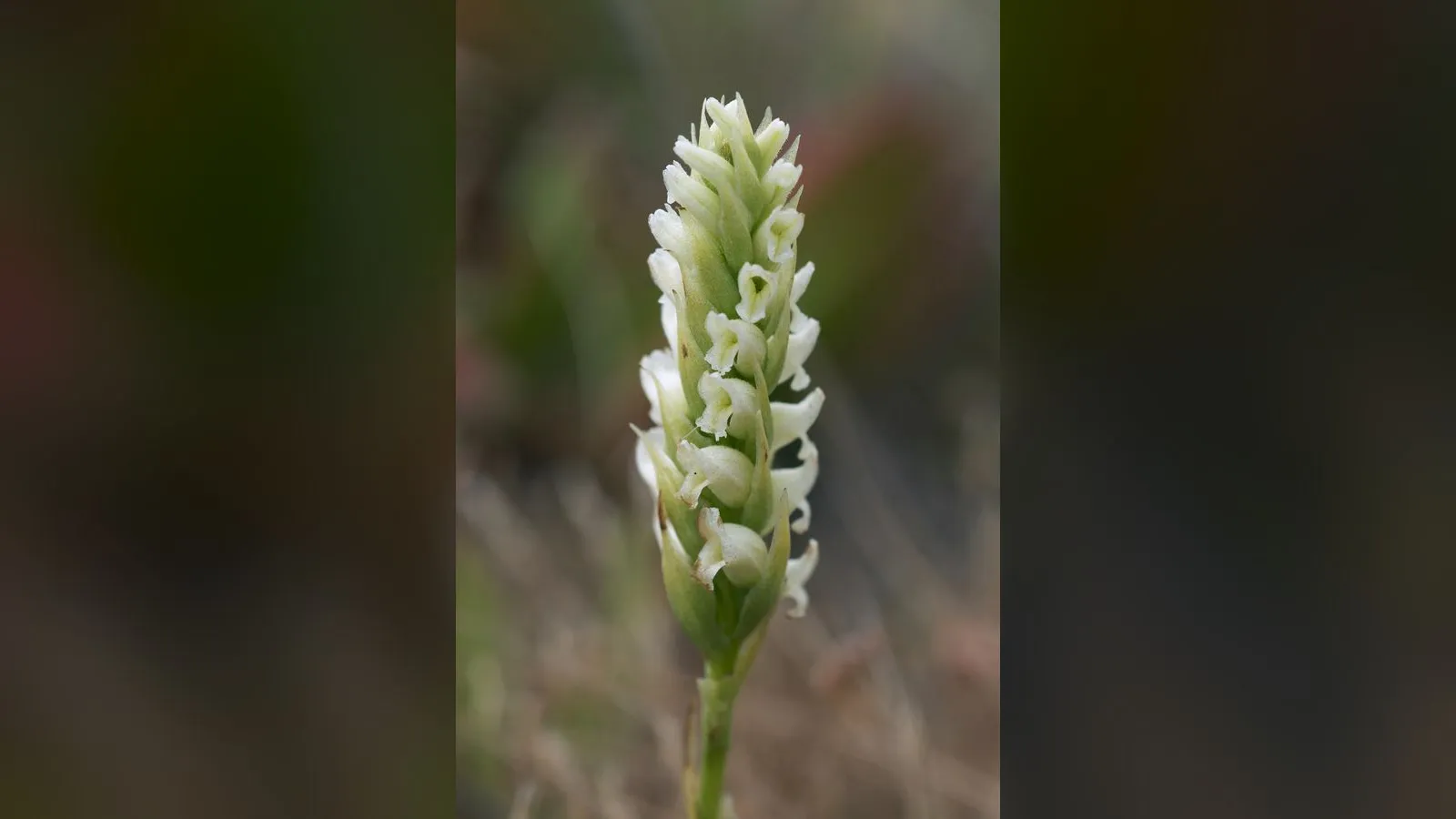

Irish Lady's-tresses (Spiranthes romanzoffiana)
Contents
TL;DR
- disputed Irish lady's-tresses presents a genuinely puzzling distribution pattern: it is widespread across North America, including Canada and the United States, yet also grows in a small number of locations in Scotland and Ireland, with almost nothing connecting these populations across the wider North Atlantic and mainland Europe in between — this article states this unresolved amphi-Atlantic puzzle directly rather than offering a single confident explanation for how the species came to occupy such a discontinuous range.
- established In 2013, volunteers discovered approximately 160 Irish lady's-tresses plants on Oronsay, a tidal island off Scotland's west coast adjacent to Colonsay, the first-ever record of the species at that location — a specific, documented discovery this article states directly rather than a vague claim that the orchid "has been found on various Scottish islands."
- established The Oronsay orchids are understood to have likely benefited from habitat management originally carried out for an entirely different rare species, the marsh fritillary butterfly, demonstrating a documented case of conservation action for one species producing an unplanned benefit for another — a specific, documented ecological coincidence this article names directly rather than presenting the orchid's discovery as resulting from management aimed at the orchid itself.
- established Within the UK, Irish lady's-tresses is now considered regionally extinct in England, while it was only recently rediscovered in Wales in 2019, and Irish populations, first documented in County Cork in 1810, have since been found more widely across the Lough Neagh basin, the Mourne Mountains, and the hills of Antrim — a specific, documented pattern of loss, persistence, and rediscovery across different parts of the UK and Ireland this article states directly rather than treating the species' British and Irish status as uniform.
- established The plant depends on a mycorrhizal fungus for essential nutrients, reproduces through a combination of insect pollination, wind-dispersed seed, and vegetative propagation via root tubers that can grow new shoots while older parts of the plant die, yet researchers note that studies specifically examining this species' mycorrhizal associations have not been conducted — a specific, honest gap in current scientific understanding this article states directly rather than implying the plant's fungal relationship is already well documented.
Key Facts
- Scientific name
- Spiranthes romanzoffiana
- Category
- Flora
- UK status (England)
- Regionally extinct
- UK status (Wales)
- Rediscovered 2019
- Key Scottish discovery
- Oronsay, 2013 (~160 plants, first record)
- First Irish record
- County Cork, 1810
- Distribution puzzle
- North America, plus scattered Scotland/Ireland sites only
- Nutritional dependency
- Mycorrhizal fungus (specific associations understudied)
Scottish Impact Index (SI Score)
- Scottish Significance
- 8/10
- Ecological Persistence
- 4/10
- Ecological Importance
- 6/10
- Botanical Distinctiveness
- 10/10
- Conservation Significance
- 10/10
- Recognition
- 5/10
43/60
Ranked =39th of 45 in Flora
A Note on Claims and Evidence
Distribution, UK and Irish historical records, biology, reproduction, and the acknowledged gap in mycorrhizal research are drawn from the species' Wikipedia-summarised research record. The 2013 Oronsay discovery details, including plant numbers, the marsh fritillary habitat-management connection, and conservation significance, are drawn from published BirdGuides reporting.
Timeline
The first documented Irish record of Irish lady's-tresses is made in County Cork, marking the beginning of the species' known Irish distribution.
The orchid is subsequently found more widely across Ireland, including the Lough Neagh basin, the Mourne Mountains, and the hills of Antrim, while in Britain it establishes itself at a small number of Scottish sites, its presence there forming part of a genuinely puzzling amphi-Atlantic distribution pattern shared with populations across North America.
Irish lady's-tresses is lost from England and is now considered regionally extinct there.
Volunteers discover approximately 160 Irish lady's-tresses plants on Oronsay, a tidal island off Scotland's west coast adjacent to Colonsay, the first-ever record of the species at that location; the orchids are understood to have likely benefited from habitat management originally carried out for the marsh fritillary butterfly, an unplanned conservation benefit, with 2013 noted more broadly as an exceptional year for orchid discoveries.
Irish lady's-tresses is rediscovered in Wales, after a period without confirmed Welsh records.
The species remains known from only a small number of UK and Irish sites, with Scottish populations assessed as extremely fragile even as new discoveries, such as Oronsay, continue to offer genuine hope for the species' persistence; researchers acknowledge that studies specifically examining the plant's mycorrhizal fungal associations have not yet been conducted.
Details
A genuinely unresolved distribution puzzle, stated honestly
This article presents Irish lady's-tresses' amphi-Atlantic distribution as a real, unresolved scientific puzzle rather than offering a single confident explanation: the species is widespread across North America, yet also grows in a small number of Scottish and Irish locations, with almost nothing connecting these populations across the wider North Atlantic and mainland Europe in between. This article states this puzzle directly because presenting a tidy explanation for how the species came to occupy such a discontinuous range would overstate what is actually established about its biogeographic history.
A Scottish discovery stated with its real documented scale
This article names the 2013 Oronsay discovery with real specificity rather than a vague claim that the orchid "has been found on various Scottish islands": approximately 160 plants were recorded, the first-ever find of the species at that specific location. This article states this precise figure and location because it represents a genuinely significant, documented addition to the species' known Scottish range, not an incidental sighting.
A conservation coincidence named rather than assumed intentional
This article states directly that the Oronsay orchids are understood to have likely benefited from habitat management originally carried out for the marsh fritillary butterfly, an entirely different rare species, rather than presenting the discovery as resulting from management aimed at the orchid itself. This article names this specific, documented coincidence because it demonstrates a genuine, unplanned conservation benefit, a finding worth stating precisely rather than crediting deliberate orchid-focused conservation that did not occur.
A UK and Irish status stated as genuinely uneven, not uniform
This article names the species' varying status across different parts of the UK and Ireland directly rather than treating its conservation status as uniform: regionally extinct in England, only recently rediscovered in Wales in 2019, and more established, with a longer documented history, across multiple sites in Ireland since the first 1810 County Cork record. This article states this pattern because it demonstrates genuinely different trajectories in different places, not a single national story of decline or persistence.
A scientific gap acknowledged rather than glossed over
This article states directly that studies specifically examining Irish lady's-tresses' mycorrhizal fungal associations have not been conducted, even though the plant is known to depend on such a fungus for essential nutrients. This article names this gap because implying the plant's fungal relationship is already well understood would overstate the current state of research into this specific species.
Did You Know?
- Irish lady's-tresses has a genuinely puzzling distribution: common across North America, but found in only a handful of Scottish and Irish sites, with almost nothing connecting the two across the wider Atlantic.
- In 2013, volunteers discovered around 160 plants on Oronsay, off Scotland's west coast — the first-ever record of the species there.
- The Oronsay orchids likely benefited from habitat management originally intended for the marsh fritillary butterfly, an unplanned conservation bonus.
- The species is now considered regionally extinct in England but was rediscovered in Wales in 2019.
- The first documented Irish record dates to 1810, in County Cork.
- The plant depends on a mycorrhizal fungus for nutrients, but researchers have not yet specifically studied which fungal species it partners with.
- It reproduces through insect pollination, wind-dispersed seed, and vegetative root tubers that grow new shoots as older plant parts die.
FAQ
1Why is Irish lady's-tresses' distribution considered puzzling?
Because it's widespread across North America yet found in only a small number of Scottish and Irish sites, with essentially nothing connecting the two populations across the wider Atlantic and mainland Europe.
2What happened on Oronsay in 2013?
Volunteers discovered around 160 Irish lady's-tresses plants there, the first-ever record of the species at that site — a significant find for such a rare orchid.
3Why did the orchids appear on Oronsay specifically?
They likely benefited from habitat management that had actually been carried out for a different rare species, the marsh fritillary butterfly — an unplanned conservation bonus.
4Is Irish lady's-tresses found throughout the UK?
No — it's regionally extinct in England, was only rediscovered in Wales in 2019, and survives at a small number of sites in Scotland and more widely across parts of Ireland.
5How does the plant get its nutrients?
Through a mycorrhizal fungal partnership, though researchers haven't yet specifically studied which fungal species are involved for this orchid.
6How does Irish lady's-tresses reproduce?
Through insect pollination and wind-dispersed seed, as well as vegetatively via root tubers that grow new shoots while older parts of the plant die back.
7When was the species first recorded in Ireland?
In County Cork, in 1810.
Sources and Further Reading
Primary/Institutional
- Spiranthes romanzoffiana — Wikipedia
- Extremely rare orchid discovered growing on remote Scottish island — BirdGuides
Scholarly/Critical
- Spiranthes romanzoffiana Cham., Irish Lady's-tresses — BSBI species account
- The vegetation associated with Spiranthes romanzoffiana — Watsonia (BSBI archive)
General
Caveats: Myths and Disputed Claims
- Disputed: the amphi-Atlantic distribution. The pattern connecting the species' North American range to its scattered Scottish and Irish sites remains genuinely unresolved.
- Myth: the Oronsay population was found through orchid-targeted conservation. It is understood to have likely benefited from habitat management carried out for the marsh fritillary butterfly instead.
Finished reading? Try the Fact Machine: three reels, one surprising Scottish connection →
Card 032 · Flora