
Changelings
Contents
Legend/Myth
A common modern assumption is that "changeling" belief was simply a quaint fairy story, applied loosely and without real consequence. In fact the belief had sharply defined diagnostic features and specific, sometimes dangerous, recovery rituals, and it attached — as folklorists and historians have long noted — disproportionately to children who were unwell, disabled, or developmentally different from their siblings. This card treats the belief as a documented folk-medical and folk-psychological system, not merely a charming tale.
TL;DR
- established — The core changeling belief — that fairies stole a healthy human infant and left a sickly or ill-favoured fairy substitute in its place — is attested across Scotland, Ireland, and Wales with consistent core motifs, because independent nineteenth- and twentieth-century folklore collectors (Katharine Briggs, W. B. Yeats for the Irish material, and Scottish-specific accounts gathered by figures such as Robert Kirk and later collectors) recorded the same diagnostic signs and remedies without evident copying between regions.
- established — A specific set of "tests" to identify and recover a changeling recurs across the tradition — most famously surprising the suspected changeling into speech by performing an absurd action, such as brewing beer or food in eggshells, because this exact motif is independently documented in Scottish, Irish, and Welsh sources.
- established — Scottish tradition links changeling belief directly to the fairy "tithe to Hell," the belief that fairies owed a periodic tribute of souls or beings to the infernal realm and might steal a human child to help meet it, because this connection is made explicit in the ballad tradition, most famously in "Tam Lin" (Child Ballad 39, treated as its own card in this series).
- disputed — Whether a specific recorded case (a child, a death, a local story) represents genuine traditional belief in action or a later literary or journalistic embellishment is frequently uncertain, because many surviving written accounts of supposed changeling incidents come from nineteenth-century newspaper and antiquarian sources with varying standards of verification, and some well-known "changeling deaths" are documented primarily through court or press reports written after the fact with moralising intent.
- established — Modern scholarship treats changeling belief substantially as a pre-medical folk explanation for conditions that caused infants and children to fail to thrive, to be developmentally atypical, or to regress after apparently normal development, because the described symptoms recur consistently (failure to grow, unusual cries, sudden onset of illness, loss of previously normal behaviour) and map closely onto conditions now understood medically — a connection widely discussed by historians of disability and folklore alike.
Key Facts Panel
- Type of Being/Legend
- Belief/motif: the substituted fairy child (changeling) and the folk tests used to detect and reverse the exchange
- Region
- Scotland generally (Highland and Lowland variants); shared tradition with Ireland and Wales
- First Attested
- Belief pattern present in Robert Kirk's 1691 manuscript material; folklore collection intensifies through the 19th century
- Category
- Legends & Folklore — Fairy Ground
- SI Score
- 45/60
- Status Note
- Kept. Curator note: the substituted child, and the tests used to recover it
A Note on Claims and Evidence
This article distinguishes the well-attested belief system (what people said they believed and did) from the historical reality of specific incidents (what actually happened to specific children). The belief system — diagnostic signs, recovery rituals, its connection to the fairy tithe — is established by consistent cross-regional documentation. Individual historical "changeling cases" reported in nineteenth-century press or court records are treated with more caution, since those sources often reflect retrospective moral framing rather than neutral reporting, and in some instances record real neglect or harm inflicted on vulnerable children under cover of the belief — a serious and sobering dimension of this folklore that this article does not minimise.
Timeline
Robert Kirk's manuscript The Secret Commonwealth of Elves, Fauns and Fairies describes fairy abduction and substitution beliefs in the Gaelic Highlands, among the earliest systematic Scottish sources.
Sporadic court, kirk-session, and press records across Scotland and Ireland document real incidents in which children believed to be changelings were subjected to dangerous or fatal "tests" and rituals, prompting growing concern among authorities.
Antiquarian and folklore collectors across the British Isles (including material drawn on by Katharine Briggs' later synthesis) record changeling belief systematically, cataloguing recovery tests such as the eggshell-brewing trick.
W. B. Yeats's Fairy and Folk Tales of the Irish Peasantry collects comparable Irish material, useful for comparison with Scottish variants given the shared Gaelic root of much of the belief.
Katharine Briggs's An Encyclopedia of Fairies (1976) and related scholarship systematise changeling belief as a cross-British folklore category and begin explicit discussion of its likely relationship to childhood illness and disability.
Historians of medicine and disability studies revisit changeling belief as a case study in pre-modern folk explanations for conditions such as failure to thrive, developmental disability, and regressive childhood illness.
Details
The core belief
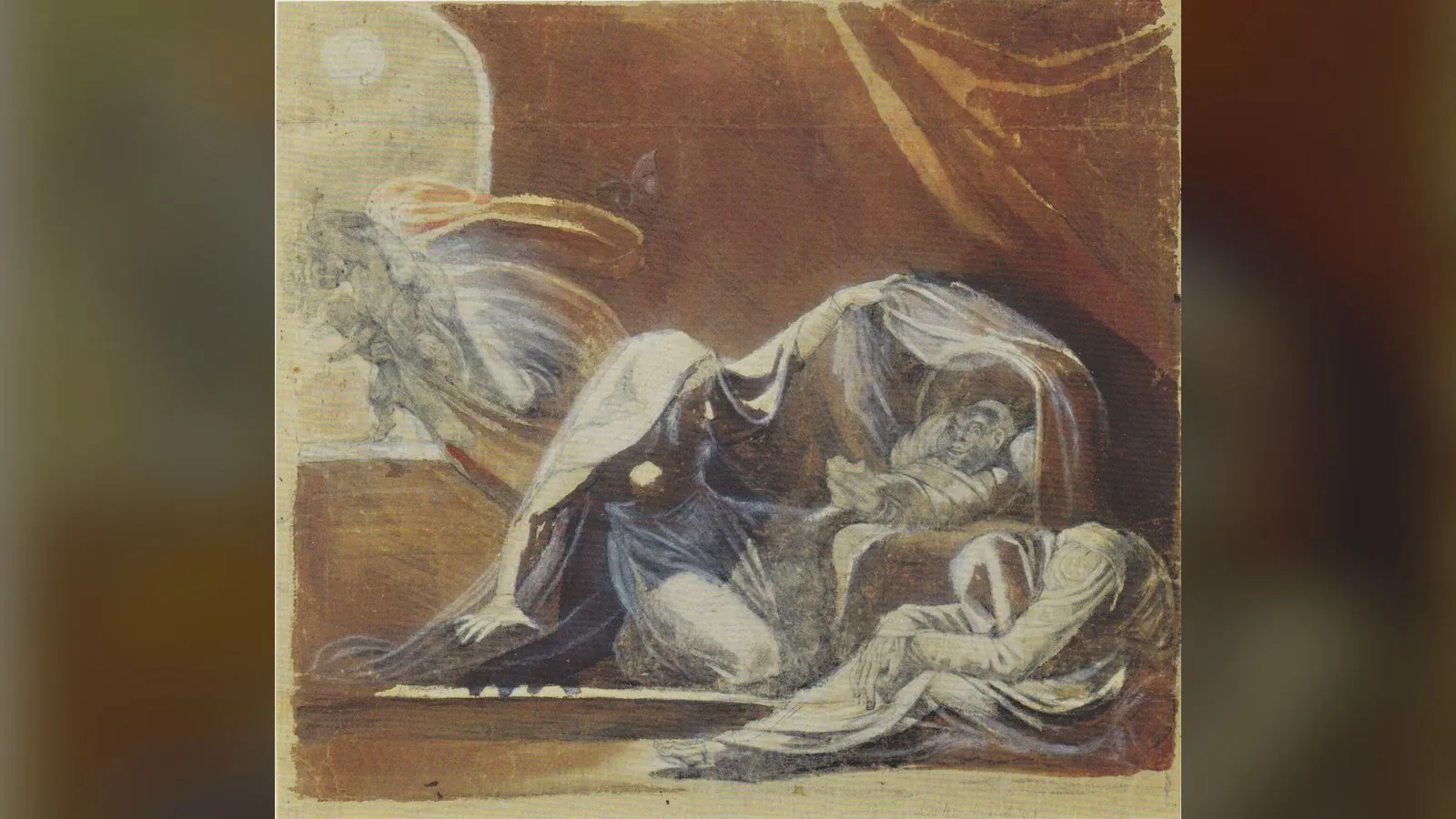
Changeling belief held that fairies, for reasons tradition gives variously (to strengthen fairy stock with human blood, to meet an obligation such as the periodic tithe to Hell described in "Tam Lin," or simply out of fairy mischief and envy of healthy human children), would steal a thriving infant from its cradle and leave behind a fairy being disguised to resemble it. The substitute was recognisable by a cluster of signs: it failed to grow or thrive despite feeding; it cried incessantly or, conversely, was eerily quiet and watchful; it had a wizened, old-looking face "wrong" for its apparent age; its temperament changed abruptly from a previously healthy child's; or — in a specific and striking Scottish variant — a child born with a caul (part of the birth membrane) across its face was held to be a changeling from birth and destined not to survive long.
The tests
Once a child was suspected, families across Scotland, Ireland, and Wales turned to a recognised repertoire of tests, several of which recur in near-identical form across all three traditions, strongly suggesting a genuinely old, shared root rather than independent invention. The best known is the eggshell trick: an adult would ostentatiously begin brewing beer, or cooking a meal, in a row of empty eggshells, performing the absurd task loudly enough for the suspected changeling, left watching, to be startled into revealing fairy nature — commonly by sitting up and remarking on the strangeness of the act, something a true infant could not do. Other tests involved exposure to fire or iron (fairies being traditionally repelled by cold iron), or simply removing the child to a known fairy site, such as a sìthean, in hope that the fairies would be forced to trade back the real child. Music — in particular, a changeling revealing itself by playing an instrument with unnatural skill — is a motif found specifically in Irish and Scottish material rather than more widely across Britain.
What the belief was understood to mean
Both contemporary and later observers recognised, even within the tradition itself, that suspected changelings were very often children who were unwell, physically disabled, or developmentally atypical — described in older language as "not thriving," failing to speak, or regressing after apparently normal early development. The belief offered grieving or frightened families an explanatory framework that preserved the idea of their "real" child as healthy and lovable, displaced rather than lost or defective, while assigning blame to an external, supernatural agent rather than to the child, the parents, or chance. This is now widely discussed by historians of folklore and disability as among the clearest cases of pre-modern "folk medicine" functioning as an explanatory system for conditions not otherwise understood — though the belief's practical consequences for the children concerned, when "remedies" involved exposure, starvation, or burning, were sometimes severe and occasionally fatal, a fact folklorists do not shy from recording.
Regional and textual variants
Highland Gaelic tradition ties changeling belief closely to the broader sìth (fairy) system described elsewhere in this series — the substitution often explicitly tied to a nearby sìthean. Lowland Scots material overlaps more with the ballad tradition, especially Tam Lin's description of the periodic fairy tithe to Hell as a possible motive for child-theft. Irish tradition shares the eggshell test almost exactly, along with the instrument-playing motif, pointing to a genuinely common Gaelic-world root rather than parallel independent development; Welsh tradition shares the eggshell test too but diverges somewhat in its mythic framing of the fairies (the Tylwyth Teg) responsible.
Relationship to neighbouring traditions
Changeling belief should be read alongside — but kept distinct from — "Fairy Hills and the Sìthean" (this series), which supplies the place-belief (the mounds through which such exchanges were sometimes thought to occur) without itself being about child substitution; and "Tam Lin" (this series), whose "tithe to Hell" motif supplies one specific, textually anchored explanation for why the fairies might need a substitute at all. It is not the same tradition as the Scandinavian-influenced Northern Isles "trowie" lore (see "The Trow," this series), which has its own, less child-substitution-focused body of belief, though cross-influence between Norse and Gaelic fairy traditions in the Northern Isles cannot be ruled out.
Scholarly significance
Changeling belief is significant to folklorists and social historians alike as a documented instance of folk belief intersecting directly with real child welfare, making it one of the more historically consequential entries in this series rather than purely a matter of story and motif. It remains a live subject of academic attention in both folklore studies and the history of medicine and disability.
Did You Know?
- A child born with a caul over its face was, in some Scottish tradition, immediately suspected of being a changeling.
- The "brewing in eggshells" test to expose a changeling is independently recorded in Scotland, Ireland, and Wales, suggesting a genuinely ancient shared root.
- Playing a musical instrument with uncanny skill was considered, specifically in Scottish and Irish tradition, a telltale sign that a child was not what it appeared to be.
- Robert Kirk's 1691 manuscript on Highland fairy belief is among the earliest systematic written sources for Scottish changeling lore.
- The ballad "Tam Lin" supplies one of the clearest textual links between changeling belief and the idea of a periodic fairy "tithe" owed to Hell.
- Historians of disability now widely treat changeling belief as a pre-modern folk explanation for conditions such as failure to thrive and developmental disability.
- Some historical "changeling" incidents, recorded in court and press records, involved real and sometimes fatal harm to vulnerable children — a serious dimension folklorists do not gloss over.
- Cold iron, a recurring protective substance throughout Scottish fairy lore generally, also features in some changeling-recovery rituals.
FAQ
1What is a changeling, in Scottish folklore?
A fairy being believed to be left in place of a human infant that the fairies had stolen, typically identified by failure to thrive, an old-looking face, or an abrupt change in temperament.
2How were changelings supposedly identified?
By a cluster of signs — poor growth, unusual crying or silence, a wizened appearance, sudden behavioural change, or being born with a caul — and confirmed through tests such as the eggshell-brewing trick.
3What was the eggshell test?
An adult would ostentatiously brew beer or cook food in empty eggshells in front of the suspected changeling, on the logic that the absurdity would startle a fairy being into speaking or acting unnaturally for its apparent age.
4Why did fairies supposedly want human children?
Tradition gives several reasons, including strengthening fairy stock, general mischief, or meeting an obligation — most famously the periodic "tithe to Hell" described in the ballad Tam Lin.
5Is changeling belief unique to Scotland?
No — closely related belief, including the eggshell test, is documented in Ireland and Wales, pointing to a shared Gaelic/Celtic-world root.
6Did real children suffer because of this belief?
Yes. Historical court and press records document cases in which children suspected of being changelings were subjected to harmful or even fatal "remedies," a sobering historical reality behind the folklore.
7What does modern scholarship think the belief was really about?
Most historians read it as a pre-modern folk explanation for childhood illness, disability, or developmental difference, offering families a way to understand a child's condition without blaming the child or themselves.
8Is the changeling belief connected to fairy hills?
Yes, loosely — substitutions were sometimes believed to happen via or near a sìthean (fairy hill), though the sìthean belief itself is a separate tradition covered on its own card.
9What is the earliest Scottish source for changeling belief?
Robert Kirk's 1691 manuscript The Secret Commonwealth of Elves, Fauns and Fairies is among the earliest systematic written accounts.
10Is this the same as the Northern Isles trow tradition?
No — the trow is a culturally distinct Orkney/Shetland being with its own body of lore; changeling belief as described here is primarily a Highland/Lowland Gaelic-Scots tradition, though some cross-influence is plausible.
11Does a caul at birth still carry this meaning today?
No — the caul-as-changeling-sign belief is a historical folk tradition, not a view held in modern medicine or contemporary Scottish culture.
12How does this connect to the ballad Tam Lin?
Tam Lin's description of the fairies' periodic tithe to Hell gives one of the clearest in-tradition explanations for why the fairies might need to substitute a human child — see that card for the full ballad.
Sources and Further Reading
Primary/Institutional
- Robert Kirk, The Secret Commonwealth of Elves, Fauns and Fairies (manuscript 1691; first printed 1815)
- W. B. Yeats, Fairy and Folk Tales of the Irish Peasantry (1888) — for comparative Irish material
Scholarly/Critical
- Katharine Briggs, An Encyclopedia of Fairies: Hobgoblins, Brownies, Bogies, and Other Supernatural Creatures (1976)
- Historical and folklore scholarship on changeling belief and disability history (various academic treatments)
General
- Wikipedia, "Changeling"
- "Changeling Legends from the British Isles and Ireland," University of Pittsburgh folklore archive
- Spookyscotland.net, "faery tithe, changelings, kidnappings and Rades"
Caveats: Myths and Disputed Claims
- Clarification: "changeling incident" records vary in reliability. Not every historical account is reliable evidence of genuine, widespread practice at the time it describes; some surviving records are retrospective, moralised or journalistic rather than neutral ethnographic documentation.
- Myth: changeling belief was harmless folklore. Real historical harm to vulnerable children occurred under its cover.
- Clarification: changelings and medical conditions. Linking changeling belief to specific medical conditions is a modern retrospective interpretation, not a claim made by the tradition itself, which attributed the condition to fairy action rather than illness or disability as understood today.
Finished reading? Try the Fact Machine: three reels, one surprising Scottish connection →
Card 022 · Folklore