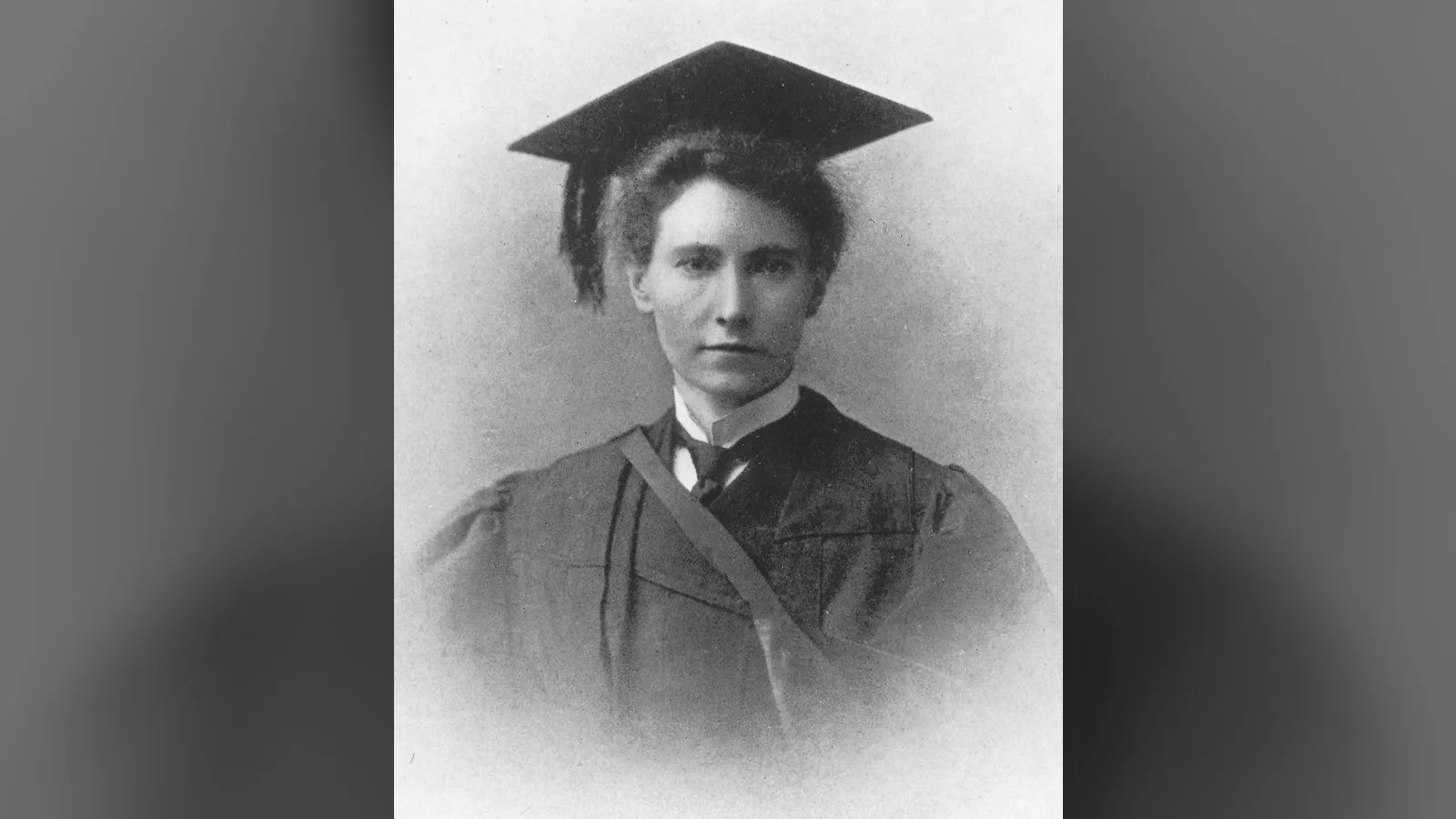

Dr Marion Gilchrist (1864–1952)
Contents
TL;DR
- Established/Documented: Gilchrist was, together with fellow graduate Alice Robson, one of the first two women to graduate from the University of Glasgow and the first women to qualify in medicine at any Scottish university, receiving her MB and CM degrees in July 1894 — a genuine institutional first achieved against active family and, at points, institutional discouragement.
- Established/Documented: Her father and elder brother actively discouraged her from pursuing formal education at all, viewing it as pointless for a girl — it was a different brother, John, who supported her continued schooling, without whom her later medical career may not have been possible at all; this card names that internal family opposition directly rather than treating her path into medicine as simply unobstructed ambition.
- Established/Documented: Gilchrist built a long, substantial ophthalmology career in Glasgow — including running the entire eye department of Glasgow Victoria Infirmary single-handedly during the First World War, while many male colleagues were away on military service — and became the first woman to chair the Glasgow division of the British Medical Association.
- Established/Documented: She was a committed suffrage activist across both the moderate and militant wings of the movement, moving from the constitutional Glasgow and West of Scotland Association for Women's Suffrage (which she co-founded in 1902) to the more confrontational Women's Social and Political Union and Women's Freedom League in 1907.
- Shared/Traditional, worth stating precisely: Gilchrist is recorded as having medically examined fellow suffragist Constance Lytton before Lytton's deliberate attempt to be arrested while disguised as a working-class woman, in a well-known episode intended to expose the British justice system's differential treatment of suffrage prisoners by social class — Gilchrist's specific role was as the examining physician confirming Lytton's fitness, not as a direct participant in the disguise or arrest itself, a distinction this card preserves rather than blurring into vaguer "involvement in the protest."
Key Facts
- Born
- 5 February 1864, Bothwell Park farm, Bothwell, Lanarkshire, Scotland
- Died
- 7 September 1952, Glasgow, Scotland (aged 88)
- Education
- Bothwell Primary School; Hamilton Academy; Queen Margaret College, Glasgow (LLA, University of St Andrews, 1890); Queen Margaret College Medical School; MB, CM, University of Glasgow (1894)
- Known for
- One of the first two women to graduate from the University of Glasgow (1894) and the first women to qualify in medicine at a Scottish university
- Key positions
- General practice, 5 Buckingham Terrace, Glasgow (from 1903); Assistant Surgeon for Diseases of the Eye, Glasgow Victoria Infirmary (1914–1930); Ophthalmic Surgeon, Redlands Hospital for Women (from 1927); first woman Chair, Glasgow division, British Medical Association
- Activism
- Founding member, Glasgow and West of Scotland Association for Women's Suffrage (1902); member, Women's Social and Political Union and Women's Freedom League (from 1907)
- Personal life
- Never married; shared her home and consulting rooms for many years with fellow Glasgow graduate and radiologist Dr Katherine Chapman
Scottish Impact Index (SI Score)
- Global Influence
- 4/10
- Enduring Relevance
- 7/10
- Material Contribution
- 3/10
- Exceptional Achievement
- 6/10
- Lasting Legacy
- 4/10
- Recognition
- 2/10
26/60
Ranked =125th of 200 in Great Scots
Claim-Status and Evidence Note
Claims are evidence-tiered as Established/Documented (settled by university records, contemporary institutional sources, or broad scholarly consensus), Shared/Traditional (widely told and broadly accurate, if sometimes imprecisely worded), disputed, or Legend/Myth (actively corrected here). Gilchrist's record is unusually well preserved through University of Glasgow institutional archives, and this card finds little requiring outright correction — the main editorial care taken is precision, particularly around the Constance Lytton episode, where the exact nature of Gilchrist's role deserves to be stated accurately rather than romanticised into something larger than the documented facts support.
Timeline
Born at Bothwell Park farm, Lanarkshire, the youngest of five children of tenant farmer William Gilchrist and Margaret Gilchrist.
Educated at Bothwell Primary School and Hamilton Academy, supported by her brother John against the discouragement of her father and brother Douglas.
Matriculates at Queen Margaret College, Glasgow, as an arts student.
Earns her LLA (Lady Literate in Arts) from the University of St Andrews; enrols the same year at the newly established Queen Margaret College Medical School.
Elected President of the Women Students' Representative Council at its first meeting.
Graduates MB, CM from the University of Glasgow, together with Alice Robson — the first two women to graduate from the university, and the first women to qualify in medicine at any Scottish university.
Co-founds the Glasgow and West of Scotland Association for Women's Suffrage.
Establishes a general practice at 5 Buckingham Terrace, Glasgow, where she remains for the rest of her career; begins volunteer work as physician at the Queen Margaret College Settlement's Invalid Children's School (continuing until 1911).
Leaves the constitutional suffrage movement to join the more militant Women's Social and Political Union and Women's Freedom League.
Medically examines fellow suffragist Constance Lytton prior to Lytton's deliberate attempt to be arrested disguised as a working-class woman, part of a protest exposing differential treatment of suffrage prisoners by social class.
Serves as Assistant Surgeon for Diseases of the Eye at Glasgow Victoria Infirmary, including running the entire eye department alone during the First World War while male colleagues served overseas.
Elected President of the Glasgow and West Scotland Association of the Medical Women's Federation.
Appointed ophthalmic surgeon at Redlands Hospital for Women.
A £1,500 gift endows a bed at Redlands Women's Hospital in her name, dedicated to treatment of eye disease.
Dies at her home in Glasgow, aged 88; the University of Glasgow establishes the Marion Gilchrist Prize the same year, awarded annually to the most distinguished woman graduate in medicine.
Details
A Lanarkshire farm childhood, and family opposition faced head-on
Marion Gilchrist was born in 1864 at Bothwell Park farm in Lanarkshire, the youngest of five children of a tenant farmer. It would be a mistake to assume her later achievements grew from a supportive or progressive family environment in the way it did for some other pioneering women of her era — the documented record shows the opposite. Her father and her brother Douglas (who went on to become a notable Scottish agriculturalist in his own right) actively discouraged Gilchrist from pursuing formal academic education at all, viewing schooling for a girl as essentially pointless. What made her later path possible was a different family member entirely: her brother John, who supported her continued education at Bothwell Primary School and Hamilton Academy against that prevailing family attitude. This detail deserves to be stated plainly rather than smoothed over into a generic account of "the barriers women faced" — Gilchrist's opposition began inside her own household, and her eventual medical career rested on one sibling's specific, documented support overriding her father's and another brother's active discouragement.
Queen Margaret College and a genuine institutional first
Gilchrist's formal higher education began in 1887, when she matriculated as an arts student at Queen Margaret College in Glasgow — one of the limited number of institutions then open to women seeking university-level study in Scotland, medical degrees for women still being essentially unavailable through the main Scottish universities themselves. She earned her LLA (Lady Literate in Arts) qualification from the University of St Andrews in 1890, a credential specifically developed to allow women external, non-resident study toward a university-recognised qualification at a time when full degree study remained closed to them. That same year, she enrolled at the newly established Queen Margaret College Medical School, part of a slowly widening, but still genuinely contested, set of opportunities for women to pursue formal medical training in Scotland.
Gilchrist was clearly a leading figure among her cohort of women students well before her graduation — she was elected President of the Women Students' Representative Council at its first meeting in January 1894. The graduation that followed in July 1894 represents a genuine, well-documented institutional first: Gilchrist and fellow student Alice Robson became the first two women to graduate from the University of Glasgow in any subject, and simultaneously the first women to qualify in medicine at any Scottish university — a double distinction, not merely a medical one, reflecting how comprehensively closed formal university education had been to women in Scotland up to that point.
An ophthalmology career built on decades of steady, substantial responsibility
After qualifying, Gilchrist established a general practice in 1903 at 5 Buckingham Terrace in Glasgow, a practice she maintained for the remainder of her professional life, and she specialised in ophthalmology, the branch of medicine dealing with diseases and surgery of the eye. Her career in this field was substantial rather than nominal: she served as Assistant Surgeon for Diseases of the Eye at Glasgow Victoria Infirmary from 1914 to 1930, and during the First World War, with many of her male colleagues away on military service, she took on responsibility for running the entire eye department of the Victoria Infirmary essentially alone — a level of clinical responsibility that stands as clear, practical evidence of her professional standing and competence, quite apart from the symbolic significance of her earlier graduation. In 1927 she was further appointed ophthalmic surgeon at Redlands Hospital for Women, and in 1932 a substantial £1,500 donation endowed a dedicated hospital bed in her name at Redlands specifically for the treatment of eye disease — a tangible mark of the esteem in which her specialist work was held by the wider Glasgow medical and philanthropic community. Alongside her hospital work, she volunteered for nearly a decade (1903–1911) as physician at the Queen Margaret College Settlement's Invalid Children's School, extending her clinical work directly into care for some of Glasgow's most vulnerable young patients. Her professional standing within organised medicine itself was formally recognised when she became the first woman to chair the Glasgow division of the British Medical Association, and she later served as President of the Glasgow and West Scotland Association of the Medical Women's Federation from 1922.
Suffrage activism across both wings of the movement
Gilchrist's professional achievements ran in parallel with a sustained, genuinely committed engagement in the campaign for women's suffrage, and her activism is notable for spanning both the movement's constitutional and militant wings rather than remaining within one camp. She co-founded the Glasgow and West of Scotland Association for Women's Suffrage in 1902, an organisation working within the moderate, non-confrontational tradition associated with campaigners like Millicent Fawcett (see our Great Scots card on Elsie Inglis, who followed a similar constitutional suffrage path before the war). In 1907, however, Gilchrist made a deliberate shift, leaving that organisation to join the considerably more confrontational Women's Social and Political Union and the Women's Freedom League — groups associated with direct action tactics and, in some cases, deliberate arrest as a form of protest.
It is within this more militant phase of her activism that Gilchrist's specific, documented connection to one of the suffrage movement's most striking individual episodes occurred: she medically examined fellow suffragist Constance Lytton before Lytton's deliberate attempt to be arrested while disguised as a working-class woman, under the assumed name "Jane Warton." Lytton's protest was designed specifically to expose a genuine and disturbing pattern in how the British justice system treated suffrage prisoners differently according to their social class — as a well-connected aristocrat, Lytton had previously received markedly more lenient treatment during earlier arrests than working-class suffragettes convicted of similar offences, and her disguised arrest was intended to test, and publicly demonstrate, that disparity directly. This card is precise about what Gilchrist's own documented role actually was: she was the examining physician who assessed Lytton's fitness before the protest went ahead, not a participant in the disguise or arrest itself. This distinction matters for historical accuracy — Gilchrist's contribution was a specific, professional medical one, lending her clinical authority and judgment to a carefully planned act of political theatre devised by Lytton herself, rather than Gilchrist personally undertaking the more famous act of civil disobedience.
A shared home, and a niece who carried on her work
Gilchrist never married. For many years she shared both her home and her consulting rooms with Dr Katherine Chapman, a fellow University of Glasgow graduate and radiologist, until 1928. Her niece, Margaret Menzies Campbell, also worked alongside her at her practice, representing a direct continuation of medical work within Gilchrist's own extended family. This arrangement — a shared professional household between two pioneering women doctors — reflects a broader, genuine pattern among the first generation of women who qualified in medicine in Scotland, for whom professional and domestic life were frequently organised around close working partnerships with other women in the same position, at a time when conventional marriage and an independent medical career were widely assumed to be incompatible.
Death and an institutional legacy still active today
Gilchrist died at her Glasgow home on 7 September 1952, aged 88, having practised medicine actively for close to sixty years. Her legacy has been marked in ways that are unusually concrete and continuing, rather than purely commemorative: the University of Glasgow established the Marion Gilchrist Prize the same year she died, awarded annually to the most distinguished woman graduate in medicine — meaning her name is still directly attached to an ongoing, living institutional tradition recognising exactly the kind of achievement she herself first accomplished in 1894. Her hometown of Bothwell named a public garden and car park after her, and a stained-glass window by Douglas Strachan, installed in 1936, commemorates her in the north transept of Bothwell Parish Church. In 2012, on the sixtieth anniversary of her death, Bothwell Library mounted an exhibition celebrating her achievements, and more recent public engagement initiatives have continued to include her among recognised pioneering Glasgow women in science and medicine.
Did You Know
- Gilchrist's own father and one of her brothers actively discouraged her from pursuing an education at all — it was a different brother who supported her schooling against that family opposition.
- Gilchrist and fellow graduate Alice Robson were not only the first women to qualify in medicine at a Scottish university in 1894 — they were the first women to graduate from the University of Glasgow in any subject whatsoever.
- During the First World War, Gilchrist ran the entire eye department of Glasgow Victoria Infirmary essentially single-handedly while male colleagues were away on military service.
- Gilchrist's activism spanned both the constitutional and militant wings of the suffrage movement — she co-founded a moderate suffrage association in 1902, then joined the more confrontational Women's Social and Political Union and Women's Freedom League in 1907.
- She personally examined fellow suffragist Constance Lytton before Lytton's famous disguised arrest as "Jane Warton" — a protest designed to expose the British justice system's differential treatment of suffrage prisoners by social class.
- Gilchrist shared her home and consulting rooms for many years with fellow pioneering doctor and radiologist Katherine Chapman.
- The Marion Gilchrist Prize, established by the University of Glasgow in 1952, the year of her death, is still awarded today to the most distinguished woman graduate in medicine — a living tradition carrying her name forward rather than a static historical memorial.
- A £1,500 donation in 1932 endowed a dedicated hospital bed in her name at Redlands Women's Hospital specifically for eye disease treatment, a direct mark of contemporary professional and philanthropic esteem.
FAQ
1What exactly was Marion Gilchrist the first to do?
She and fellow graduate Alice Robson were, in July 1894, the first two women to graduate from the University of Glasgow in any subject, and simultaneously the first women to qualify in medicine at any Scottish university.
2Did Gilchrist's family support her education?
Not entirely — her father and brother Douglas actively discouraged her academic education, viewing it as pointless for a girl. It was her brother John's specific support that allowed her to continue her schooling and eventually pursue medicine.
3What medical specialty did Gilchrist practise?
Ophthalmology — she built a substantial career treating eye disease, including nearly two decades as Assistant Surgeon for Diseases of the Eye at Glasgow Victoria Infirmary and later as ophthalmic surgeon at Redlands Hospital for Women.
4What did Gilchrist do during the First World War?
With many male colleagues away on military service, she took on responsibility for running the entire eye department of Glasgow Victoria Infirmary on her own — substantial, direct clinical evidence of her professional standing.
5What was Gilchrist's connection to the suffrage movement?
She was deeply involved across both its moderate and militant wings, co-founding a constitutional suffrage association in 1902 before joining the more confrontational Women's Social and Political Union and Women's Freedom League in 1907.
6Did Gilchrist take part in Constance Lytton's famous disguised arrest?
Not directly — her documented role was as the examining physician who assessed Lytton's medical fitness before the protest, lending professional medical judgment to a carefully planned act of political protest devised by Lytton herself, rather than participating in the disguise or arrest personally.
7Did Gilchrist marry or have children?
No — she never married. She shared her home and consulting rooms for many years with fellow doctor and radiologist Katherine Chapman, and her niece, Margaret Menzies Campbell, worked alongside her in practice.
8Is Gilchrist's name still associated with any active institution today?
Yes — the Marion Gilchrist Prize, established by the University of Glasgow in 1952, is still awarded annually to the most distinguished woman graduate in medicine, making it a living tradition rather than only a historical commemoration.
9How is Gilchrist commemorated in her hometown?
Bothwell, Lanarkshire, named a public garden and car park after her, and a 1936 stained-glass window by Douglas Strachan commemorates her in Bothwell Parish Church.
10How long did Gilchrist practise medicine?
From her 1894 graduation until close to her death in 1952 — a professional medical career spanning nearly sixty years.
Sources and Further Reading
Primary/Institutional
- University of Glasgow, University Story, biographical record of Marion Gilchrist: universitystory.gla.ac.uk
- University of Glasgow School of Medicine, "A Significant Medical History: Marion Gilchrist"
- Women, War and the West End, "Dr Marion Gilchrist" (Glasgow West End heritage project)
Scholarly
- The Glasgow Story, "1914 to 1950s: Personalities: Marion Gilchrist"
- NHS Lanarkshire, "Women's History Month: Marion Gilchrist"
General
- Wikipedia, "Marion Gilchrist (doctor)"
- University of Glasgow, "20 Inspiring Glasgow Women" and Glasgow Science Festival "Monumental Women" profile
Caveats: Myths and Disputed Claims
- Myth: Gilchrist took part in Constance Lytton's 1909–10 disguised-arrest protest. Some looser retellings of suffrage history imply a more direct or dramatic personal role than the record supports. Gilchrist was the examining physician who assessed Lytton's fitness beforehand — a real and meaningful contribution, but distinct from personal participation in the disguise or arrest. Her record is otherwise unusually well documented through University of Glasgow institutional sources.
Finished reading? Try the Fact Machine: three reels, one surprising Scottish connection →
Card 058 · Great Scots