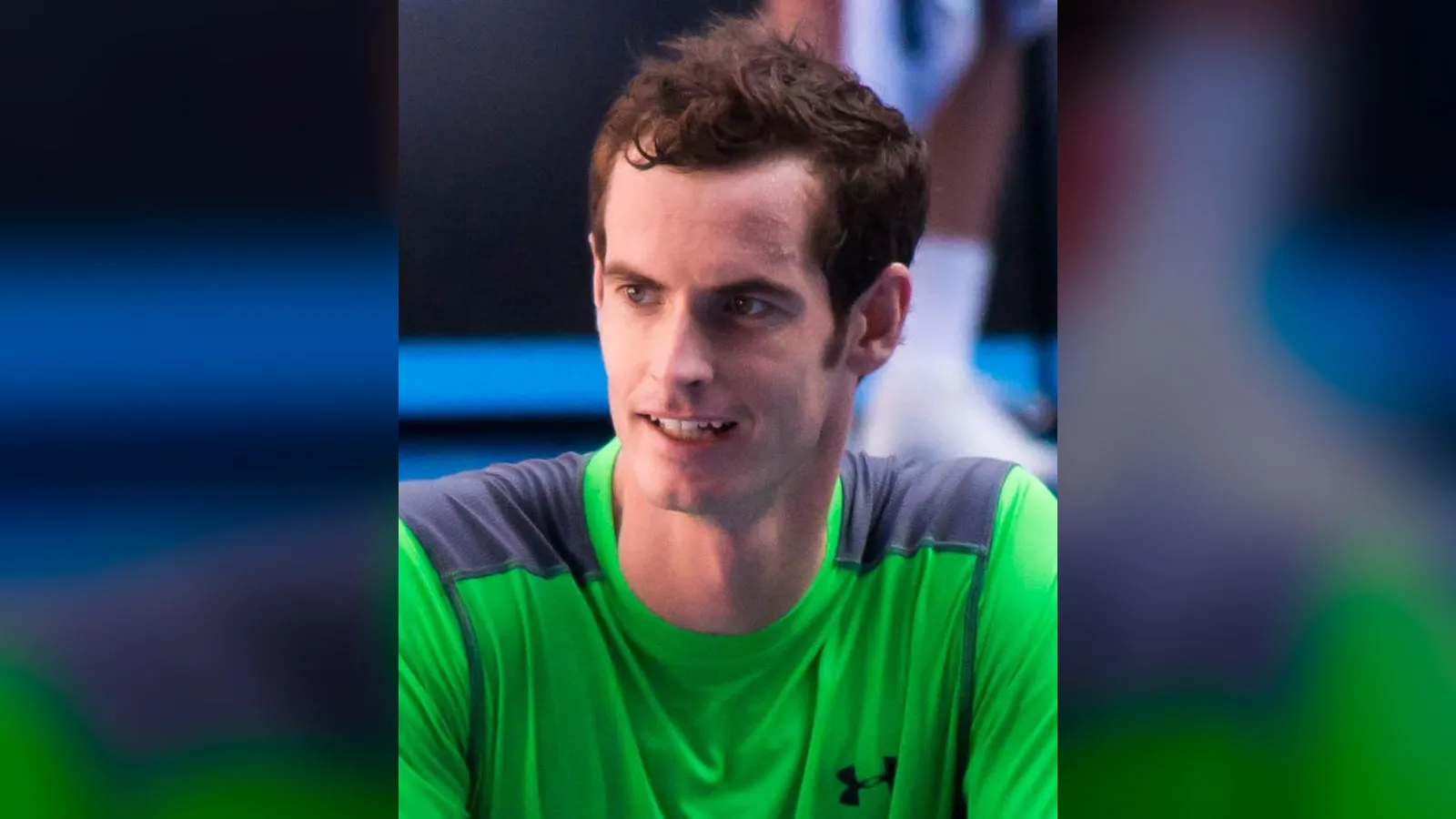

Sir Andy Murray (b. 1987)
Contents
TL;DR
- established Murray, aged eight, was a pupil at Dunblane Primary School on 13 March 1996, when Thomas Hamilton killed sixteen children and a teacher in the gymnasium — one of the deadliest mass shootings in British history. Murray's class was en route to the gym when the attack began and was diverted to hide in the headmaster's study; he and his brother Jamie had previously had direct personal contact with the gunman, who had driven them in his car and run clubs they attended. Murray has said this history contributed to lasting anxiety, including breathing difficulties during competition.
- established He won three Grand Slam singles titles — the 2012 US Open, and Wimbledon in 2013 and 2016 — and is the first British man to win a Wimbledon singles title since Fred Perry in 1936.
- established He is the only player, male or female, to win two Olympic singles gold medals in tennis, successfully defending his title from London 2012 at Rio 2016.
- established He reached world No. 1 in November 2016, the first British man to do so since ATP rankings began in 1973, before a serious hip injury requiring hip-resurfacing surgery significantly limited the remainder of his career.
- established He has been a consistent, outspoken advocate for women in tennis — notably hiring Amélie Mauresmo as his coach in 2014, making her the first woman to coach a top male player — and for LGBT+ rights, among other equality causes.
Key Facts
- Born
- Andrew Barron Murray, 15 May 1987, Glasgow (raised in Dunblane)
- Known for
- Three Grand Slam titles; two Olympic singles golds; world No. 1 (2016)
- Honours
- Knighted 2017, for services to tennis and charity
- Spouse
- Kim Sears (m. 2015)
- Coach (early)
- Trained at the Sánchez-Casal Academy, Barcelona, from age 15
- Retired
- 1 August 2024, after the Paris Olympics
Scottish Impact Index (SI Score)
- Global Influence
- 9/10
- Enduring Relevance
- 7/10
- Material Contribution
- 7/10
- Exceptional Achievement
- 5/10
- Lasting Legacy
- 6/10
- Recognition
- 9/10
43/60
Ranked =27th of 200 in Great Scots
A Note on Claims and Evidence
Murray's career statistics, titles, and public statements are extensively documented and treated as Established. His connection to the 1996 Dunblane massacre is a matter of well-documented public record, including his own and his family's later accounts, and is treated here with the seriousness the event warrants — reported plainly, without sensationalism, but also without the common softening of referring to it only obliquely. His anxiety and the described impact on his family are reported as his own and his family's stated accounts, not independently diagnosed or adjudicated claims.
Timeline
Born in Glasgow; raised in Dunblane.
Introduced to tennis by his mother, Judy Murray, aged three.
Present at Dunblane Primary School during the Dunblane massacre, in which sixteen children and a teacher were killed.
Declines a place at Rangers FC's School of Excellence to pursue tennis; moves to Barcelona to train at the Sánchez-Casal Academy.
Turns professional; begins dating Kim Sears.
Makes his top-10 debut, aged 19.
Wins Olympic singles gold at London 2012; wins the US Open, his first Grand Slam title and the first by a British man since 1936.
Wins Wimbledon, the first British man to do so since 1936.
Hires Amélie Mauresmo as coach, the first woman to coach a top-ranked male player.
Marries Kim Sears at Dunblane Cathedral.
Wins his second Wimbledon title; successfully defends his Olympic gold at Rio 2016, becoming the only player in history (men's or women's) to win two Olympic singles golds; reaches world No. 1 in November.
Knighted in the New Year Honours, becoming the UK's youngest knight at 29.
Undergoes hip-resurfacing surgery after prolonged injury struggles.
Wins the European Open on his comeback from surgery.
Voices support for the Black Lives Matter movement.
Family relocates to Leatherhead, Surrey.
Retires from professional tennis following the Paris Olympics men's doubles.
Serves as a coaching partner to Novak Djokovic, later Jack Draper.
Details
Dunblane
On 13 March 1996, Andy Murray, then eight years old, was a pupil at Dunblane Primary School when Thomas Hamilton entered the school gymnasium and shot and killed sixteen children and their teacher before taking his own life — one of the deadliest mass shootings in British history, and an event that led directly to the UK's subsequent tightening of handgun ownership laws. Murray's own class was walking toward the gym when the attack began; a teacher investigating the commotion redirected the children to hide in the headmaster's study, where they were kept singing songs to shield them from understanding what was happening nearby. Murray and his elder brother Jamie had a further, disturbing personal connection to the perpetrator: Hamilton had previously driven the boys in his car and run children's clubs they had attended, a detail Murray has discussed only sparingly and that surfaced more fully in his autobiography, Hitting Back. Murray has said the experience contributed to lasting anxiety, including serious breathing difficulties during competition in later life, and his family has described the period afterward — which included his parents' divorce within the following year and his brother's early departure to pursue tennis separately — as compounding a sense of personal upheaval. This article treats Dunblane as a serious, formative part of Murray's life history, reported plainly rather than referenced only obliquely, consistent with the gravity the event itself warrants. In more recent years, Murray has spoken publicly and pointedly about gun violence in response to subsequent mass shootings elsewhere, including describing the scale of US mass shootings as "f***ing madness" and questioning why children should have to go through shooting drills at school — his own stated views, offered from the standpoint of someone who lived through such an event as a child.
From Dunblane's courts to the Sánchez-Casal Academy
Murray's mother, Judy Murray — herself a significant figure in British tennis coaching — introduced him to the sport at age three, and he was competing against adults in league play by age eight. At fifteen, he turned down a place at Rangers Football Club's School of Excellence to focus on tennis, relocating to Barcelona to train at the Sánchez-Casal Academy under coach Pato Alvarez, with his parents investing £40,000 in the 18-month stay — a serious financial and personal commitment to a career that was, at that stage, far from guaranteed.
The Scottish tennis world he grew up in
Murray did not emerge from nowhere. Scotland had an old, if small, tennis culture. Lawn tennis reached Edinburgh in 1874, when the advocate James Patten (later Sir James Patten MacDougall) tried Major Wingfield's new game on the Grange cricket field. The Scottish Championships, first played in 1878 in a covered court at the Grange known as the "Tin Temple", are among the oldest tennis championships in the world, a year younger than Wimbledon. The Scottish Lawn Tennis Association was founded in 1895. Before Murray, Scotland's best-known players were women: Glasgow's Winnie Mason, Scottish champion in 1930 and 1933 (and, according to the association's history, winner of all three titles in 1933), her daughter Winnie Shaw, twice a Wimbledon quarter-finalist, and Joyce Hume (née Barclay), both of whom played for Britain in the Wightman Cup in the late 1960s and early 1970s.
Dunblane itself was part of that world. A Dunblane tournament was on the association's calendar as early as 1927, and by 1994 it hosted one of three national junior ratings tournaments. The association's centenary history, published in 1995 when Andy was eight, shows how central his mother already was. Judy Murray was the association's press liaison officer, editor of its journal Scottish Tennis, a member of its international selection committee and the coach for the Central district, and she appears among the singles winners of the Edinburgh Grass Court Championships. The book describes her chasing coverage for Scottish players in a national press that would otherwise have ignored most of their tournaments.
Three Grand Slam titles and the end of a British drought
Murray turned professional in 2005 and rose rapidly, becoming part of tennis's so-called "Big Four" alongside Roger Federer, Rafael Nadal, and Novak Djokovic by 2010 — a group that dominated men's tennis for much of the decade. His first Grand Slam title came at the 2012 US Open, defeating Djokovic in a five-set final that was, at the time, the longest US Open final in history, and making him the first British man to win a Grand Slam singles title since Fred Perry in 1936. The following year, his 2013 Wimbledon title — again defeating Djokovic — made him the first British man to win the Wimbledon singles title since Perry's win 77 years earlier, a milestone of substantial cultural weight in British tennis. He won a third Grand Slam, his second Wimbledon title, in 2016.
Olympic history and world No. 1
Murray's Olympic record is unmatched: he won singles gold at London 2012, defeating Roger Federer in the final, and successfully defended that title at Rio 2016 — making him the only player, male or female, in tennis history to win two Olympic singles gold medals. He reached the world No. 1 ranking in November 2016, the first British man to do so since the ATP rankings began in 1973, clinching the year-end top spot by defeating Djokovic at the ATP Finals.
Hip injury and a difficult late career
Murray's career was significantly altered by a serious hip injury that developed after his 2016 peak, ultimately requiring major hip-resurfacing surgery. He returned to competition and won a title at the 2019 European Open, but never recaptured his earlier dominant form, failing to reach the fourth round of any Grand Slam tournament for the remainder of his career. He retired from professional tennis on 1 August 2024, immediately following the men's doubles event at the Paris Olympics, where he and Dan Evans reached the quarterfinals.
Advocacy and equality
Murray built a sustained reputation as one of men's tennis's most consistent advocates for equality. His decision to hire Amélie Mauresmo as coach in 2014 made her the first woman to coach a top-ranked male player, and he has repeatedly and publicly corrected journalists and commentators who overlooked the achievements of women players in his own post-match interviews — becoming something of a notable public example of active allyship in sport. He has also voiced support for LGBT+ rights and same-sex marriage, and spoke in support of the Black Lives Matter movement in 2020.
Personal life
Murray married Kim Sears, daughter of tennis coach Nigel Sears, in April 2015 at Dunblane Cathedral — a deliberate choice of venue given his connection to the town. They have four children and have lived in Oxshott and, since 2022, Leatherhead, both in Surrey. He was knighted in the 2017 New Year Honours for services to tennis and charity, becoming, at 29, the youngest knight in the UK at the time.
Did You Know?
- He was a pupil at Dunblane Primary School during the 1996 Dunblane massacre, one of the deadliest school shootings in British history.
- He is the only player, male or female, to have won two Olympic singles gold medals in tennis.
- He turned down a place at Rangers Football Club's youth academy to pursue tennis instead.
- His decision to hire Amélie Mauresmo as his coach in 2014 made her the first woman to coach a top-ranked male tennis player.
- He married his wife, Kim Sears, at Dunblane Cathedral in 2015.
- He became the UK's youngest knight at the time of his 2017 knighthood, aged 29.
- His hip was surgically resurfaced with metal components after persistent injury problems from 2017 onward.
- He partnered with former rival Novak Djokovic as a coach shortly after his own retirement.
- In 1995, the year Andy turned eight, his mother Judy was the Scottish Lawn Tennis Association's press liaison officer and the editor of its journal, Scottish Tennis.
- The Scottish Championships, first held in 1878, are a year younger than Wimbledon; for their first six years they were played indoors, in a covered court in Edinburgh nicknamed the "Tin Temple".
FAQ
1Was Andy Murray really present at the Dunblane massacre?
Yes — he was an eight-year-old pupil at Dunblane Primary School on 13 March 1996, when sixteen children and a teacher were killed. His class was diverted away from the gymnasium where the attack occurred, and he has spoken about the lasting anxiety the experience contributed to.
2What are his biggest tennis achievements?
Three Grand Slam singles titles (2012 US Open, 2013 and 2016 Wimbledon), two Olympic singles gold medals (a unique achievement in the sport), and the world No. 1 ranking, reached in November 2016.
3Why did his career decline after 2016?
A serious hip injury, ultimately requiring hip-resurfacing surgery, significantly limited his physical capability for the remainder of his career, even after his return to competition.
4Is he known for advocacy beyond tennis?
Yes — notably for hiring the first female coach of a top male player, and for consistently and publicly correcting the record on women's achievements in tennis during his own interviews.
5When did he retire?
1 August 2024, following the men's doubles event at the Paris Olympics.
6Where did he marry?
Dunblane Cathedral, in April 2015 — a deliberate choice of venue reflecting his connection to the town.
7Is he related to another tennis player?
Yes — his older brother, Jamie Murray, is a successful doubles player, and his mother, Judy Murray, is a well-known coach and former British Fed Cup captain.
8What has he done since retiring from playing?
He became a coaching partner to former rival Novak Djokovic, and later to Jack Draper.
Sources and Further Reading
Primary/Institutional
Scholarly/Critical
General
- Andy Murray — Biography.com
- George Robertson, Tennis in Scotland: 100 Years of the Scottish Lawn Tennis Association, 1895–1995 (Edinburgh: SLTA, 1995)
Caveats: Myths and Disputed Claims
- Often omitted: Dunblane. Murray's connection to the Dunblane massacre is sometimes referenced only in passing or omitted from celebratory sporting profiles. His proximity to the attack and his own later statements about its impact are documented.
- Thomas Hamilton. His and his brother's prior contact with the perpetrator, Thomas Hamilton, is documented in Murray's own autobiography. It implies no culpability or unusual circumstance beyond Hamilton's role as a local youth club organiser known to many Dunblane families at the time.
- Singles, not doubles. His two Olympic singles golds are sometimes conflated with doubles or mixed doubles achievements in casual references; the "only player to win two Olympic singles golds" distinction refers specifically to singles competition.
Finished reading? Try the Fact Machine: three reels, one surprising Scottish connection →
Card 129 · Great Scots