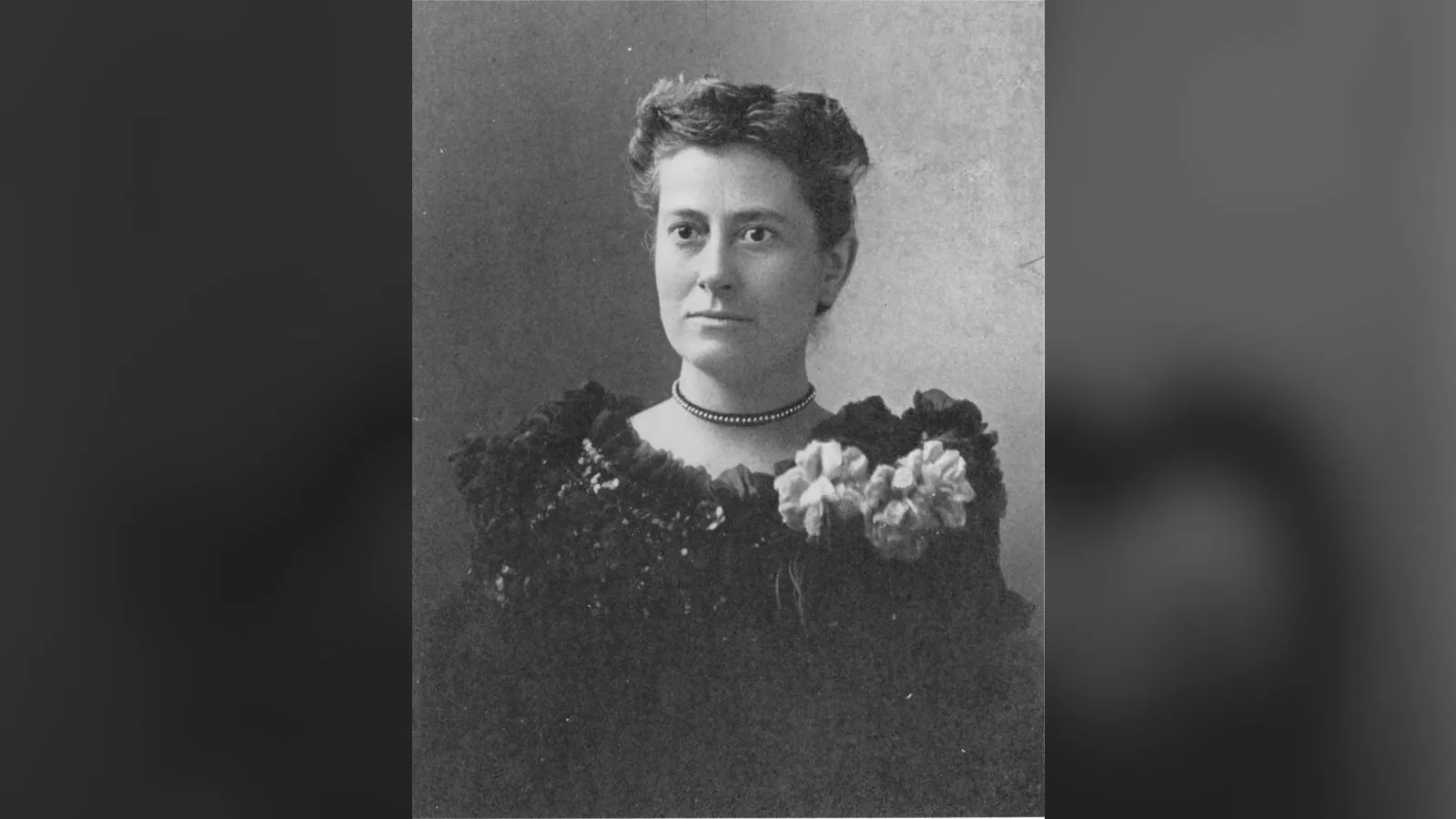

Williamina Fleming (1857–1911)
Contents
TL;DR
- Established/Documented. Born in Dundee and left to support her infant son alone in Boston after her husband abandoned her, Williamina Fleming went from working as a domestic servant to leading a team of astronomers at Harvard College Observatory — one of the more remarkable career trajectories in the history of science.
- Established/Documented. She personally classified the majority of the more than 10,000 stars in the landmark Henry Draper Catalogue (1890), developed the classification system that Annie Jump Cannon later refined into the Harvard spectral classification still used by astronomers today, and discovered 59 gaseous nebulae, over 300 variable stars, and 10 novae.
- Established/Documented. She was the first person to identify the existence of white dwarf stars, a fact confirmed in astronomer Henry Norris Russell's own account crediting her ahead of himself and Observatory director Edward Pickering.
- Shared/Traditional. The popular version of how she was hired — that Pickering, exasperated with a male assistant, declared his Scottish maid could do better and hired her on the spot — is broadly consistent with the documented facts, but the vivid, quotable version of the story has likely been smoothed and dramatised in retelling; what's solidly established is that she worked in the Pickering household and was brought into the Observatory's staff by 1879–1881.
- Established/Documented. For decades her specific contributions were folded into Pickering's institutional credit rather than attributed by name — a pattern common to the women who worked at Harvard College Observatory in this period, and one modern historians of science have worked to correct.
Key Facts
- Born
- 15 May 1857, Dundee, Scotland
- Died
- 21 May 1911, Boston, Massachusetts (aged 54), pneumonia
- Family
- Married James Orr Fleming, 1877; one son, Edward
- Emigrated
- To Boston, USA, 1878
- Employer
- Harvard College Observatory, under Edward Charles Pickering, from 1879/1881
- Key role
- Led the "Harvard Computers"; Curator of Astronomical Photographs from 1898 (first woman to hold the title)
- Major achievement
- Principal classifier of the Henry Draper Catalogue (1890); discoverer of the Horsehead Nebula (1888) and the first white dwarf
- Honours
- First American woman elected Honorary Member, Royal Astronomical Society (1906)
Scottish Impact Index (SI Score)
- Global Influence
- 6/10
- Enduring Relevance
- 8/10
- Material Contribution
- 3/10
- Exceptional Achievement
- 8/10
- Lasting Legacy
- 6/10
- Recognition
- 3/10
34/60
Ranked =67th of 200 in Great Scots
How This Article Handles the Evidence
Fleming's career is unusually well documented for a 19th-century working-class woman, thanks largely to Harvard's own institutional records and, more recently, Project PHaEDRA — an ongoing effort by the Harvard–Smithsonian Center for Astrophysics to digitise and properly attribute the notebooks of Fleming and her fellow "Harvard Computers." That said, her most-repeated origin story — the maid-to-astronomer hiring — has the shape of an anecdote that gets crisper and more dramatic each time it's retold. This article treats the underlying facts (domestic service in the Pickering household, hiring into the Observatory) as solid, while flagging the more theatrical version of the story (Pickering's supposed declaration about his maid outperforming his male staff) as a widely repeated but less precisely verifiable embellishment.
Timeline
Born in Dundee, Scotland, one of six children of Robert Stevens, a carver and gilder, and Mary Walker.
Begins working as a pupil-teacher at age 14.
Marries James Orr Fleming, an accountant and widower, in Dundee.
Emigrates to Boston with her husband, then pregnant; is abandoned by him shortly after, leaving her to support herself and her infant son alone.
Begins part-time administrative work for Edward Charles Pickering at Harvard College Observatory, having previously worked as a domestic servant in the Pickering household.
Formally joins the Harvard College Observatory staff and is trained by Pickering in stellar spectral analysis.
The Henry Draper Memorial begins funding HCO's major cataloguing project; Fleming is placed in charge.
Discovers the Horsehead Nebula on a photographic plate.
The first Henry Draper Catalogue is published, containing spectral classifications for more than 10,000 stars, the great majority personally classified by Fleming.
Delivers "A Field for Woman's Work in Astronomy" at the World's Fair in Chicago, arguing that differences in scientific achievement between men and women were a matter of culture and opportunity, not biology.
Appointed Curator of Astronomical Photographs at Harvard, the first woman to hold the title.
Elected the first American woman Honorary Member of the Royal Astronomical Society of London.
Becomes a U.S. citizen; publishes A Photographic Study of Variable Stars, cataloguing 222 variable stars she discovered.
Publishes her identification of the white dwarf companion star of 40 Eridani.
Dies of pneumonia in Boston, aged 54.
Details
From Dundee tenement to Boston domestic service
Williamina Paton Stevens was born in Dundee in 1857 to a working-class family; her father worked as a carver and gilder. She began working as a pupil-teacher at just 14, a common path for a bright but financially constrained young woman of the period with no realistic access to university education. She married James Orr Fleming, an accountant, in 1877, and the following year the couple emigrated to Boston. Shortly after arriving, while pregnant with their son Edward, she was abandoned by her husband — leaving her, at 21, alone in a new country with no independent income.
To support herself and her infant son, Fleming took work as a domestic servant, ultimately in the household of Edward Charles Pickering, director of the Harvard College Observatory. This part of her story is solidly documented; what's less precisely nailed down is the specific, often-repeated anecdote that Pickering, frustrated with a male assistant's work, declared that his own maid could do the job better — and hired her on the spot as a result. Shared/Traditional: the broad shape of this story is consistent with the documented facts, and it captures something real about how she came to the Observatory's attention, but the vivid dialogue and dramatic timing usually attached to it should be read as retelling rather than verbatim record. What is established is that Fleming began part-time administrative work at the Observatory in 1879 and was formally brought onto the scientific staff and trained in spectral analysis by 1881.
Building a stellar classification system
Fleming became a founding figure among the "Harvard Computers" — the team of women Pickering employed to carry out the painstaking mathematical and observational work of classifying stars from photographic plates. When the Henry Draper Memorial began funding a major cataloguing project in 1886, Fleming was placed in charge of it. She developed a system — now known as the Pickering-Fleming system — that classified stars by the strength of hydrogen absorption lines in their spectra, using letters A through to roughly Q.
This system was later reorganised by Fleming's colleague Annie Jump Cannon, who resequenced the classification by stellar temperature rather than hydrogen strength, producing the now-familiar O-B-A-F-G-K-M sequence that remains the basis of the Harvard spectral classification system used in astronomy today. Established/Documented: Fleming's original framework was the direct foundation on which Cannon's better-known refinement was built, a connection that is sometimes lost in popular accounts that credit Cannon alone with the modern system.
The Henry Draper Catalogue and a working method of naming credit
The first Henry Draper Catalogue, published in 1890, contained spectral classifications for more than 10,000 stars — the great majority of which Fleming personally classified. Established/Documented, and worth stating plainly: in the era's publication conventions, this kind of work was often credited institutionally to the Observatory's director rather than by name to the women who actually carried it out, and early published records of the Catalogue's work reflect this pattern. It was not until later — notably the second Dreyer Index Catalogue in 1908 — that Fleming and her female colleagues began receiving more direct, named recognition for specific discoveries in the astronomical literature. This is not a matter of later historians uncovering hidden fraud; it reflects the normal institutional and gender conventions of 19th-century scientific publishing, which modern historians of science have since worked to correct by re-attributing credit more precisely.
Specific discoveries
Fleming's personal discovery record, once properly attributed, is substantial: 59 gaseous nebulae, more than 310 variable stars, and 10 novae over the course of her career. In 1888 she is credited with discovering the Horsehead Nebula, describing it on a photographic plate as a "semicircular indentation" near the star Zeta Orionis — now one of the most recognisable objects in popular astronomy imagery.
Established/Documented, and among her most significant achievements: Fleming was the first person to identify the existence of what we now call white dwarf stars, through her analysis of the companion star to 40 Eridani, published in 1910. This priority is confirmed directly by contemporary astronomer Henry Norris Russell, who wrote plainly that "the first person who knew of the existence of white dwarfs was Mrs. Fleming; the next two, an hour or two later, Professor E. C. Pickering and I" — a rare and unambiguous piece of testimony, from a leading astronomer of the era, crediting her ahead of two more institutionally prominent men.
Advocacy and recognition
In 1893, Fleming delivered a talk at the World's Fair in Chicago titled "A Field for Woman's Work in Astronomy," making an explicit public case that differences in scientific achievement between the sexes reflected culture and opportunity rather than any inherent difference in ability — a genuinely forward-looking argument for its time, made from a position of hard-won personal authority.
Her institutional recognition followed, if belatedly relative to her male contemporaries: appointment as Curator of Astronomical Photographs at Harvard in 1898, the first woman to hold that title there; election in 1906 as the first American woman to become an Honorary Member of the Royal Astronomical Society in London; and membership of the Astronomical and Astrophysical Society of America, along with the Guadalupe Almendaro Medal from the Astronomical Society of Mexico. She became a U.S. citizen in 1907.
Death and legacy
Fleming died of pneumonia in Boston in May 1911, aged 54, still an active member of the Observatory staff. Her modern legacy has grown substantially as historians of science have revisited the contributions of the Harvard Computers as a group: a lunar crater is named jointly for her and Alexander Fleming (no relation), asteroid 5747 Williamina bears her name, and she is commemorated on the Dundee Women's Trail in her home city. Project PHaEDRA, run by the Harvard–Smithsonian Center for Astrophysics, is digitising and transcribing more than 2,500 volumes of notebooks left by Fleming and her fellow computers — an ongoing effort specifically aimed at recovering and properly crediting work that was, for decades, folded anonymously into institutional output.
Did You Know
- Williamina Fleming was working as a domestic servant in her future employer's household before she ever set foot in an observatory.
- She personally classified the majority of the more than 10,000 stars catalogued in the landmark 1890 Henry Draper Catalogue.
- The modern spectral classification system astronomers still use today (O-B-A-F-G-K-M) descends directly from the letter-based system she originally devised.
- She is credited with discovering the Horsehead Nebula, one of the most photographed objects in the night sky, in 1888.
- Astronomer Henry Norris Russell directly credited her as the first person in the world to identify a white dwarf star — ahead of himself and Harvard Observatory's own director.
- She delivered a public address in 1893 arguing that the shortage of women in science reflected opportunity, not ability — a strikingly modern argument for the period.
- A lunar crater carries her name, shared with the (unrelated) discoverer of penicillin, Alexander Fleming.
- Harvard is still working, more than a century after her death, to digitise and properly attribute the thousands of notebook pages she and her fellow "Harvard Computers" produced.
Frequently Asked Questions
1Was Williamina Fleming really hired as a maid and then promoted to astronomer?
The underlying facts are true — she worked as a domestic servant in Pickering's household before joining the Observatory staff — but the more theatrical version of the story, with Pickering supposedly declaring his maid could do better than his male assistants, should be treated as a widely repeated but not precisely verified retelling rather than a documented quotation.
2What exactly did she discover?
Directly: the Horsehead Nebula, 59 gaseous nebulae, over 300 variable stars, 10 novae, and — most significantly — the first identified white dwarf star. She also personally classified the great majority of the 10,000-plus stars in the 1890 Henry Draper Catalogue.
3Did she invent the classification system astronomers still use?
She invented its direct predecessor. Her original hydrogen-strength-based system was later reorganised by her colleague Annie Jump Cannon into the temperature-based O-B-A-F-G-K-M sequence still in use — a system built directly on Fleming's foundation, even though Cannon's version is the one most often remembered today.
4Why wasn't she given more credit at the time?
Largely because of the publishing conventions of the era, in which work by the women of the Harvard Computers was often credited institutionally to Observatory director Edward Pickering rather than by name. This began to change within her own lifetime — by 1908 she and her colleagues were receiving more direct attribution — and has continued to be corrected by historians since.
5Was she ever formally trained as a scientist?
She had no university education — unavailable to a woman of her class and era — and was trained on the job by Pickering himself, going on to train and lead other members of the Harvard Computers in turn.
6How did she die?
She died of pneumonia in Boston in 1911, at 54, while still actively working at the Observatory.
Sources and Further Reading
Primary/Institutional
- Williamina Fleming: Curator of Astronomical Photographs at Harvard College Observatory — American Institute of Physics
- Project PHaEDRA (Preserving Harvard's Early Data and Research in Astronomy), Harvard–Smithsonian Center for Astrophysics
Scholarly
- Brief life of Williamina Fleming, spectrographic pioneer and astronomer — Harvard Magazine
- Williamina Paton Stevens Fleming — Britannica
General
Caveats: Myths and Disputed Claims
- Myth: "Pickering said his maid could do better." The dramatic quote is widely repeated, but it is a smoothed retelling of a real underlying hiring story, not a verbatim record.
- Myth: Annie Jump Cannon alone created the modern spectral classification system. Her system was a direct refinement of Fleming's earlier framework.
- Credited institutionally, not by name. For much of her career Fleming's discoveries were credited institutionally rather than by name — a product of period publishing convention, not a later scandal to be uncovered.
Finished reading? Try the Fact Machine: three reels, one surprising Scottish connection →
Card 035 · Great Scots