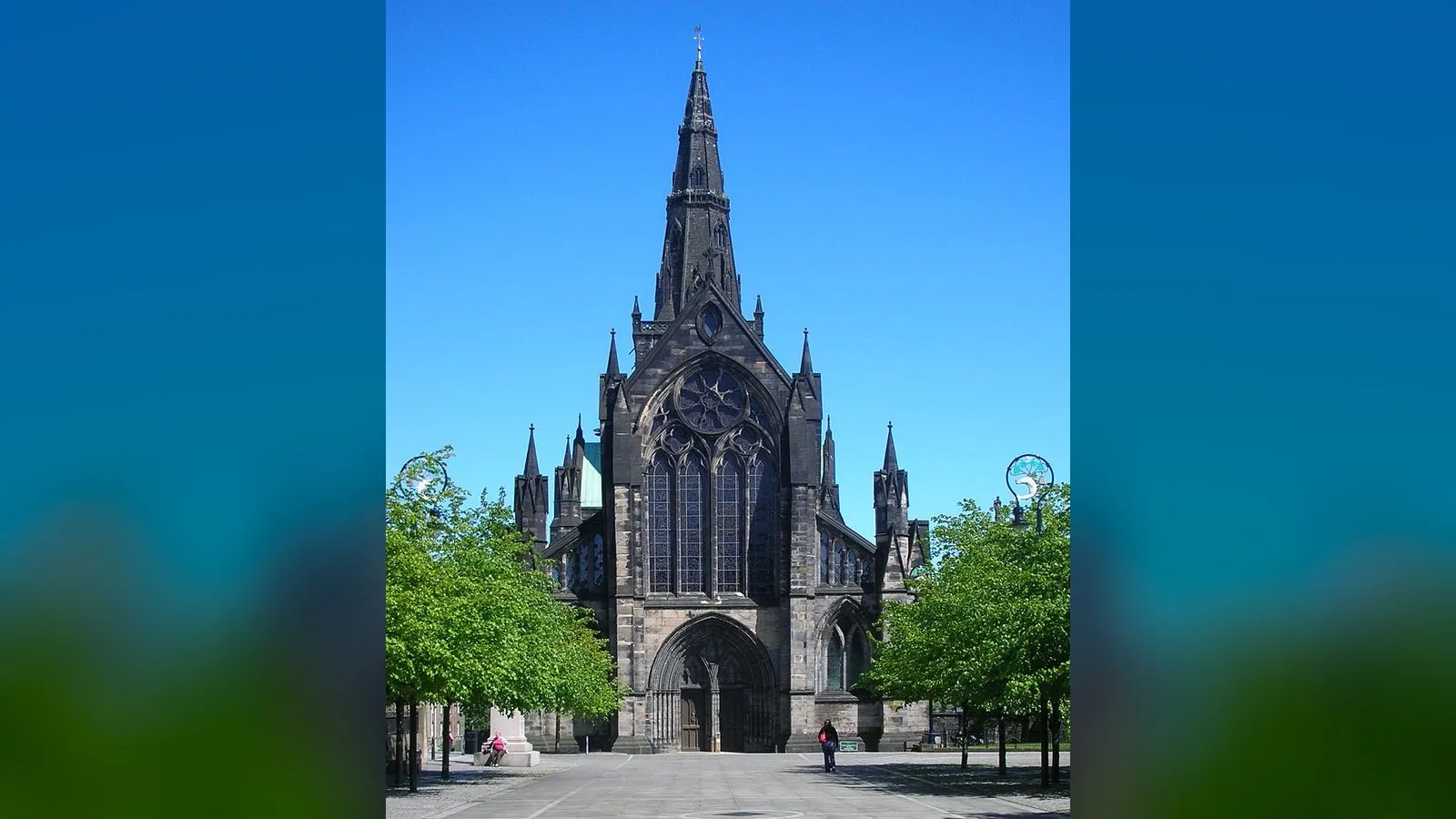

Glasgow Cathedral & the Necropolis
Contents
Legend/Myth Opener
Scotland's Reformation of 1560 was genuinely destructive to the country's medieval church buildings — many great cathedrals were stripped, vandalised, or left to fall into ruin as symbols of a rejected Catholic past. Glasgow Cathedral is routinely described as having simply "survived," as if by luck. It did not survive by accident. It survived because the ordinary trades and craftsmen of Glasgow were prepared to physically defend it, a specific and well-attested episode that makes the building's survival a far more interesting story than passive good fortune.
TL;DR
- established Glasgow Cathedral dates mainly from the 13th century, built on a site traditionally associated with St Mungo (St Kentigern), who is said to have been buried there around AD 612 — the 13th-century construction phases are well documented through architectural and historical record. established
- established It is the only medieval cathedral on the Scottish mainland to have survived the Protestant Reformation of 1560 substantially intact, at a time when most other Scottish cathedrals were damaged, stripped, or left to ruin — this is a documented and widely cited distinction among Scotland's medieval ecclesiastical buildings. established
- established Its survival is attributed to the organised trades and craftsmen of Glasgow, who took up arms to physically defend the cathedral against reformist destruction, reportedly outnumbering those intent on demolishing it — this account is drawn from historical record of the period's events in Glasgow specifically. established
- established The adjacent Glasgow Necropolis was established in 1831 by the Merchants' House of Glasgow, modelled explicitly on Paris's Père-Lachaise cemetery, and opened in 1833 as one of Britain's first major non-denominational Victorian cemeteries — this is documented through the cemetery's own institutional and architectural history. established
- established The Necropolis holds around 50,000 burials across 37 acres and roughly 3,500 monuments, including work by architect Charles Rennie Mackintosh, and is today managed by Glasgow City Council — these figures and management facts are matters of public record. established
Key Facts
- Location/Region
- Glasgow city centre, east end, adjacent to the High Street
- Era/Date
- Cathedral mainly 13th century (earlier origins traditionally to AD 612); Necropolis founded 1831, opened 1833
- Type
- Medieval cathedral (Gothic) and adjoining Victorian garden cemetery
- Heritage/Protected Status
- Category A Listed Building (Cathedral); Inventory of Gardens and Designed Landscapes (Necropolis)
- Managed/Owned by
- Historic Environment Scotland (Cathedral, as Crown property since the 19th century); Glasgow City Council (Necropolis, since 1966)
- Access/Visitor Notes
- Cathedral: free entry (donations welcome), active place of worship with variable hours around services; Necropolis: freely accessible outdoor site, guided tours available, entrances via St Mungo's Museum, Wishart Street, or John Knox Street
Scottish Impact Index (SI Score)
- National Significance
- 9/10
- Historical Continuity
- 10/10
- Human & Economic Importance
- 8/10
- Landscape / Architectural Distinctiveness
- 10/10
- Cultural & Historical Legacy
- 10/10
- Recognition
- 9/10
56/60
Ranked #15 of 43 in Locations
A Note on Claims and Evidence
The construction history of Glasgow Cathedral, its dedication to St Mungo, and the broad narrative of its Reformation-era survival are documented through architectural evidence and historical record specific to Glasgow, distinguishing this account from vaguer, unverifiable claims sometimes made about other sites. The earliest layer of the St Mungo tradition — his activity and burial around AD 612 — sits further back in time than the cathedral's surviving fabric and rests partly on traditional hagiographical and later historical record rather than contemporary 7th-century documentation, and is presented with that distinction. The Necropolis's founding, design inspiration, and burial records are comparatively recent and well documented through institutional archives, requiring less interpretive caution.
Timeline
Death and burial of St Mungo (St Kentigern), traditionally associated with the cathedral site, according to later hagiographical tradition.
An earlier church on the site is consecrated in the presence of King David I, marking the documented beginning of a continuous ecclesiastical presence.
Bishop Jocelin initiates major rebuilding and expansion of the cathedral.
Bishop William de Bondington continues major construction, with much of the cathedral's present Gothic form dating from this period.
Scottish Reformation triggers widespread destruction and stripping of Catholic church buildings across Scotland; Glasgow's organised trades defend the cathedral, and it survives substantially intact — a rare outcome among Scotland's medieval cathedrals.
John Knox monument erected on the hill that would become the Necropolis, predating the cemetery's formal establishment.
Merchants' House of Glasgow establishes the Glasgow Necropolis on a former arboretum site, modelled on Père-Lachaise in Paris.
Necropolis formally opens as an interdenominational burial ground; first burial recorded as Joseph Levi.
The ornate entrance and "Bridge of Sighs" linking the cathedral precinct to the Necropolis are completed; the cathedral becomes Crown/state property.
Full state management of the cathedral established.
Further extensions made to the Necropolis.
Merchants' House hands management of the Necropolis to Glasgow City Council.
Cathedral remains an active place of worship managed by Historic Environment Scotland; Necropolis managed by Glasgow City Council as a heritage landscape with guided tours.
Details
A cathedral built on very old ground
Glasgow Cathedral's documented architectural history begins in earnest in the 12th and 13th centuries, with an earlier church on the site consecrated in 1136 and major rebuilding campaigns under Bishop Jocelin from 1181 and Bishop William de Bondington between 1233 and 1258 producing much of the Gothic structure that survives today — long rows of pointed arches, soaring windows with delicate stone tracery, and an unusual arrangement of three vaulted aisles around the choir and presbytery. The site's association with Christianity in the Glasgow area goes back further still, according to tradition: the cathedral is dedicated to St Mungo (also known as St Kentigern), regarded as the area's first bishop and traditionally said to have been buried on the site around AD 612. This earliest layer rests on later hagiographical and historical tradition rather than contemporary 7th-century documentation, and should be understood as the founding tradition underpinning the site's sacred significance rather than an archaeologically verified date.
Surviving the Reformation: a specific, documented story
Glasgow Cathedral's most historically distinctive claim is a comparative one: it is the only medieval cathedral on the Scottish mainland to have survived the Reformation of 1560 substantially intact. Elsewhere in Scotland, the Reformation brought widespread destruction to Catholic ecclesiastical buildings — altars smashed, decoration stripped, and in many cases buildings left to fall into ruin as unwanted symbols of the rejected old religious order. Glasgow Cathedral avoided this fate for a specific and well-documented reason: the organised trades and craftsmen of the city, who held real affection for the building, mobilised to physically defend it against those intent on its destruction, reportedly outnumbering the would-be destroyers when the crisis came to a head. This is a genuinely unusual episode in Scottish Reformation history, and it is worth stating plainly rather than reducing to vague "it somehow survived" language: Glasgow Cathedral stands today in large part because ordinary townspeople chose to defend it.
A different kind of monument: the Necropolis
Immediately adjacent to the cathedral, separated by a ravine and linked by the aptly named "Bridge of Sighs," lies a monument of an entirely different era and character: the Glasgow Necropolis. Established in 1831 by the Merchants' House of Glasgow on the site of a former arboretum, the Necropolis was explicitly modelled on Père-Lachaise in Paris, part of a wider European movement toward planned, landscaped "garden cemeteries" that treated burial grounds as designed public spaces rather than simple churchyards. It opened in 1833 as an interdenominational burial ground — notably, its first recorded burial was Joseph Levi, a Jewish merchant, predating the first Christian burial there by roughly a year, an early and striking statement of the site's non-denominational character at a time when burial practice was often strictly confined along religious lines.
A dense landscape of Victorian ambition and memory
Over the following decades the Necropolis grew substantially, with extensions in 1877 and 1892 eventually bringing the site to around 37 acres holding approximately 50,000 burials across roughly 3,500 individual monuments and memorials. These range from grand, architecturally ambitious tombs commissioned by Glasgow's wealthy merchant and industrial families — a reflection of the city's 19th-century commercial confidence — to simpler markers, including work by architect Charles Rennie Mackintosh, among the city's most celebrated designers. The hilltop is dominated visually by an earlier monument, a statue of the reformer John Knox erected in 1824, actually predating the cemetery's formal establishment and later incorporated into its landscape — a reminder that the site's association with Reformation-era memory and 19th-century civic commemoration are closely intertwined, even though the Knox monument itself long precedes the Necropolis as an institution.
Two sites, one story about memory and continuity
Taken together, Glasgow Cathedral and the Necropolis form an unusually continuous sequence of sacred and commemorative landscape at the heart of the city: a rare, substantially intact medieval cathedral standing beside one of Britain's most architecturally significant Victorian cemeteries, physically linked by a single bridge. The cathedral represents a specific act of community defence against religious iconoclasm; the Necropolis represents a specific 19th-century civic ambition to create a dignified, non-sectarian landscape for the dead modelled on continental example. Both remain active, managed heritage sites today — the cathedral as a working place of worship under Historic Environment Scotland, the Necropolis as a heritage landscape under Glasgow City Council — and together they offer visitors an unusually direct physical encounter with roughly eight centuries of Glasgow's religious, civic, and architectural history in a single compact site.
Did You Know?
- Glasgow Cathedral is the only medieval cathedral on the Scottish mainland to have survived the 1560 Reformation substantially intact.
- Its survival is credited specifically to Glasgow's organised trades, who took up arms to defend the building when it was threatened with destruction.
- The cathedral is traditionally linked to St Mungo, said to have been buried on the site around AD 612 — centuries before any part of the present building was constructed.
- The Glasgow Necropolis's first recorded burial, in 1833, was a Jewish merchant, Joseph Levi — predating the first Christian burial there by about a year.
- The Necropolis was explicitly modelled on Père-Lachaise cemetery in Paris, part of a broader European "garden cemetery" movement.
- The statue of John Knox on the Necropolis hilltop was erected in 1824, several years before the cemetery around it was formally established.
- A bridge nicknamed the "Bridge of Sighs" physically connects the cathedral precinct to the Necropolis.
- The Necropolis holds roughly 50,000 burials across about 3,500 monuments, including work attributed to architect Charles Rennie Mackintosh.
FAQ
1Why is Glasgow Cathedral unusual among Scottish cathedrals?
It is the only medieval cathedral on the Scottish mainland to survive the 1560 Reformation substantially intact, while most others were damaged or left to ruin.
2Why did it survive?
Glasgow's organised trades and craftsmen physically defended the building against reformist destruction, reportedly outnumbering those intent on demolishing it.
3How old is the cathedral?
Most of the surviving structure dates from the 13th century, though the site's religious association is traditionally traced back to around AD 612.
4Who was St Mungo?
Also known as St Kentigern, he is traditionally regarded as the area's first bishop and is said to have been buried on the cathedral site.
5What is the Glasgow Necropolis?
A large Victorian garden cemetery established in 1831 adjacent to the cathedral, modelled on Père-Lachaise in Paris.
6How many people are buried in the Necropolis?
Approximately 50,000 burials across roughly 3,500 monuments.
7Is the Necropolis linked to a specific religion?
No — it was established as an interdenominational burial ground, notable for its non-sectarian intent from the outset.
8What is the "Bridge of Sighs"?
The ornate bridge, completed in 1836, connecting the cathedral precinct to the Necropolis.
9Who manages these sites today?
Historic Environment Scotland manages the cathedral; Glasgow City Council manages the Necropolis, since taking over from the Merchants' House in 1966.
10Can you visit both for free?
The cathedral offers free entry with donations welcomed; the Necropolis is a freely accessible outdoor site, with guided tours also available.
11Is the cathedral still used for worship?
Yes, it remains an active place of worship, so visitor hours can vary around services and events.
12Are there notable architects' work in the Necropolis?
Yes — monuments include work attributed to Charles Rennie Mackintosh, among Scotland's most celebrated architects and designers.
Sources and Further Reading
Primary/Institutional
- Historic Environment Scotland — Glasgow Cathedral: History
- Glasgow City Council / Glasgow Necropolis official visitor information
Scholarly/Critical
- Historical scholarship on the Scottish Reformation's impact on ecclesiastical architecture, and the specific Glasgow trades defence episode
- Architectural history of 19th-century garden cemeteries and the Père-Lachaise model
General
- Wikipedia — Glasgow Cathedral; Glasgow Necropolis
- Undiscovered Scotland and History Hit — visitor overviews of both sites
Caveats: Myths and Disputed Claims
- Myth: the cathedral survived the Reformation by accident. Its survival is specifically attributed to armed defence by Glasgow's organised trades.
- Traditional: the AD 612 date of St Mungo's burial. It is traditional/hagiographical rather than contemporaneously documented fact, and long predates the surviving 13th-century structure.
- Myth: Glasgow Cathedral is the only Scottish cathedral to survive the Reformation. It is the only one on the Scottish mainland to survive substantially intact; other cathedrals survived in ruined or partial states, or on islands (such as Orkney's St Magnus Cathedral, which has its own distinct survival story).
- The John Knox statue predates the Necropolis. The statue was erected in 1824; the Necropolis was founded in 1831.
- Disputed: some Mackintosh attributions in the Necropolis. Not every attributed Mackintosh monument is fully confirmed; some architectural attributions in large Victorian cemeteries rely on documentary and stylistic evidence rather than universally undisputed record.
Finished reading? Try the Fact Machine: three reels, one surprising Scottish connection →
Card 048 · Locations