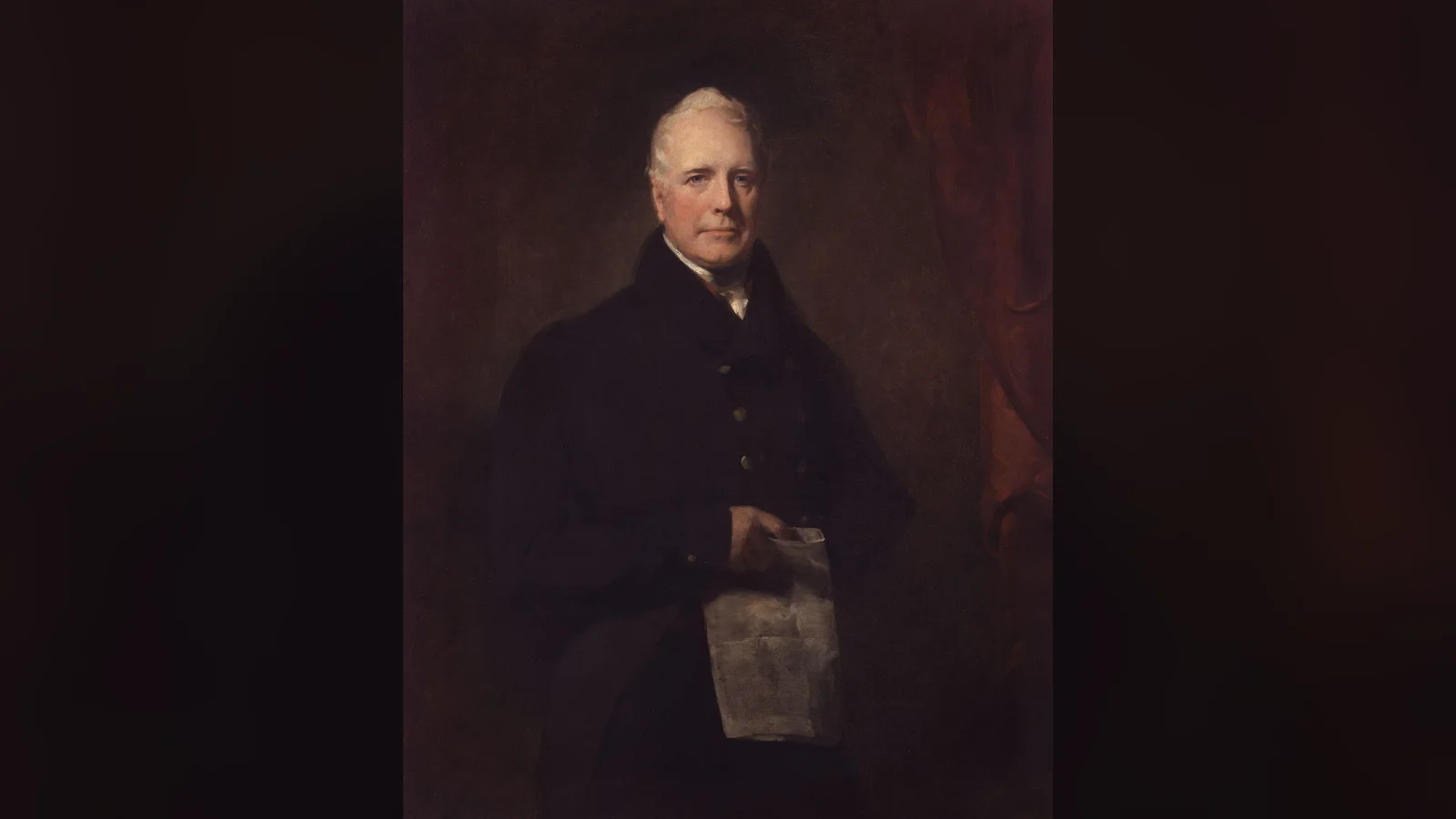

Sir David Baird: Prisoner of Seringapatam, Conqueror of Seringapatam
Contents
David Baird, a younger son of the Bairds of Newbyth in East Lothian, joined the army at fifteen. In 1780, as a captain in Lord Macleod's Highlanders, he was badly wounded and captured by Hyder Ali at the disaster of Pollilur, and spent nearly four years a prisoner, much of it in irons, in the fortress of Seringapatam. Fifteen years after his release he volunteered to lead the storming party that took the same fortress, in May 1799, and killed Tipu Sultan. The next day he was replaced as its commander by a junior colonel, Arthur Wellesley. Baird went on to march an army from the Red Sea across the desert to the Nile, capture the Cape of Good Hope from the Dutch, fight at Copenhagen, and lose his left arm at Corunna. This story follows Theodore Hook's two-volume life of 1832.
TL;DR
- established Born at Newbyth in December 1757, the fifth son of William Baird. He became an ensign on 16 December 1772 and joined his regiment at Gibraltar in 1773.
- established In 1777 he became a captain in the 73rd, Lord Macleod's Highlanders, raised at Elgin. The regiment reached Madras in January 1780.
- established Wounded and captured at Pollilur in September 1780, he was held at Seringapatam until 1784. His friend Captain Lucas offered to wear two sets of irons to spare Baird's wounded leg.
- established On 4 May 1799 he led the storm of Seringapatam, stepping out of the trenches at ten past one. The next day the command of the city was given to Colonel Arthur Wellesley: "Before the sweat was dry on my brow, I was superseded by an inferior officer."
- established He captured the Cape in January 1806, lost his left arm at Corunna in January 1809, was made a baronet that April, commanded the forces in Ireland from 1820, and died at Fern Tower, near Crieff, on 18 August 1829.
Key Facts
- Born
- December 1757, Newbyth, East Lothian
- Family
- Fifth son of William Baird of Newbyth, who died when David was eight
- Regiments
- 2nd Foot (1772); 73rd, later 71st, Highlanders (1777)
- Prisoner
- Seringapatam, 1780–84
- Seringapatam
- Led the assault, 4 May 1799
- Egypt
- Led the army from India across the desert from Kosseir to the Nile, 1801
- The Cape
- Captured from the Dutch, January 1806
- Corunna
- Left arm amputated at the shoulder, January 1809
- Honours
- Baronet, 13 April 1809; Privy Councillor; Governor of Fort George, 1829
- Married
- Ann Campbell Preston, 4 August 1810
- Died
- 18 August 1829, Fern Tower, Perthshire
- Main source
- Theodore Edward Hook, The Life of General, the Right Honourable Sir David Baird, Bart. (2 vols, Richard Bentley, London, 1832)
A Note on Claims and Evidence
Each major claim carries one of three labels. established means supported by primary records, official bodies or several independent reliable sources. shared means the core fact is sound but sources disagree on details, dates or interpretation. traditional means widely repeated but not traceable to a primary or independent source.
Hook wrote with the help of Baird's widow and from his papers, and he is a partisan. He takes Baird's side in every quarrel, above all against the Wellesleys and against the version of the Corunna campaign given by Walter Scott and William Napier. The book prints many of Baird's letters and despatches in full, which makes it valuable for what Baird himself thought.
Hook's descriptions of Hyder Ali and Tipu Sultan are those of their British enemies.
Timeline
Born at Newbyth.
Commissioned ensign in the 2nd Foot.
Captain in Lord Macleod's 73rd Highlanders.
Sails from Portsmouth for India.
Lands at Madras.
Wounded and captured at Pollilur.
Prisoner at Seringapatam.
Serves under Cornwallis against Tipu.
Promoted major-general; sails from the Cape for India.
Leads the assault on Seringapatam.
Leads the Indian army across the desert to the Nile.
Captures the Cape of Good Hope.
Commands a division at Copenhagen.
Wounded at Corunna.
Created a baronet.
Marries Ann Campbell Preston.
Commander of the forces in Ireland.
Dies at Fern Tower.
Details
Newbyth to Madras
established Baird's father died when he was eight, and he was brought up by his mother, whom Hook calls "a remarkably clever woman". He became an ensign at fifteen, studied at a military academy in Chelsea, and joined his regiment at Gibraltar in 1773. In 1777 he became captain of the light company in the new 73rd, Lord Macleod's Highlanders, raised at Elgin and formed at Fort George in 1778. Before it sailed, one company mutinied after men were told they had been sold to the East India Company. The regiment left Portsmouth on 7 March 1779 and reached Madras in January 1780.
Pollilur and Seringapatam
established In September 1780 Colonel Baillie's detachment, marching to join Sir Hector Munro, was surrounded by Hyder Ali's army near Pollilur and destroyed. Baird, wounded, was taken by one of Hyder's horsemen. The captured officers were marched to Seringapatam. In May 1781 the prisoners were put in irons of about nine pounds a pair. Baird's leg wound was still open, and his friend Captain Lucas, who spoke the language, offered to wear two sets himself to spare him; Baird was left unchained for a time, but put in irons that November. Lucas died in the prison.
established After Hyder's death his son Tipu Sultan pressed some of the European captives to convert to Islam. The surviving officers were released in March 1784 under the peace of that year. Their first proper dinner, Hook says, was the first they had seen in nearly four years.
The storm of 1799
established Baird returned to India as a major-general in 1798, under the new Governor-General, Lord Mornington, later Marquess Wellesley. He was already angry that Mornington's younger brother, Colonel Arthur Wellesley, had been given a command he thought his. At the siege of Seringapatam in 1799 he volunteered to lead the assault. At ten past one on 4 May he climbed out of the trenches and called out, "Now, my brave fellows, follow ME, and prove yourselves worthy of the name of British soldiers." Within minutes the breach was full of men. Tipu was killed in the fighting at a gateway.
established Baird took over the palace and began restoring order. The next morning Wellesley arrived with an order from the commander-in-chief, General Harris, handing him the command of the city. Baird protested in writing, and the sentence about being superseded "before the sweat was dry on my brow" is quoted by Hook from his papers.
Egypt and the Cape
established In 1801 Baird led a force from India up the Red Sea to drive the French from Egypt. Landing at Kosseir, his army crossed the desert to the Nile at Ghenneh with, Hook says, the loss of only three men. It reached the Nile too late to fight; the French had already capitulated.
established In January 1806 Baird captured the Cape of Good Hope from the Dutch under General Janssens, and the town capitulated after a brief battle. When Commodore Sir Home Popham proposed attacking Buenos Aires, Baird reluctantly lent him troops. The expedition ended in disaster, Baird was blamed for supporting it, and he was recalled.
Corunna and after
established In 1808 Baird was sent with about 11,000 men to Corunna to join Sir John Moore in Spain. At the battle of Corunna on 16 January 1809 a shot shattered his left arm, which was amputated at the shoulder on board the Ville de Paris; Hook says he sat through it without a word of complaint until the last moment. Moore was killed the same day. Baird received the thanks of both Houses of Parliament and a baronetcy, which he accepted reluctantly, having hoped for a peerage.
established He married Ann Campbell Preston in 1810 and lived on her estate at Fern Tower, near Crieff. In 1820 he was given command of the forces in Ireland and made a Privy Councillor, until the post was reduced when his old rival's brother, Marquess Wellesley, became Lord Lieutenant. Appointed Governor of Fort George in 1829, he died at Fern Tower on 18 August that year.
Did You Know?
- As a cadet Baird told a friend who wanted to slip past his sentry post that he could knock him down and walk over his body.
- A friend offered to wear two sets of irons to spare Baird's wound.
- Baird stormed the fortress where he had been a prisoner.
- His army crossed the Egyptian desert and lost only three men.
- He lost his arm at Corunna on the day Sir John Moore was killed.
FAQ
1Who was Sir David Baird?
A Scottish general who was a prisoner at Seringapatam, led its capture in 1799, took the Cape in 1806 and lost his arm at Corunna.
2Why did he resent Wellington?
Because Arthur Wellesley, a junior officer and the Governor-General's brother, was given the command of Seringapatam the day after Baird stormed it.
3What was the 73rd?
Lord Macleod's Highlanders, raised at Elgin in 1777 and later renumbered the 71st.
4Where is he buried?
Hook does not say where in the volumes read; check before print.
Sources and Further Reading
Primary
- Theodore Edward Hook, The Life of General, the Right Honourable Sir David Baird, Bart., 2 vols (Richard Bentley, London, 1832). Free from Google Books. The source for this story; it prints many of Baird's letters and despatches.
Further reading (not consulted directly)
- Denys Forrest, Tiger of Mysore: The Life and Death of Tipu Sultan (Chatto and Windus, 1970).
Caveats: Myths and Disputed Claims
- The Wellesley quarrel. Hook is wholly on Baird's side; Wellesley's appointment had political and practical reasons that Hook plays down.
- Captivity. The details of the prison years come from prisoners' journals quoted by Hook.
- The famous anecdote of Baird's mother. The story that on hearing her son was chained to another prisoner she said she pitied the man chained to "oor Davie" is often told; it does not appear in the passages read.
Finished reading? Try the Fact Machine: three reels, one surprising Scottish connection →
A Defence story