
Scots in New Zealand: A Quarter of the Settlers
Contents
New Zealand was the farthest place a Scot could emigrate to, a voyage of up to five months, and only about one Scottish emigrant in ten went there. To New Zealand they mattered far more than that suggests. Scots were nearly a quarter of its migrants from the United Kingdom, second only to the English, when Scotland held about an eighth of the home population.
TL;DR
- established Scots were between 20 and 30 per cent of immigrants from the United Kingdom to New Zealand in every period from 1800 to 1945.
- established The 1861 census counted 15,534 Scottish-born residents, 15.7 per cent of the population. The number peaked above 50,000 from the 1880s while the share fell as the colony grew.
- established About 117,000 Scottish-born migrants arrived between 1840 and 1939.
- established James Busby, a Scot, was the first British Resident from 1833, drafted the 1835 Declaration of Independence and, with William Hobson, drafted the Treaty of Waitangi in 1840.
- established The gold rushes of the 1860s spread Scots through the country. Up to the First World War they were at least 15 per cent of the population in almost every province.
- established Government schemes of the 1870s placed Shetlanders on Stewart Island and at Karamea. Both settlements largely failed.
Key Facts
- Period
- 1833 (Busby's appointment) to the mid-twentieth century
- Share of UK immigrants
- 20.6 per cent in 1840–52; 30.2 per cent in the gold-rush period; 22.2 per cent in 1891–1915; 28.7 per cent in 1916–45
- Scottish-born residents
- 15,534 in 1861; 52,753 in 1881; 54,188 in 1936; 44,049 in 1951
- Total arrivals
- About 117,000 Scottish-born, 1840–1939
- People
- James Busby; John Logan Campbell; Revd Thomas Burns; James Hector; Robert Stout; Learmonth White Dalrymple
- Caledonian Society of Otago
- Founded 1862, the first in the colony
- Main sources
- Bueltmann, Hinson and Morton, The Scottish Diaspora (2013), ch. 14; Tanja Bueltmann, Scottish Ethnicity and the Making of New Zealand Society (2011)
Scottish Impact Index (SI Score)
- Global Influence
- 7/10
- Enduring Connection
- 9/10
- Material Contribution
- 8/10
- Scottish Diaspora Distinctiveness
- 7/10
- Diaspora Legacy
- 8/10
- Recognition
- 5/10
44/60
Ranked =43rd of 93 in Diaspora
A Note on Claims and Evidence
Each major claim carries one of three labels. established means supported by primary records, official bodies or several independent reliable sources. shared means the core fact is sound but sources disagree on details, dates or interpretation. traditional means widely repeated but not traceable to a primary or independent source.
The main source is the Antipodes chapter of The Scottish Diaspora (2013), whose lead author, Tanja Bueltmann, has written a monograph on Scots in New Zealand. Her monograph, Scottish Ethnicity and the Making of New Zealand Society, 1850–1930 (2011), has now been consulted directly for the migration figures, the Caledonian societies and games, and the Burns clubs. The census tables come from Angela McCarthy and from Jock Phillips and Terry Hearn's Settlers, which were not consulted directly.
Counting is harder than it looks, because New Zealand's original census returns were destroyed and only the published totals survive.
The Treaty of Waitangi and what followed for Māori are large subjects on which the chapter says little. Busby's role is given as the chapter gives it, without a judgment on the Treaty.
Timeline
James Busby takes up his post as British Resident.
Busby drafts the Declaration of Independence, signed by thirty-five chiefs.
The Treaty of Waitangi. John Logan Campbell arrives from Australia and, with William Brown, opens Auckland's first merchant firm in December.
Dunedin is founded as a Free Church settlement.
Gold is found in Otago and then on the West Coast.
The census counts 15,534 Scottish-born, 15.7 per cent of the population.
The Caledonian Society of Otago is formed in Dunedin, the first in New Zealand. Its first games follow at New Year 1863.
Wellington's first large Caledonian sports meet, on New Year's Day.
Julius Vogel's Immigration and Public Works Act.
Shetlanders settle at Port William on Stewart Island.
Scottish-born residents number 52,753. A Gaelic Society is founded in Dunedin, modelled on the Gaelic Society of Inverness.
An Auckland Burns Club and Literary Society is in place and joins the Burns Federation.
The Dunedin Burns Club is founded.
The magazine New Zealand Scot first appears.
Scottish-born residents number 44,049, or 2.3 per cent.
Details
The Resident from Scotland
established James Busby had gone to Australia to grow vines. His reports on New Zealand won him appointment in 1833 as the first official British Resident. The post had duties and no powers. He was to protect settlers and traders, and to protect Māori from Europeans, with no troops and a salary grudgingly paid by New South Wales.
established In 1835 he drafted the Declaration of Independence of New Zealand to forestall Baron de Thierry, who intended to declare French sovereignty. Thirty-five chiefs signed as the United Tribes of New Zealand. In 1840 Busby and William Hobson, soon to be the first Governor, drafted the Treaty of Waitangi, under which Britain asserted sovereignty.
Merchants and surveyors
established John Logan Campbell, a surgeon, left Greenock for Australia in 1839 and crossed to New Zealand early in 1840. With William Brown, a Scottish lawyer he had met on the voyage out, he founded Auckland's first merchant house in December 1840. He moved from supplying basic goods into land and helped to promote the Bank of New Zealand and two insurance companies. James Hector directed the Geological Survey of Otago and founded the national survey.
established The chapter opens with a smaller story that shows how such careers worked, and Bueltmann's 2011 monograph names the people. Alexander McMaster, born in Stranraer in 1822, emigrated to Australia in about 1842 and reached Oamaru in the mid-1850s. There he went into partnership with John Borton, whom he had probably met in Australia, and the two bought runs and bred cattle. In the late 1850s McMaster went back to Australia to persuade James Gardiner, a friend from the ship that had taken him from Scotland, to come as station manager. Gardiner ran the station until his death in 1867, and his son William after him. Many Scots reached New Zealand in two steps, through Australia.
The numbers
established Scots were a fifth of UK immigrants before 1853. In the following gold-rush years the share rose to 30.2 per cent, and it stayed above a fifth afterwards, reaching 28.7 per cent in 1916–45. Scotland's share of the United Kingdom's population was about 12 per cent in 1901. Bueltmann (2011), using the same death-register sample, gives the averages for 1840–1945: English 58.12 per cent, Scots 24.64 per cent and Irish 15.22 per cent, with the Scottish peak of 30.2 per cent in 1853–70. On the Otago goldfields in 1861, Terry Hearn found Scots were 19.3 per cent of the miners, against 10.3 per cent of the UK population.
established The census shows the same thing from the other side. In 1861 there were 15,534 Scottish-born people in the colony, 15.7 per cent of everyone in it and 21.8 per cent of the foreign-born. By 1881 the number was 52,753, though the share had fallen to 10.8 per cent as the New Zealand-born population grew. The count stayed near 50,000 for half a century and was 44,049, or 2.3 per cent, in 1951.
established Most came from the Lowlands: Rebecca Lenihan's study, cited by Bueltmann, finds 70.03 per cent of Scottish immigrants in 1840–1920 born in a Lowland county, and the migrants a fair cross-section of Scotland by region. In all about 117,000 Scottish-born people arrived between 1840 and 1939. That was at most a tenth of Scotland's emigrants in the period.
established Devine adds three points in To the Ends of the Earth. By the end of the nineteenth century, settlers in New Zealand from the British Isles were more than twice as likely to be Scots as the population at home. Studies of their last address in Scotland find it spread fairly evenly across the country. And as sailing times fell, more people came back along the New Zealand route as a whole: returning passengers equalled 36 per cent of outward sailings in 1853–80 and 82 per cent in 1881–1920. The Clyde's Albion Line specialised in carrying emigrants to New Zealand and in 1882 brought home the first cargo of refrigerated mutton.
Otago, gold and Vogel
established In the 1840s and 1850s most Scots bound for New Zealand went to Otago, where Dunedin was founded in 1848 as a Free Church settlement with the Revd Thomas Burns, a nephew of the poet, as its minister. Gold changed the pattern. Finds in central Otago and on the West Coast in the 1860s drew young single men, many of them by way of the Victorian diggings. Scots then settled throughout the country and made up at least 15 per cent of the population in nearly every province until the First World War.
established From 1870 the government of Julius Vogel offered free passages to labourers and domestic servants, to support its programme of public works. Immigration fell away from the 1880s in an economic downturn, yet the number of Scots arriving between 1891 and 1915 held fairly steady.
Shetlanders at the end of the world
established Vogel's programme included "special settlements" in remote districts. In 1873 a party of Shetlanders was placed at Port William on Stewart Island, the southernmost outpost of the country. The scheme had the backing of Robert Stout, a Shetlander who became a leading politician, and of the Superintendent of Otago, James Macandrew. Its promoters argued that Shetlanders were hardened to a rough climate and bred to the sea. The reasoning failed. Conditions in Foveaux Strait were severe, and the settlers did not have the particular skills the place demanded. A second Shetland settlement at Karamea on the West Coast was better sited and also largely failed. Bueltmann notes that only a little over thirty Shetlanders went to Stewart Island, and that poor preservation also made their fish hard to sell. Far more Shetlanders came under Vogel's scheme in general: Lenihan counts about 1,200 in 1871–81, between 6 and 10 per cent of Scottish arrivals in that decade.
What stayed
established Caledonian societies. Bueltmann traces formal Scottish associations to the Caledonian Society of Otago, mooted at a Scottish sports meeting in Dunedin in May 1862 and formally constituted by the end of that year, with its first games at New Year 1863. Caledonian societies were the most widespread and open Scottish associations until the late nineteenth century, when more specialised bodies followed: a Gaelic Society in Dunedin in 1881, with 350 members in its first year; Burns clubs in Auckland (by 1886) and Dunedin (1891); and from 1912 the magazine New Zealand Scot. The Caledonians made no co-ordinated attempt to federate nationally until the late 1920s.
shared The chapter argues that Scottish customs in New Zealand passed into general use. Caledonian societies ran Highland Games that became local sports days for everyone, with cycling as popular as the caber. They were usually held on New Year's Day, which helped to make New Year a bigger holiday than Christmas in some districts. Bueltmann calls the link between sport and New Year a distinctive contribution of the southern-hemisphere Scots, and cites estimates that about 60,000 people took part in or watched Caledonian games across New Zealand over the 1887–88 holidays. New Zealand universities adopted the Scottish four-year honours degree. Learmonth White Dalrymple was a pioneer in promoting education for girls.
shared Devine, in To the Ends of the Earth (2011), tests the claim of Scottish prominence against the Dictionary of New Zealand Biography. Scots are 25.1 per cent of those it notes for success in business and 21.3 per cent of all its UK-born entries. He reads that as real over-representation and a modest one, and points out that the English were well represented among high achievers too.
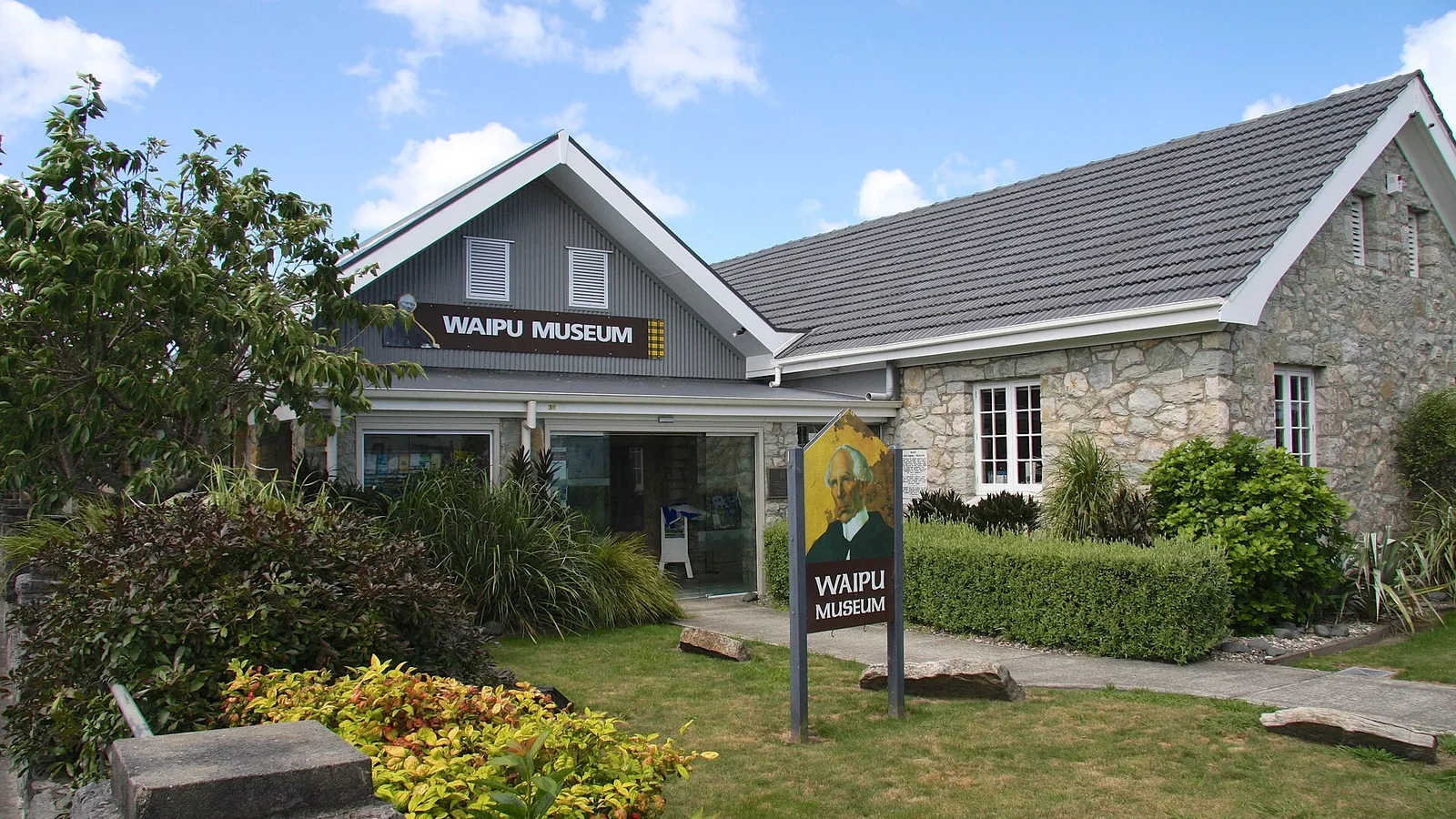
shared Not every Scottish settlement was Lowland or Presbyterian in the Otago manner. Marjory Harper records the Revd Norman McLeod's community, who left Assynt for Cape Breton in 1817 and later moved on, by way of Australia, to Waipu in the North Island. Harper dates the departure for Australia to 1849 and the settlement at Waipu to 1851; Maureen Molloy's Dictionary of New Zealand Biography entry has the first ship leaving Cape Breton in 1851, a first party reaching Auckland in September 1853 and settlement at Waipu beginning a year later. She also notes that the Otago scheme began with a proposal by George Rennie in 1842, before the Free Church existed.
Letters home
established Bueltmann's monograph (chapter 2) reads 784 letters written by and to fifty-seven Scottish settlers and their families, about 61 per cent of them in Otago and Southland. She warns that they lean towards the better educated (ministers and businessmen wrote and kept the most), that only 16 per cent of writers and recipients were women, and that letters home were no place to admit failure. When John Shennan left in 1858, his father wrote him a poem beginning "Dear John you are going to leave me forever", consoled only by the hope of meeting in heaven. Settlers in turn reported on wages, food and health: one wrote from Dunedin in 1856 that New Zealand was not so warm as Australia nor so cold as Scotland. John Thomson at West Taieri wrote in 1861 that if working people at home knew how working people ate in New Zealand they would never rest; John Dewar was struck that his employer ate with the servants; J. F. Blackwood told his father that a colonist had his own house and ground, which a working man at home could hardly hope for.
shared Bueltmann concludes that the settlers' letters made New Zealand a "better Scotland" in their own telling, while cautioning that some favourable accounts may have been written to paint a picture of success.
The crofters' cause
established Bueltmann (chapter 7) shows the Highland and Gaelic societies following the crofters' agitation of the 1880s. Invercargill Highlanders sent money to Skye crofters in 1883; in 1887 the Dunedin Gaelic Society raised £95 17s 5d for distressed crofters in the Hebrides and called for land to be taken back from the sheep walks and deer forests. The Otago Caledonian Society proposed settling Skye crofters between the Catlins River and the Mataura, and a deputation met the premier, Robert Stout, in early 1885; the land minister, John Ballance, sent a memorandum to London. Stout told the society it would have to help the newcomers itself, and one Otago paper compared crofters to the Chinese as an unprogressive people. Following Tom Brooking, Bueltmann notes the paradox that politicians who had seen Highland clearances were blind to Māori grievances over their own land.
Did You Know?
- In 1861 nearly one person in six in New Zealand had been born in Scotland.
- The first British official in New Zealand was a Scottish vine-grower with no troops and no legal powers.
- Auckland's first merchant firm was started by two Scots who met on an emigrant ship.
- Shetlanders were sent to Stewart Island in 1873 on the theory that they were used to bad weather.
- New Year's Day, not Christmas, was the usual date for Highland Games in New Zealand.
FAQ
1How many Scots emigrated to New Zealand?
About 117,000 Scottish-born people arrived between 1840 and 1939.
2What share of New Zealand settlers were Scottish?
Between a fifth and three-tenths of migrants from the United Kingdom, depending on the period. Only the English were more numerous.
3Where did Scots settle?
At first mainly in Otago and Southland. After the gold rushes of the 1860s they were spread through all provinces.
4Who was James Busby?
The first British Resident in New Zealand, appointed in 1833. He drafted the 1835 Declaration of Independence and helped draft the Treaty of Waitangi.
5Did Highlanders settle in New Zealand?
Some did, but most Scottish migrants were Lowlanders. Organised schemes brought Shetlanders in the 1870s, with poor results.
6Why is New Year a big holiday in New Zealand?
Partly, the chapter suggests, because Scottish settlers held their Highland Games and Hogmanay celebrations then.
Sources and Further Reading
Scholarly/Critical
- Tanja Bueltmann, Andrew Hinson and Graeme Morton, The Scottish Diaspora (Edinburgh University Press, 2013), chapter 14, "The Antipodes".
- Tanja Bueltmann, Scottish Ethnicity and the Making of New Zealand Society, 1850–1930 (Edinburgh University Press, 2011). ISBN 978-0-7486-4155-0. Chapters 1 (migration), 2 (letters), 3–5 (associations and Caledonian games), 6 (Burns) and 7 (homeland politics and the crofters).
- T. M. Devine, To the Ends of the Earth: Scotland's Global Diaspora, 1750–2010 (Allen Lane, 2011), chs 3–4 on shipping and migration, and the Dictionary of New Zealand Biography comparison.
- Marjory Harper, Adventurers and Exiles: The Great Scottish Exodus (Profile, 2003), for Waipu and George Rennie.
- Maureen Molloy, 'McLeod, Norman', Dictionary of New Zealand Biography (1990), Te Ara, https://teara.govt.nz/en/biographies/1m39/mcleod-norman, for the Waipu dates.
General
- Jock Phillips and Terry Hearn, Settlers: New Zealand Immigrants from England, Ireland and Scotland, 1800–1945 (Auckland University Press, 2008). Source of the immigration table; not consulted directly.
Caveats: Myths and Disputed Claims
- Disputed: when Scottish societies took off. Marjory Harper says New Zealand's Caledonian societies did not really take off until the 1890s; Bueltmann (2011) dates the first to 1862 and treats the 1860s–80s as their main period.
- Myth: New Zealand's Scots all went to Dunedin. Otago was the first centre. After the 1860s Scots were found everywhere.
- Myth: New Zealand was a main destination for Scottish emigrants. It took a tenth of them at most.
- Disputed: how "Scottish" New Zealand is. The chapter claims a disproportionate Scottish part in shaping colonial society and says in the same breath that it does not wish to overstate it.
Finished reading? Try the Fact Machine: three reels, one surprising Scottish connection →
Card 056 · Diaspora