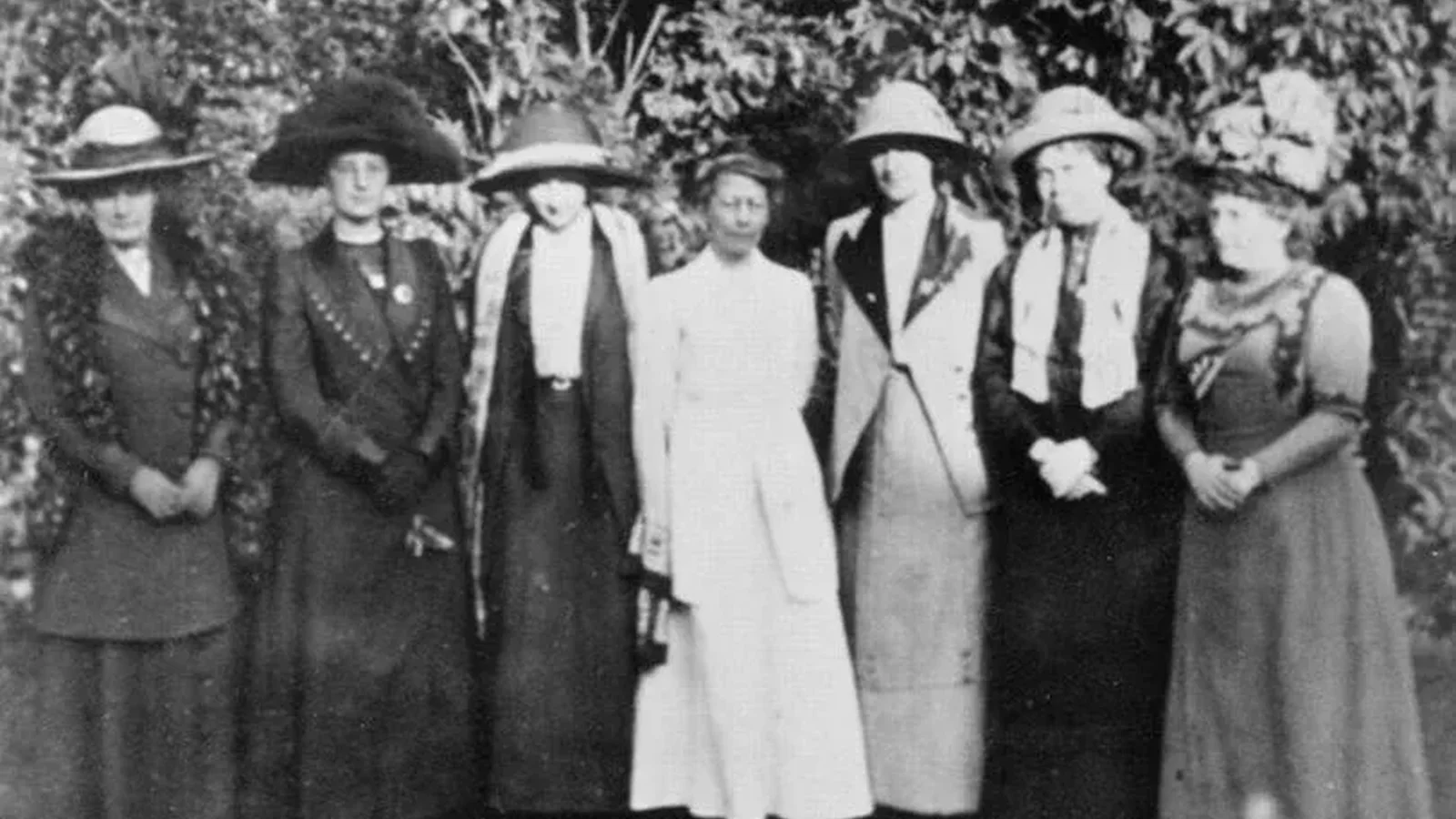

Helen Crawfurd (1877–1954)
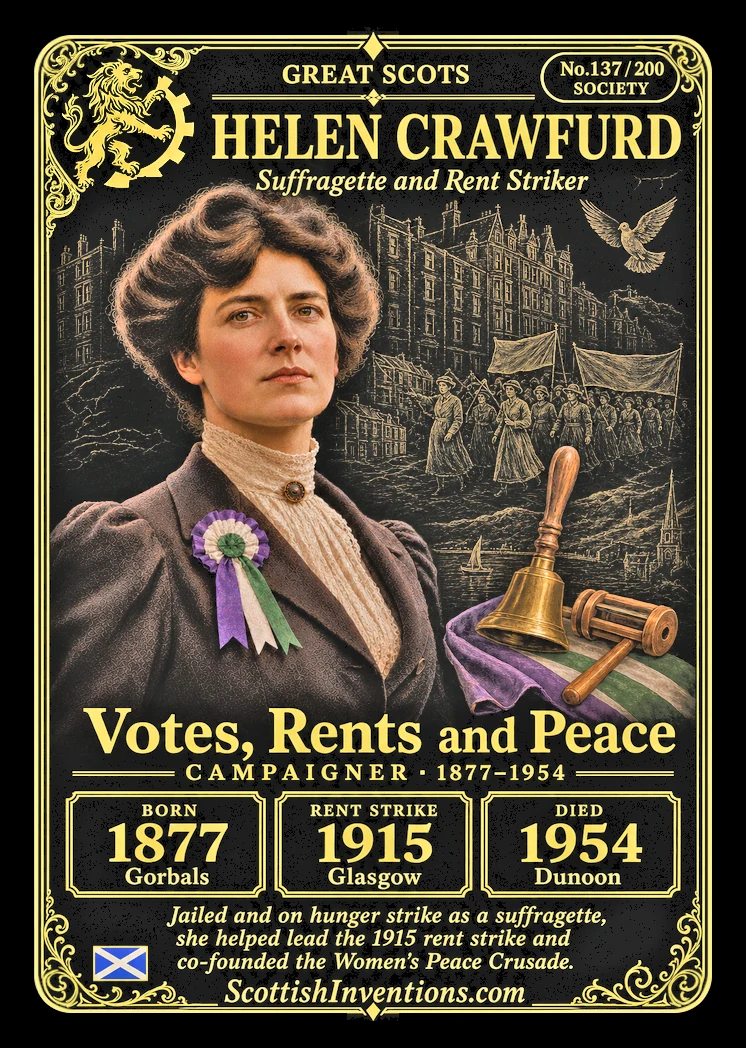
Contents
Helen Crawfurd went from a Gorbals baker's daughter and a minister's wife to suffragette, rent striker, peace campaigner and founding member of the Communist Party of Great Britain. She was at the centre of almost every radical movement in Glasgow between 1910 and 1926.
TL;DR
- established Born Helen Jack in the Gorbals in 1877, she married the evangelical minister Alexander Montgomerie Crawfurd in 1898 and joined the militant Women's Social and Political Union in 1910.
- established As a suffragette she was arrested five times, imprisoned in Holloway, Duke Street and Perth, and went on hunger strike three times; she broke with Emmeline Pankhurst when Pankhurst backed the First World War.
- established As secretary of the Glasgow Women's Housing Association she gave overall leadership to the 1915 Glasgow rent strikes, which ended in the Rent Restrictions Act of 1915.
- established In 1916 she co-founded the Women's Peace Crusade with Agnes Dollan and Mary Barbour, and in 1921 she joined the Communist Party of Great Britain, serving on its national executive.
- established In old age she became Dunoon's first woman councillor (1945–1948) and supported Scottish self-government.
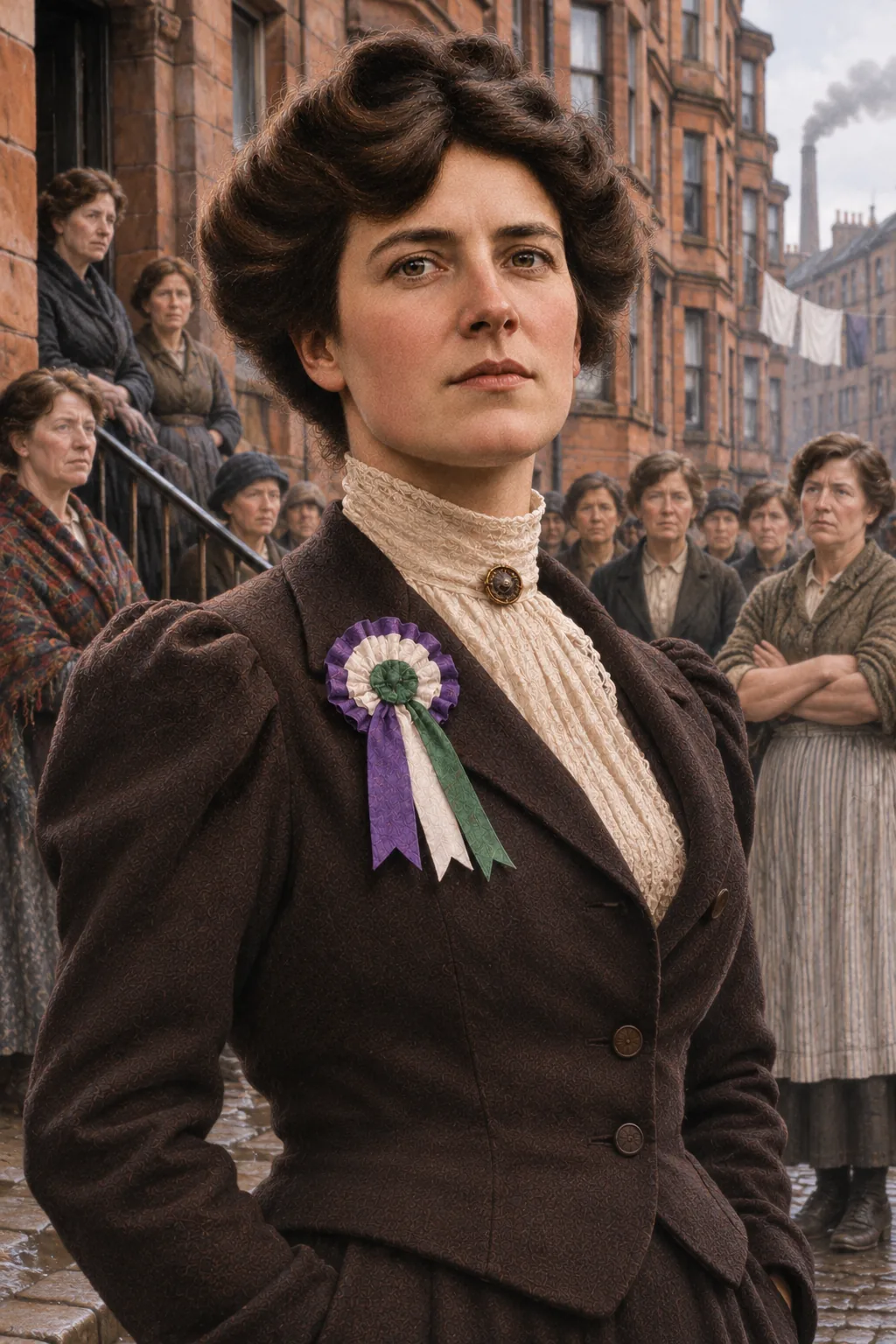
Key Facts
- Born
- 9 November 1877, Gorbals, Glasgow
- Died
- 18 April 1954, Dunoon (aged 76)
- Parents
- William Jack, master baker; Helen Kyle
- Married
- (1) Rev. Alexander Montgomerie Crawfurd (1830–1914), in 1898; (2) George Anderson (1872–1952), in 1944
- Roles
- Suffragette (WSPU); Secretary, Glasgow Women's Housing Association; Secretary, Women's Peace Crusade in Scotland; CPGB national executive
- Imprisoned
- Holloway (London), Duke Street (Glasgow) and Perth
- Elected
- Dunoon Town Council, 1945–1948, the town's first woman councillor
A Note on Claims and Evidence
Each major claim carries one of three labels. established means supported by primary records, official bodies or several independent reliable sources. shared means the core fact is sound but sources disagree on details, dates or interpretation. traditional means widely repeated but not traceable to a primary or independent source.
Crawfurd's own unpublished autobiography survives in the National Library of Scotland and the Marx Memorial Library in London, and her campaigns are recorded in the labour press and in memoirs such as William Gallacher's Revolt on the Clyde (1936). Dates of arrests, organisations and elections are established. How much credit she, rather than Mary Barbour or others, deserves for the rent strikes is shared: the strikes were a mass movement with many local leaders, and accounts differ on who led what.
Timeline
Born Helen Jack on 9 November in the Gorbals, Glasgow, fourth of seven children.
Returns to Glasgow after schooling in Ipswich and London.
Marries the Rev. Alexander Montgomerie Crawfurd, an evangelical minister nearly 50 years her senior.
Joins the Women's Social and Political Union.
Arrested five times; imprisoned in Holloway, Duke Street and Perth; three hunger strikes.
Leaves the WSPU after Emmeline Pankhurst backs the war; her husband dies.
As secretary of the Glasgow Women's Housing Association, leads the Glasgow rent strike; demonstration at the sheriff court on 17 November; Rent Restrictions Act passed.
Co-founds the Women's Peace Crusade in Scotland with Agnes Dollan and Mary Barbour.
The Women's Peace Crusade is launched nationally in Glasgow on 10 June.
Attends the Zurich congress of the Women's International League; helps John Maclean set up the Scottish Labour College.
Visits Moscow and speaks with Lenin.
Joins the Communist Party of Great Britain and its national executive; stands for Govan Ward.
Distributes food to the children of striking Fife miners for Workers' International Relief.
Retires to Dunoon.
Organises the Peace and Empire Conference in Glasgow.
Marries George Anderson.
Dunoon's first woman councillor.
Dies in Dunoon on 18 April.
Details
From the manse to the WSPU
established Helen Jack grew up in a lively, argumentative household; both her parents were active Conservatives. In 1898, aged 20, she married Alexander Montgomerie Crawfurd, a Glasgow evangelical minister born in 1830. She shared his opposition to war, but found church work oppressive and disagreed with the Bible's treatment of women. Reading women's literature led her to the suffrage cause, and in 1910 she joined the Women's Social and Political Union, the militant organisation led by Emmeline Pankhurst.
Prison and hunger strike
established Crawfurd was arrested five times. She served sentences in Holloway in London, Duke Street in Glasgow and Perth, and went on hunger strike three times, for up to eight days. Physically strong, she acted as a bodyguard for Emmeline Pankhurst. established The partnership ended in 1914, when Pankhurst suspended militancy and threw the WSPU behind the war effort. Crawfurd felt betrayed and left. After her husband died in 1914 she joined the Independent Labour Party and travelled to Ireland to meet James Connolly and Irish women revolutionaries.
The 1915 rent strike
established Wartime Glasgow filled with munitions workers, and landlords raised rents sharply. In 1915 housewives began refusing to pay the increases. In Govan, Mary Barbour organised women's committees that met in kitchens and closes, and drove off the sheriff's officers who came to evict tenants by ringing hand-bells and rattles to bring women into the streets. shared As secretary of the Glasgow Women's Housing Association, Crawfurd provided the overall leadership and was one of the main speakers at mass rallies. On 17 November 1915 thousands of women, joined by engineers and shipyard workers, marched to the sheriff court, where Crawfurd, John Maclean and William Gallacher spoke. established Within weeks Parliament passed the Rent and Mortgage Interest (War Restrictions) Act 1915, freezing rents at pre-war levels across Britain.
The Women's Peace Crusade
established Crawfurd also set up the Glasgow branch of the Women's International League for Peace and Freedom. In 1916, with Agnes Dollan and Mary Barbour, she founded the Women's Peace Crusade in Scotland and became its secretary. It was launched as a national movement in Glasgow on 10 June 1917 and campaigned for a negotiated peace at a time when anti-war speech could bring prosecution.
Communist
established In 1919 she represented the British delegation at the Women's International League congress in Zurich, and on her return helped John Maclean found the Scottish Labour College. As vice-president of the ILP's Scottish division she was invited to Moscow in 1920, where she spoke with Lenin, and on her return she urged the ILP to join the Communist International. When it refused, she joined the Communist Party of Great Britain in 1921 and was elected to its national executive. She edited a women's page in The Communist and stood unsuccessfully for Govan Ward in November 1921. Through the 1920s, as secretary of Workers' International Relief, she raised money for famine and disaster victims at home and abroad, and in 1926 distributed food to the children of striking miners in Fife.
Dunoon and self-government
established Crawfurd retired to Dunoon in 1935 but stayed active in anti-fascist campaigns, organising the large Peace and Empire Conference in Glasgow in 1938. In 1944 she married George Anderson. From 1945 to 1948 she served as Dunoon's first woman councillor, and she strongly supported Scottish self-government. At her funeral in 1954, a comrade said her life "personified all that was best in revolutionary womanhood".
Did You Know?
- Her first husband was born in 1830, 47 years before her.
- She served as a bodyguard for Emmeline Pankhurst.
- She went on hunger strike three times, for up to eight days.
- The women of the rent strike used hand-bells and rattles to summon neighbours when the sheriff's officers came.
- She met Lenin in Moscow in 1920.
- She was Dunoon's first woman councillor, at the age of 67.
- Her unpublished autobiography survives in the National Library of Scotland.
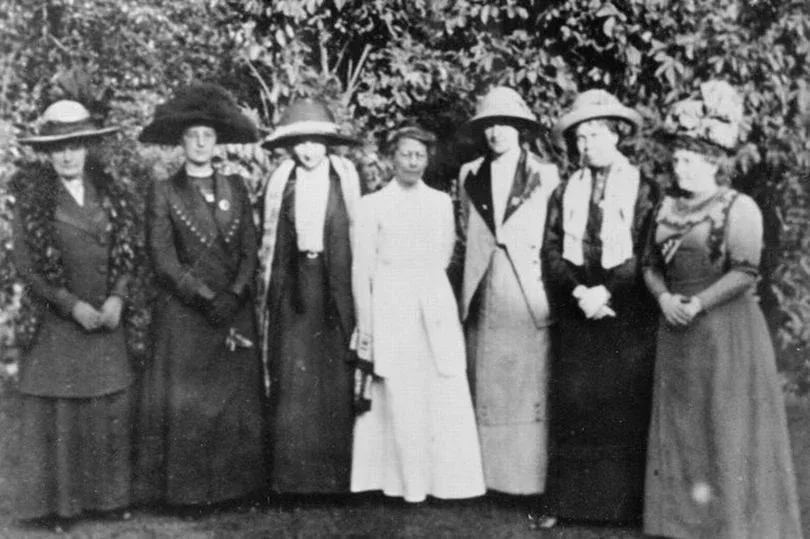
From the archive
Original documents and images from the period.
FAQ
1Who was Helen Crawfurd?
A Glasgow suffragette, rent-strike leader, peace campaigner and Communist (1877–1954).
2What did she do in the rent strikes?
As secretary of the Glasgow Women's Housing Association she gave overall leadership and spoke at the mass rallies of 1915, alongside local leaders such as Mary Barbour in Govan.
3Did the rent strikes succeed?
Yes. The government passed the Rent Restrictions Act in late 1915, freezing rents at their pre-war level.
4Was she really a suffragette?
Yes. She joined the WSPU in 1910, was arrested five times and imprisoned three times, and went on hunger strike.
5Why did she leave the WSPU?
Because Emmeline Pankhurst backed the First World War in 1914, which Crawfurd opposed.
6What was the Women's Peace Crusade?
A movement she co-founded in 1916 to campaign for a negotiated end to the war; it went national in 1917.
7Did she meet Lenin?
Yes, in Moscow in 1920.
8Was she a Communist?
Yes. She joined the Communist Party of Great Britain in 1921 and served on its national executive.
9What did she do later in life?
She campaigned against fascism, organised a large peace conference in 1938 and served on Dunoon Town Council from 1945 to 1948.
10How is she connected to Mary Barbour?
They worked together in the 1915 rent strikes and co-founded the Women's Peace Crusade with Agnes Dollan in 1916.
Sources and Further Reading
Primary/Institutional
- National Library of Scotland: Helen Crawfurd collection, including her unpublished autobiography (copy also in the Marx Memorial Library, London).
- Helen Crawfurd, "Mrs Pankhurst, whom does she represent?", Forward, 16 June 1919.
- William Gallacher, Revolt on the Clyde (1936).
Scholarly/Critical
- Elizabeth Ewan, Rose Pipes et al. (eds), The New Biographical Dictionary of Scottish Women (Edinburgh University Press, 2018), entries "Crawfurd, Helen" and "Barbour, Mary".
- Jill Liddington, The Long Road to Greenham: Feminism and Anti-Militarism in Britain since 1820.
- Anne Wiltsher, Most Dangerous Women (1985).
General
- Edward J. Cowan and Richard J. Finlay (eds), Scottish History: The Power of the Past (2002).
Caveats: Myths and Disputed Claims
- Disputed: who led the rent strike. It was a mass movement with many leaders. Mary Barbour organised Govan, Jean Ferguson Partick, and Crawfurd gave citywide leadership through the Glasgow Women's Housing Association. Crediting any one woman alone is misleading.
- Myth: the rent strike was a purely women's protest. Women led it, but the decisive November 1915 demonstration was joined by engineers and shipyard workers threatening industrial action.
Finished reading? Try the Fact Machine: three reels, one surprising Scottish connection →
Card 137 · Great Scots