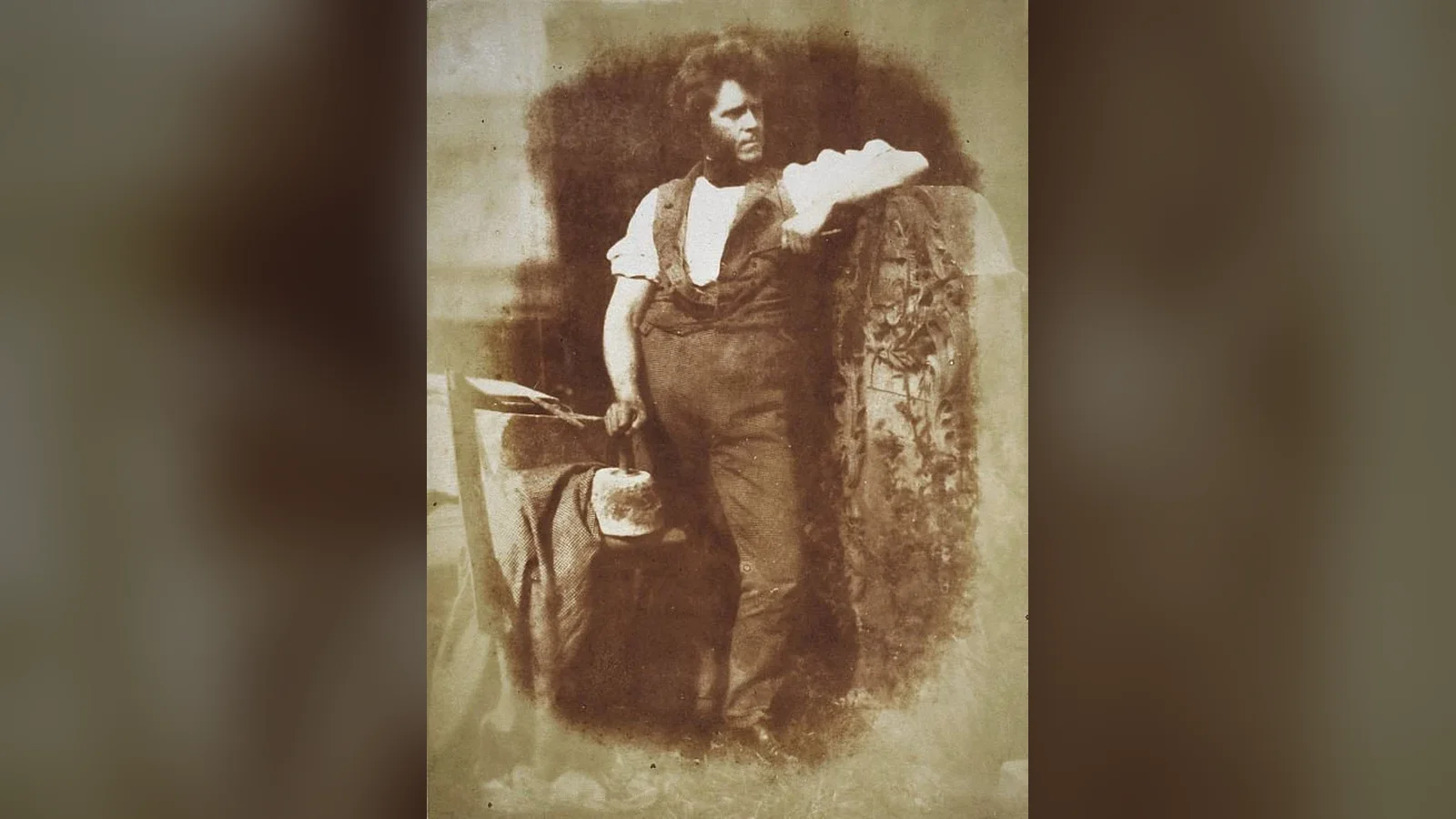

Hugh Miller (1802–1856): The Cromarty Stonemason Who Read the Old Red Sandstone
Contents
Hugh Miller spent fifteen years as a stonemason in the quarries and graveyards of Cromarty before he became one of the most widely read writers of early Victorian Britain. His fossil fishes from the Old Red Sandstone were new to science; his books The Old Red Sandstone (1841) and My Schools and Schoolmasters (1854) each sold more than 50,000 copies; and as editor of the Edinburgh newspaper the Witness he was a leading voice of the Free Church at the Disruption of 1843. He died by his own hand on Christmas Eve 1856. This account draws on Hugh Miller's Memoir: From Stonemason to Geologist (1995), the autobiography Miller wrote while still a working mason, first published in that edition by Michael Shortland with an introduction by Shortland and Harry Hanham.
TL;DR
- established Born in Cromarty on 10 October 1802, the son of a shipmaster who was lost at sea in 1807, he was raised by his mother and her two brothers, a saddler and a carpenter.
- established He walked out of school after a fight with the schoolmaster, refused college, and in February 1820 began a three-year apprenticeship as a mason and quarrier.
- established As a journeyman he worked from Gairloch in the west to Niddry near Edinburgh. In 1829 he published Poems Written in the Leisure Hours of a Journeyman Mason and the memoir printed here was written about the same time.
- established In 1834 he became an accountant at the new Cromarty branch of the Commercial Bank. In 1839 his Letter to Lord Brougham on church patronage led to the editorship of the Witness in Edinburgh.
- established His Old Red Sandstone fishes, one of them named Pterichthys milleri by Louis Agassiz, made the formation one of the best-known in geology.
- shared Shortland and Hanham argue that Miller shaped the way a whole generation thought about science and belief, though he was largely forgotten after Darwin.
Key Facts
- Born
- 10 October 1802, Cromarty
- Died
- 24 December 1856, Portobello, Edinburgh (aged 54)
- Parents
- Hugh Miller, shipmaster (lost at sea, 1807); Harriet Wright
- Trade
- Stonemason and quarrier, 1820–34
- Married
- Lydia Fraser, 1837
- Newspaper
- Editor of the Witness, Edinburgh, from 1840
- Best-known books
- Scenes and Legends of the North of Scotland (1835); The Old Red Sandstone (1841); Footprints of the Creator (1849); My Schools and Schoolmasters (1854); The Testimony of the Rocks (1857)
- Fossil named after him
- Pterichthys milleri
- Buried
- Grange Cemetery, Edinburgh
- Monument
- Hugh Miller Monument, Cromarty
A Note on Claims and Evidence
Each major claim carries one of three labels. established means supported by primary records, official bodies or several independent reliable sources. shared means the core fact is sound but sources disagree on details, dates or interpretation. traditional means widely repeated but not traceable to a primary or independent source.
The memoir in this edition, which Miller called "Four Years in the Life of a Journeyman Mason", was written around 1829–30 in a letterbook now in New College Library, Edinburgh, for the Principal of Edinburgh University, George Husband Baird. Miller later reworked it heavily into My Schools and Schoolmasters. Shortland and Hanham warn that his published accounts often improve the story. In his Chambers's Edinburgh Journal articles of 1838, for example, he implied that he had studied geology from his first day as a mason in 1820, which the evidence does not support. Where the only source is Miller's own later telling, the claim is labelled traditional.
Timeline
Born in Cromarty on 10 October.
His father's sloop is lost in a storm after leaving Peterhead.
Leaves school after a fight with the schoolmaster.
Begins a three-year apprenticeship with his uncle-by-marriage, a mason and quarrier.
Sails to Leith to sell a family property and find work; works at Niddry, near Edinburgh.
Poems Written in the Leisure Hours of a Journeyman Mason and Letters on the Herring Fishing; meets Principal Baird at Inverness.
Writes the memoir.
Appointed accountant at the Commercial Bank's new Cromarty branch.
Scenes and Legends of the North of Scotland.
Marries Lydia Fraser.
"Gropings of a Working Man in Geology" in Chambers's Edinburgh Journal.
Letter to Lord Brougham on church patronage.
Becomes editor of the Witness.
The Old Red Sandstone.
The Disruption; the Witness leads the Free Church press.
Footprints of the Creator, against the evolutionary Vestiges.
My Schools and Schoolmasters.
Dies at his home in Portobello.
The Testimony of the Rocks published.
Details
Cromarty, seamen and seers
established Miller was born in Cromarty, a small town of about 2,000 people on the Black Isle that had prospered as a herring-curing station and was beginning to decline. His father, master and owner of a small trading sloop, sailed for the western Highlands for kelp in late 1807 and was never heard of again after a storm off Peterhead; his grandfather and two great-uncles had been lost at sea before him. established His mother, Harriet Wright, came of a long line of Highlanders. Her great-grandfather was the renowned seer Donald Roy, and her stories of fairies and second sight later filled Scenes and Legends of the North of Scotland. shared Shortland and Hanham read the memoir as the book of his father's world and the Scenes and Legends as the book of his mother's.
Uncle James and Uncle Sandy
established The boy was brought up largely by his mother's brothers, James and Alexander Wright, a saddler and a carpenter who lived unmarried with their aged father. They were "Whigs of the old school", men who would have fought for the Covenant. James was a teller of humorous stories who read like a historian. Alexander, Uncle Sandy, had served seven years on a man-of-war: he had sailed with Nelson, witnessed the mutiny at the Nore, and fought at Camperdown. As one of the seamen drafted from Lord Keith's fleet to make up the army's shortage of artillerymen in Egypt in 1801, he took part in the landing, fought in the battle of 13 March and in the battle that cost Sir Ralph Abercromby his life, and served at the siege of Alexandria.
A school education that ended in a fight
established His uncles wanted him educated for a learned profession, but he found the Latin grammar the dullest book he had ever seen and spent his school hours reading stories and writing verse. He much preferred Blind Harry's Wallace and the voyages of Cook and Anson. In the last of several clashes with the schoolmaster, the master called him up to be punished and, instead of using the tawse in the usual way, tried to throw him down. Miller was a good wrestler and held out for several minutes before he was floored and beaten. He took his cap from the pin and marched out of the school, and that was the end of his schooling. shared He refused the chance of college in Aberdeen. Shortland and Hanham note that his model, as far as he had one, was the self-taught Burns.
The apprentice mason
established Deciding that only a trade would make him independent, he agreed to serve three years with the husband of one of his mother's sisters, a mason and quarrier who built village and country houses. He began work in a Cromarty quarry in February 1820. traditional His master called him the most awkward of all his apprentices, and his first six months of work were, in his words, a series of disasters. Within three years he was a competent mason. established As a journeyman he worked as far west as Gairloch and as far south as Niddry, near Edinburgh, where he went in May 1824. He saw the worst of the bothy system, eight or ten labourers to a miserable outhouse, and Niddry workmen who spent a fortnight's wages in a weekend in Edinburgh. Back in the north he cut inscriptions on tombstones, and hoped for more such work in the churchyards of Inverness.
From poet to prose writer
established In 1829 he published, anonymously in Inverness, Poems Written in the Leisure Hours of a Journeyman Mason, and articles that became Letters on the Herring Fishing. That summer the Principal of Edinburgh University, George Husband Baird, asked to meet the mason-poet, and the memoir was written partly for him. shared Miller refused Baird's offers of help, as he had refused his uncles'. Shortland and Hanham see in this a fear of being taken over, and a "diffidence" that kept him a mechanic longer than he needed to be.
established In 1834 a local merchant arranged for him to become accountant of the new Cromarty branch of the Commercial Bank, at £60 a year. He married Lydia Fraser in 1837, and in 1835 he published Scenes and Legends of the North of Scotland.
The Old Red Sandstone
established Miller had collected fossils for years in the rocks of the Cromarty shore. In the 1830s he sent boxes of specimens to Roderick Murchison and to Louis Agassiz in Switzerland, who was writing the great study of fossil fishes. Almost all were new to science, and one of them, which Agassiz named Pterichthys milleri, became famous for its beauty and importance. established Miller's articles in the Witness, collected as The Old Red Sandstone (1841), turned one of the least-known formations into one of the best-known. shared Shortland and Hanham warn that he later improved the story of his own discovery of geology, dating it to his first day as a mason in one account and, in My Schools and Schoolmasters, to a great storm late in 1830 that blew down thousands of trees on the hill of Cromarty and laid bare the rocks beneath.
established Land of Mountain and Flood (2007), the Scottish Natural Heritage guide to Scotland's geology, adds the working method. Miller learned the anatomy of his fossil fishes by dissecting modern fish he caught locally, and did most of his work far from the scientists studying the same rocks. In 1844 he visited Eigg aboard the yacht Betsey and found fossils in its Jurassic rocks, which he described in The Cruise of the Betsey, published in 1858 after his death. His winged fish is now placed in the genus Pterichthyodes: Pterichthyodes milleri is common at Achanarras Quarry in Caithness, in fish beds about 385 million years old; periodic mass deaths explain why the fossils lie in distinct beds rather than through the whole rock.
The Witness and the Disruption
established In 1839 Miller wrote a Letter from One of the Scotch People to Lord Brougham, attacking the system of church patronage that let a patron force a minister on an unwilling congregation. It made his name, and the evangelical party brought him to Edinburgh to edit the Witness, which appeared twice weekly from 1840. It quickly became one of the leading papers of Scotland and by far the most influential on the Free Church side at the Disruption of 1843. shared His relations with the Free Church leaders were uneasy. He wrote all the leading articles himself, called himself more a Protestant than a politician, and disconcerted Free Churchmen who hoped for an alliance with the Whigs and Liberals.
Science and faith
established When the anonymous Vestiges of the Natural History of Creation (1844) argued for the development of species, Miller replied with Footprints of the Creator (1849), drawing on an Old Red Sandstone fish from Stromness. His last work, The Testimony of the Rocks, published after his death, tried to reconcile Genesis with geology. shared Dickens called him a delightful writer; Carlyle judged The Testimony of the Rocks full of grave and manly talent. By the end of the century The Old Red Sandstone, First Impressions of England, Footprints of the Creator and My Schools and Schoolmasters had each sold more than 50,000 copies in Britain.
Death
established On 24 December 1856, at his home in Portobello, Miller died of a gunshot wound from a pistol he kept by his bed. The Witness first called it an accident. A post-mortem examination found that the act was suicidal and committed under the impulse of insanity, brought on, his friends believed, by overwork. shared Shortland and Hanham note that the verdict allowed a Christian funeral and turned scandal into sympathy. Several thousand Edinburgh people followed his coffin to the Grange Cemetery, and his admirers raised a tall column with his statue at Cromarty, looking out over the bay.
Did You Know?
- His father and grandfather were both lost at sea.
- His mother was descended from the Highland seer Donald Roy.
- His Uncle Sandy fought in Egypt in 1801, at the battle where Sir Ralph Abercromby was mortally wounded.
- He ended his schooling by walking out after a fight with the schoolmaster.
- He cut tombstone inscriptions before he was known as a writer.
- A fossil fish, Pterichthys milleri, is named after him.
- My Schools and Schoolmasters was long given to Scottish pupils as a school prize.
- Miller's winged fish is still common at Achanarras Quarry in Caithness, under its modern name Pterichthyodes milleri.
FAQ
1Who was Hugh Miller?
A Cromarty stonemason who became a geologist, writer and the editor of the Witness newspaper.
2What did he discover?
Fossil fishes of the Old Red Sandstone, many new to science, including the one named Pterichthys milleri.
3What is his memoir?
An autobiography written about 1829–30, while he was still a mason, first published in 1995 and later reworked as My Schools and Schoolmasters.
4Was he involved in the Disruption?
Yes. As editor of the Witness he was the leading Free Church journalist of 1843.
5Did he accept evolution?
No. He wrote Footprints of the Creator against the Vestiges and tried to reconcile geology with Genesis.
6How did he die?
By his own hand, at Portobello on 24 December 1856.
Sources and Further Reading
Scholarly/Critical
- Alan McKirdy, John Gordon and Roger Crofts, Land of Mountain and Flood: The Geology and Landforms of Scotland (Birlinn/Scottish Natural Heritage, 2007), pp. 131, 148, 267–268.
Primary
- Michael Shortland (ed.), Hugh Miller's Memoir: From Stonemason to Geologist, with an introduction by Harry Hanham and Michael Shortland (Edinburgh University Press, 1995).
- Hugh Miller, My Schools and Schoolmasters; or, The Story of My Education (1854).
- Hugh Miller, The Old Red Sandstone (1841).
Biography
- Peter Bayne, The Life and Letters of Hugh Miller (2 vols, 1871).
Caveats: Myths and Disputed Claims
- Myth: he taught himself geology from his first day in the quarry. His 1838 articles say so; Shortland and Hanham show the story was improved in the telling.
- Traditional: the awkward apprentice. His master's verdict and his near-escapes come from Miller's own account.
- Disputed: the circumstances of his death. The Witness first reported an accident; the post-mortem concluded suicide under the impulse of insanity.
Finished reading? Try the Fact Machine: three reels, one surprising Scottish connection →
A Great Scots story