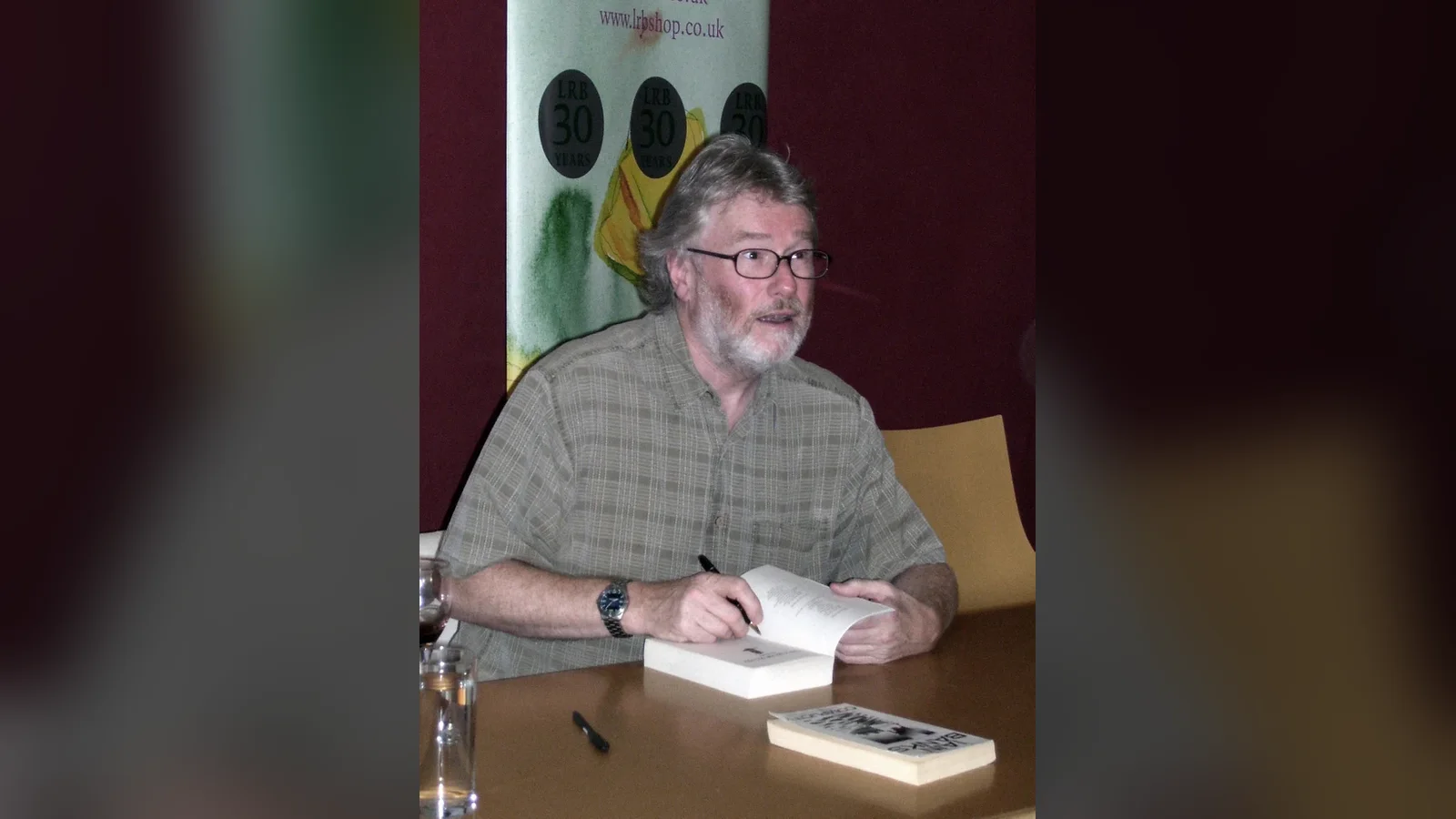

Iain Banks (1954–2013)
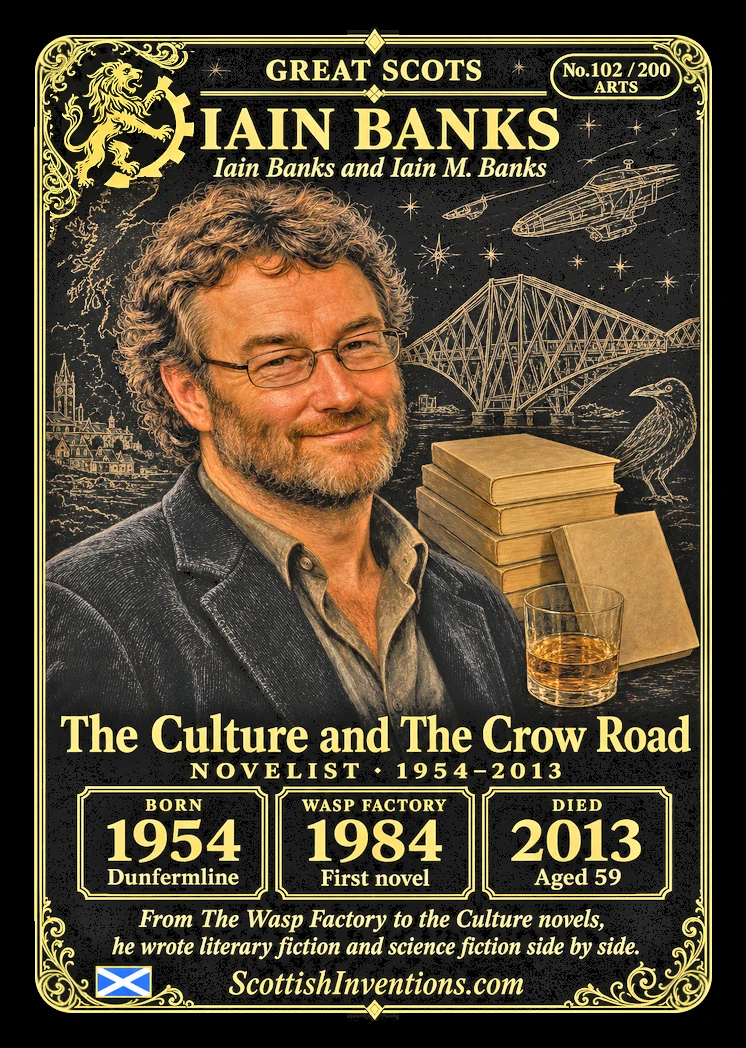
Contents
Iain Banks wrote dark, funny literary novels as Iain Banks and vast, playful space operas as Iain M. Banks, and was a bestseller under both names. The Wasp Factory (1984) made him notorious, The Crow Road (1992) made him loved, and his "Culture" novels redefined modern science fiction.
TL;DR
- established Born in Dunfermline in 1954 and raised in North Queensferry and Gourock, he studied at the University of Stirling.
- established His first novel, The Wasp Factory (1984), shocked critics and became a cult classic.
- established From 1987 he published science fiction as Iain M. Banks, beginning the "Culture" series with Consider Phlebas.
- established The Bridge (1986), The Crow Road (1992) and Complicity (1993) are among his best-known literary novels; The Crow Road was adapted for BBC television in 1996.
- established He announced in April 2013 that he had terminal cancer and died on 9 June 2013, aged 59, shortly before his last novel, The Quarry, was published.
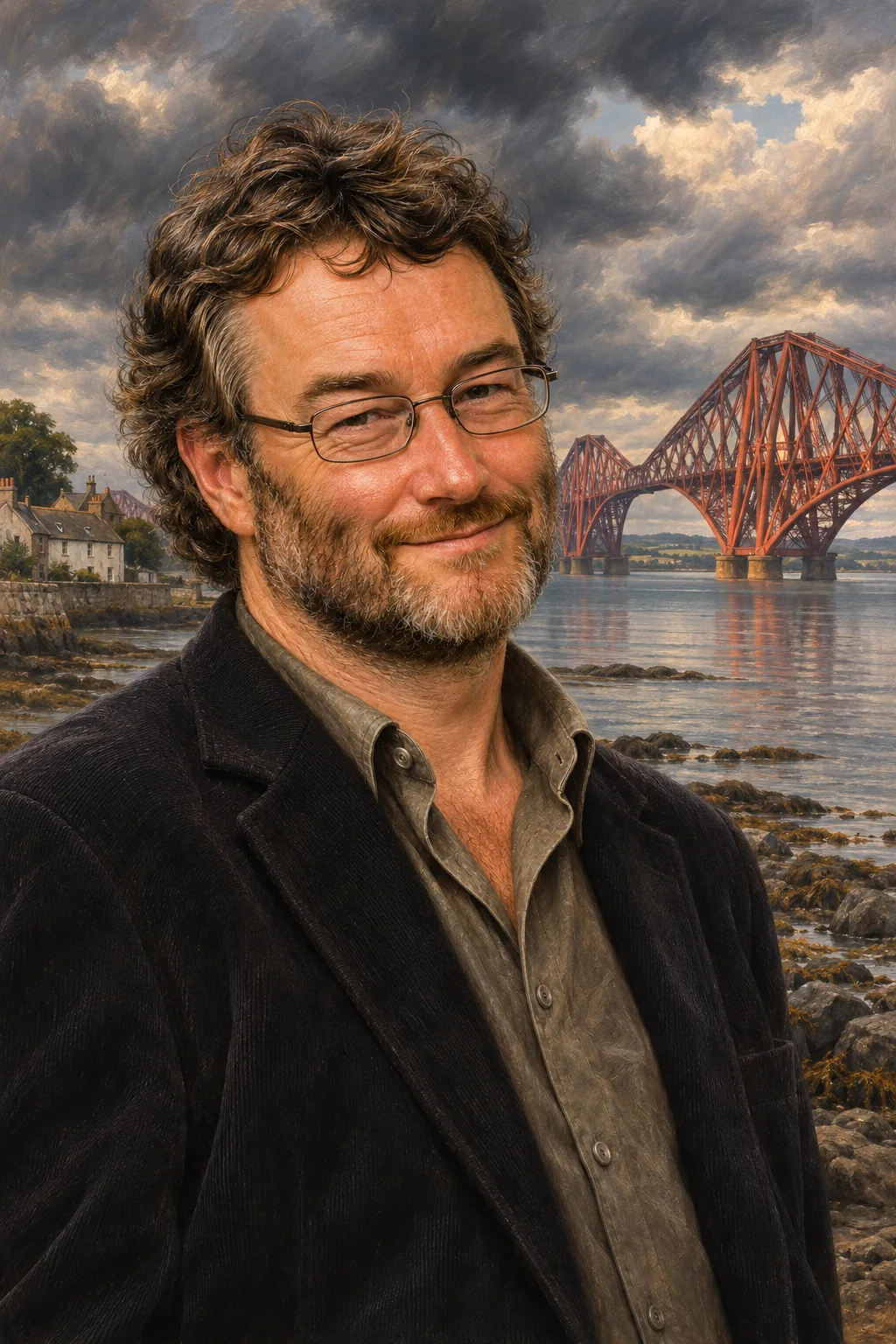
Key Facts
- Born
- 16 February 1954, Dunfermline, Fife
- Died
- 9 June 2013, at home (aged 59)
- Education
- Gourock and Greenock schools; University of Stirling (English, philosophy, psychology)
- Pen names
- Iain Banks (mainstream fiction); Iain M. Banks (science fiction)
- First novel
- The Wasp Factory (1984)
- Culture series
- Ten novels and a story collection, from Consider Phlebas (1987) to The Hydrogen Sonata (2012)
- Other works
- The Bridge, Espedair Street, The Crow Road, Complicity, Whit, Raw Spirit
- Last novel
- The Quarry (2013)
A Note on Claims and Evidence
Each major claim carries one of three labels. established means supported by primary records, official bodies or several independent reliable sources. shared means the core fact is sound but sources disagree on details, dates or interpretation. traditional means widely repeated but not traceable to a primary or independent source.
Banks's life and books are well documented through his own interviews and publishers' records. Literary verdicts are labelled shared. The Edinburgh History of Scottish Literature and The Oxford Handbook of Modern Scottish History both discuss The Bridge as a key Scottish novel of the 1980s, and these are cited below.
Timeline
Born in Dunfermline on 16 February; grows up in North Queensferry, beside the Forth Bridge.
Family moves to Gourock.
Studies at the University of Stirling.
Works in jobs including technician and costing clerk in London, writing science fiction in his spare time.
The Wasp Factory published.
The Bridge.
Consider Phlebas, the first Culture novel, as Iain M. Banks; Espedair Street.
The Crow Road.
Complicity.
The Crow Road adapted by the BBC.
Raw Spirit, a book about whisky; cuts up his passport in protest at the Iraq war.
The Hydrogen Sonata, the last Culture novel.
Announces he has terminal cancer.
Dies at home; The Quarry published later that month.
Details
Fife and the Forth
established Iain Banks was born in Dunfermline in 1954, the only child of a mother who was a professional ice skater and a father who worked for the Admiralty. He grew up in North Queensferry, in the shadow of the Forth Bridge, and from the age of nine in Gourock on the Clyde. He studied English, philosophy and psychology at the University of Stirling and wrote from an early age.
The Wasp Factory
established After years of rejected science-fiction manuscripts, Banks broke through with The Wasp Factory (1984), narrated by Frank, a teenager on a remote Scottish island who carries out disturbing rituals. Some reviewers were appalled, and the paperback famously reprinted their outraged comments alongside the praise. shared It became a cult classic and is regularly listed among the best novels of the twentieth century in readers' polls.
The Bridge
established The Bridge (1986) follows a man in a coma who imagines himself living in a city built on an endless bridge, modelled on the Forth Bridge of his childhood. The Oxford Handbook of Modern Scottish History reads it as part of a wave of 1980s Scottish fiction that used fantasy to explore a country unable to control its own history. The Edinburgh History of Scottish Literature calls it outstanding and notes that it openly acknowledged the influence of Alasdair Gray's Lanark, with its mixture of science fiction and psychology. shared Banks often said it was his own favourite.
Iain M. Banks and the Culture
established From 1987, with Consider Phlebas, he published science fiction as Iain M. Banks, adding his middle initial. The Culture novels describe a vast, post-scarcity civilisation run by benevolent artificial intelligences called Minds, which live in starships with whimsical names. Books include The Player of Games (1988), Use of Weapons (1990), Excession (1996) and Look to Windward (2000). shared The series is widely credited with reviving British "space opera" and with offering a rare, serious vision of a left-leaning utopia.
The Crow Road and the family novel
established The Crow Road (1992), set in Argyll and Glasgow, begins with one of the most quoted first lines in modern Scottish fiction, about the day a grandmother exploded. It combines a family mystery with comedy and grief. The Edinburgh History of Scottish Literature notes how this and Whit (1995) move freely between city and countryside. The 1996 BBC adaptation made it one of his best-loved books. Other novels include Espedair Street (1987), about a burnt-out rock star, and the thriller Complicity (1993), filmed in 2000.
Whisky and politics
established In Raw Spirit (2003) he toured Scotland's distilleries, mixing whisky tasting with politics and motoring. A committed socialist and supporter of Scottish independence, he cut up his passport and sent it to Downing Street in protest at the 2003 invasion of Iraq.
Last months
established In April 2013 Banks announced that he had late-stage gall bladder cancer and was unlikely to live more than a year. He married his partner, Adele Hartley, soon afterwards. He died on 9 June 2013, aged 59. His last novel, The Quarry, about a man dying of cancer, was published later that month. established An asteroid, 5099 Iainbanks, is named after him, and SpaceX named its rocket-landing drone ships after Culture starships.
Did You Know?
- He grew up beside the Forth Bridge, which inspired The Bridge.
- He wrote science fiction for years before his first novel was accepted.
- The Wasp Factory paperback printed its worst reviews as well as its best.
- His middle initial "M." marked his science fiction.
- He cut up his passport in protest at the Iraq war.
- An asteroid is named after him.
- SpaceX's drone ships are named after Culture starships.
FAQ
1Who was Iain Banks?
A Scottish novelist (1954–2013) who wrote literary fiction as Iain Banks and science fiction as Iain M. Banks.
2What is his most famous book?
The Wasp Factory and The Crow Road are the best known of his literary novels; Consider Phlebas and The Player of Games of his science fiction.
3What is the Culture?
A utopian galactic civilisation run by artificial intelligences, the setting of ten of his novels.
4Why two names?
He used Iain M. Banks to distinguish his science fiction from his other novels.
5Where was he from?
Dunfermline, North Queensferry and Gourock.
6Was The Crow Road televised?
Yes, by the BBC in 1996.
7What did he write about whisky?
Raw Spirit (2003), a tour of Scotland's distilleries.
8How did he die?
Of cancer, in June 2013, aged 59.
9What was his last book?
The Quarry (2013).
10Was he political?
Yes, he was a socialist and supported Scottish independence.
Sources and Further Reading
Primary/Institutional
- Iain Banks, The Wasp Factory (1984), The Bridge (1986), The Crow Road (1992), Raw Spirit (2003).
- Iain M. Banks, Consider Phlebas (1987) and the Culture series.
Scholarly/Critical
- The Edinburgh History of Scottish Literature, vol. 3: Modern Transformations: New Identities (from 1918) (2007), chapters by Douglas Gifford and others.
- T. M. Devine and Jenny Wormald (eds), The Oxford Handbook of Modern Scottish History (2012), chapter on Scottish literature.
- Martyn Colebrook and Katharine Cox (eds), The Transgressive Iain Banks (2013).
- Simone Caroti, The Culture Series of Iain M. Banks: A Critical Introduction (2015).
Caveats: Myths and Disputed Claims
- Caution: "Iain M. Banks" as a separate author. The same man wrote both; the initial was a marketing device.
- Caution: polls. Rankings of The Wasp Factory in "best books" lists come from readers' polls, not critical consensus.
Finished reading? Try the Fact Machine: three reels, one surprising Scottish connection →
Card 102 · Great Scots