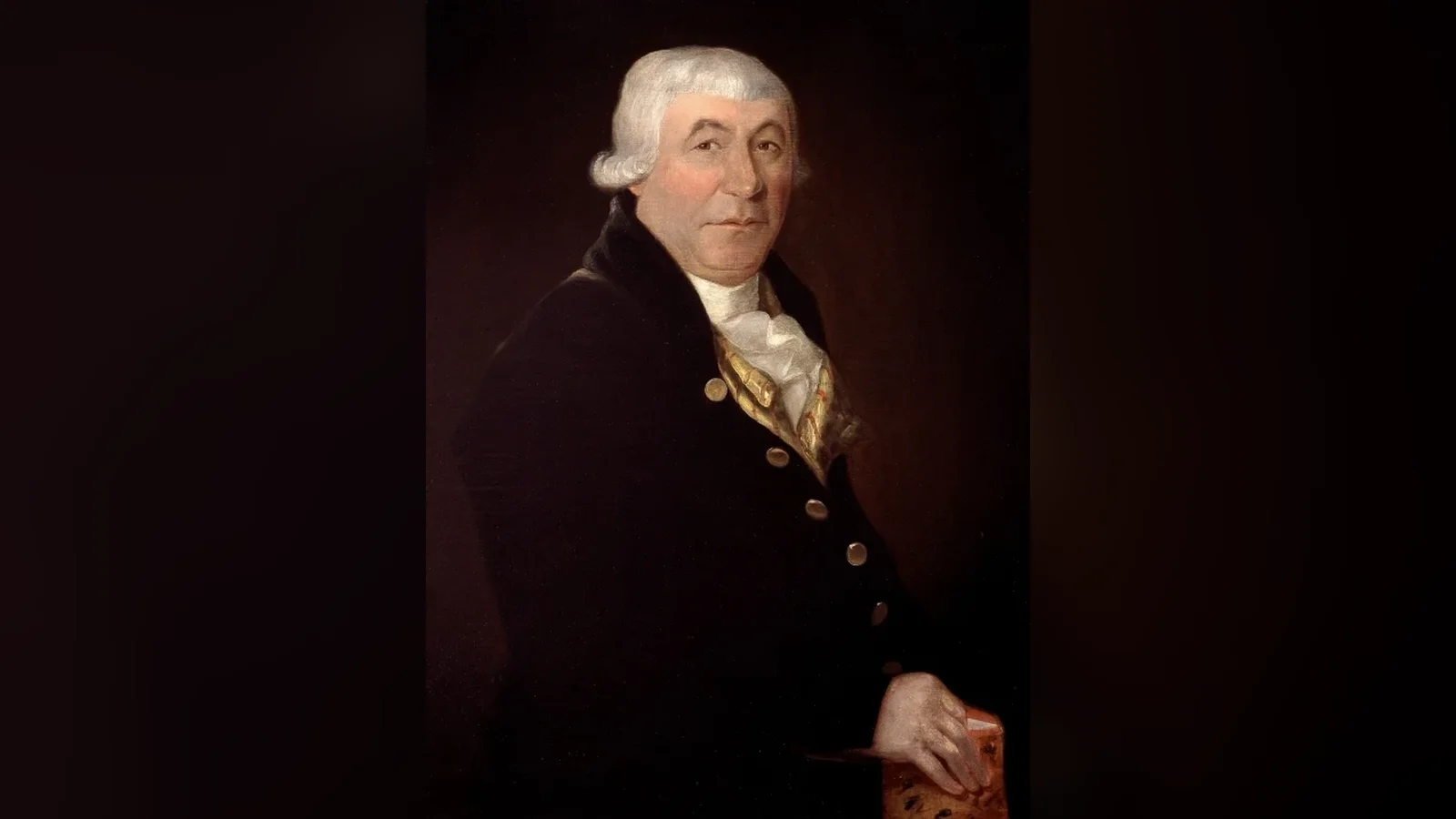

James McGill (1744–1813): The Glasgow Fur Trader Who Left Montreal a University
Contents
James McGill was born in Glasgow, the son and grandson of hammermen, and studied at the city's university without taking a degree. He went to Canada in his early twenties and spent his first winter trading furs on Lake Michigan. He built a fortune in the Montreal fur and general trade. He became a magistrate, an assemblyman, an executive councillor and, in 1813, the commander of the city's militia. When he died he left his country estate of Burnside and £10,000 to found a college. That bequest is now McGill University. The main source is Stanley Brice Frost's James McGill of Montreal (1995), the first full life, which is built on McGill's business papers, almanacs and letters.
TL;DR
- established McGill was born in Glasgow on 6 October 1744 into a family of the Incorporated Guild of Hammermen. His father was deacon of the guild in 1755–57 and built tenements in Stockwell Street.
- established He studied at the University of Glasgow but left without a degree. By 1766, aged 22, he was in Montreal on his way to the fur country, as a factor for a fellow Scot, William Grant.
- established He became a leading Montreal merchant (Todd, McGill and Co.), a magistrate from 1776, a member of the first Parliament of Lower Canada (1792–96) and an executive councillor.
- established He owned slaves. His accounts record payment for four slaves, presumably Indigenous, bought for Britain's Indigenous allies, and in 1788 he bought a Black woman named Sarah, aged about 25, for £56.
- established His will left Burnside (about 46 acres) and £10,000 to the Royal Institution for the Advancement of Learning, on condition that a university or college be set up on the land within ten years of his death.
Key Facts
- Born
- 6 October 1744, Glasgow
- Died
- 19 December 1813, Montreal
- Family
- Son of James McGill, hammerman and builder, and Margaret Gibson; brothers John and Andrew
- Education
- Glasgow Grammar School; University of Glasgow (did not graduate)
- Trade
- Fur trader from 1766; partner in Todd, McGill and Co.; later James and Andrew McGill and Co.
- Offices
- Justice of the peace (1776); member for Montreal in the first Legislative Assembly of Lower Canada (1792–96); Executive Council; acting brigadier general of the Montreal militia (1813)
- Married
- Charlotte Guillimin, widow Desrivières, in 1776
- Bequest
- Burnside estate and £10,000 for a university or college
- Legacy
- McGill College, which became McGill University
A Note on Claims and Evidence
Each major claim carries one of three labels. established means supported by primary records, official bodies or several independent reliable sources. shared means the core fact is sound but sources disagree on details, dates or interpretation. traditional means widely repeated but not traceable to a primary or independent source.
- established is used for facts in documents: Glasgow civic and guild records, the university matriculation album, McGill's day-books and accounts, his will, and the newspapers of 1813.
- shared marks Frost's interpretation, for example his reading of why McGill wrote the bequest the way he did.
- traditional marks the story that McGill spent his first years in America in the Carolinas, for which Frost found no supporting evidence.
Very little was known about McGill for a century after his death. In 1870 Principal William Dawson could give only the bare outline of his life. Most of what follows rests on papers found or published from the late 1920s onwards: the Askin correspondence, three almanacs with McGill's own notes, and a financial day-book bought from a farmer.
Timeline
His grandfather, James McGill, marries Janet Craig and joins the Glasgow Hammermen.
His father, James McGill, is born. He joins the guild in 1741 and marries Margaret Gibson in 1742.
James McGill is born in Glasgow.
His father is deacon of the Hammermen.
He attends Glasgow Grammar School and then the University of Glasgow.
He passes through Montreal on his way to Michilimackinac as a factor for William Grant, and winters at Green Bay on Lake Michigan.
With Isaac Todd he leads a canoe brigade to the Great Lakes; the trader Peter Pond travels with them.
American forces occupy Montreal; McGill stays loyal to the British government.
He is appointed to the Commission of the Peace and marries Charlotte Desrivières.
He joins the new Beaver Club, whose members had wintered in the fur country. His medal bears the date 1766.
He buys an enslaved woman, Sarah.
He is elected to the first Legislative Assembly of Lower Canada and named an alternate member of the Executive Council. With John Richardson and others he tries and fails to found the Canada Banking Company.
He outfits the young Scottish schoolmaster John Strachan and sends him upriver to Kingston.
Strachan marries Ann Wood, widow of McGill's brother Andrew.
He is acting brigadier general in command of Montreal's militia as the American armies advance.
He dies in Montreal and is buried with military honours.
The deadline in his will for founding the college.
Burnside passes to McGill College, after his stepsons, François and Guy Desrivières, fought the will as far as the Privy Council.
Details
A Glasgow hammerman's son
established McGill came from a Glasgow craft family, which Frost says probably originated in Galloway. His grandfather joined the Incorporated Guild of Hammermen (the metalworkers) on 11 September 1716. His father joined in 1741, was elected deacon in 1755, and is recorded doing ironwork on city property. From 1749 the father bought land in Stockwell Street and in the early 1760s built tenements there, living in one and letting the rest. The university's matriculation album describes him as a mercator, a merchant.
established James went to the Grammar School and then the University of Glasgow, but left without graduating. His brother Andrew also went to college. Frost argues that McGill's later view of a college, practical, secular and open, came from this Glasgow education. He wanted a working institution like Glasgow, not a copy of Oxford or Cambridge.
traditional One tradition says that James and his brother John went first to the tobacco colonies of the Carolinas, and that he sailed from Charleston to New York before heading north. Frost thinks some of the six years between leaving university and reaching Montreal were probably spent in the south, but he states that no supporting evidence has been found.
The fur trader
established McGill is documented passing through Montreal in 1766 on his way to Michilimackinac, where Lakes Huron, Michigan and Superior meet. He went as a factor for William Grant but, by agreement, also traded a little on his own account. He pushed on another two hundred miles to winter at Green Bay in what is now Wisconsin. Surviving a winter in the wilderness was the fur trade's test of a man, and when the Beaver Club was founded in 1785 that was its qualification. McGill kept his gold membership medal, struck with his year, 1766.
established He was part of the Scottish wave into the Canadian fur trade after the conquest of New France, alongside the Grants, McGillivrays, McTavishes and Frobishers. His partner Isaac Todd was an Irish merchant already settled in Montreal. In 1787 a committee of Montreal merchants that included McGill reported to the Executive Council that their outlay in the Indigenous country stood at about £300,000. Later he moved into general trade, export to Britain and land: in 1801 alone he acquired 10,000 acres in Hunterstown Township and 32,400 acres in Stanbridge Township.
Slavery
established Frost does not hide this. McGill's accounts show that the Indian Department repaid him for a payment to Jacques Lefrenier for four slaves, presumably Indigenous, bought to give to allied nations who had lost people fighting on the British side. The transaction fulfilled a promise made by the local British commander. In 1788 McGill bought from Jean Cavilhe a Black woman named Sarah, aged about 25, as a household servant, for £56. Frost's verdict is that McGill was a man of his century and not a reformer, and that whatever her treatment, Sarah was bought and owned as a slave. Slavery was not formally illegal in the province at the time.
Becoming a Montrealer
established In 1776 McGill married Charlotte Guillimin, the Catholic widow of the fur trader Joseph-Amable Trottier dit Desrivières, who had lost two small daughters and was raising two sons, François and Guy. Since a Catholic and a Presbyterian could not marry in her church, they were married by the French-speaking Swiss Protestant minister David Delisle. McGill brought up the boys as his own.
established He kept a pew at Christ Church, the Anglican church, and gave ten guineas to the Scottish merchants' St Gabriel Street Presbyterian Church, founded in 1786. Frost finds no sign of personal religious conviction, and notes that the will contains no religious sentiment at all. What McGill did show was tolerance across the churches at a time when that was rare.
established He was executor and guardian of the eight orphaned children of his friend John Porteous, and served for many years as Montreal's commissioner for foundlings and the insane. In 1797 he led the Protestant community's purchase of a new cemetery and moved Porteous's remains there.
Magistrate, member and colonel
established McGill was appointed a justice of the peace in 1776. He signed petition after petition for English schools in Montreal, for a legislative assembly and for a bank. In 1792 he was elected to the first Parliament of Lower Canada and named to the governor's Executive Council. Frost stresses that, unlike John Richardson, he avoided anti-Canadien partisanship and came to respect French civil law.
established In the autumn of 1813, as the American armies of Wade Hampton and James Wilkinson closed on Montreal from the south and the west, McGill was made acting brigadier general in command of all the city's militia. Hampton was turned back on the Châteauguay River and Wilkinson at Crysler's Farm, and the attack never came.
The bequest
established The college idea was older than McGill's will. In 1790 Simon Sanguinet left his seigneury of La Salle to a future university, but his brother overturned the will in 1792. The same year Isaac Ogden drafted a charter for a "liberal College" that would bar no one on grounds of religion. The final push came from John Strachan. McGill had outfitted the young Scottish schoolmaster in 1799, and Strachan married McGill's widowed sister-in-law in 1807. Strachan later wrote that the two men talked about fur traders who had died rich in Lower Canada and left no memorial behind them, and that he had urged the need for a university.
established The will left Burnside, his summer estate of about 46 acres at the foot of Mount Royal, to the Royal Institution for the Advancement of Learning. The condition was that a university or college be set up there within ten years of his death. A second bequest added £10,000. If a university were founded, one of its colleges was to bear his name; if only one college resulted, it was to be called McGill College. He also left £200 each to the Protestant poor of Montreal, the Catholic poor, the Grey Nuns, the Hôtel-Dieu, the Glasgow Infirmary and the Glasgow Asylum.
shared Frost reads the bequest as a merchant's move rather than an idealist's. The land and money came to about £15,000, roughly an eighth of the estate. That was not enough to fund a university, but the ten-year limit was meant to force a slow government to act. The will says nothing about religion, language or subjects, which left the trustees free.
established The founding was slow. His stepsons, François and Guy Desrivières, fought the will through the courts as far as the Privy Council. Burnside passed to the college only in 1829, and the farmhouse became the principal's residence. In the 1850s Montreal merchants led by James Ferrier, Peter McGill (no relation), Hew Ramsay and Charles Dewey Day revived the struggling college. McGill's grave now stands outside the Arts Building, on the old Burnside land.
Did You Know?
- established His tombstone calls him "a native of Glasgow, North Britain" but gets two facts wrong. It names the 4th rather than the 1st Battalion of militia, and gives his 69th rather than his 70th year.
- established A militiaman in the firing party at his funeral wrote in his diary that the day was one of "Frost, keen, bitter."
- established Childless, McGill offered land in Upper Canada to James Cartwright, son of his friend Richard Cartwright, if he would take the name McGill and bear the McGill arms. Cartwright did not take up the offer.
- established His step-grandson was baptised James McGill Guy Desrivières but grew up a Canadien and never used his first two names.
- established Old people remembered that McGill liked to sing voyageur songs and to read.
FAQ
1Was James McGill Scottish?
Yes. He was born in Glasgow in 1744 and educated there. He emigrated in his twenties and spent the rest of his life in Canada.
2Did he found McGill University himself?
No. He left the land and money in his will, and the college took years of legal and political struggle to establish after his death. The university carries his name and his martlet crest.
3Did James McGill own slaves?
Yes. His own accounts and a 1788 bill of sale show it. His biographer records it plainly.
4Was he a religious man?
Frost finds no evidence that he was. He observed the outward forms, supported both Anglican and Presbyterian churches, and left money to Catholic institutions, but his will has no religious language.
5Why was he so important in Montreal?
He was the rare fur-trade fortune that went back into the city. He served as magistrate, assemblyman, councillor, commissioner for foundlings and militia commander, and his charity reached Protestants and Catholics alike.
Sources and Further Reading
- Stanley Brice Frost, James McGill of Montreal (McGill-Queen's University Press, 1995)
- Milo M. Quaife (ed.), The John Askin Papers (2 vols, Detroit, 1928–31), as used by Frost
- Cyrus Macmillan, McGill and Its Story, 1821–1921 (London, 1921)
Caveats: Myths and Disputed Claims
- The Carolinas. The story that McGill spent his first American years in the Carolinas is unproven. It is tradition.
- "Founder" of McGill. He endowed the college; he did not found it in his lifetime. Strachan says McGill considered opening one while alive, on condition that Strachan move to Montreal to run it, and Strachan declined.
- The tombstone. Its battalion number and age are wrong; use the Montreal Gazette notice and his 1744 birth date instead.
- Slavery. Accounts that present McGill only as a philanthropist leave out his slave-owning. Frost records both.
Finished reading? Try the Fact Machine: three reels, one surprising Scottish connection →
A Great Scots story