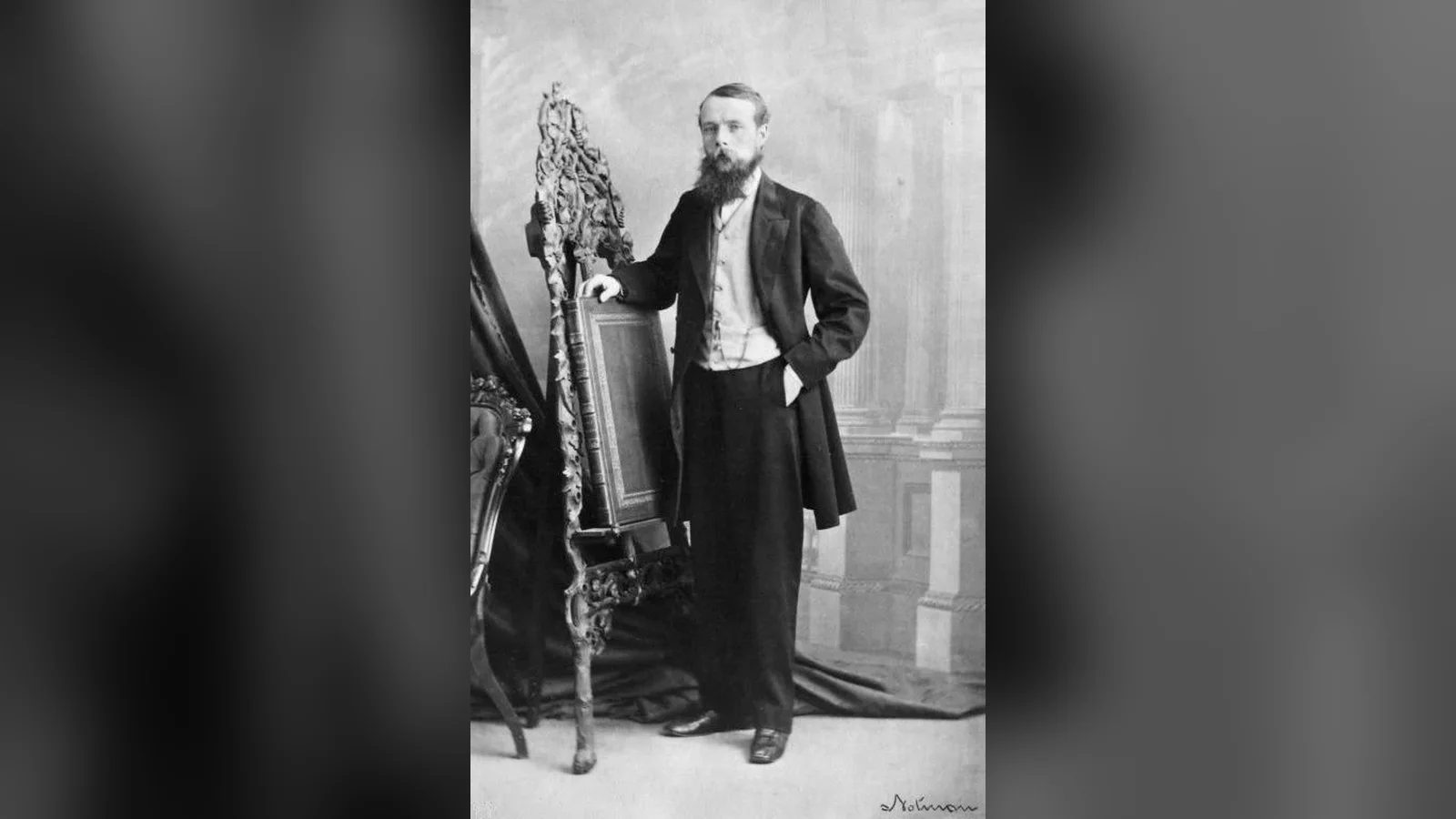

George Stephen, Lord Mount Stephen (1829–1921): The Banffshire Herd Boy Who Financed the Canadian Pacific
Contents
George Stephen was a carpenter's son from upper Banffshire who left school at fourteen, served a draper's apprenticeship in Aberdeen and sailed for Montreal in 1850. Thirty years later he was president of the Bank of Montreal and the man Sir John A. Macdonald turned to when no one else would build a railway to the Pacific. He led the Canadian Pacific syndicate, kept the company alive through its money crisis by pledging nearly everything he owned, and saw the line finished in 1885, five years ahead of its contract date. In 1891 he became the first colonist to be made a peer of the United Kingdom, taking as his title a Rocky Mountain peak and his home village: Baron Mount Stephen of Mount Stephen, British Columbia, and Dufftown, Banffshire. The main source is Heather Gilbert's Awakening Continent: The Life of Lord Mount Stephen, Volume 1: 1829–91 (Aberdeen University Press, 1965). It is built on some eight hundred of his letters to Macdonald and on oral evidence she collected in Mortlach.
TL;DR
- established George Stephen was born on 5 June 1829 at Stephen's Croft, near Croftglass in Inveraven, Banffshire, and grew up in Dufftown, where his father was a carpenter.
- established He was apprenticed to an Aberdeen draper in 1844, worked in London, and joined his father's cousin William Stephen's dry-goods firm in Montreal in 1850.
- established He became president of the Bank of Montreal in 1876. With his cousin Donald Smith, James J. Hill and Norman Kittson he took control of the bankrupt St Paul and Pacific Railroad in Minnesota in 1878, and it made them rich.
- established He led the syndicate that contracted in 1880 to build the Canadian Pacific Railway and was its president from its organisation until August 1888.
- established In the 1884–85 crisis he pledged his own fortune, down to the furnishings of his house, as security. A government relief bill and a Barings bond issue in July 1885 saved the company. The last spike was driven on 7 November 1885.
- established He was made a baronet in January 1886 and a baron in 1891. His motto was the Scots word Lippen, "trust".
Key Facts
- Born
- 5 June 1829, Stephen's Croft, near Croftglass, Inveraven, Banffshire
- Died
- 29 November 1921, Brocket Hall, Hertfordshire
- Parents
- William Stephen, carpenter, and Elspet Smith, daughter of John Smith of Knockando
- School
- Parish school at the Kirkton of Mortlach, under John Macpherson
- Trade
- Draper's apprentice, Aberdeen (1844–48); dry-goods merchant, Montreal, from 1850
- Bank of Montreal
- Director from 1871; president 1876–81
- Railways
- St Paul, Minneapolis and Manitoba; president of the Canadian Pacific Railway 1881–88
- Honours
- Baronet "of Montreal, Canada" (1886); Baron Mount Stephen (1891); freedom of Aberdeen (1901)
- Married
- Annie Charlotte Kane, at Woolwich, March 1853
- Cousin
- Donald Smith, Lord Strathcona
A Note on Claims and Evidence
Each major claim carries one of three labels. established means supported by primary records, official bodies or several independent reliable sources. shared means the core fact is sound but sources disagree on details, dates or interpretation. traditional means widely repeated but not traceable to a primary or independent source.
- established marks facts drawn from Stephen's letters to Macdonald in the Public Archives of Canada, from his sworn testimony in the Farley lawsuit of 1888, from Colonial Office files and from the press.
- shared marks Gilbert's interpretations, for example her reading of his motives.
- traditional marks stories she reports from family and Dufftown memory without documents.
Stephen ordered almost all his private papers destroyed. After his death a few pages of notes on his boyhood and a list of dates were found in his desk at Brocket Hall. Gilbert's book was a London PhD thesis written under her maiden name, Heather Donald, and her father, a minister from Auchindoun, collected oral evidence for it in Mortlach and Glenrinnes.
Timeline
George Stephen is born at Stephen's Croft, Inveraven.
He goes to the first Dufftown Boys' Ball with the saddler's daughter Jane Symon.
Aged ten, he is hired out to a farmer; the schoolmaster John Macpherson persuades his father to send him back to school.
He leaves Dufftown, where he had worked as an ostler at the Fife Arms, and is apprenticed to Alexander Sinclair, draper and silk mercer in Union Street, Aberdeen.
He seeks work in Glasgow, then moves to London, to F. Pawson and Company in St Paul's Churchyard.
His parents and siblings emigrate to Montreal.
He sails from London; he reaches Montreal on 1 May.
He marries Annie Charlotte Kane at Woolwich.
William Stephen dies and George takes over the firm.
He becomes a director of the Bank of Montreal.
He faces the shareholders as president of the Bank.
With Smith and Hill he travels the St Paul and Pacific line in Minnesota.
The associates take control of the St Paul and Pacific.
Macdonald accepts Stephen's offer to build the Canadian Pacific.
He gives up the Bank presidency to devote himself to the railway.
He moves into his Drummond Street mansion in Montreal and begins signing his cables "Dufftown".
Federal relief bill (Royal Assent 20 July); Barings take $15 million of bonds; Stephen cables "Railway now out of danger" on 5 November.
Donald Smith drives the last spike at Craigellachie.
Stephen is made a baronet.
He resigns the presidency of the Canadian Pacific.
He accepts a peerage; the Stephen Cottage Hospital opens in Dufftown.
He receives the freedom of Aberdeen.
He dies at Brocket Hall.
Details
Glenlivet, Dufftown and "Mac"
established The Stephens were a Glenlivet family. Croftglass, the family holding, looked across the valley to the site of the battle of Glenlivet. George's grandfather, a builder and mason, moved to Dufftown in 1817, soon after the Earl of Fife founded the village, and liked to say his was the third chimney to smoke there. George's father, a carpenter, married Elspet Smith of Knockando in 1828, and the family moved into a small stone house in Church Street with the workshop below. Water came from the well in the square.
established At five George went to the parish school at the Kirkton of Mortlach. His schoolmaster from about 1837 was John Macpherson, a prize mathematician from Aberdeen who ran the school alone for thirty years. Macpherson counted Stephen among the three best mathematicians he ever taught. When George, the eldest of eight, was hired out to a farmer at ten, Macpherson went to his father and offered to teach him free if the family would only feed him. So George went back, for six months of each year. The memorial stone to Macpherson in Mortlach churchyard is said to be chiefly his work.
traditional Gilbert thinks the schoolmaster's salmon-fishing trips, his reward for good work, gave Stephen the love of fishing that was his only recreation in later life.
Aberdeen, London and Montreal
established At fourteen he left school and worked as an ostler at the Fife Arms in Dufftown. In 1844 he and Patrick Collie went to Aberdeen as apprentices to Alexander Sinclair, draper and silk mercer, at the "Bonnet Emporium" in Union Street. In 1846 he broke his arm and spent time in the Aberdeen Royal Infirmary, which he disliked; it later became one of his favourite charities, so that it could have the facilities he had lacked. After his apprenticeship he tried Glasgow in 1848, found trade depressed, and moved to London.
traditional Two London stories survive. One says a foreman hired him after watching him stoop to pick up a pin on his way out of the shop. The other says that in 1848 he slipped into the reception committee outside the Mansion House and shook hands with the exiled King Louis Philippe.
established His father's cousin William Stephen ran a wholesale dry-goods firm in St Paul Street, Montreal. George's father and sister went out in 1847 on the barque St Lawrence from Aberdeen, and the rest of the family followed in 1848 after a two-month voyage with smallpox on board. When William Stephen came to Pawson's to place an order and was served by George, he offered to take him to Montreal. George arrived on 1 May 1850.
Merchant and banker
established Stephen became a partner and buyer, crossing regularly to England. When the Crimean War loomed, he took the London merchant James Morrison's advice to buy all the cotton and woollen goods he could and ship them to Canada, without being able to consult his cautious senior partner. It paid. He took over the firm in 1862. In the 1860s he moved into woollen mills at Almonte and Sherbrooke, the Montreal Rolling Mills and the Canada Rolling Stock Company, often alongside his cousin Donald Smith.
established He joined the board of the Bank of Montreal in 1871 and was its president from 1876, through the depression of the later 1870s, until 1881.
Minnesota
established Smith had pressed his cousin about the bankrupt St Paul and Pacific Railroad since about 1873–74, but Stephen was not convinced until the spring of 1877, when Hill came to Montreal with a proposal. Late that summer Stephen went to St Paul. The story that he and R. B. Angus tossed a coin to choose between St Paul and St Louis is false: Gilbert notes that Stephen already had a letter from Hill looking forward to his visit.
established Smith later told Archbishop John Ireland how the tour of 1 September 1877 won Stephen over. Beyond Litchfield the prairie seemed empty, until at De Graff they saw crowds of new settlers going to Mass in the Catholic colony Ireland had founded a year before.
established A first loan mission to London failed. Stephen then devised a plan to buy the Dutch bondholders' bonds on credit, and on 13 March 1878 the associates took control. The agreement of 27 March gave Stephen two-fifths, half of it held to raise the money, and Smith, Hill and Kittson one-fifth each. The company became the St Paul, Minneapolis and Manitoba Railroad. The receiver, Jesse Farley, later sued for a share of the profits. Stephen's testimony in that case, given in 1888, is the main record of the deal.
The Canadian Pacific
established By 1880 Macdonald's government had failed to interest the Grand Trunk or any London house in a line to the Pacific through Canadian territory. Stephen's offer was the one that remained. Stephen raised a syndicate that included Morton, Rose and Company, its New York house, John S. Kennedy, and a French–German group he courted, bluntly, in Paris. In 1882 the company won approval for a southern route over the Rockies by the Kicking Horse Pass. Major A. B. Rogers found the pass through the Selkirks that bears his name.
established The money ran short almost at once. Stephen fought hostile newspapers, the Grand Trunk's lobbying in London and a cautious government. In December 1883 he pledged guaranteed stock in New York for a $5 million loan. When it fell due in November 1884, he and close associates repaid it by borrowing on their personal securities. In 1885 Treasury officers inventoried not only his securities but the paintings, furniture, linen, china and silver of his Drummond Street house, and he signed it all away as security.
established In the spring of 1885 the general manager, William Van Horne, wired that he could not pay wages, and unpaid workmen on the mountain section struck. The North-West Rebellion that spring showed what the railway could do, as troops moved west on it. A relief bill passed the Commons on 11 July and received Royal Assent on 20 July. Barings took the $15 million issue of first mortgage bonds at 95. Stephen and Smith bought a large block themselves to support the price. On 5 November he cabled Macdonald in cypher: "Railway now out of danger." Two days later Smith drove the last spike.
established Stephen was determined to repay the government loan early, to free the company from politics. He also pushed for Pacific and Atlantic steamship services, settlement of the West, and control of the Soo Line, which he called his greatest service to the railway's independence. He resigned the presidency in August 1888, in a mood Gilbert calls close to a disappointed man's.
Peer of Dufftown
established In May 1891 Lord Salisbury offered him a peerage, the first for a colonist. He chose the name of the peak in the Rockies already named after him, and added Dufftown. His crest showed an arm holding a pickaxe; his arms carried fleurs-de-lis and maple leaves; his motto was Lippen. That summer he and Lady Mount Stephen visited Dufftown, where she turned on the town's new piped water supply from the Conval Burn and he opened the Stephen Cottage Hospital. He credited the idea for it to a local woman, Mrs Cowie.
shared Gilbert says he was amused in later years by press references to the "herd-boy millionaire", and smiled at the way his cousin Donald Smith wore his own coronet.
Did You Know?
- established His telegraph signature from 1883 was "Dufftown". In 1890 he changed it to "Estevan", a name that survives as a city in Saskatchewan.
- established In 1885 he backed Count Paul Esterhazy's settlement of Hungarian miners on the prairie with his own money. The place is now Esterhazy, Saskatchewan.
- established The Stephens had no surviving children; their only child was stillborn. They brought up Alice Brooke, who married Henry Stafford Northcote, son of the Chancellor Sir Stafford Northcote, in 1873.
- established His Drummond Street mansion took three years to build, with oak from England, mahogany from Cuba, onyx and marble from Italy and woodcarvers from Scotland. Critics in Parliament said the company should build the railway before it built palaces.
- established He was made baronet "of Montreal, Canada" at the suggestion of his son-in-law.
FAQ
1Was George Stephen Scottish?
Yes. He was born in Banffshire, schooled at Mortlach and apprenticed in Aberdeen, and emigrated at twenty.
2Did George Stephen build the Canadian Pacific Railway?
He financed and led it. Van Horne managed construction; Stephen raised the money, negotiated with the government and carried the risk.
3How were Stephen and Donald Smith related?
They were cousins. Gilbert calls Smith "a cousin of Stephen"; Stephen's mother was a Smith from Knockando.
4Where does the name Mount Stephen come from?
A peak in the Rockies near the Kicking Horse Pass was named for him. He took it as his title in 1891, with Dufftown.
5Who drove the last spike?
Donald Smith, at Craigellachie on 7 November 1885. Stephen was not there.
Sources and Further Reading
- Heather Gilbert, Awakening Continent: The Life of Lord Mount Stephen, Volume 1: 1829–91 (Aberdeen University Press, 1965)
- Heather Gilbert, The End of the Road: The Life of Lord Mount Stephen, Volume 2: 1891–1921 (Aberdeen University Press, 1977)
- Stephen, George, 1st Baron Mount Stephen — Dictionary of Canadian Biography (Alexander Reford)
Caveats: Myths and Disputed Claims
- Born in Dufftown? He was born at Stephen's Croft in Inveraven and brought to Dufftown as a baby. Dufftown is where he grew up.
- The coin toss. The story that Stephen chose St Paul over St Louis by tossing a coin is refuted by Hill's letter of invitation.
- "Stand fast, Craigellachie." Gilbert's full life, drawn from the Macdonald papers, does not mention the famous telegram to Smith. She records only that the last-spike site was afterwards named Craigellachie.
- "Herd boy." Stephen did herd the minister's cattle out of school hours, but the press label of "herd-boy millionaire" amused him.
Finished reading? Try the Fact Machine: three reels, one surprising Scottish connection →
A Great Scots story