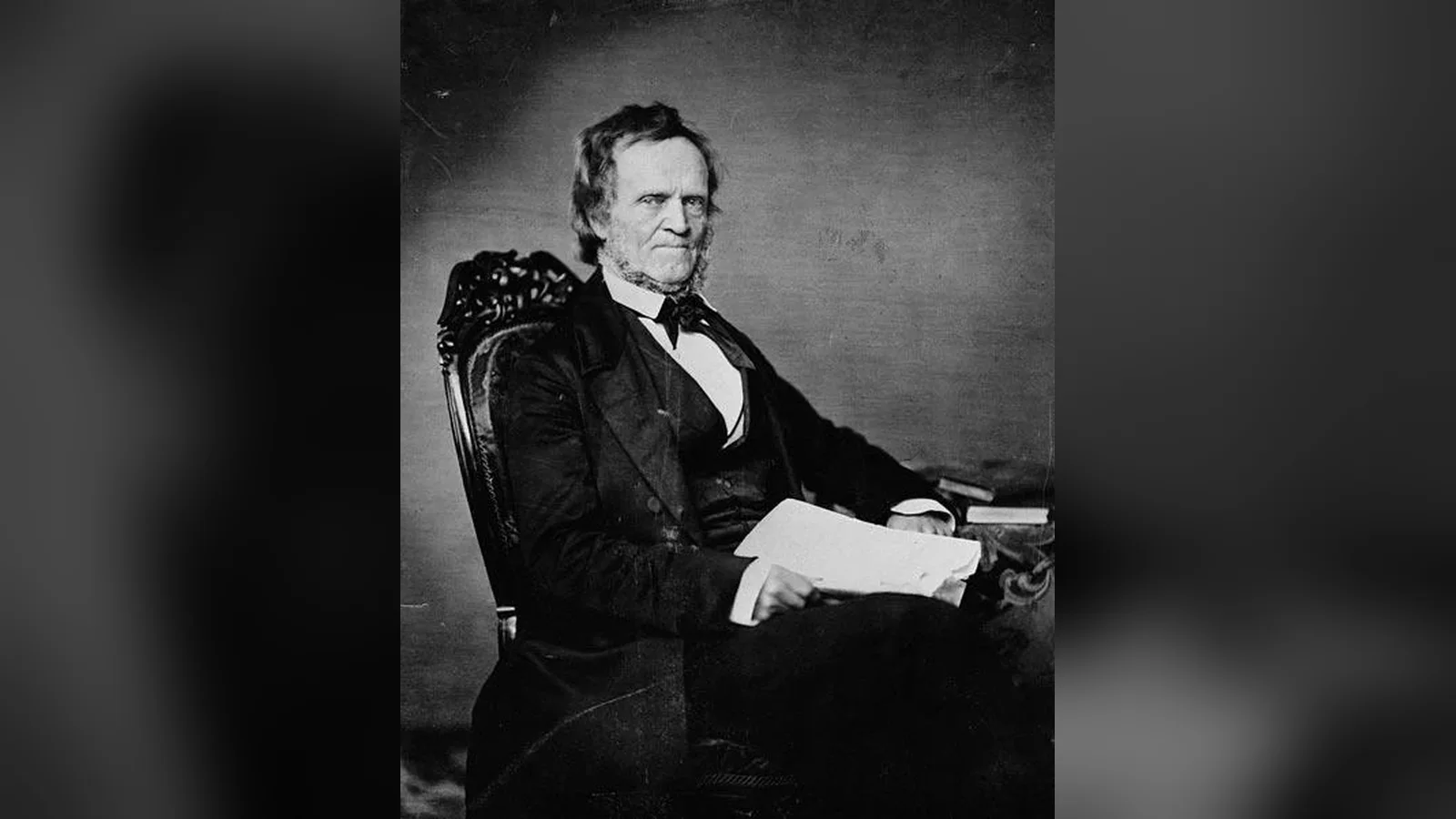

William Lyon Mackenzie (1795–1861): The Dundee Firebrand Who Led the Upper Canada Rebellion
Contents
William Lyon Mackenzie was a weaver's son from Dundee, a little over five feet tall, who emigrated to Upper Canada in 1820 and became its loudest critic. His newspaper, the Colonial Advocate, attacked the ruling clique known as the Family Compact so fiercely that young Tories wrecked his press in 1826. The Assembly expelled him again and again, and his voters kept sending him back. In 1834 he became the first mayor of Toronto. In December 1837 he led an armed rising at Montgomery's Tavern that collapsed in a day, and he spent twelve years in exile in the United States, including a year in jail. He came home under an amnesty in 1849, sat in the Assembly again, and died in Toronto in 1861. His grandson was William Lyon Mackenzie King, Canada's longest-serving prime minister. The main source is William Kilbourn's The Firebrand: William Lyon Mackenzie and the Rebellion in Upper Canada (Clarke, Irwin, 1956), a vivid biography drawn on Mackenzie's papers.
TL;DR
- established Mackenzie was born near Dundee in March 1795. His father, Daniel, a weaver, died when he was three weeks old, and he was brought up by his strictly Calvinist mother, Elizabeth.
- established He went to the parish school, read voraciously, kept a store and circulating library in his late teens, failed in the post-war depression, and sailed for Canada on the schooner Psyche in the spring of 1820.
- established He founded the Colonial Advocate in 1824. Young Tories destroyed his press on 8 June 1826, and a jury awarded him £625 damages. He was elected for York County in 1828 and expelled by the Assembly repeatedly from 1831.
- established He became the first mayor of Toronto after the town was incorporated on 6 March 1834, and designed its coat of arms with the motto "Industry, Intelligence, Integrity".
- established He led the rising of December 1837, fled to the United States, declared a provisional government on Navy Island in the Niagara River, and was jailed in Rochester. He was pardoned in 1849 and died in Toronto on 28 August 1861.
Key Facts
- Born
- 12 March 1795, near Dundee (Springfield, in the standard records)
- Died
- 28 August 1861, Toronto
- Parents
- Daniel Mackenzie, weaver (died 1795), and Elizabeth Mackenzie
- Emigrated
- Spring 1820, on the schooner Psyche to Quebec
- Married
- Isabel Baxter, a schoolmate from Scotland, at Montreal in 1822; thirteen children, six of whom died young
- Newspaper
- Colonial Advocate, Queenston and York, 1824–34
- Offices
- Member for York County from 1828; first mayor of Toronto, 1834; member for Haldimand, 1851–58
- Rebellion
- December 1837, Montgomery's Tavern, Yonge Street
- Exile
- United States, 1837–49; 18-month sentence in Rochester jail, of which he served a year
- Descendant
- Grandfather of William Lyon Mackenzie King
A Note on Claims and Evidence
Each major claim carries one of three labels. established means supported by primary records, official bodies or several independent reliable sources. shared means the core fact is sound but sources disagree on details, dates or interpretation. traditional means widely repeated but not traceable to a primary or independent source.
- established marks facts from the record: Assembly journals, court verdicts, Mackenzie's own newspapers and the city's charter, as used by Kilbourn.
- shared marks Kilbourn's interpretation of Mackenzie's character and of what the rebellion achieved.
- traditional marks family stories, which Kilbourn tells freely.
Kilbourn wrote a deliberately literary biography and gives few dates for the Scottish years. His day of birth ("the late winter of 1795") is filled in here from the standard record. Mackenzie's heroic self-image needs care: much of what we know about him he wrote himself.
Timeline
Born near Dundee; his father dies three weeks later.
At about eleven he joins the reading room of the Dundee Advertiser, the youngest member.
At nineteen he opens a general store and circulating library; it fails three years later.
His son James is born; Mackenzie's mother brings the boy up.
He sails for Canada on the Psyche and works briefly for the Lachine Canal company.
He marries Isabel Baxter, who has followed him from Scotland, and runs a store at Dundas.
The first Colonial Advocate appears at Queenston.
Young Tories wreck the Advocate office in York and throw the type into the bay.
He is elected to the Assembly for York County.
First expulsion; his voters re-elect him.
He takes petitions with nearly 25,000 signatures to London, where Joseph Hume introduces him to the Radicals.
York becomes the city of Toronto; Mackenzie is its first mayor.
His Seventh Report on Grievances.
The rebels gathered at Montgomery's Tavern are dispersed; Mackenzie flees to the United States.
He proclaims a provisional government on Navy Island.
He serves a year of an 18-month sentence in Rochester jail for breaching US neutrality.
He lives in poverty in New York.
Robert Baldwin's government grants him a pardon.
He wins the Haldimand by-election, beating George Brown.
He dies in Toronto.
Details
Dundee
established Kilbourn writes that both Mackenzie's grandfathers were of the clan Mackenzie and had fought for Prince Charles Edward Stuart in the '45. His father, Daniel, was a weaver, a dark, wild young man fond of dancing, who married a woman eighteen years older than himself. His mother, Elizabeth, was tiny, intense and fiercely proud. Their only child was born near Dundee in the late winter of 1795, and Daniel died, blind, when the baby was three weeks old.
established Elizabeth Mackenzie brought up her son in poor but proud independence and strict Calvinism. He learned the psalms and the Presbyterian catechism, and Kilbourn sees his Calvinist training and his knowledge of the Bible as important sources of his later radicalism. One of his earliest memories was of his mother selling a Mackenzie tartan she had spun and woven herself to buy barley meal during the famine of 1810.
traditional Kilbourn tells stories of the boy from family memory. He mimicked his six-foot-eight schoolmaster, ran away at ten to live as a hermit in a castle in the hills above Dundee, and nearly drowned diving into the Tay for a bet. His mother believed that no Mackenzie died without being warned by the family banshee.
established At eleven he became by far the youngest member of the reading room of the Dundee Advertiser. He kept a list of everything he read until he left for Canada: 957 books, including 352 novels and 168 works of history and biography. His mother feared "the laddie" would "read himsel' out o' his judgment".
Failure and emigration
established After school he worked as a clerk for a large merchant firm, learning the accounting he later used against the government's books. At nineteen, just after Waterloo, he borrowed to open a general store and circulating library. It failed in the post-war depression after three years. He drifted through England, worked as accountant to a canal company, lived wildly, spent time in Paris and gambled himself to the edge of ruin. A son, James, was born to him before he left; Mackenzie's mother brought the boy up.
established When a Scottish friend proposed emigrating, Mackenzie gave up gambling for good, promised his creditors he would repay them, which he did, and sailed on the schooner Psyche in the spring of 1820. In Canada he and a partner, Lesslie, ran a drug and book business in York and a store and circulating library at Dundas. In 1822 Isabel Baxter, a schoolmate from Scotland whom he had not seen for years, crossed the Atlantic; he met her at Quebec and they were married three weeks later. Kilbourn suspects his mother chose the bride.
The Colonial Advocate
established Mackenzie founded the Colonial Advocate at Queenston in 1824 and soon moved it to York, the capital. It attacked the Family Compact, the small group of officials, Anglican clergy and merchants around Bishop John Strachan and John Beverley Robinson who held power under the lieutenant-governor. On 8 June 1826, while Mackenzie was out of town, fifteen young gentlemen broke into his office, smashed the press and threw the type into the bay, while two senior officials looked on. A jury awarded him £625 in damages. Kilbourn calls the incident the one that pushed him firmly into public life.
established He was elected for York County in 1828. From 1831 the Tory majority expelled him repeatedly for libelling the Assembly, and each time his voters returned him. In January 1832 a sleigh procession with bagpipes carried him from Montgomery's Tavern to his re-election. By that spring he had gathered nearly 25,000 signatures on petitions to London, and he went there himself, where the Scottish radical Joseph Hume took him under his wing.
First mayor of Toronto
established On 6 March 1834 the town of York was incorporated as the city of Toronto, and Mackenzie was chosen its first mayor. He designed the city's coat of arms with the motto "Industry, Intelligence, Integrity". As chairman of the Assembly's grievance committee he then produced the Seventh Report on Grievances (1835), his last great indictment of the Compact.
Rebellion
established After the Reformers lost the election of 1836, Mackenzie turned to revolution. He drafted a constitution for a "State of Upper Canada" and planned a rising for 7 December 1837, when men were to gather at Montgomery's Tavern on Yonge Street, seize the arms in the city and take the government. The plan was muddled and brought forward. The rebels were dispersed by loyalist militia, and two of the leaders, Samuel Lount and Peter Matthews, were later hanged.
established Mackenzie escaped across the Niagara. On 13 December 1837, less than a week after fleeing the battlefield, he raised the Patriot flag on Navy Island in the Niagara River as chairman of a provisional government, and printed handbills for its citizens. Volunteers and supplies came from upstate New York until Canadian militia under Allan MacNab destroyed the American steamer Caroline, which had been ferrying men and cannon, and the venture collapsed. An American jury convicted him of breaching US neutrality, and he served a year of an 18-month sentence in Rochester jail before President Van Buren released him.
Exile and return
established The family lived in poverty in New York from 1842 to 1850; at times they had no bread for a whole day. All the other rebels were pardoned in 1843, but Mackenzie's letters of penitence were ignored until 1849, when Robert Baldwin's Reform government, the first responsible government in Canada, granted his pardon. A Tory mob burned Baldwin in effigy, and another howled outside the house where Mackenzie stayed on his first visit home. In 1851 he won a by-election for Haldimand, ahead of George Brown, and sat until 1858. He died in Toronto on 28 August 1861.
What he achieved
shared Kilbourn's verdict is double-edged. Mackenzie was brave, honest, compassionate and untiring, but erratic and quarrelsome, often "in a minority of one". The rising failed, yet within twelve years the colonies had won the responsible government the Reformers wanted, and his family always believed the rebellion had forced the pace. Later historians are divided on how much it did. His grandson made a political career partly out of vindicating him.
Did You Know?
- Mackenzie was the youngest member of the Dundee Advertiser reading room, at eleven.
- He listed 957 books he had read before he emigrated.
- Once, in his forties, he escaped two constables by diving between them and somersaulting down the stairs.
- He designed Toronto's first coat of arms.
- He barricaded himself behind piles of books when defending himself in court or the Assembly.
- His grandson, William Lyon Mackenzie King, was Canada's prime minister for more than twenty-one years.
FAQ
1Was William Lyon Mackenzie Scottish?
Yes. He was born near Dundee in 1795, schooled there, and emigrated to Upper Canada in 1820.
2Was he the first mayor of Toronto?
Yes. He became mayor when York was incorporated as the city of Toronto in March 1834.
3What was the Upper Canada Rebellion?
An armed rising in December 1837, led by Mackenzie, against the colonial government and the Family Compact. It was quickly defeated.
4What happened to him afterwards?
He fled to the United States, was jailed for breaching American neutrality, and lived in exile until he was pardoned in 1849.
5How was he related to Mackenzie King?
He was his grandfather. King's mother, Isabel Grace Mackenzie, was his youngest child, born in New York during the exile.
Sources and Further Reading
- William Kilbourn, The Firebrand: William Lyon Mackenzie and the Rebellion in Upper Canada (Clarke, Irwin, 1956; paperback 1964)
- W. L. Mackenzie, Sketches of Canada and the United States (London, 1833)
- Mackenzie, William Lyon — Dictionary of Canadian Biography (Frederick H. Armstrong and Ronald J. Stagg)
Caveats: Myths and Disputed Claims
- Born in Dundee or near it? Kilbourn says near Dundee; the standard record names Springfield, near Dundee.
- Childhood stories. The hermit adventure, the near-drowning and the banshee come from family memory as Kilbourn retells it.
- Did the rebellion win responsible government? His family thought so; most historians give more weight to British policy and to the moderate Reformers.
Finished reading? Try the Fact Machine: three reels, one surprising Scottish connection →
A Great Scots story