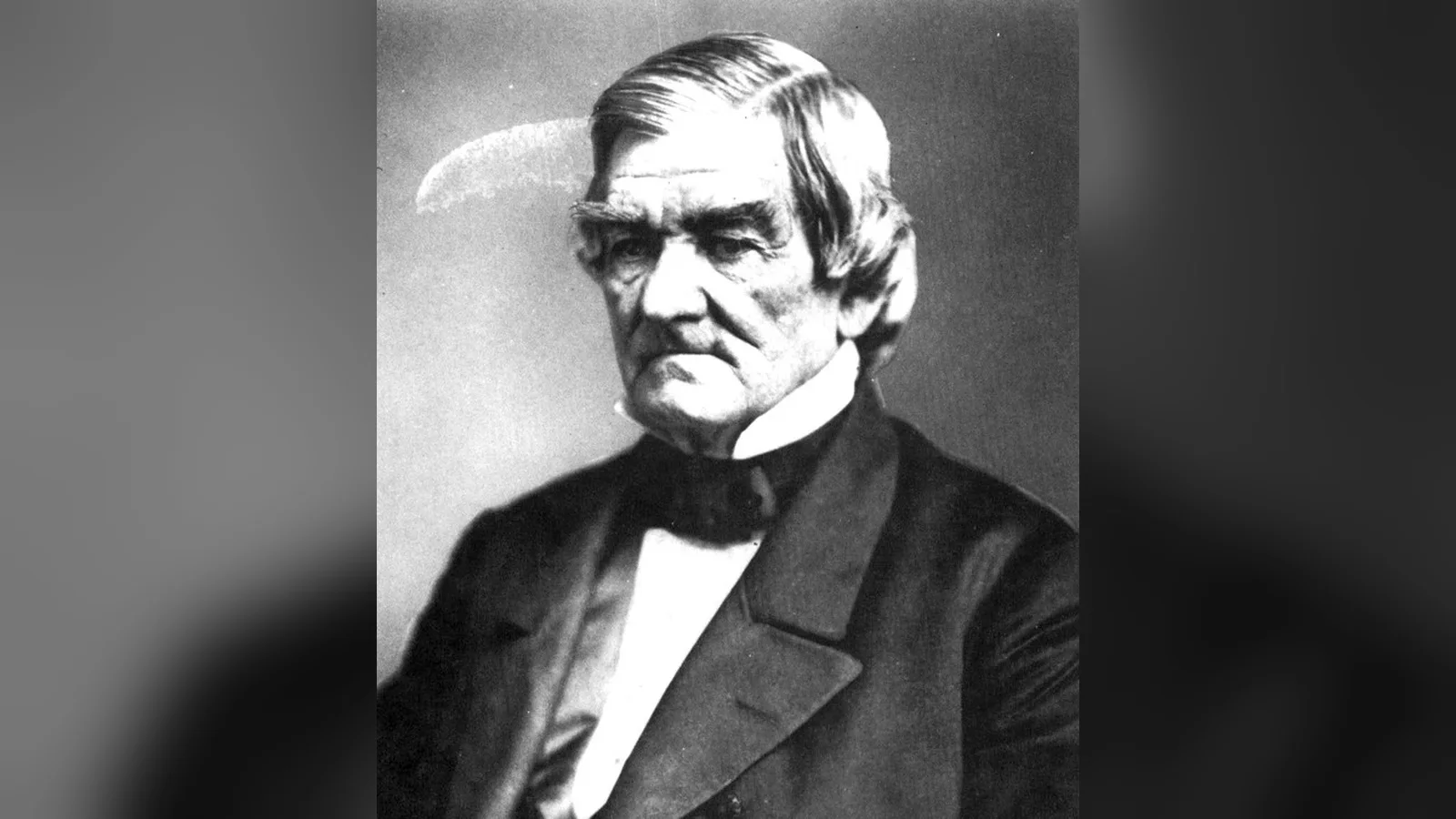

John Ross: The Cherokee Chief Who Sent Money to the Highlands
Contents
In April 1847, as famine spread through the Western Highlands and Islands, the principal chief of the Cherokee Nation wrote to his people's newspaper. "Have the Scotch no claim upon the Cherokees?" asked John Ross. The Cherokees had just survived the Trail of Tears, on which a quarter of their nation died, and a near civil war. Yet they raised money and sent it to Scotland. Ross had never set foot there, but by descent he was seven-eighths Scottish, the grandson and great-grandson of Highland traders.
TL;DR
- established John Ross was principal chief of the Cherokee Nation during the Removal crisis of the 1830s. His father, Daniel Ross, was a Scot, and his mother, Mary, was the daughter of the Inverness-born Cherokee agent John McDonald.
- established Cherokees reckoned identity through the mother's clan, not by blood. Ross was seven-eighths Scottish by descent, but he was Cherokee and Bird Clan through his mother's line.
- established About 4,000 Cherokees, a quarter of the nation, including Ross's wife, died on the forced removal west in 1838, the Trail of Tears.
- established In 1847 Ross urged the Cherokees to help the starving Highlanders. A meeting at Tahlequah set up a relief committee, and in May Ross sent a bank draft for $190.
- shared The historian Colin Calloway argues that the gift came not from a natural bond between clan peoples but from generations of Scottish traders who married into the south-eastern nations.
Key Facts
- Role
- Principal chief of the Cherokee Nation during Removal
- Scottish ancestry
- Father Daniel Ross, a Scot; maternal grandfather John McDonald, born in Inverness
- Clan
- Bird Clan, through his mother, grandmother and great-grandmother
- Removal
- Indian Removal Act 1830; removal treaty 1835; Trail of Tears 1838
- Famine gift
- Letter to the Cherokee Advocate, April 1847; $190 sent in May 1847
- Related cards
- Diaspora 47, Alexander McGillivray; Diaspora 61, Lachlan McGillivray
- Main source
- Colin G. Calloway, "'Have the Scotch no Claim upon the Cherokees?'", in Angela McCarthy and John M. MacKenzie (eds), Global Migrations: The Scottish Diaspora since 1600 (Edinburgh University Press, 2016)
Scottish Impact Index (SI Score)
- Global Influence
- 6/10
- Enduring Connection
- 8/10
- Material Contribution
- 6/10
- Scottish Diaspora Distinctiveness
- 9/10
- Diaspora Legacy
- 7/10
- Recognition
- 6/10
42/60
Ranked =58th of 93 in Diaspora
A Note on Claims and Evidence
Each major claim carries one of three labels. established means supported by primary records, official bodies or several independent reliable sources. shared means the core fact is sound but sources disagree on details, dates or interpretation. traditional means widely repeated but not traceable to a primary or independent source.
Calloway's chapter is about Scots and Native peoples in the American South more broadly; Ross frames it. It gives the facts of Ross's family and the 1847 letter but not his dates of birth and death or a full account of his long career. Those are left out here rather than supplied from memory.
The phrase "Cherokee Clearances" is Calloway's, used deliberately to draw the parallel with the Highlands. He is equally clear that Scots were not natural allies of Native peoples: Highland troops burned Cherokee towns in the 1760s, and Scottish traders helped turn Indian debts into land cessions.
Timeline
John Stuart, son of an Inverness merchant, emigrates to Charles Town. He later becomes British superintendent of Indian affairs in the South.
Stuart appoints the Inverness-born John McDonald as his deputy in Cherokee country. McDonald marries Annie Shorey, of the Bird Clan.
McDonald's daughter Mary marries the Scot Daniel Ross. Their son John Ross is born.
The Cherokees adopt a written constitution and print the Cherokee Phoenix in Cherokee and English.
Congress passes the Indian Removal Act.
The Supreme Court rules in Worcester v. Georgia that Georgia has no jurisdiction in Cherokee country; Georgia's pressure continues.
A minority of Cherokees sign a treaty selling the nation's remaining land for $5 million.
The Cherokees are rounded up and marched west. About 4,000 die, including Ross's wife.
A truce ends years of near civil war in the Cherokee Nation.
Ross appeals for Highland famine relief and sends $190.
Details
Scots in Indian country
established Scots dominated the deerskin trade with the Creek, Cherokee, Choctaw, Chickasaw and Seminole peoples of the American south-east. By 1764 it produced 800,000 pounds of deerskins a year. The great firm of Panton, Leslie and Company, founded by men from the Moray Firth coast east of Inverness, controlled the trade from Spanish Pensacola, and sent Scottish boys to live with Indian families to learn their languages.
established Many traders married into the nations they traded with. Among the matrilineal peoples of the south-east they usually lived in their wives' towns, and their children belonged to their mothers' clans. Calloway traces the results: the Colberts, descended from the Scot James Logan Colbert, spoke for the Chickasaws for over a century; the McGillivrays and McIntoshes led factions among the Creeks. Calloway is clear that traders also used Indian debts to force land sales, and that some Scots-Indian leaders, such as William McIntosh, sold their people's land.
A family of Scots and Cherokees
established John Stuart, son of a Jacobite-supporting Inverness merchant, became British superintendent of Indian affairs in the South and appointed two fellow Scots as his deputies in Cherokee country. One was John McDonald, born in Inverness, who came to South Carolina at nineteen, married a Cherokee woman, fought beside the Cherokees in the American Revolution and lived among them for forty years. A visitor said he entertained "with the hospitality of an ancient Caledonian or a modern Cherokee".
established McDonald married Annie Shorey, daughter of the trader William Shorey and a Bird Clan Cherokee woman named Ghigooie. Their daughter Mary married another Scot, Daniel Ross. Their son was John Ross. By descent he was seven-eighths Scottish; but Cherokees reckoned identity by clan, through the mother, and through his mother's line he was Cherokee and Bird Clan.
The Cherokee Clearances
established By the 1820s the Cherokees had rebuilt their nation, with a constitution modelled on that of the United States and a newspaper in their own script. It did not save them. In 1830 Congress passed the Indian Removal Act, and after gold was found in Cherokee country Georgia arrested Cherokee leaders and gave away Cherokee land by lottery. The Supreme Court ruled in Worcester v. Georgia (1832) that the state had no jurisdiction there, but the federal government did nothing. In 1835 a minority signed away the remaining land, and in 1838 the rest were rounded up and marched west. About 4,000 died on the Trail of Tears, among them John Ross's wife. Killings of the treaty signers followed, and years of near civil war, until a truce in 1846.
"Have the Scotch no claim?"
established In April 1847, as the potato crop failed in the Highlands and Islands, Ross wrote to the Cherokee Advocate that 300,000 Scots must be fed by charity or die. He asked whether the Scots had a claim on the Cherokees, and answered that they did, a "very especial claim". A meeting at the capital, Tahlequah, appointed a relief committee, and in May Ross sent a bank draft for $190 for the famine in Scotland, more than many Cherokees could afford.
shared Calloway rejects the romantic idea of a natural kinship between clan peoples. His explanation is the long presence of Scots and their descendants in the south-eastern nations. Many who walked the Trail of Tears were children and grandchildren of Scottish migrants, with names like McDonald, McIntosh, Bushyhead and Ross. For them, he concludes, the famine-stricken Scots did indeed have a claim.
Did You Know?
- John Ross was seven-eighths Scottish by descent but fully Cherokee by clan.
- His grandfather John McDonald was born in Inverness.
- The Cherokees sent $190 to Scotland in 1847, less than ten years after the Trail of Tears.
- The Cherokee surname Bushyhead comes from the nickname of the red-haired Scot John Stuart.
- Panton, Leslie and Company, founded by men from the Moray Firth, controlled the south-eastern deerskin trade.
FAQ
1Who was John Ross?
Principal chief of the Cherokee Nation during the Removal crisis of the 1830s, and a descendant of Scottish traders.
2How was he Scottish?
His father Daniel Ross was a Scot, and his mother was the daughter of John McDonald of Inverness. By descent he was seven-eighths Scottish.
3Why was he Cherokee, then?
Cherokees traced identity through the mother's clan. His mother, grandmother and great-grandmother were Bird Clan, so he was too.
4What did the Cherokees do for Scotland?
In 1847 they raised money for the Highland famine, and Ross sent $190.
5Did Ross ever visit Scotland?
No. Calloway notes that he never set foot there.
Sources and Further Reading
Scholarly/Critical
- Colin G. Calloway, "'Have the Scotch no Claim upon the Cherokees?' Scots, Indians and Scots Indians in the American South", in Angela McCarthy and John M. MacKenzie (eds), Global Migrations: The Scottish Diaspora since 1600 (Edinburgh University Press, 2016), ch. 5. Main source.
Further reading (not consulted directly)
- Colin G. Calloway, White People, Indians, and Highlanders: Tribal Peoples and Colonial Encounters in Scotland and America (Oxford University Press, 2008).
- Gary E. Moulton, John Ross, Cherokee Chief (University of Georgia Press, 1978).
Caveats: Myths and Disputed Claims
- Myth: Scots and Native Americans were natural allies as clan peoples. Calloway rejects it; Highland soldiers fought the Cherokees, and Scottish traders helped dispossess them.
- "Seven-eighths Scottish." Calloway's reckoning by descent; it is not how Cherokees themselves counted identity.
- The 1835 treaty. Signed by a minority faction against Cherokee law; its signers were later killed.
Finished reading? Try the Fact Machine: three reels, one surprising Scottish connection →
Card 076 · Diaspora