
Scottish Capital in the American West: Dundee Money and the Cattle Kingdom
Contents
Not every part of the Scottish diaspora was made of people. From the 1870s a flood of Scottish money crossed the Atlantic, raised by Edinburgh lawyers and Dundee jute barons and placed in American railroads, mortgages, mines and, most famously, cattle ranches on the Great Plains. Investment trusts pioneered in Dundee and Edinburgh let small savers share in the boom. The Dundee-based Matador Land and Cattle Company ran a Texas ranch for almost seventy years, managed for most of that time by a Highlander.
TL;DR
- established Scottish overseas investment took off after the American depression of 1873, when Scottish capitalists bought cheap American railroad securities. It spread into land, mining, ranching and city building.
- established In 1873 the Edinburgh lawyer William J. Menzies helped found the Scottish-American Investment Company, and Robert Fleming of Dundee was the main influence behind the Scottish American Investment Trust, one of the first investment trusts.
- shared One estimate cited by T. M. Devine is that two-thirds of the British money invested in American stock markets and mortgages in the boom after 1873 was Scottish.
- established The Dundee-based Matador Land and Cattle Company bought a Texas ranch in 1882 with 40,000 cattle and grazing on 1.5 million acres. Its longest-serving manager, Murdo Mackenzie, held the post for forty-six years, and the company operated until 1951.
- established The boom was volatile. In 1884, according to the historian W. T. Jackson, Scottish investments in the American West lost about £1 million and fell in value by about £3 million more.
Key Facts
- Period
- 1873 to the 1890s, with the Matador company lasting to 1951
- Sources of money
- Edinburgh, Dundee and, later, Glasgow; jute families such as the Baxters, Coxes and Gilrays
- Pioneers
- William J. Menzies (Scottish-American Investment Company, Edinburgh, 1873); Robert Fleming (Scottish American Investment Trust, Dundee, 1873)
- Sectors
- Railroads, mortgages, land, mining, cattle ranching
- Best-known ranch
- Matador Land and Cattle Company, Dundee, bought 1882, sold 1951 for $20 million
- Manager
- Murdo Mackenzie, forty-six years with the Matador
- Related card
- Industry 47, Edinburgh financial services; Industry 25, Dundee jute
- Main sources
- T. M. Devine, To the Ends of the Earth (2011); Tanja Bueltmann, Andrew Hinson and Graeme Morton, The Scottish Diaspora (2013)
Scottish Impact Index (SI Score)
- Global Influence
- 7/10
- Enduring Connection
- 6/10
- Material Contribution
- 8/10
- Scottish Diaspora Distinctiveness
- 7/10
- Diaspora Legacy
- 6/10
- Recognition
- 4/10
38/60
Ranked =76th of 93 in Diaspora
A Note on Claims and Evidence
Each major claim carries one of three labels. established means supported by primary records, official bodies or several independent reliable sources. shared means the core fact is sound but sources disagree on details, dates or interpretation. traditional means widely repeated but not traceable to a primary or independent source.
Devine stresses that exact totals for Scottish overseas investment are elusive. Figures here are estimates quoted from historians, chiefly W. T. Jackson's The Enterprising Scot and Christopher Schmitz's work, as Devine reports them.
The Scottish Diaspora says that in 1880 three-quarters of all foreign investment in the United States came from Scotland, and that Scots owned eleven ranch companies, including the XIT in Texas. Both claims go further than Devine, who gives two-thirds of British (not all foreign) funds in American stock markets and mortgages. Devine's more cautious figure is the main one used here, and the XIT is not listed as Scottish-owned.
Timeline
Aberdeen speculators form the Illinois Investment Company, an early Scottish venture in the United States.
William J. Menzies visits the United States.
American financial panic and depression. Menzies helps form the Scottish-American Investment Company in Edinburgh; Robert Fleming leads the Scottish American Investment Trust in Dundee.
Investment in American railroads doubles. One estimate puts Scottish money at two-thirds of British funds in American stocks and mortgages.
The "beef bonanza" on the Great Plains. American cattle numbers rise by more than half, to 60 million.
The Matador Land and Cattle Company of Dundee buys its Texas ranch.
Five of eight Scottish American cattle companies pay dividends of 10 to 20.5 per cent.
Scottish investors lose about £1 million in the West, with further losses in value of about £3 million.
Hard winters and depression drive most Scottish investors out of ranching; crisis in Argentina, Australia and the United States.
The Matador company is sold for $20 million.
Details
The golden flood
established Devine dates the start of large-scale Scottish investment abroad to the depression of 1873 in the United States, when Scottish capitalists took advantage of low prices on the New York Stock Exchange to buy into American railroads. From there it spread into land, gold and silver mining, sheep and cattle, and city building on four continents. A newspaper writer in 1882 joked that hardly a train reached Edinburgh without a "Yankee" carrying a cattle ranch in one pocket and a timber concession in another.
established The reason was the return. In 1884 Blackwood's Edinburgh Magazine put it plainly: Scots borrowed at 4 per cent and lent abroad at 8 to 10. After the Great Fire of Chicago, Scottish money helped to rebuild the city, and the chairman of the Scottish American Mortgage Company made the same point about borrowing at home and lending in Chicago at 8 per cent.
shared How large the flood was is hard to pin down. Devine notes that investment in American railroads doubled between 1873 and 1890, and cites one estimate that two-thirds of the British money invested in American stock markets and mortgages came from Scotland.
Edinburgh lawyers and Dundee jute barons
established The Edinburgh lawyer William J. Menzies, a Writer to the Signet, visited the United States three times and was persuaded by New York and Chicago bankers of its prospects. In 1873 he helped found the Scottish-American Investment Company. His draft prospectus praised America's fertile soil, its railroads and its half a million immigrants a year.
established In Dundee the money came from the jute families, the Baxters, Coxes, Gilrays and others, who, Devine writes, inspired young men such as Robert Fleming to lead the investment trusts that made the city a centre of financial management. The investment trust was not a Scottish invention; the first British one was founded in London in 1868. But Fleming, the main influence behind the Scottish American Investment Trust of 1873, showed what it could do: spread the risk across many holdings and give small investors expert management. He is said to have crossed the Atlantic 128 times. By 1904 the Cox family held shares in sixty-four companies, three-quarters of them American.
The Matador
established The Great Plains had a "beef bonanza" in the 1880s, when for a few seasons cattle ranching seemed to investors almost a licence to print money: cheap cattle, free grass and growing city markets. In 1883, five of the eight Scottish American cattle companies paid dividends of 10 to 20.5 per cent.
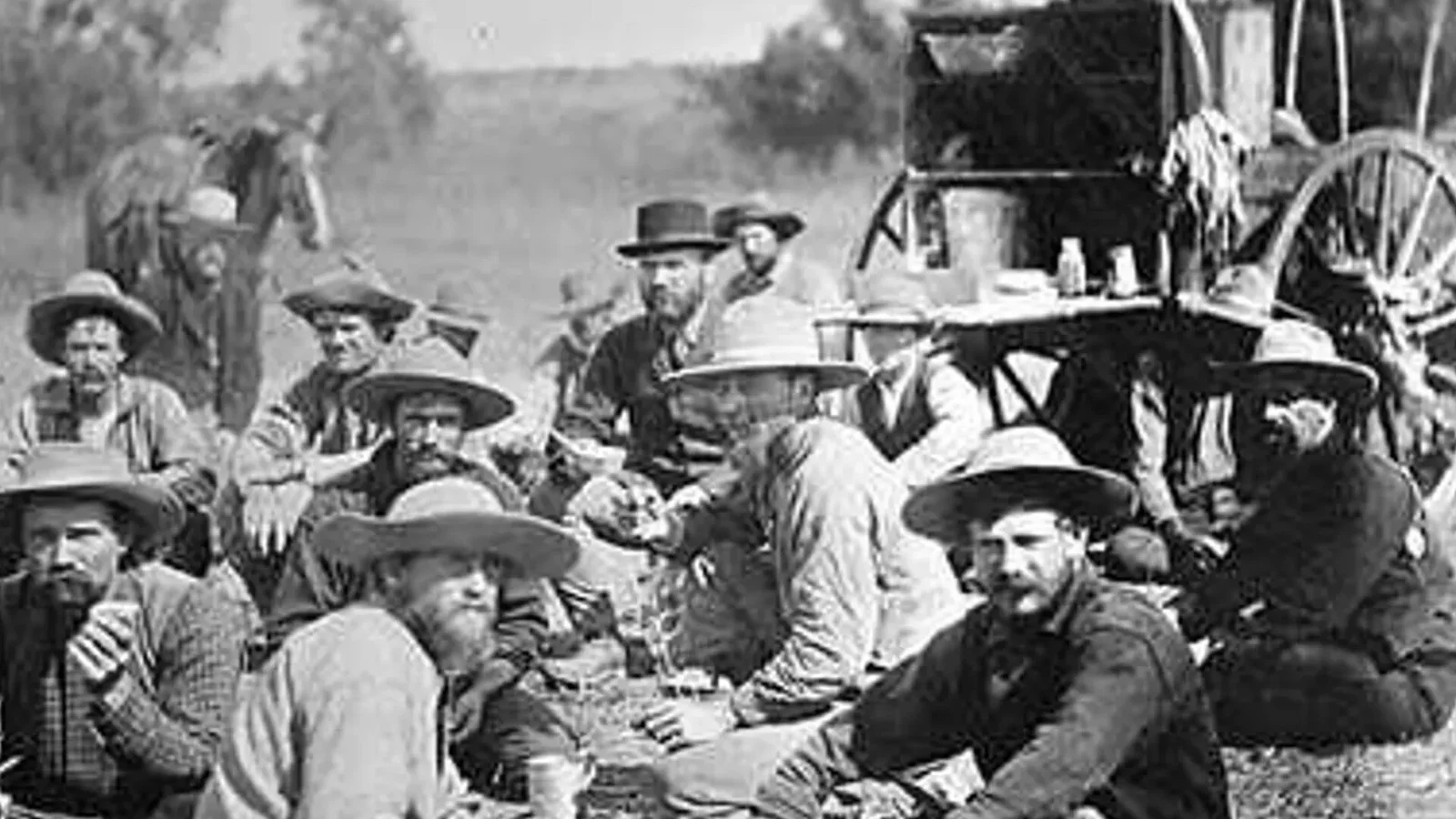
established The best-known was the Dundee-based Matador Land and Cattle Company. When it bought its ranch in 1882 the property had 40,000 cattle and grazing rights on 1.5 million acres in Texas. The Scottish Diaspora records that under Scottish ownership the company invested in the land, changed grazing practices and improved breeding. Just under a quarter of its cowboys (385) had Scottish surnames, but Scots dominated management: most ranch managers were Scottish immigrants, and the longest-serving, Murdo Mackenzie, held the post for forty-six years. The company won prizes at cattle shows, and Theodore Roosevelt, a friend of Mackenzie's, called him "the most influential of American cattlemen".
established Other Scottish-backed ranches included the Swan Land and Cattle Company, with 600,000 acres in Nebraska and Wyoming, and the Espuela Cattle Company in Texas. Hard winters and depression at the end of the century drove most Scottish investors out, but the Matador lasted until 1951, when it was sold for $20 million.
Not so canny
established Devine stresses that the story was not one of easy profit. Good years in 1870–73 were followed by seven of depression, a recovery in the 1880s, and then collapse in Argentina, crisis in Australia and a crash in America in the 1890s. When prosperity returned in 1895–96, Scottish capital in the United States never fully regained its value.
shared The historian W. T. Jackson questioned the stereotype of the "canny Scot". In his account, a nation of four million put about £20 million into western lands, railroads, mines, ranches and forests within three years, then lost about £1 million and saw another £3 million wiped off in 1884 alone. Fired by early success, he argued, Scots invested too fast in too many schemes.
Did You Know?
- Scottish money helped to rebuild Chicago after the Great Fire.
- Robert Fleming of Dundee is said to have crossed the Atlantic 128 times.
- A Texas cattle company was run from Dundee for almost seventy years.
- Theodore Roosevelt called the Matador's Scottish manager "the most influential of American cattlemen".
- In 1904 three-quarters of the Cox jute family's shareholdings were American.
FAQ
1Why did Scots invest so heavily in America?
Because returns were far higher than at home: they could borrow at around 4 per cent and lend in America at 8 per cent or more.
2Who was Robert Fleming?
A Dundee financier who led the Scottish American Investment Trust of 1873, one of the first investment trusts, and showed how pooling money could spread risk.
3What was the Matador Land and Cattle Company?
A Dundee company that owned a vast Texas ranch from 1882 to 1951, run for forty-six years by the Scot Murdo Mackenzie.
4Did the investors do well?
Some did, especially in good years, but the market was volatile and there were heavy losses in 1884 and the 1890s.
5Did Scots invent the investment trust?
No. The idea began in Belgium and the first British trust was in London, but Scottish trusts made it popular.
Sources and Further Reading
Scholarly/Critical
- T. M. Devine, To the Ends of the Earth: Scotland's Global Diaspora, 1750–2010 (Allen Lane, 2011), ch. on overseas investment.
- Tanja Bueltmann, Andrew Hinson and Graeme Morton, The Scottish Diaspora (Edinburgh University Press, 2013), ch. on the United States.
Further reading (not consulted directly)
- W. Turrentine Jackson, The Enterprising Scot: Investors in the American West after 1873 (Edinburgh University Press, 1968).
- G. A. Stout, "Robert Fleming and the Trustees of the First Scottish-American Investment Trust", Friends of Dundee City Archives 1 (1999).
Caveats: Myths and Disputed Claims
- Disputed: how much of America's foreign capital was Scottish. Devine cites an estimate of two-thirds of British funds in American stocks and mortgages; The Scottish Diaspora says three-quarters of all foreign investment in 1880. Use the first.
- Disputed: the XIT Ranch. The Scottish Diaspora lists it among Scots-owned ranches; it is not listed here, pending a check.
- Myth: the "canny Scot". Jackson's figures suggest Scottish investors were often reckless.
- Two 1873 bodies. Devine names Menzies's Scottish-American Investment Company (Edinburgh) and Fleming's Scottish American Investment Trust (Dundee). They are different organisations.
Finished reading? Try the Fact Machine: three reels, one surprising Scottish connection →
Card 075 · Diaspora