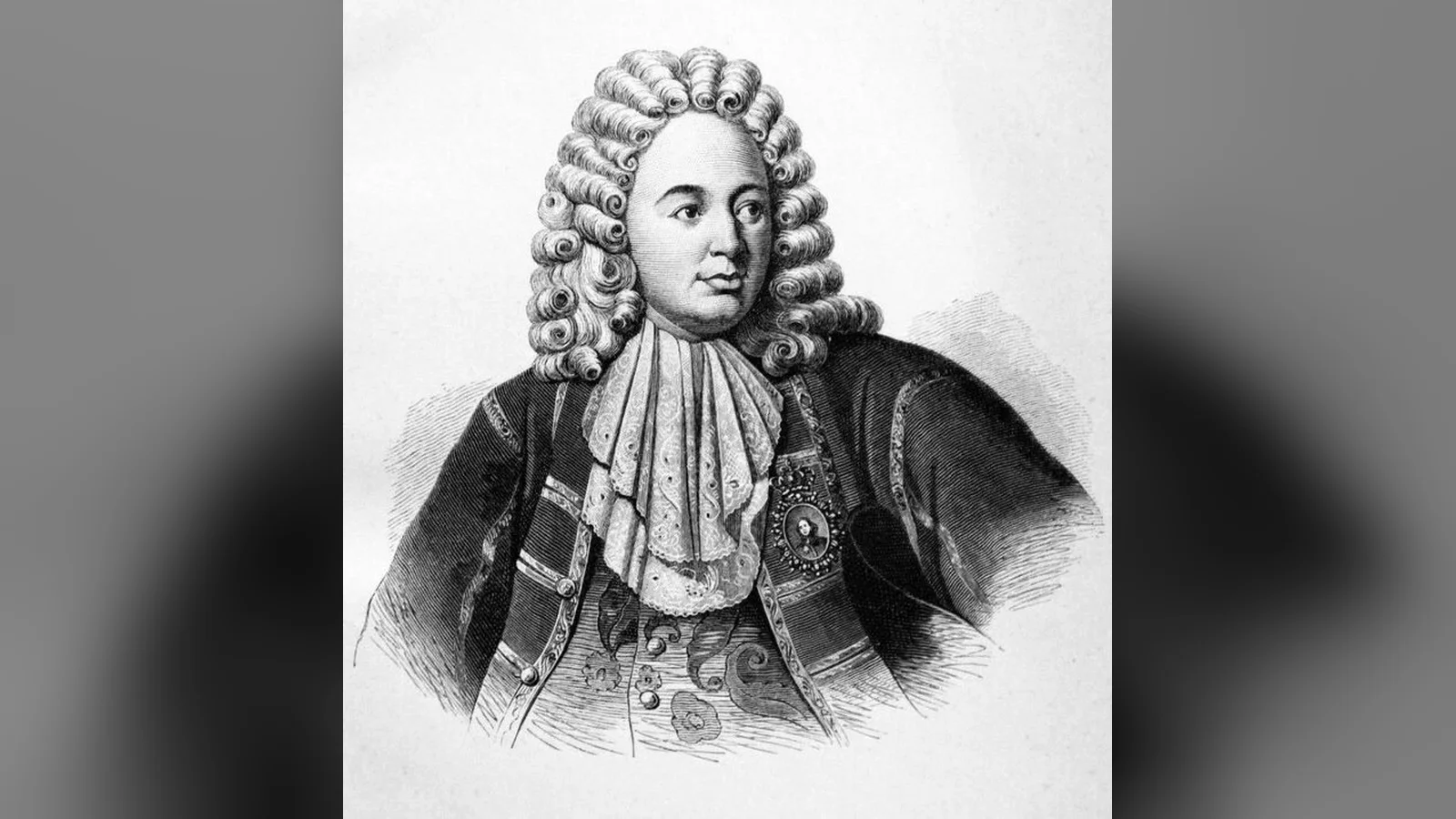

Patrick Gordon of Auchleuchries (1635–1699): The Aberdeenshire Soldier Who Served Peter the Great
Contents
Patrick Gordon left Aberdeen at sixteen with a little money and no friends abroad. Over the next ten years he fought for Sweden, then Poland, then Sweden and Poland again, changing sides when he was captured or when the pay looked better. In 1661 he went to Moscow, meaning to stay three years. He stayed thirty-eight. He rose from major to full general, defended Chyhyryn against the Ottoman army in 1678, brought the foreign officers over to the young Peter I in the crisis of 1689, planned the earthworks that took Azov in 1696 and crushed the Streltsy revolt of 1698. Peter was at his bedside when he died. Gordon kept a diary in English for forty years, and it is one of the main sources for Russia in his lifetime. This account draws on the selections from it printed by the Spalding Club in 1859.
TL;DR
- established Gordon was born on 31 March 1635 at Easter Auchleuchries in the parish of Cruden, Aberdeenshire, a Catholic and "the younger sone of a younger brother of a younger house". He sailed from Aberdeen for Danzig in June 1651.
- established Between 1655 and 1661 he served Sweden and Poland-Lithuania in turn, was captured several times, and left Warsaw for Moscow in 1661 on the promise of a short engagement.
- established His own service record lists his promotions in Russia: lieutenant-colonel 1662, colonel 1665, major-general 1678 after the siege of Chyhyryn, lieutenant-general 1683 and general in 1687.
- established In August 1689 he led the foreign officers out of Moscow to join Peter at the Trinity monastery, and in June 1698 he defeated the rebel Streltsy at the Resurrection monastery and took part in the torture and executions that followed.
- shared The plan of rolling a great bank of earth up to the walls of Azov in 1696 is credited to Gordon by his son-in-law and by Captain John Perry, but both wrote years later and his son-in-law's account of his own career is not trusted.
Key Facts
- Born
- 31 March 1635, Easter Auchleuchries, parish of Cruden, Aberdeenshire
- Died
- 29 November 1699, Moscow (Russian calendar)
- Parents
- John Gordon and Mary Ogilvie, owners of Auchleuchries
- Religion
- Roman Catholic throughout his life
- Left Scotland
- June 1651, by ship from Aberdeen to Danzig
- Armies served
- Sweden (1655–56, 1656–58), Poland-Lithuania (1656, 1659–61), Russia (1661–99)
- Highest rank
- General (1687); also commander of the Butyrki regiment
- Known in Russia as
- Pyotr Ivanovich ("Peter, son of John")
- Missions to Britain
- 1666–67 (for Tsar Alexis to Charles II) and 1686 (leave to visit his estate)
- Wives
- Katharine von Bockhoven (married 1665); a second wife of Dutch family, married before 1686
- The diary
- Written in English; six volumes survive, covering 1635–67, 1677–78 and 1684–99
- Buried
- Before the high altar of the Catholic church in Moscow's foreign quarter
Scottish Impact Index (SI Score)
- Global Influence
- 4/10
- Enduring Relevance
- 4/10
- Material Contribution
- 4/10
- Exceptional Achievement
- 6/10
- Lasting Legacy
- 4/10
- Recognition
- 2/10
24/60
Ranked =140th of 179 in Great Scots
A Note on Claims and Evidence
Each major claim carries one of three labels. established means supported by primary records, official bodies or several independent reliable sources. shared means the core fact is sound but sources disagree on details, dates or interpretation. traditional means widely repeated but not traceable to a primary or independent source.
Each claim carries one of three labels. established means supported by primary records or several independent reliable sources. shared means the core fact is sound but sources disagree on details or interpretation. traditional means widely repeated but not traceable to a primary or independent source.
Gordon's diary is the main source for his life, and it has to be read with care. The 1859 Spalding Club edition, edited by Joseph Robertson, prints only selections. Gordon's own words cover his early life, his mission to England in 1666–67 and his journey to Scotland in 1686. Most of the rest is the editor's English summary of the German version made by M. C. Posselt (1849–53), with occasional translated passages, so it is two steps from Gordon's text. Two long gaps in the diary (1667–77 and 1678–84) are filled from Russian military records. Gordon wrote his account of the years before about 1662 after the event, and the German editors warned that his history of public events is not always reliable. Dates in Russia follow the Russian (Julian) calendar, ten days behind the Western one.
Timeline
Born at Easter Auchleuchries, parish of Cruden.
Schooled at Cruden and Ellon. As a Catholic he refuses to go to a Scottish university.
Sails from Aberdeen in a Danzig ship. Studies at the Jesuit college at Braunsberg (Braniewo) in Prussia.
Leaves the college and wanders through Prussia and Poland, helped by Scottish merchants at Danzig, Kulm and Poznań.
Enlists at Hamburg as a trooper in the Swedish army for the invasion of Poland; wounded near Kraków.
Captured by the Poles and enlisted as a dragoon; recaptured by the Swedes and joins Robert Douglas's company of Scots.
With about fourteen other Scots he plans to kill an English envoy named Bradshaw, taking him for the regicide. The plan is abandoned.
Captured again; takes service with the Poles as quartermaster.
Fights for Poland in the defeat of the Russians at Chudniv (Czudnów).
Arrives in Moscow and is enrolled as major in Colonel Daniel Crawford's regiment.
Lieutenant-colonel.
Marries Katharine von Bockhoven; made colonel in February.
Carries a letter from Tsar Alexis to Charles II in London.
Defends Chyhyryn in Ukraine against Ottoman and Crimean Tatar armies; made major-general in August 1678.
Given the chief command at Kyiv.
Lieutenant-general.
Visits London and Scotland; James VII and II asks the tsars to release him. Back in Moscow he is threatened with exile, then pardoned.
Quartermaster-general of the first Crimean campaign; promoted general.
Leads the foreign officers to Peter at the Trinity monastery during the fall of the regent Sophia.
Sails with Peter at Archangel as rear-admiral.
First siege of Azov fails.
Second siege; Azov surrenders.
Defeats the rebel Streltsy at the Resurrection (New Jerusalem) monastery.
Dies in Moscow, with Peter present.
Details
Auchleuchries and Cruden
established Gordon was born on the last day of March 1635 at Easter Auchleuchries, in the parish of Cruden in Buchan. His parents, John Gordon and Mary Ogilvie, owned the small estate. On his father's side he descended from the Gordons of Haddo, later Earls of Aberdeen; through his mother he was related to the Ogilvies of Deskford and Findlater. The editor found that the estate's five or six small farms brought in about £360 Scots (£30 sterling) a year and were heavily mortgaged.
established He was taught at the parish schools of Cruden and Ellon. Schooling was broken off in the troubled years of the mid-1640s, when his father hired a tutor at home. In 1651, aged sixteen, he decided to go abroad. He gave three reasons: to escape a youthful love affair, to be free of his parents' close supervision, and because his inheritance was small. He also wrote that, because he dissented in religion, he was unwilling to go to a Scottish university. His family were Catholics in a Protestant country.
A Scot among Scots in Prussia and Poland
established Gordon left Aberdeen on 13 June 1651 in an eighteen-gun merchant ship of Danzig. In Danzig he lodged with a Scot, John Donaldson, in Holy Ghost Street, and went on to the Jesuit college at Braunsberg. He found the life too strict and left in 1653, meaning to go home. Walking back to Danzig, he was rescued from a man he took for a robber by a Scottish pedlar measuring lawn in a village inn.
established His account of the next year shows how thickly Scots were spread through the region. A Scottish merchant, John Smith, put him up at Schwetz; a namesake took him in for the winter at Kulm; another Scot, John Dick, an apprentice to a merchant called Robert Sleich, went with him to Warsaw, hoping to find a place in Prince Janusz Radziwiłł's life company, which was "all or most Scottismen". At Poznań the Scottish merchants James Lindsay, Robert Farquhar, James Ferguson and others fed him, found him a place with a young Polish nobleman and sent him off with money. Lindsay at first mocked his names: "Gordon and Ogilvie! these are two great clannes, sure you must be a gentleman!"
Changing sides, 1655–1661
established At Hamburg in 1655 the officers raising troops for Charles X of Sweden talked him into the army. He served as a trooper in the invasion of Poland, was wounded below the ribs in a skirmish near Kraków and had a horse shot under him. In January 1656 he was captured by the Poles. After seventeen weeks under arrest he was freed through a Scottish Franciscan, Father Innes, on condition that he served Poland, and he became a dragoon under Constantine Lubomirski. Captured by Brandenburg troops after the battle of Warsaw in July 1656, he was taken to the Swedish general Robert Douglas, a Scot, and joined a company of Scots that Douglas was forming as a training school for officers.
established Gordon does not hide how the Scots lived. He describes taking protection money from peasants sheltering on a Vistula island, and a racket in which comrades drove off a nobleman's cattle and Gordon was paid for "recovering" them. He wrote that in the Swedish army a soldier who would not live by plunder must starve or be eaten by vermin. In 1658, captured again, he turned down a dragoon company offered by John Sobieski, the future king, as a dead end, and in 1659 took a quartermaster's post with the Poles. He fought for Poland at Chudniv in June 1660, when a Russian army was destroyed.
established In early 1658, with about fourteen other Scots in Swedish service, he planned to stab an English envoy named Bradshaw on his way back from Moscow. They believed he was the John Bradshaw who had presided at the trial of Charles I. The editor notes that he was not. The plan was dropped when they learned that forty dragoons had arrived to escort him.
To Moscow, 1661
established In 1661 Gordon was choosing between offers. He agreed to help raise a regiment of horse for the Emperor with another Scot, Lieutenant-Colonel Patrick Gordon, called "Steelhand", but Russian envoys in Warsaw and Colonel Daniel Crawford pressed him to serve the tsar, promising silver pay and an engagement of only three years. He told the imperial ambassador he was going to fetch his belongings from Toruń, and went to Russia instead. He kissed Tsar Alexis's hand at Kolomenskoye on 5 September 1661 and was enrolled as major in Crawford's regiment.
established He was disappointed at once. The pay came in debased copper coin, worth a quarter of its face value; officials expected bribes; foreigners could not marry Russians or hold civil office without converting. When he was made to take the oath of loyalty, he refused to swear service for life and was held in the office until he agreed to serve for as long as the war with Poland lasted. He then spent most of four decades trying to leave.
Marriage and the 1666 mission to London
established In 1662 Gordon, by then a lieutenant-colonel, decided after listing the arguments for and against that he should marry. He chose Katharine von Bockhoven, daughter of a Catholic colonel held prisoner by the Poles. The editor's summary says she was "scarcely thirteen" when he proposed in January 1663. They married early in 1665, and their first daughter was born that year. Katharine died before 1682, and Gordon kept the anniversary of her death as a day of mourning for the rest of his life. He remarried, to a woman of Dutch family, before 1686.
established In June 1666 he was ordered to carry Tsar Alexis's reply to a letter from Charles II. Relations had been poor since the Earl of Carlisle's embassy to Moscow in 1664, and no Russian would take the letter, so a foreigner was sent. Gordon travelled by Riga, Lübeck, Hamburg and Flanders and reached London in October 1666, weeks after the Great Fire. Lauderdale took him to the king, who said the message was the more welcome because the tsar had entrusted it to one of Charles's own subjects. Gordon came home in June 1667 to find himself out of favour; he was not received by the tsar and was not repaid his costs until the next reign.
Chyhyryn, 1677–1678
established From 1670 Gordon served for seven years in Ukraine, which, the editor says, he used to study mechanics and fortification. He was at the defence of Chyhyryn, the Cossack capital, against the Ottomans in 1677. In 1678 he was sent back as chief engineer and, after the governor was killed on 8 August, the officers asked him to take command. Deserters told him the Ottoman army numbered about 50,000, with as many Crimean Tatars; the garrison was under 12,000.
shared The editor's summary, from Posselt, describes Gordon holding the town for weeks, being ordered to evacuate, firing the powder magazine and escaping across a bridge where Ottoman soldiers were carrying the heads of fugitives. It says the explosion killed four thousand Turks. That figure comes from the diary as summarised and has not been checked against other sources. established His service record shows he was made major-general on 20 August 1678 for his service at Chyhyryn.
Kyiv, Golitsyn and the 1686 journey
established Gordon commanded at Kyiv from 1679 and was promoted lieutenant-general in 1683. There he became friends with François Lefort, a Genevan officer who would become Peter's closest companion. After the accession of the Catholic James VII and II in 1685, Gordon asked again to go home. He was given leave in 1686 for a visit only, with his wife and children kept in Moscow as pledges.
established The account of this journey is in his own words and is full of prices. In London in April and May 1686 he paid a penny for a newspaper and between a penny and sixpence for a cup of tea, and took rooms in Pall Mall for eleven shillings a week. James received him several times, questioned him about the Russian army and Chyhyryn, took him to Tilbury, Sheerness and Chatham, and at Windsor pressed him to come back soon. Gordon rode north with Sir Ewen Cameron of Lochiel, was entertained by the Duke of Gordon and the Scottish nobility in Edinburgh, and in late June reached Buchan, where he walked over his own fields "to my great satisfaction and contentment". Aberdeen gave him a civic entertainment and made his relations burgesses.
established James wrote to the tsars asking them to release Gordon with his family, and the Earl of Middleton told him he was to be James's envoy extraordinary to Russia. The Russian court took this badly. In November 1686 Gordon was warned that unless he begged for pardon he and his family would be sent to some remote part of the empire. He submitted. In December the tsars refused to accept him as envoy, pardoned him and restored his rank. Gordon called the whole affair a "stage play".
General, and Peter's man
established Gordon was quartermaster-general of the Crimean campaigns of 1687 and 1689, both of which turned back short of the Crimea. He was made general after the first. In 1688 the patriarch complained that Russian arms would not prosper while a heretic commanded the best troops. In the same year Peter, then fifteen, began drawing drummers, fifers and grooms from Gordon's Butyrki regiment for his play regiments, and Gordon's name appears with him more and more.
established In August 1689 the struggle between Peter and his half-sister, the regent Sophia, came to a head. Peter fled to the Trinity monastery and ordered the troops in Moscow to join him; Sophia forbade them. Gordon showed Peter's order to Sophia's minister, Prince Vasily Golitsyn, who temporised. Gordon then told the other foreign officers that he would march that night whatever the Kremlin ordered, and they followed him. shared The editor calls this one of the two occasions on which Gordon "saved the throne of Peter the Great". The officers' move mattered, but Peter's victory also rested on the Streltsy and boyars who went over to him, and the phrase is the editor's.
established Over the next ten years Gordon dined and drank with Peter, set off fireworks with him and sailed with him from Archangel in 1694 as rear-admiral. In 1695 he wrote that he had driven with Peter to the iron works, "where I hammered a broad plate". He took the style of Ivanovich, a mark of noble status, in 1689.
Azov, 1695–1696
established Peter's first siege of Azov, the Ottoman fortress at the mouth of the Don, failed in 1695. Gordon opposed the assault of August, which cost about 1,500 men, and blamed it on "Rehoboam's councillors". Azov surrendered after a second siege in the summer of 1696. Gordon received a medal, a gold cup, a sable robe and an estate with ninety serfs; Peter also gave him lands confiscated from Golitsyn.
shared Gordon's son-in-law Alexander Gordon of Auchintoul, who served at the siege, wrote that the general proposed rolling a huge rampart of earth forward to the walls with ten or twelve thousand men working in shifts, and that this forced the surrender with the loss of about three hundred men. Captain John Perry, in 1716, also credits a rolling bank of earth to "General Gordon". Both accounts are secondary and were written years later, and Posselt challenged the accuracy of Auchintoul's memoir of his own career.
The Streltsy, 1698
established Peter left for western Europe in 1697 and Gordon was second in command of military affairs. In June 1698 four Streltsy regiments marched on Moscow. Gordon met them at the Resurrection monastery on 17–18 June, offered pardon and pay if they turned back, and when they refused had his guns fire over their heads. The rebels cheered. The next rounds were aimed, and within an hour the revolt was over; Gordon recorded twenty-two rebels killed on the spot and about forty wounded.
established His diary then records what followed: prisoners tortured to name ringleaders, men of one regiment made to draw lots so that every tenth man would die, beheadings and hangings, seventy men hanged on one day. By his count 130 were executed and 1,845 sent to monasteries and prisons. When Peter returned he ordered a harsher inquiry of his own, and many more were killed in the autumn. Gordon was part of that apparatus, not a bystander to it.
Jacobite, Catholic and Aberdeenshire man to the end
established Gordon stayed loyal to James after 1688. At a feast at Voronezh in April 1696 the guests drank William III's health; Gordon refused and drank King James's instead. When he heard of the Boyne he wrote that he wished James had ordered him to stay in Scotland in 1686. established He paid off two of the debts on Auchleuchries and wrote in 1690 that he wanted nothing more than "to come home and end my lyfe, where I received it". He never did. His grandson sold the estate in 1726.
established He died at seven in the morning of 29 November 1699. shared The editor, drawing on earlier accounts, says Peter visited him five times in his last illness, was with him when he died, and led the funeral, at which twenty-eight colonels carried the coffin. He was buried before the high altar of the first stone Catholic church allowed in Moscow, which he had largely paid for.
Family
established Gordon's eldest son John was dismissed from the Russian army, did no better at the Scots College at Douai, and settled at Auchleuchries. James became a colonel in Russia and was captured by the Swedes in 1700. Theodore was a colonel by 1709. His elder daughter, Katharine Elizabeth, married first a German officer, Colonel Strasburg, and then her kinsman Alexander Gordon of Auchintoul, who took her back to Scotland in 1711. Auchintoul commanded for the Jacobites in 1715 and later wrote a History of Peter the Great (Aberdeen, 1755). A nephew, Thomas Gordon of Aberdeen, became a Russian admiral and governor of Kronshtadt.
Did You Know?
- Gordon could not swim. At Chyhyryn he escaped by running across a bridge held by Ottoman soldiers with a sword in one hand and a pistol in the other.
- He walked from Braunsberg to Danzig in 1653 with seven and a half dollars and the clothes he stood in.
- In May 1686 he watched Hamlet performed at Whitehall in front of James VII and II and the court.
- He wrote a Latin epitaph for a fellow Scot, Andrew Arbuthnot, who died in 1684 aged 78: "Scotia me genuit, tenuitque Polonia quondam, / Russia nunc requiem praebet."
- In 1818 Lord Byron listed "General Gordon" in a joking verse letter among the books his publisher John Murray was supposedly preparing; the book was never published.
- The Italian doctor of a Lithuanian prisoner in Moscow was nearly tortured because a Russian guard heard him prescribe cremor tartari (cream of tartar) and took the two men to be plotting about Crim Tartary.
- Six volumes of the diary survive. The volumes for 1667–77 and 1678–84 have never been found.
FAQ
1Who was Patrick Gordon of Auchleuchries?
An Aberdeenshire Catholic soldier who served Sweden and Poland and then Russia from 1661 until his death in 1699, rising to general and becoming one of Peter the Great's most trusted commanders.
2Was he born in Scotland?
Yes. He was born at Easter Auchleuchries, in the parish of Cruden, Aberdeenshire, on 31 March 1635.
3Why did he leave Scotland?
He was a younger son with a small inheritance, he wanted to escape a love affair and his parents' oversight, and as a Catholic he would not attend a Scottish university. Soldiering abroad was a common path for such men.
4Did he really change sides?
Yes, several times. He served Sweden, then Poland after being captured, then Sweden again, then Poland again, before going to Russia. He wrote openly that he was trying to make his fortune and that the Swedes had too many enemies.
5Why did he stay in Russia so long?
Because he was not allowed to leave. He was hired for a short term, but the oath he swore tied him to the Polish war, and later tsars and regents refused his requests. In 1686 he was threatened with exile to a remote part of the empire for pressing the point.
6What did he do for Peter the Great?
He brought the foreign officers over to Peter in 1689, served in the Azov campaigns of 1695–96, commanded in Moscow while Peter was abroad, and defeated the Streltsy revolt of 1698.
7Did he invent the method that took Azov?
His son-in-law and Captain John Perry both credit him with the plan of rolling a bank of earth forward to the walls. Both wrote later and neither is independent, so the attribution is likely but not certain.
8Was he involved in the executions of 1698?
Yes. His diary records the torture of prisoners, the drawing of lots for every tenth man in one regiment, and 130 executions before Peter returned and ordered a harsher inquiry.
9Was he a Jacobite?
Yes. He stayed loyal to James VII and II after 1688, kept up a correspondence with Jacobites in Scotland and refused to drink William III's health in 1696.
10What happened to Auchleuchries?
He cleared part of its debt, but his grandson sold it in 1726. Gordon never returned after 1686.
11Where can I read the diary?
The Spalding Club printed selections in 1859. A fuller German version was published by Posselt in 1849–53, and a complete English edition has been published in several volumes since 2009.
Sources and Further Reading
Primary/Institutional
- Joseph Robertson (ed.), Passages from the Diary of General Patrick Gordon of Auchleuchries, A.D. 1635–A.D. 1699 (Spalding Club, Aberdeen, 1859; new impression, Frank Cass, 1968, as Russia through European Eyes, no. 3, general editor A. G. Cross). Includes Gordon's service record (p. 172), letters of 1690–96 and an appendix of Auchleuchries charters.
- M. C. Posselt (ed.), Tagebuch des Generals Patrick Gordon, 3 vols (Moscow and St Petersburg, 1849–53), as described in Robertson's preface.
Scholarly/Critical
- Alexander Gordon of Auchintoul, The History of Peter the Great, Emperor of Russia, 2 vols (Aberdeen, 1755), as quoted in Robertson's edition, pp. 185–86.
- John Perry, The State of Russia under the Present Czar (London, 1716), as quoted in Robertson's edition, p. 186.
Further reading
- Dmitry Fedosov (ed.), Diary of General Patrick Gordon of Auchleuchries, 1635–1699 (Aberdeen, 2009 onwards), the complete English text in several volumes. Further reading.
Caveats: Myths and Disputed Claims
- Myth: Gordon was stripped to the rank of ensign in 1686. A contemporary, Johann Korb, said so. Gordon's diary shows he was threatened with degradation and exile, then pardoned and restored to his former rank in December 1686.
- Disputed: Gordon "twice saved the throne" of Peter the Great. The phrase is his 1859 editor's. Gordon's move to the Trinity monastery in 1689 and his defeat of the Streltsy in 1698 were both important, but neither was his doing alone.
- Disputed: Gordon devised the earthworks that took Azov in 1696. Two later writers credit him, one of them his son-in-law, whose memoir has been challenged. Neither is independent of the other's circle.
- Disputed: the Chyhyryn magazine explosion killed four thousand Turks. The figure comes from the diary as summarised by its editors and has not been checked against Ottoman or other sources.
- Myth: Patrick Gordon "of the Steel Hand" and Patrick Gordon of Auchleuchries were the same man. They were two officers of the same name and knew each other well. Steelhand was a major and later lieutenant-colonel in Polish and imperial service.
Finished reading? Try the Fact Machine: three reels, one surprising Scottish connection →
Card 171 · Great Scots