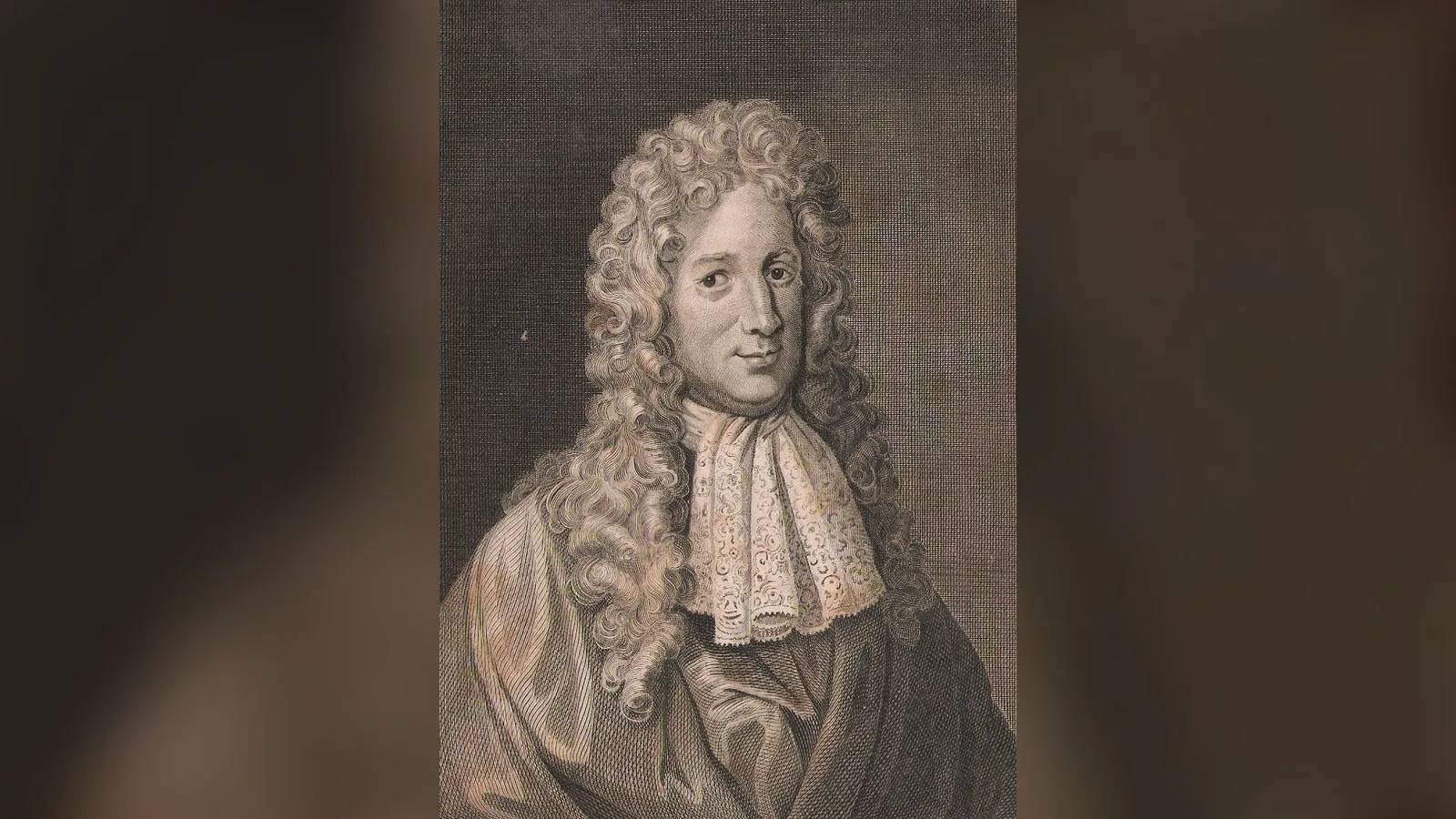

Andrew Fletcher of Saltoun (c. 1653–1716)
Contents
TL;DR
- Established/Documented. Fletcher was the fiercest and most articulate opponent of the 1707 Act of Union in the Scottish Parliament — but his actual position was more specific than "anti-Union": he argued against an incorporating union in favour of a federal one, alongside a detailed programme of constitutional limits on the Crown.
- Established/Documented. His most famous line — "if a man were permitted to make all the ballads, he need not care who should make the laws of a nation" — is real, but it's routinely misquoted today as "let me write the songs of a nation" and wrongly attributed to Plato; it was Fletcher's own observation, made in 1703, about the persuasive power of popular culture.
- Established/Documented, and rarely mentioned. In an earlier 1698 pamphlet, Fletcher proposed solving Scotland's vagrancy crisis by placing tens of thousands of the poor into compulsory, hereditary servitude — a genuinely dark scheme that sits uncomfortably beside his later reputation as a champion of liberty, and this article does not minimise it.
- Shared/Traditional. Fletcher has become a symbol for modern Scottish nationalist and republican politics; the degree to which this popular image reflects his actual, more complicated political programme is worth examining rather than assuming.
- disputed Historians differ sharply on how to weigh Fletcher overall — some see a serious, prescient constitutional thinker; others see an admirable stylist attached to a fundamentally unworkable and backward-looking vision of Scottish society.
Key Facts
- Born
- c. 1653–1655, Saltoun, East Lothian (exact year disputed)
- Died
- September 1716, Paris (aged around 61)
- Family
- Son of Sir Robert Fletcher; educated under Gilbert Burnet, later Bishop of Salisbury
- Role
- Commissioner to the Scottish Parliament (Haddingtonshire); political writer and theorist
- Major works
- A Discourse of Government relating to Militias (1698); Two Discourses concerning the Affairs of Scotland (1698); An Account of a Conversation concerning a right regulation of Governments (1703)
- Best known for
- Leading opposition to the 1707 Act of Union; the "Twelve Limitations" constitutional proposals (1703–04)
- Marital status
- Never married; died in Paris while travelling
Scottish Impact Index (SI Score)
- Global Influence
- 3/10
- Enduring Relevance
- 7/10
- Material Contribution
- 2/10
- Exceptional Achievement
- 6/10
- Lasting Legacy
- 4/10
- Recognition
- 2/10
24/60
Ranked =143rd of 200 in Great Scots
How This Article Handles the Evidence
Fletcher presents a genuine gap between popular reputation and full historical record — more so than most figures in this series. The modern image, cultivated heavily by later nationalist and republican movements, is of an uncomplicated patriot-hero who fought for Scottish liberty against English domination. The actual record includes that fight, conducted with real intellectual seriousness — but it also includes a proposal, made just a few years before his Union stand, to enslave Scotland's poor. Both are documented in his own published writing. This article gives both equal, unflinching weight rather than quietly filing one under "context" and the other under "legacy."
Timeline
Born at Saltoun, East Lothian.
Elected Commissioner for Haddingtonshire to the Scottish Parliament.
Re-elected; opposes the Duke of Lauderdale's use of taxation and a standing army to entrench royal power in Scotland.
Charged with plotting against Charles II; flees into exile in the Netherlands.
Joins the Duke of Monmouth's rebellion against James VII/II with a cavalry command; kills a fellow rebel, Thomas Dare, in a dispute over a horse, and is dismissed from the expedition. Escapes capture after the rebellion collapses.
Serves in Hungary fighting alongside forces resisting the Ottoman Empire.
Returns to Britain with William of Orange during the Glorious Revolution.
Publishes A Discourse of Government relating to Militias and Two Discourses concerning the Affairs of Scotland, the latter containing his controversial vagrancy-servitude proposal.
Darien Scheme collapses, devastating Scotland's finances; Fletcher remains a defender of the venture's aims even as it fails.
Re-elected to the Scottish Parliament amid the debates that will lead to Union; publishes An Account of a Conversation concerning a right regulation of Governments, containing his "ballads" remark.
Proposes his "Twelve Limitations" — a detailed programme to constrain royal power and secure Scottish self-government short of full separation.
The Act of Union passes despite his opposition; Fletcher withdraws from active politics.
Dies in Paris while travelling, reportedly with the words "Lord have mercy on my poor country that is so barbarously oppressed."
Details
Formation of a "Country Party" politician
Fletcher was born into the East Lothian gentry and educated privately under the tutorship of Gilbert Burnet, later Bishop of Salisbury — a formative influence that gave him an unusually thorough grounding in classical and continental political thought. He assembled what contemporaries described as one of the best private libraries in Scotland, and his writing throughout his life shows the marks of a serious, well-read intellectual rather than a mere pamphleteer.
He entered the Scottish Parliament in 1678 as Commissioner for Haddingtonshire and quickly aligned with the "Country Party" opposition to the Duke of Lauderdale, whose management of Scotland on behalf of Charles II involved heavy taxation and a standing army Fletcher regarded as instruments of arbitrary royal power. This early hostility to unchecked executive authority — royal or otherwise — runs through his entire career.
Exile, rebellion, and a fatal quarrel
Charged with conspiracy against Charles II in 1683, Fletcher fled to the Netherlands, where he became involved with the Duke of Monmouth's circle of exiled opponents of the Stuart monarchy. When Monmouth launched his 1685 rebellion against the newly crowned James VII/II, Fletcher took a cavalry command — but the campaign ended for him almost immediately: in a dispute over a requisitioned horse, he killed a fellow rebel officer, Thomas Dare, and Monmouth sent him away from the expedition. Fletcher escaped capture after the rebellion's defeat and spent the following years on the Continent, including a period fighting alongside forces resisting Ottoman expansion in Hungary — an episode about which detailed sources are relatively thin, but which is broadly accepted by biographers.
He returned to Britain in 1688 with William of Orange during the Glorious Revolution, initially hopeful that the new regime would favour Scottish self-government. That hope soured: Fletcher came to believe William's interest in Scotland was chiefly as a source of troops and revenue for his continental wars, and he drifted into a more independent, increasingly Scotland-focused opposition politics.
The vagrancy pamphlet: the part of the record often left out
Established/Documented, and central to a fair account of Fletcher: in his 1698 pamphlet Two Discourses concerning the Affairs of Scotland, written against the backdrop of the "Seven Ill Years" of famine and economic crisis, Fletcher proposed that the large population of vagrants and beggars then overwhelming Scotland's parishes be placed into compulsory, hereditary servitude — bound to landowners who would be responsible for their labour and upkeep, with the condition passing to their children. This was not a passing aside; it was a considered policy proposal, set out at length, from a man responding to what he saw as a genuine social emergency of mass destitution.
It needs to be read in its 17th-century context — coerced labour schemes for vagrants and the poor were a live policy discussion across contemporary Europe, and Fletcher was not proposing something wholly outside the intellectual currents of his time. But that context explains the proposal; it doesn't erase it. This is the same man who, a few years later, would become Scotland's most eloquent public voice against the loss of Scottish liberty to an incorporating union with England — and it is worth sitting with that contradiction rather than resolving it in his favour. Modern accounts of Fletcher that present him purely as a liberty-championing patriot typically omit this pamphlet altogether; this article does not.
The republican and civic humanist vision
Fletcher's broader political philosophy drew on classical and Renaissance civic humanism — the tradition running through Machiavelli's republican writing — with a particular emphasis on martial virtue, civic participation, and suspicion of both standing armies and commercial luxury as corrupting forces. His companion 1698 work, A Discourse of Government relating to Militias, argued for replacing professional royal armies with locally raised, citizen-based militias, on the grounds that a population that bears arms in its own defence retains a check on tyranny that a population reliant on a monarch's paid soldiers does not. Shared/Traditional: the phrase "well regulated militia," later echoed in the United States' Second Amendment, appears in Fletcher's militia writing, and some historians of political thought trace an influence, though the line of transmission from Fletcher specifically to the American framers is not always precisely established and shouldn't be overstated as direct causation.
Opposing the Union — and what he actually proposed instead
Fletcher's stand against the 1707 Act of Union is the core of his historical reputation, and it deserves to be stated precisely rather than in the flattened form it's often given. He did not simply oppose "Union" in the abstract, nor did he argue for outright Scottish separation with no relationship to England at all. What he opposed specifically was an incorporating union — the dissolution of the separate Scottish Parliament and state into a single British one dominated, given the population and wealth disparity, by England. His preferred alternative, developed across his speeches and the "Twelve Limitations" he brought before the Scottish Parliament in 1703–1704, was a looser federal arrangement, or a shared monarchy with strict constitutional limits on royal power, that would have preserved Scotland's distinct parliament and legal sovereignty.
The Twelve Limitations themselves were a genuinely detailed constitutional programme: annual parliaments elected by secret ballot, parliamentary control over declarations of war and the raising of armies, parliamentary appointment of major civil and military officers, a standing council accountable to Parliament during recesses, and explicit provision for forfeiting the crown if a monarch violated these conditions. They failed to pass in that form, but elements of the same thinking fed into the Scottish Parliament's Act of Security (1704) and Act anent Peace and War (1703), both genuine, documented attempts to assert Scottish parliamentary independence in the years immediately before Union.
He was also a committed, if ultimately disappointed, supporter of the Darien Scheme — Scotland's catastrophic attempt to establish a trading colony in Panama — seeing it as a path to genuine Scottish economic independence rather than dependence on England. Its financial collapse in 1700 helped devastate the very Scottish landed and merchant class whose independence Fletcher wanted to secure, and, historians generally agree, made some form of union with England more financially attractive to the Scottish elite than it would otherwise have been — an irony Fletcher lived to see play out against his own case.
The famous quotation, properly sourced
Established/Documented. In his 1703 work An Account of a Conversation concerning a right regulation of Governments, Fletcher wrote: "I knew a very wise man so much of Sir Christopher's sentiment, that he believed if a man were permitted to make all the ballads, he need not care who should make the laws of a nation." The remark, attributed by Fletcher to an unnamed "very wise man," reflects a genuine argument about political power: that popular culture — songs, ballads, the stories a people tell about themselves — shapes a nation's values and loyalties more durably than formal legislation does.
Today the line is very widely quoted in a shortened, altered form — "let me write the songs of a nation, and I care not who makes its laws" — and just as widely misattributed to Plato. Disputed origin of the misattribution: research into the error traces it to an ambiguous passage in a 20th-century music history textbook, not to any ancient source. Fletcher's own version used "ballads," not "songs," and "make," not "write" — small differences that shift the emphasis from creative authorship toward something closer to popular circulation and repetition.
Final years and death
After the Union passed in 1707, Fletcher largely withdrew from active political life, turning instead to agricultural improvement on his Saltoun estate — among other things, he is traditionally credited with introducing an improved design of barley mill to Scotland, though the details of this claim vary between sources and should be treated as Shared/Traditional rather than firmly established. He died unmarried in Paris in September 1716 while travelling on the Continent. His reported last words — "Lord have mercy on my poor country that is so barbarously oppressed" — are widely repeated but, as with many recorded deathbed statements from this period, rest on secondhand report rather than a contemporary witness transcript, and should be read with that caveat.
Legacy: patriot symbol versus the fuller record
Shared/Traditional, worth naming directly: Fletcher has been adopted extensively as a symbol by later Scottish nationalist, republican, and pro-devolution political movements, his name and image invoked as an early and eloquent voice for Scottish self-government. Thomas Jefferson is recorded praising his "political principles" as worthy of the "purest periods" of British constitutional thought, and 20th-century philosopher Alasdair MacIntyre credited him with understanding, almost alone among his contemporaries, the real dilemma facing Scotland at the Union. Other historians are more skeptical: Arthur Herman, for instance, while acknowledging Fletcher as a genuine intellectual, has characterised his broader social and economic vision — rooted in an agrarian, militia-based, anti-commercial civic republicanism — as fundamentally backward-looking rather than a realistic programme for Scotland's future.
Both assessments can be true at once. Fletcher's constitutional critique of incorporating union was serious, detailed, and in some respects prescient about the terms on which Scotland would in fact be governed within Britain. His vagrancy-servitude proposal was a real and troubling part of the same body of political thought. A fair modern account holds both together rather than choosing the flattering half.
Fletcher among the Union debaters
The historian Clare Jackson notes that Fletcher's position was more complicated than simple opposition. In January 1689, after the Revolution, he admitted he could not conceive "any true settlement but by uniting with England in Parliaments", though he thought religious and legal union unworkable. By 1703 he complained that Scotland under an absentee monarch was "totally neglected, like a farm managed by servants, and not under the eye of the master". His ideal was a confederal union of equal partners, "a sort of United Provinces of Great Britain", which would have required dividing England itself into smaller units and could, he hoped, serve as a model for Europe.
Jackson adds that historians no longer treat Fletcher as the lone authority of the Union debates. John Robertson credited him with their sophistication, but recent work has recovered many other writers, including Lord Belhaven, James Hodges, George Mackenzie (Earl of Cromarty), William Paterson, George Ridpath, William Seton of Pitmedden and Daniel Defoe. The range of alternatives they discussed was so wide that Colin Kidd has called the Union debates of 1698–1707 "largely … an intra-unionist conversation".
Did You Know
- In 1689 Andrew Fletcher of Saltoun said he could not conceive "any true settlement but by uniting with England in Parliaments", though he later fought the incorporating Union of 1707.
- Fletcher's most famous quotation is almost never quoted correctly — the real line concerns "ballads," not "songs," and it is routinely, and wrongly, attributed to Plato.
- Before he became Scotland's leading Unionist opponent, Fletcher had already been an exiled conspirator against Charles II, a cavalry officer in Monmouth's failed rebellion, and a soldier fighting the Ottoman Empire in Hungary.
- He killed a fellow rebel officer, Thomas Dare, in a quarrel over a horse during the 1685 Monmouth Rebellion — an episode that ended his part in the campaign almost as soon as it began.
- His 1698 proposal to solve Scottish vagrancy through compulsory hereditary servitude is rarely mentioned alongside his later reputation as a champion of liberty.
- His "Twelve Limitations" of 1703–04 proposed annual parliaments elected by secret ballot — a genuinely radical idea for the time.
- Phrasing from his 1698 militia writings, including "well regulated militia," has been traced by some historians as an influence on the wording of the United States' Second Amendment.
- He died unmarried in Paris in 1716, reportedly still lamenting Scotland's loss of self-government.
- Thomas Jefferson later praised Fletcher's political principles directly.
Frequently Asked Questions
1Was Andrew Fletcher simply against the Union with England?
Not exactly — he opposed a specific kind, an incorporating union that abolished Scotland's own parliament. He proposed an alternative: either a federal union or continued separate Scottish sovereignty under constitutional limits on royal power, set out in detail in his "Twelve Limitations" of 1703–04.
2What is the real version of his famous quote about songs and laws?
"If a man were permitted to make all the ballads, he need not care who should make the laws of a nation," from his 1703 work An Account of a Conversation concerning a right regulation of Governments. The popular version — "let me write the songs of a nation..." — is a later paraphrase, and the attribution to Plato that often accompanies it is simply wrong.
3Did Andrew Fletcher really propose enslaving people?
Yes. In his 1698 pamphlet Two Discourses concerning the Affairs of Scotland, written during a severe famine and vagrancy crisis, he proposed placing Scotland's vagrant poor into compulsory, hereditary servitude to landowners. This is a documented part of his published work, not a later distortion of his views.
4Why is this proposal not better known?
Because his later reputation as an anti-Union patriot has come to dominate popular memory of him, particularly through 20th- and 21st-century nationalist and republican invocations of his name — and the vagrancy proposal sits awkwardly beside that image, so it tends to be left out.
5Was Fletcher involved in the Darien Scheme?
He was a strong supporter of Scotland's attempt to found a trading colony at Darien in Panama, seeing it as a route to genuine Scottish economic independence. Its financial collapse in 1700 helped weaken the very independence he was arguing for, by leaving many in the Scottish elite more receptive to union with England.
6What happened to Fletcher after the Union passed in 1707?
He largely withdrew from active politics and turned to agricultural improvement on his Saltoun estate, dying in Paris in 1716 while travelling.
7Is Andrew Fletcher a reliable symbol for modern Scottish nationalism?
His constitutional critique of incorporating union is genuinely substantial and worth taking seriously on its own terms. But treating him as a simple, uncomplicated patriot-hero requires leaving out the 1698 servitude proposal — a fuller picture holds both facts together rather than selecting only the flattering one.
8Did Fletcher actually fight against the Ottoman Empire?
Sources describe him serving in Hungary against Ottoman forces during his years of continental exile in the 1680s, though the documentary detail on this specific episode is thinner than for the rest of his career.
9Is his connection to the U.S. Second Amendment's "well regulated militia" phrase well established?
The phrase does appear in Fletcher's 1698 militia writings, and some historians of political thought note this as a possible influence. The precise chain of transmission to the American framers is not conclusively documented, so this should be treated as a plausible intellectual connection rather than a proven direct line.
Sources and Further Reading
Primary/Institutional
- Andrew Fletcher, Two Discourses concerning the Affairs of Scotland (1698) — Internet Archive digitised copy
- Andrew Fletcher, Selected Discourses and Speeches — Online Library of Liberty
- Fletcher, Andrew, of Saltoun — Oxford Dictionary of National Biography
Scholarly
- G. W. T. Omond, Fletcher of Saltoun — Project Gutenberg edition
- Andrew Fletcher (patriot) — overview and bibliography
- Clare Jackson, "Union Historiographies", in T. M. Devine and Jenny Wormald (eds), The Oxford Handbook of Modern Scottish History (Oxford University Press, 2012)
General
Caveats: Myths and Disputed Claims
- "Fletcher simply opposed the Union." Corrected throughout this article — his actual position favoured a federal alternative or constitutionally limited separate sovereignty, not blanket anti-Union sentiment for its own sake.
- The vagrancy-servitude proposal is frequently omitted entirely from popular accounts of Fletcher. This article treats it as an established, documented part of his record, not a footnote.
- The "ballads/songs" quotation is widely mangled in both wording and attribution (commonly, and wrongly, credited to Plato); the original text and its likely 20th-century mis-sourcing are given directly above.
- His exact birth year is given variously as 1653 or 1655 across sources; this article does not adjudicate between them.
- His reported deathbed words are widely repeated but rest on secondhand report, not a contemporary witnessed transcript.
- The Second Amendment influence claim is a plausible historical connection some scholars draw, not a firmly documented direct line of influence, and is presented here with that qualification.
Card 029 · Great Scots