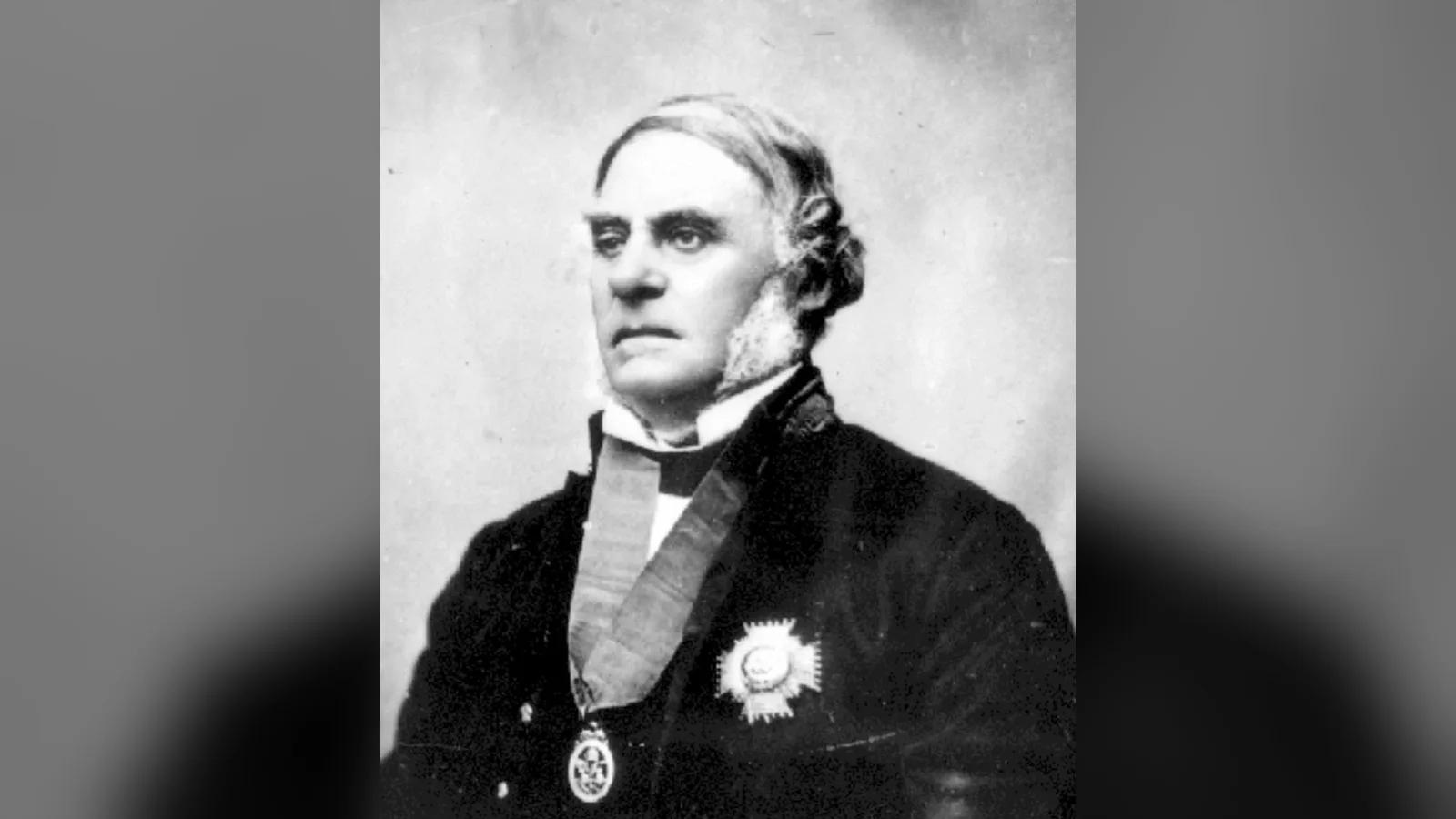

Sir James Douglas: The Fur Trader Who Founded Victoria and Governed British Columbia
Contents
James Douglas was born in Demerara, the son of a Glasgow merchant's son, and schooled in Lanark. At seventeen he crossed to Canada to join the fur trade. Over the next forty years he rose through the Hudson's Bay Company to become its chief factor on the Pacific, chose the site of Fort Victoria in 1843, and governed first the colony of Vancouver Island and then, from 1858, the new colony of British Columbia, holding together a territory flooded by gold miners. His 1908 biographers called him "the greatest figure which the fur trade of Canada ever gave".
TL;DR
- established James Douglas was born at Demerara, British Guiana, on 15 August 1803. His father was the son of John Douglas, a Glasgow merchant. He was taken to Scotland young and educated at a private school in Lanark.
- established He left Scotland in 1820 to join the North West Company, stayed on after its 1821 merger with the Hudson's Bay Company, and rose to chief trader in 1832 and chief factor in 1840.
- established In 1843 he led the expedition from Fort Vancouver that founded Fort Camosun, renamed Victoria. In 1849 the company moved its Pacific headquarters there.
- established He became governor of Vancouver Island in 1851 and, when the Fraser River gold rush brought 20,000 to 25,000 people through Victoria in 1858, governor of the new mainland colony of British Columbia as well, cutting his ties with the company.
- shared Coats and Gosnell credit his restraint with helping to avert war over San Juan Island in 1859, and his roads with opening the Cariboo gold fields. They also record that his spending made lasting enemies.
Key Facts
- Born
- 15 August 1803, Demerara, British Guiana
- Died
- 1 August 1877, Victoria
- Scottish link
- Father the son of John Douglas, merchant of Glasgow; schooled in Lanark
- Fur trade
- North West Company from 1820; Hudson's Bay Company from 1821; chief factor 1840
- Married
- Amelia Conolly, daughter of the chief factor William Conolly
- Founded
- Fort Victoria, 1843
- Governor
- Vancouver Island 1851–63; British Columbia 1858–64
- Honour
- Knighted
- Nickname
- "The Black Douglas"
- Main source
- Robert Hamilton Coats and R. E. Gosnell, Sir James Douglas (The Makers of Canada, vol. 20; Morang, Toronto, 1908)
Scottish Impact Index (SI Score)
- Global Influence
- 7/10
- Enduring Connection
- 8/10
- Material Contribution
- 8/10
- Scottish Diaspora Distinctiveness
- 7/10
- Diaspora Legacy
- 7/10
- Recognition
- 6/10
43/60
Ranked =50th of 93 in Diaspora
A Note on Claims and Evidence
Each major claim carries one of three labels. established means supported by primary records, official bodies or several independent reliable sources. shared means the core fact is sound but sources disagree on details, dates or interpretation. traditional means widely repeated but not traceable to a primary or independent source.
Coats and Gosnell wrote in 1908 for a patriotic series, The Makers of Canada, and they admire their subject. They used the Hudson's Bay Company's journals and Douglas's official dispatches, and they compare conflicting accounts where they find them, notably of the 1828 confrontation at Stuart Lake.
The book is silent on some matters modern historians discuss, including Douglas's mother and his dealings with Indigenous land. Those are left out here rather than supplied from elsewhere.
Timeline
Born at Demerara, British Guiana.
Taken to Scotland and educated at a private school in Lanark.
Leaves Scotland to join the North West Company; reports at Fort William.
The North West and Hudson's Bay Companies merge; John McLoughlin persuades him to stay.
Posted to New Caledonia under the chief factor William Conolly; marries Conolly's daughter Amelia.
Confrontation at Stuart Lake over a man accused of killing two company servants.
Moves to Fort Vancouver on the Columbia as McLoughlin's deputy.
Chief trader.
Chief factor.
Voyage to Monterey to negotiate with the Mexican governor of California.
Leaves Fort Vancouver to found the post that becomes Fort Victoria.
The Oregon Treaty fixes the boundary at the 49th parallel; McLoughlin resigns and Douglas leads the company's western department.
The company's headquarters moves to Victoria.
Governor of Vancouver Island.
Proclamation creating the island's elected assembly, which first meets on 12 August.
Fraser River gold rush. The mainland colony of British Columbia is created by an Act of 2 August; Douglas is inaugurated as its governor at Fort Langley on 17 November and leaves the company.
Dispute with the United States over San Juan Island.
Leaves the island governorship in 1863 and the mainland in 1864; knighted.
Tours Britain and Europe, visiting a daughter near Inverness.
Dies in Victoria.
Details
Demerara and Lanark
established Douglas was born at Demerara, in British Guiana, on 15 August 1803. His father, of whose youth little is known, was the son of John Douglas, a merchant of Glasgow; family tradition traced them to the Douglases, Earls of Angus. James was taken to Scotland at an early age and schooled at a private school in Lanark, where, family tradition says, his French tutor was an exiled French nobleman. The French proved useful in the fur trade.
established In 1820, at about seventeen, he left Scotland to join the North West Company and reported at Fort William. When the North West Company merged with the Hudson's Bay Company in 1821, he was among the men unhappy with the terms. John McLoughlin persuaded him to stay, and later asked for him to come to the Columbia.
New Caledonia
established By about 1823–24 Douglas was in New Caledonia, the company's district in the northern interior of what is now British Columbia, at Fort St James on Stuart Lake under the chief factor William Conolly. He ran the fishery on which the post depended. He married Conolly's daughter Amelia, then about sixteen, whose mother was an Indigenous woman. Companions called Douglas "the Black Douglas", partly for his dark complexion and stern face.
shared In 1828 he was at the centre of a confrontation at Stuart Lake over a man accused of killing two company servants in 1823. Three historians, Bancroft, McLean and Morice, tell the story differently, but in each Douglas acted against the accused and was then seized by the man's people. Coats and Gosnell doubt that the episode was why he was moved; they say he was promoted for his ability.
Fort Vancouver and Victoria
established In 1830 Douglas moved to Fort Vancouver on the Columbia River, the company's Pacific headquarters, as McLoughlin's deputy. He became chief trader in 1832 and chief factor in 1840. He reorganised the accounts, led the express to York Factory in 1835, helped raise the British flag at Fort Stikine, and in 1840–41 sailed to Monterey to negotiate with the Mexican governor of California.
established As American settlers poured into Oregon, the company looked north. On 1 March 1843 Douglas led an expedition from Fort Vancouver to the southern tip of Vancouver Island and built a post at what is now Bastion Square. First called Fort Camosun, then Albert, it was named Victoria in 1845. The Oregon Treaty of 1846 drew the border at the 49th parallel, leaving Vancouver Island British. McLoughlin resigned the same year, and in 1849 Douglas moved the company's western headquarters, and his family, to Victoria.
Governor of Vancouver Island
established The company had proposed Douglas as the island colony's first governor, but London appointed Richard Blanshard, who arrived in March 1850 and left in September 1851. Douglas succeeded him while remaining the company's chief factor. In 1856 he proclaimed the colony's first elected assembly, which met on 12 August. Coats and Gosnell describe his influence with the island's Indigenous peoples as "almost unlimited"; he also led armed parties to secure men accused of killing settlers, who were tried and hanged.
Gold and British Columbia
established In 1858 gold was found on the Fraser River. That spring and summer Victoria grew from a hamlet into a city, with an estimated 20,000 to 25,000 people passing through on the way to the diggings. Douglas toured the mainland and reported gold over a vast area. An Act of 2 August 1858 created the colony of British Columbia, the company's exclusive trading licence on the mainland was revoked, and Douglas agreed to govern both colonies, giving up his ties to the company. He was inaugurated at Fort Langley on 17 November 1858.
shared He built roads to the gold fields, above all the wagon road from Yale to the Cariboo, which his biographers call the "crowning work" of his plans. In 1859, when an American settler shot a company pig on San Juan Island and the US Army landed troops, Douglas proposed joint occupation and kept British forces restrained; the island was eventually awarded to the United States in 1872. Coats and Gosnell praise his judgement but call him "over sanguine" about the colony's growth, and say his spending made lasting opponents.
Last years
established Douglas left the island governorship in 1863 and the mainland in 1864, and was knighted, which his biographers call "the crowning honour of his career". In 1864–65 he toured Britain and Europe, visiting a daughter near Inverness, and returned to Victoria, where he lived quietly. He died on 1 August 1877; Indigenous people paid notable tributes at his funeral. His biographers' verdict was that he was "the greatest figure which the fur trade of Canada ever gave".
Did You Know?
- James Douglas was born in South America and schooled in Lanark.
- His fur-trade companions nicknamed him "the Black Douglas".
- Victoria was first called Fort Camosun, then Albert.
- The 1859 San Juan crisis began when an American settler shot a Hudson's Bay Company pig.
- His wife Amelia was the daughter of a fur-trade officer and an Indigenous woman.
- He read the Bible to his family on Sunday evenings at Fort Vancouver.
FAQ
1Was James Douglas Scottish?
He was born in Demerara to a family of Glasgow merchant stock and was educated in Scotland, which he left at seventeen.
2What did he found?
Fort Victoria, in 1843, which became the city of Victoria, capital of British Columbia.
3What offices did he hold?
Chief factor of the Hudson's Bay Company, governor of Vancouver Island from 1851 and governor of British Columbia from 1858.
4What was the San Juan dispute?
A boundary quarrel with the United States over San Juan Island in 1859, sparked by the shooting of a pig. Douglas helped keep it from becoming a war.
5When did he die?
On 1 August 1877, in Victoria.
Sources and Further Reading
Scholarly/Critical
- Robert Hamilton Coats and R. E. Gosnell, Sir James Douglas (The Makers of Canada, vol. 20; Morang, Toronto, 1908). Free scan at the Internet Archive. Main source.
Further reading (not consulted directly)
- John Adams, Old Square-Toes and His Lady: The Life of James and Amelia Douglas (Horsdal and Schubart, 2001).
- Dictionary of Canadian Biography, entry on Sir James Douglas (free online).
Caveats: Myths and Disputed Claims
- Not Scottish-born. Douglas was born in Demerara; his Scottish link is his family and his schooling.
- Disputed: the Stuart Lake incident of 1828. Three historians tell it three ways; Coats and Gosnell doubt it caused his transfer.
- Not "father of British Columbia". The phrase is often used of him but not by these biographers.
- Silent sources. Coats and Gosnell do not discuss his mother or his land agreements with Indigenous peoples; both need a modern source.
Finished reading? Try the Fact Machine: three reels, one surprising Scottish connection →
Card 080 · Diaspora