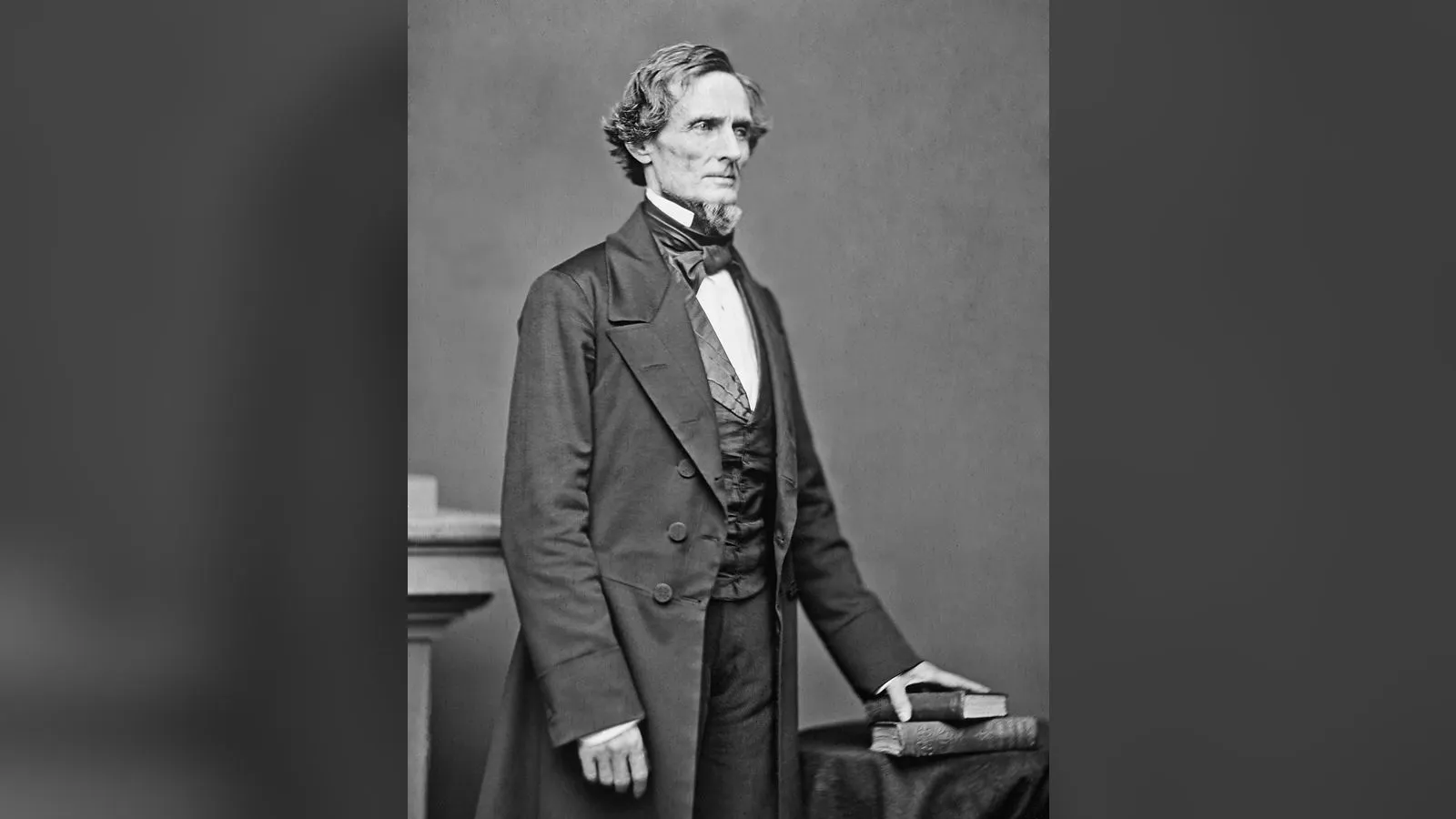

Jefferson Davis (1808–1889)
Contents
TL;DR
- established Jefferson Davis's Scottish ancestry runs through his mother's side, not his surname: his father, Samuel Davis, is documented as having Welsh ancestry, tracing to an immigrant named Evan Davis who arrived from Wales around 1716, while his mother, Jane Cook, descended from Scotch-Irish heritage — this article states both distinct, documented lines directly rather than assuming the Davis surname itself signals Scottish origin.
- established Davis distinguished himself militarily before his political career, graduating from West Point in 1828 and later serving with distinction in the Mexican-American War, where he was wounded at the Battle of Buena Vista — this article names this specific, documented military record directly as the real foundation of his early public reputation.
- established As President of the Confederate States from 1861 to 1865, Davis functioned as both political leader and operational military commander, a specific, documented dual role this article states directly rather than presenting his Confederate presidency as a purely ceremonial position.
- disputed Davis owned the Brierfield Plantation, eventually holding 113 enslaved people, consistently advocated for expanding slavery into western territories, and described the Emancipation Proclamation as "the most execrable measure recorded in the history of guilty man" — this article states this full, documented record directly, as central to Davis's historical legacy, rather than minimising it in favour of his military or political career.
- established Following his capture by Union forces in May 1865, Davis was imprisoned at Fort Monroe for two years and released without ever standing trial, and modern historical assessment generally views his Confederate leadership as constituting treason — this article names this specific, documented legal and historiographical outcome directly.
Key Facts
- Born
- 3 June 1808, Fairview, Kentucky, USA
- Died
- 6 December 1889, New Orleans, Louisiana, USA
- Category
- Statesmen, Politicians & Public Figures
- Scottish ancestry
- Documented, maternal line — mother Jane Cook, of Scotch-Irish heritage; paternal Davis line is Welsh
- Key role
- President of the Confederate States of America (1861–1865)
- Documented controversy
- Owned 113 enslaved people; advocated expanding slavery
- Postwar outcome
- Imprisoned two years without trial; modern assessment views leadership as treason
Scottish Impact Index (SI Score)
- Global Influence
- 10/10
- Enduring Connection
- 8/10
- Material Contribution
- 10/10
- Scottish Diaspora Distinctiveness
- 9/10
- Diaspora Legacy
- 10/10
- Recognition
- 10/10
57/60
Ranked =2nd of 45 in Diaspora
A Note on Claims and Evidence
Family background, including the documented Welsh origin of the paternal Davis line (tracing to immigrant Evan Davis, c. 1716) and the separate Scotch-Irish heritage of his mother, Jane Cook, are drawn from the Jefferson Davis Presidential Library's published genealogical research and Wikipedia's published biographical record. Military career, political career before the Civil War, the Confederate presidency, his documented record on slavery, his postwar capture and imprisonment, and legacy are drawn from Wikipedia's published research record.
Timeline
Evan Davis, an immigrant from Wales, establishes the paternal line of Jefferson Davis's family in America.
Jefferson F. Davis is born in Fairview, Kentucky, the youngest of ten children of Samuel Davis, of Welsh paternal ancestry, and Jane Cook, of Scotch-Irish heritage.
Davis serves in the US Army, graduating from West Point in 1828 and participating in the Black Hawk War.
Davis serves in the Mexican-American War, distinguishing himself at the Battle of Monterrey and being wounded at the Battle of Buena Vista.
Davis represents Mississippi in the US House of Representatives.
Davis serves as a US Senator from Mississippi.
Davis serves as Secretary of War under President Franklin Pierce, championing a transcontinental railroad and the Gadsden Purchase.
Davis is elected President of the Confederate States of America.
Davis is formally inaugurated.
Davis serves as both political leader and operational military commander of the Confederacy, consistently advocating for the expansion of slavery into western territories.
Davis characterises the Emancipation Proclamation as "the most execrable measure recorded in the history of guilty man."
Facing Confederate military collapse, Davis reluctantly endorses enlisting African Americans into the Confederate army.
Union forces capture Davis near Irwinville, Georgia.
Davis is imprisoned at Fort Monroe, Virginia.
Davis is released without ever standing trial.
Davis dies in New Orleans, Louisiana, at age 81.
Details
A surname that misleads corrected with the real documented ancestry
This article names Jefferson Davis's actual documented ancestry precisely rather than assuming his surname reflects his own family's Scottish origin: his paternal Davis line is documented as Welsh, tracing to immigrant Evan Davis around 1716, while his real Scottish connection runs through his mother, Jane Cook, of Scotch-Irish heritage. This article states this distinction because conflating the surname with the actual ancestral line would misrepresent Davis's genuinely mixed, documented family history.
A substantial military record named before Davis's political and Confederate fame
This article states Davis's documented military distinction directly, rather than presenting his political career as his first notable public role: his West Point graduation, his Black Hawk War service, and his wounding at the Battle of Buena Vista during the Mexican-American War. This article names this because it represents the real, documented foundation of Davis's early public reputation, well before his Confederate presidency.
A full, unminimised accounting of Davis's advocacy for slavery
This article states Davis's documented record on slavery directly and in full, rather than minimising it in favour of his military or political achievements: his ownership of 113 enslaved people at Brierfield Plantation, his consistent advocacy for expanding slavery into western territories, and his own quoted characterisation of the Emancipation Proclamation. This article names this because it represents a central and inseparable part of Davis's historical significance, consistent with this series' standard of giving uncomfortable findings full weight.
A postwar legal outcome and its modern historical assessment named directly
This article states both Davis's actual legal outcome and its modern historiographical interpretation: he was imprisoned for two years without ever standing trial, and modern historical assessment generally views his Confederate leadership as constituting treason. This article names both because presenting only the absence of a conviction, without the broader historical judgment, would give an incomplete account of how Davis's actions are understood today.
Did You Know?
- Jefferson Davis's own surname is actually of Welsh origin, tracing to an immigrant ancestor who arrived in America around 1716; his real documented Scottish connection comes through his mother's Scotch-Irish heritage.
- Before becoming the Confederate president, Davis was wounded serving with distinction in the Mexican-American War.
- As Confederate president, Davis functioned as both political leader and operational military commander, not merely a ceremonial head of state.
- Davis personally owned 113 enslaved people and consistently advocated for expanding slavery into new US territories.
- Davis called the Emancipation Proclamation "the most execrable measure recorded in the history of guilty man."
- Despite being captured and imprisoned for two years after the Civil War, Davis was released without ever standing trial.
- Modern historical assessment generally views Davis's Confederate leadership as constituting treason, and many memorials to him have since been removed.
FAQ
1Was Jefferson Davis actually of Scottish descent?
Through his mother, yes — Jane Cook was of Scotch-Irish heritage; his father's Davis line is documented as Welsh, not Scottish.
2What did Jefferson Davis do before becoming Confederate president?
He served with distinction in the Mexican-American War, represented Mississippi in Congress, and served as US Secretary of War.
3Was Jefferson Davis just a political figurehead for the Confederacy?
No — he functioned as both political leader and operational military commander throughout the Confederacy's existence.
4Did Jefferson Davis personally own enslaved people?
Yes — he owned 113 enslaved people at his Brierfield Plantation and consistently advocated for expanding slavery into western territories.
5Was Jefferson Davis ever put on trial for treason?
No — he was imprisoned for two years without trial and then released, though modern historians generally view his Confederate leadership as treasonous.
6When did Jefferson Davis die?
6 December 1889, in New Orleans, Louisiana, at age 81.
7Is Jefferson Davis still honoured with memorials today?
Many memorials to him have been removed in recent years, reflecting a shift in modern historical assessment of his legacy.
Sources and Further Reading
Primary/Institutional
- Jefferson Davis — Wikipedia
- Genealogy of the Davis Family — Jefferson Davis Presidential Library, Rice University
Scholarly/Critical
- Jefferson Davis: President of the Confederate States — World History Encyclopedia
- Jefferson Davis, President (CSA), Politician, Secretary of War — American History Central
General
Caveats: Myths and Disputed Claims
- Clarification: This article does not treat the surname "Davis" as evidence of Scottish ancestry; the paternal Davis line is documented as Welsh, while Jefferson Davis's real Scottish connection runs through his mother's Scotch-Irish heritage.
- Content note: This article states Jefferson Davis's documented ownership of enslaved people and his advocacy for expanding slavery directly and in full, consistent with this series' standard of giving uncomfortable findings full weight rather than minimising them.
Card 030 · Diaspora