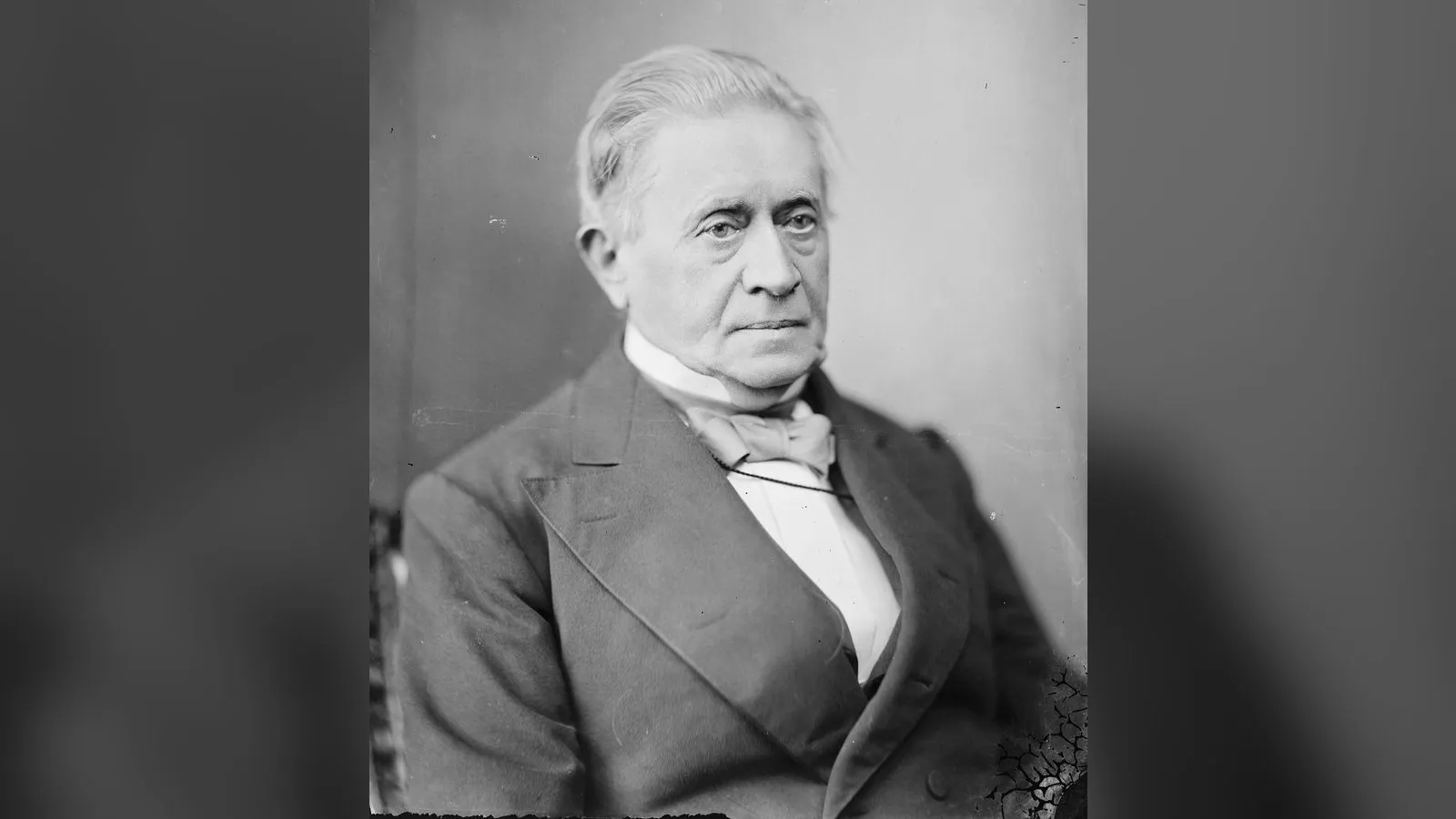

Joseph Henry (1797–1878)
Contents
TL;DR
- established Joseph Henry was born in Albany, New York, to Scottish immigrants, Ann Alexander Henry and William Henry — a direct, first-generation immigrant connection this article states plainly rather than a vague, distant ancestral claim, making Henry's Scottish identity among the most directly documented in this series.
- established Henry's childhood was marked by genuine hardship: his father died during his boyhood, and Henry was sent to live with his grandmother in Galway, New York, before working at a general store and apprenticing as a watchmaker and silversmith, with his scientific interest only awakened at age sixteen through a popular science book — this article names this specific, documented early hardship directly rather than presenting Henry's path to science as a conventional academic trajectory.
- established Henry revolutionised electromagnet design by coiling insulated wire tightly around an iron core, surpassing William Sturgeon's earlier uninsulated approach and producing the era's most powerful electromagnets, and he independently invented both a distance-operated electric bell (1831) and the electromechanical relay (1835), the latter becoming foundational to the telegraph technology later developed by Samuel Morse and Charles Wheatstone — a specific, documented technical contribution this article states directly rather than crediting telegraphy's foundations to Morse alone.
- disputed Henry discovered the principle of self-inductance and mutual inductance independently, and some historians credit his discoveries as pre-dating Michael Faraday's, but Faraday published first and received the official scientific credit, since scientific priority is conventionally assigned by publication rather than by the date of discovery itself — this article states this genuine, documented priority question directly rather than crediting Henry's electromagnetic induction work as unambiguously his own first.
- established Henry served as the first Secretary of the Smithsonian Institution from 1846 until his death in 1878, actively expanding its mission beyond simply housing collections into a genuine research and publication centre, and in 1848, working with Stephen Alexander, he used thermopile technology to demonstrate that sunspots are cooler than the surrounding solar surface, pioneering work later extended by astronomer Angelo Secchi — a specific, documented institutional and scientific legacy this article states directly rather than defining Henry's career by his electromagnetic work alone.
Key Facts
- Born
- 17 December 1797, Albany, New York, USA
- Died
- 13 May 1878, Washington, D.C., USA
- Category
- Science, Technology & Invention
- Scottish ancestry
- First-generation (both parents Scottish immigrants)
- Key achievement
- Powerful insulated-wire electromagnets; electromechanical relay (1835)
- Institutional role
- First Secretary, Smithsonian Institution (1846–1878)
- SI unit named after him
- The henry (inductance)
Scottish Impact Index (SI Score)
- Global Influence
- 9/10
- Enduring Connection
- 5/10
- Material Contribution
- 9/10
- Scottish Diaspora Distinctiveness
- 6/10
- Diaspora Legacy
- 8/10
- Recognition
- 8/10
45/60
Ranked =42nd of 45 in Diaspora
A Note on Claims and Evidence
Family background, ancestry, early life hardship, electromagnetic research, the self-inductance discovery and its documented priority question relative to Michael Faraday, the invention of the electromechanical relay, and his Smithsonian leadership and sunspot research are drawn from Wikipedia's published research record.
Timeline
Joseph Henry is born in Albany, New York, to Scottish immigrants Ann Alexander Henry and William Henry.
Following his father's death, Henry is sent to live with his grandmother in Galway, New York, before working at a general store and apprenticing as a watchmaker and silversmith; his early ambition is toward theatre, not science.
Henry's scientific interest is awakened by the book Popular Lectures on Experimental Philosophy.
Henry enrols at Albany Academy on free tuition, supporting himself through teaching and tutoring, initially intending to study medicine.
As Professor of Mathematics and Natural Philosophy at Albany Academy, Henry makes his most significant contributions: redesigning the electromagnet with tightly coiled insulated wire, producing the era's most powerful electromagnets, and independently discovering the principles of self-inductance and mutual inductance.
Henry invents a distance-operated electric bell, an early demonstration of practical long-distance electromagnetic signalling.
Michael Faraday publishes his own discovery of electromagnetic induction, receiving official scientific priority; historians continue to debate whether Henry's own unpublished discoveries pre-date Faraday's.
Henry invents the electromechanical relay, a device that becomes foundational to the telegraph technology later developed commercially by Samuel Morse and Charles Wheatstone.
Henry becomes the first Secretary of the Smithsonian Institution, a position he holds until his death, actively expanding the institution's mission into genuine scientific research and publication.
Working with Professor Stephen Alexander, Henry uses thermopile technology to demonstrate that sunspots are cooler than the surrounding solar surface, pioneering work later extended by astronomer Angelo Secchi.
Henry dies in Washington, D.C., at age 80, and is interred at Oak Hill Cemetery, Georgetown.
Details
A directly documented first-generation ancestry, stated plainly
This article names Joseph Henry's Scottish ancestry with real directness rather than a vague or distant claim: both of his parents, Ann Alexander Henry and William Henry, were Scottish immigrants, making Henry himself a first-generation American. This article states this specific, documented fact because it represents among the most directly verifiable Scottish connections of any figure in this series, not an inherited or diluted ancestral claim.
A hardship-filled early life named rather than assumed conventional
This article names Henry's documented childhood hardship directly rather than presenting his path to science as a conventional academic trajectory: his father's early death, being sent to live with his grandmother, and an apprenticeship as a watchmaker before science captured his interest at sixteen. This article states these specific circumstances because they represent the real, documented foundation of Henry's later scientific career, not an assumed privileged or linear path.
A foundational technical contribution named beyond Morse's telegraph
This article names Henry's specific electromagnetic innovations directly rather than crediting telegraphy's foundations to Samuel Morse alone: his redesigned, insulated-wire electromagnet and his 1835 invention of the electromechanical relay, which became foundational to the telegraph systems Morse and Wheatstone later developed commercially. This article states this specific contribution because it is the real, documented technical foundation beneath later, more commercially famous telegraph work.
A genuine priority dispute presented without resolving it unfairly
This article states Henry's electromagnetic induction discovery alongside the real, documented priority question it raises: some historians credit his discoveries as pre-dating Michael Faraday's, but Faraday published first and received official credit, since scientific priority is conventionally assigned by publication rather than discovery date. This article presents this tension directly because crediting Henry's work as unambiguously prior, or omitting the dispute entirely, would each misrepresent the real, documented historical record.
An institutional legacy named as a defining achievement, not an afterthought
This article names Henry's three-decade leadership of the Smithsonian Institution and his specific 1848 sunspot research directly, rather than defining his career by his earlier electromagnetic work alone. This article states this institutional and scientific legacy because it represents a substantial, documented second chapter of Henry's career, not a minor postscript to his earlier inventions.
Did You Know?
- Joseph Henry was the son of two Scottish immigrants, making him a first-generation American.
- After his father's death, young Henry was sent to live with his grandmother and apprenticed as a watchmaker and silversmith — his early ambition was theatre, not science.
- Henry's redesigned, insulated-wire electromagnets were the most powerful of their era.
- His 1835 invention of the electromechanical relay became foundational to the telegraph systems Samuel Morse and Charles Wheatstone later developed commercially.
- Some historians believe Henry discovered electromagnetic induction before Michael Faraday — but Faraday published first and received the official credit.
- Henry served as the first Secretary of the Smithsonian Institution for over three decades, from 1846 until his death.
- In 1848, Henry helped demonstrate that sunspots are cooler than the surrounding solar surface.
- The SI unit of electrical inductance, the henry, is named after him.
FAQ
1Was Joseph Henry actually Scottish?
Directly so — both of his parents were Scottish immigrants, making Henry himself a first-generation American.
2Did Joseph Henry discover electromagnetic induction before Faraday?
It's genuinely disputed — some historians believe he did, but Michael Faraday published first and received the official scientific credit.
3What did Joseph Henry actually invent?
A powerful redesigned electromagnet, a distance-operated electric bell, and the electromechanical relay, which became foundational to telegraph technology.
4Did Henry invent the telegraph?
No — but his relay invention was foundational to the telegraph systems Samuel Morse and Charles Wheatstone later developed and commercialised.
5What role did Henry play at the Smithsonian Institution?
He was its first Secretary, serving from 1846 until his death in 1878, and actively expanded it into a genuine research and publication institution.
6What else did Henry contribute to science beyond electromagnetism?
In 1848, he helped demonstrate that sunspots are cooler than the surrounding solar surface.
7When did Joseph Henry die?
13 May 1878, in Washington, D.C., at age 80.
Sources and Further Reading
Primary/Institutional
Scholarly/Critical
General
Caveats: Myths and Disputed Claims
- disputed This article does not credit Joseph Henry's electromagnetic induction discovery as unambiguously his own first; some historians believe it pre-dates Michael Faraday's published work, but Faraday received official priority through earlier publication.
- Clarification: This article does not credit Samuel Morse's telegraph as a standalone invention disconnected from Henry's work; Henry's electromechanical relay, invented in 1835, was foundational to the telegraph systems Morse and Wheatstone later developed.
Card 007 · Diaspora