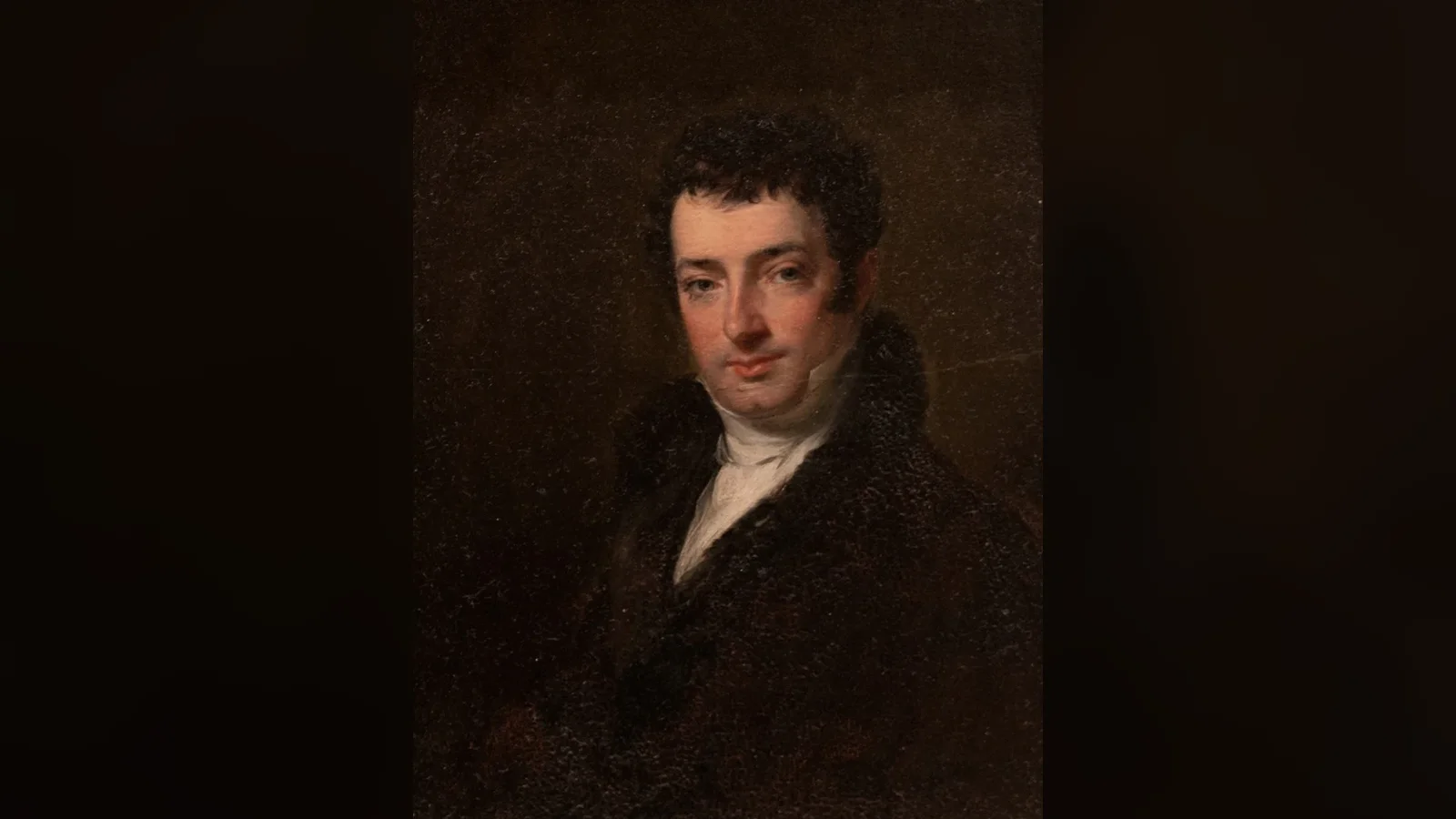

Washington Irving: The Orkney Sailor's Son Who Became America's First Literary Star
Contents
Washington Irving, the author of "Rip Van Winkle" and "The Legend of Sleepy Hollow", was the son of a sailor from Shapinsay in Orkney. William Irving went to sea, married a Cornish girl at Falmouth and settled in New York, where his youngest son was born in April 1783, at the end of the Revolution, and named after George Washington. Thirty-four years later the son visited Walter Scott at Abbotsford and spent days walking the Borders with him. When The Sketch Book was stranded in London in 1820 by its publisher's failure, it was Scott who persuaded John Murray to take it on, and Irving dedicated its second volume to him. Irving.
TL;DR
- established Irving was born in New York on 3 April 1783, the youngest of eleven children of William Irving, from Shapinsay in Orkney, and Sarah Sanders, from Falmouth.
- established His father, a petty officer on a Falmouth packet, married in 1761 and reached New York on 18 July 1763. He became a merchant and a deacon, and helped American prisoners during the Revolution.
- established "Washington's work is ended," said his mother, "and the child shall be named after him." A Scots maid, Lizzie, later presented the boy to the President, who laid a hand on his head.
- established In 1817 Irving visited Edinburgh and stayed with Scott at Abbotsford, rambling with him to Dryburgh, Yarrow and the haunts of Thomas the Rhymer.
- established In 1819 Scott offered him the editorship of a new Edinburgh weekly at £500 a year, which he declined. In 1820 Scott's intervention brought The Sketch Book to John Murray, who bought the copyright for £200.
Key Facts
- Born
- 3 April 1783, New York
- Father
- William Irving (Shapinsay, Orkney), sailor, then merchant and Presbyterian deacon in New York
- Mother
- Sarah Sanders, of Falmouth, Cornwall
- Scottish descent
- Traced by George Petrie of Kirkwall through the Irvings of Shapinsay to the Irvines of Drum
- Scotland
- Edinburgh and Abbotsford, August–September 1817
- Breakthrough
- The Sketch Book of Geoffrey Crayon, Gent. (1819–20), published in London by John Murray
- Died
- 1859 (general knowledge; outside the volume read)
- Related cards
- Great Scots 91, Sir Walter Scott; Diaspora 87, Thomas Pringle
- Main source
- Pierre M. Irving, The Life and Letters of Washington Irving, vol. I (G. P. Putnam, New York, 1862)
Scottish Impact Index (SI Score)
- Global Influence
- 7/10
- Enduring Connection
- 6/10
- Material Contribution
- 7/10
- Scottish Diaspora Distinctiveness
- 6/10
- Diaspora Legacy
- 6/10
- Recognition
- 7/10
39/60
Ranked =69th of 93 in Diaspora
A Note on Claims and Evidence
Each major claim carries one of three labels. established means supported by primary records, official bodies or several independent reliable sources. shared means the core fact is sound but sources disagree on details, dates or interpretation. traditional means widely repeated but not traceable to a primary or independent source.
Pierre Irving was his uncle's chosen biographer and had his papers. The Life and Letters is a family book, warm and careful, built largely from Irving's own letters and journals. Its account of the family's Scottish ancestry rests on a pedigree drawn up for Irving in the 1850s by George Petrie of Kirkwall; the link back to Robert Bruce's armour-bearer, William de Irwyn, is family tradition.
Only the first volume was read. It ends in 1820, when Irving was thirty-seven, so his later life and death in 1859 are not covered here.
Timeline
William Irving, of Shapinsay, marries Sarah Sanders at Falmouth.
The couple land in New York.
The family flees to Rahway, New Jersey, during the war.
Washington Irving born in New York.
Baptised, soon after Washington's army enters the city.
A History of New York by "Diedrich Knickerbocker" (general knowledge for the date).
Visits Edinburgh and Abbotsford.
The Sketch Book begins to appear in New York in numbers.
Scott offers him an Edinburgh editorship at £500 a year.
Scott persuades John Murray to publish The Sketch Book in London.
The Orkney pedigree is drawn up at Kirkwall.
Dies (general knowledge).
Details
From Shapinsay to New York
established Irving's father, William, was the son of Magnus Irving and Catharine Williamson of Shapinsay. The family's fortunes had declined, and when his mother died he followed a boyhood wish and went to sea. During the Seven Years' War he served as a petty officer on an armed packet between Falmouth and New York, and at Falmouth he met Sarah Sanders, the only child of John and Anna Sanders. They married there on 18 May 1761, buried their first child in England, and landed in New York on 18 July 1763.
established William Irving left the sea and went into trade. When war came the family fled to Rahway, New Jersey, where British troops were billeted in their house; back in New York, he and his wife fed and nursed American prisoners. A Presbyterian minister who had been a prisoner certified in November 1783 that "Deacon William Irving, merchant in this city" had been "friendly inclined to the liberties of the United States". Pierre Irving describes him as a stern, devout Scots Presbyterian, and his son later recalled being led to think that "every thing that was pleasant was wicked".
The President's blessing
established Washington Irving was born on 3 April 1783, the youngest of eleven children. "Washington's work is ended," his mother said, "and the child shall be named after him." When Washington returned to New York as President, the family's young Scots maid, Lizzie, followed him into a shop with the boy and told him, "Please your Honor, here's a bairn was named after you." Washington laid his hand on the child's head and gave him his blessing.
The Orkney pedigree
shared The family had only "a dim tradition" of how it came to Orkney. In 1855, after James Robertson, sheriff-substitute at Kirkwall, remarked that Irving could trace his pedigree "step by step", George Petrie, Clerk of the Records at Kirkwall, drew up a table of descent from the island's udal land records. It ran from Magnus Irving, the first of Shapinsay, in 1608, through James "the Lawman" of 1560 and John Erwyne of 1438, to a William de Erwin living in Kirkwall in 1369, whom the family took to be a younger son of the Irvines of Drum. The Drum family claimed descent from William de Irwyn, armour-bearer to Robert Bruce, who granted him the forest of Drum near Aberdeen in 1324.
Abbotsford
established In the late summer of 1817 Irving was in Edinburgh, dining at Francis Jeffrey's, where Lady Davy held the room for an hour. He met William Blackwood, who wanted him to write for his new Edinburgh Monthly Magazine, and Archibald Constable. Then he took the coach to Selkirk and sent his letter of introduction in at the gate of Abbotsford. "The glorious old minstrel himself came limping to the gate," he wrote to his brother, and he stayed for days, walking the hills with Scott and visiting Dryburgh, Yarrow and "the haunts of Thomas the Rhymer". Scott was "a sterling golden-hearted old worthy".
Scott and The Sketch Book
established In 1819 The Sketch Book of Geoffrey Crayon, Gent. began to appear in New York. Irving offered the first numbers to John Murray in London, who declined, and wrote to Scott for help. On 17 November 1819 Scott replied by offering him the editorship of a new weekly paper in Edinburgh at £500 a year. Irving turned it down; Scott had himself foreseen that the paper's politics might not suit him. When he published The Sketch Book in London at his own risk, the bookseller failed. "I called to him for help," Irving wrote of Scott, "as I was sticking in the mire; and more propitious than Hercules, he put his own shoulder to the wheel." Murray took the book, buying the copyright for £200, and became Irving's publisher. Irving dedicated the second volume to Scott.
Did You Know?
- Irving's father was born on Shapinsay in Orkney.
- A Scots maid introduced the child Washington Irving to George Washington.
- Scott offered Irving £500 a year to edit an Edinburgh paper.
- Murray bought The Sketch Book for £200 after Scott intervened.
- Irving's family traced its descent to Robert Bruce's armour-bearer.
FAQ
1Was Washington Irving Scottish?
His father was an Orcadian, from Shapinsay; his mother was from Falmouth in Cornwall. He was born and raised in New York.
2What was his connection to Walter Scott?
He stayed with Scott at Abbotsford in 1817, and in 1820 Scott persuaded John Murray to publish The Sketch Book in Britain.
3What is The Sketch Book?
The collection of essays and tales, including "Rip Van Winkle" and "The Legend of Sleepy Hollow", that made Irving the first American writer with a large British readership.
4Who wrote the Life and Letters?
His nephew, Pierre M. Irving, from Irving's own papers.
Sources and Further Reading
Primary
- Pierre M. Irving, The Life and Letters of Washington Irving, vol. I (G. P. Putnam, New York, 1862). Free scan at the Internet Archive. Main source.
Further reading (not consulted directly)
- Washington Irving, Abbotsford and Newstead Abbey (1835), his own account of the 1817 visit.
- Brian Jay Jones, Washington Irving: An American Original (Arcade, 2008).
Caveats: Myths and Disputed Claims
- The Bruce connection. The descent from William de Irwyn rests on family tradition and a nineteenth-century pedigree.
- "First American author". Irving was the first American writer to win wide fame in Britain, not the first American author.
- Half Cornish. His mother was English; the Scottish link is through his father.
Finished reading? Try the Fact Machine: three reels, one surprising Scottish connection →
Card 090 · Diaspora