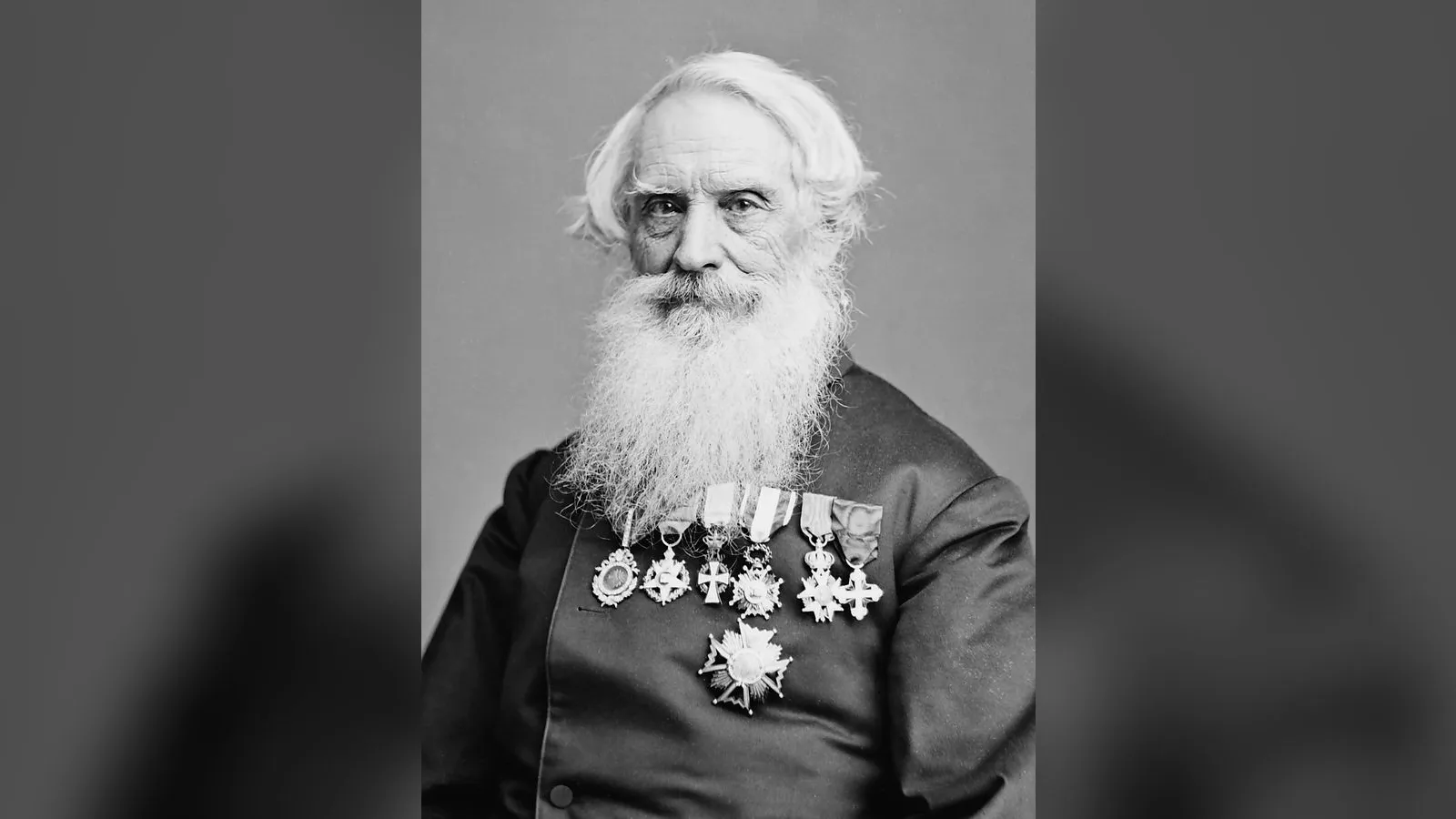

Samuel Morse (1791–1872)
Contents
TL;DR
- established Samuel Morse's documented ancestral connection to Scotland is real but specifically Scots-Irish (Ulster Scots) rather than a direct line from Scotland itself: his great-grandfather, Samuel Finley, president of Princeton and the source of Morse's own middle name, was born in County Armagh, Ireland, to a father, Michael Lauder Finley, carrying a documented Scottish surname, within the Ulster Scots Presbyterian community — while Morse's own surname descends from a separate, English Puritan paternal line, Anthony Morse having emigrated from Wiltshire, England, in 1635. This article states this specific, nuanced ancestry directly rather than presenting Morse as straightforwardly descended from Scotland.
- established Morse's priority as the telegraph's inventor was genuinely legally contested, not simply accepted: British inventors William Cooke and Charles Wheatstone patented a working electromagnetic telegraph in May 1837, before Morse received his US patent in 1847, and the dispute reached the US Supreme Court in the 1853 case O'Reilly v. Morse, which recognised Morse as first to combine key components into a workable telegraph but explicitly denied his broader monopoly claim — this article states this genuine legal contest directly rather than presenting Morse's invention as uncontested.
- established Morse was a documented and vocal anti-Catholic nativist, running unsuccessfully for Mayor of New York in 1836 on an explicitly anti-immigrant, anti-Catholic platform and authoring Foreign Conspiracy Against the Liberties of the United States (1835), which described Catholicism as "a system of the darkest political intrigue and despotism" — this article states this documented history plainly, with Morse's own published words, rather than minimising or omitting it in favour of his technical achievements alone.
- established Morse was also a documented defender of slavery, writing in the 1850s that "Slavery per se is not sin. It is a social condition ordained from the beginning of the world for the wisest purposes, benevolent and disciplinary, by Divine Wisdom" — this article states this directly, in Morse's own documented words, rather than omitting it from an account focused only on his invention.
- established On 24 May 1844, Morse inaugurated the Washington-to-Baltimore telegraph line with the message "What hath God wrought," a specific, documented historical moment this article names directly, marking the practical beginning of long-distance electrical telegraphy in the United States.
Key Facts
- Born
- 27 April 1791, Charlestown, Massachusetts, USA
- Died
- 2 April 1872, New York City, USA
- Category
- Science, Technology & Invention
- Scottish ancestry
- Scots-Irish (Ulster Scots), via maternal great-grandfather Samuel Finley
- Paternal ancestry
- English Puritan (Anthony Morse, emigrated 1635)
- Key achievement
- Telegraph system and Morse code
- First inaugural message
- "What hath God wrought" (24 May 1844)
- Documented controversies
- Anti-Catholic nativism; pro-slavery writings
Scottish Impact Index (SI Score)
- Global Influence
- 10/10
- Enduring Connection
- 5/10
- Material Contribution
- 10/10
- Scottish Diaspora Distinctiveness
- 7/10
- Diaspora Legacy
- 9/10
- Recognition
- 10/10
51/60
Ranked =24th of 45 in Diaspora
A Note on Claims and Evidence
Family background, the paternal Morse lineage, the telegraph invention and its priority dispute, and the O'Reilly v. Morse Supreme Court case are drawn from Wikipedia's published research record. Morse's great-grandfather Samuel Finley's birthplace, parentage, and direct genealogical connection to Morse are drawn from Wikipedia's published biographical record on Finley. Morse's documented anti-Catholic nativism and pro-slavery writings are drawn from Wikipedia's published research record and Village Preservation's published historical assessment.
Timeline
Anthony Morse emigrates from Wiltshire, England, to Newbury, Massachusetts, founding the English Puritan paternal line from which Samuel Morse's surname descends.
Samuel Finley is born in County Armagh, Ireland, to Michael Lauder Finley and Anna O'Neill, within the Ulster Scots Presbyterian community; Finley later becomes president of Princeton.
Samuel Finley Breese Morse is born in Charlestown, Massachusetts, to Jedidiah Morse and Elizabeth Ann Finley Breese, named directly after his great-grandfather Samuel Finley, through whom his documented Scots-Irish ancestry descends.
Morse graduates Phi Beta Kappa from Yale College, having studied religious philosophy, mathematics, and science.
Morse studies painting at the Royal Academy of Arts in England, going on to establish himself as a respected portrait and historical painter between 1815 and 1832.
Returning from Europe by ship, Morse becomes fascinated with electromagnetism and begins developing a single-wire telegraph system.
British inventors William Cooke and Charles Wheatstone patent a working electromagnetic telegraph, predating Morse's own US patent.
Morse, with collaborators Leonard Gale and Alfred Vail, gives the first public demonstration of his telegraph system at Speedwell Ironworks, Morristown, New Jersey.
Morse runs unsuccessfully for Mayor of New York on an explicitly anti-immigrant, anti-Catholic Nativist Party platform, receiving only 1,496 votes; in 1835 he had authored Foreign Conspiracy Against the Liberties of the United States, describing Catholicism in explicitly hostile terms.
Morse inaugurates the Washington-to-Baltimore telegraph line, transmitting the message "What hath God wrought."
Morse receives his US patent for the telegraph, a decade after Cooke and Wheatstone's British patent.
Morse writes in defence of slavery as a divinely ordained, non-sinful institution, a documented position held alongside his continuing scientific and artistic reputation.
The US Supreme Court decides O'Reilly v. Morse, recognising Morse as the first to combine key components into a workable telegraph, while explicitly denying his broader claim to monopolise all electromagnetic signal transmission.
Morse dies of pneumonia in New York City and is buried at Green-Wood Cemetery, Brooklyn.
Details
An ancestry claim corrected for its real, specific line of descent
This article names Morse's Scottish connection with real precision rather than presenting him as straightforwardly descended from Scotland: his great-grandfather, Samuel Finley, was born in County Armagh, Ireland, to a father carrying the documented Scottish surname Lauder, within the Ulster Scots Presbyterian community, while Morse's own paternal surname descends from a separate English Puritan line, Anthony Morse having emigrated from Wiltshire in 1635. This article states this specific, two-sided ancestry because treating Morse as simply "of Scottish descent" would collapse a genuinely more precise and more interesting documented genealogy, Scots-Irish on one side, English on the other, into an inaccurate generalisation.
A contested invention named as a real, documented legal dispute
This article states directly that Morse's priority as the telegraph's inventor was genuinely contested: British inventors Cooke and Wheatstone patented a working electromagnetic telegraph in 1837, before Morse's 1847 US patent, and the US Supreme Court's 1853 ruling in O'Reilly v. Morse recognised Morse's specific technical contribution while explicitly denying his broader monopoly claim. This article names this documented dispute because presenting Morse's invention as simply and uncontestedly his own would misrepresent the real, documented legal and historical record.
Documented nativism stated plainly, in Morse's own words
This article names Morse's anti-Catholic political activity and writing directly rather than omitting it from an account of his technical achievements: his unsuccessful 1836 mayoral campaign on an explicitly anti-immigrant, anti-Catholic platform, and his 1835 book describing Catholicism as "a system of the darkest political intrigue and despotism." This article states this documented history in Morse's own published words because the "accuracy over patriotism" standard this article applies requires presenting uncomfortable, documented aspects of a figure's legacy with the same weight given to their achievements.
A documented pro-slavery position stated without omission
This article names Morse's 1850s defence of slavery directly, quoting his own documented words describing it as "a social condition ordained from the beginning of the world for the wisest purposes, benevolent and disciplinary, by Divine Wisdom," rather than presenting an account of Morse limited to his invention. This article states this documented position because omitting it would present an incomplete and misleadingly favourable account of a historical figure whose full, documented legacy includes both major technical achievement and genuinely troubling political positions.
A specific historical moment named rather than a vague achievement summary
This article names the exact date and message of Morse's inaugural telegraph transmission, 24 May 1844, "What hath God wrought," rather than a vague claim that he "invented the telegraph." This article states this specific moment because it represents the real, documented practical beginning of long-distance electrical telegraphy in the United States, not a generalised achievement.
Did You Know?
- Samuel Morse's Scottish connection traces specifically to Ulster Scots ancestry, through a great-grandfather born in County Armagh, Ireland — not directly from Scotland itself.
- His own surname, Morse, actually comes from a separate, English Puritan ancestral line.
- Morse's priority as the telegraph's inventor was genuinely legally contested; British inventors Cooke and Wheatstone patented a working telegraph a decade before Morse received his US patent.
- The 1853 US Supreme Court case O'Reilly v. Morse recognised Morse's specific contribution but explicitly denied his broader monopoly claim.
- Morse ran unsuccessfully for Mayor of New York in 1836 on an anti-immigrant, anti-Catholic platform.
- Morse wrote in the 1850s defending slavery as divinely ordained and "not sin."
- His famous first telegraph message, "What hath God wrought," was sent on 24 May 1844.
FAQ
1Was Samuel Morse actually Scottish?
Not directly — his documented Scottish connection is specifically Scots-Irish, through a great-grandfather born in Ulster, Ireland; his own surname comes from a separate English ancestral line.
2Did Samuel Morse really invent the telegraph on his own?
His priority was genuinely contested — British inventors patented a working telegraph before Morse received his US patent, and the US Supreme Court later denied his broader monopoly claim while recognising his specific contribution.
3What was Morse's famous first telegraph message?
"What hath God wrought," sent on 24 May 1844 between Washington and Baltimore.
4Did Samuel Morse hold controversial political views?
Yes, documented ones — he campaigned for Mayor of New York on an anti-Catholic, anti-immigrant platform and wrote in defence of slavery in the 1850s.
5Who was Morse named after?
His great-grandfather, Samuel Finley, a Scots-Irish-born president of Princeton.
6When did Samuel Morse die?
2 April 1872, in New York City.
7Was Morse a scientist by training?
Not originally — he trained and worked as a professional portrait and historical painter before turning to the telegraph in his forties.
Sources and Further Reading
Primary/Institutional
Scholarly/Critical
- Samuel Finley — Wikipedia
- Samuel F.B. Morse: A Brilliant Artist and Inventor With A Complicated, Troubling Legacy — Village Preservation
General
Caveats: Myths and Disputed Claims
- Clarification: This article does not present Samuel Morse as straightforwardly descended from Scotland; his documented ancestry is specifically Scots-Irish via a great-grandfather born in Ulster, Ireland, while his own surname descends from a separate English line.
- disputed This article does not present Morse's telegraph invention as uncontested; British inventors patented a working telegraph before Morse's own US patent, and the US Supreme Court later limited his monopoly claim.
- Content note: This article states Morse's documented anti-Catholic nativism and pro-slavery writings plainly, in his own words, consistent with this series' standard of presenting uncomfortable historical facts rather than omitting them.
Card 003 · Diaspora