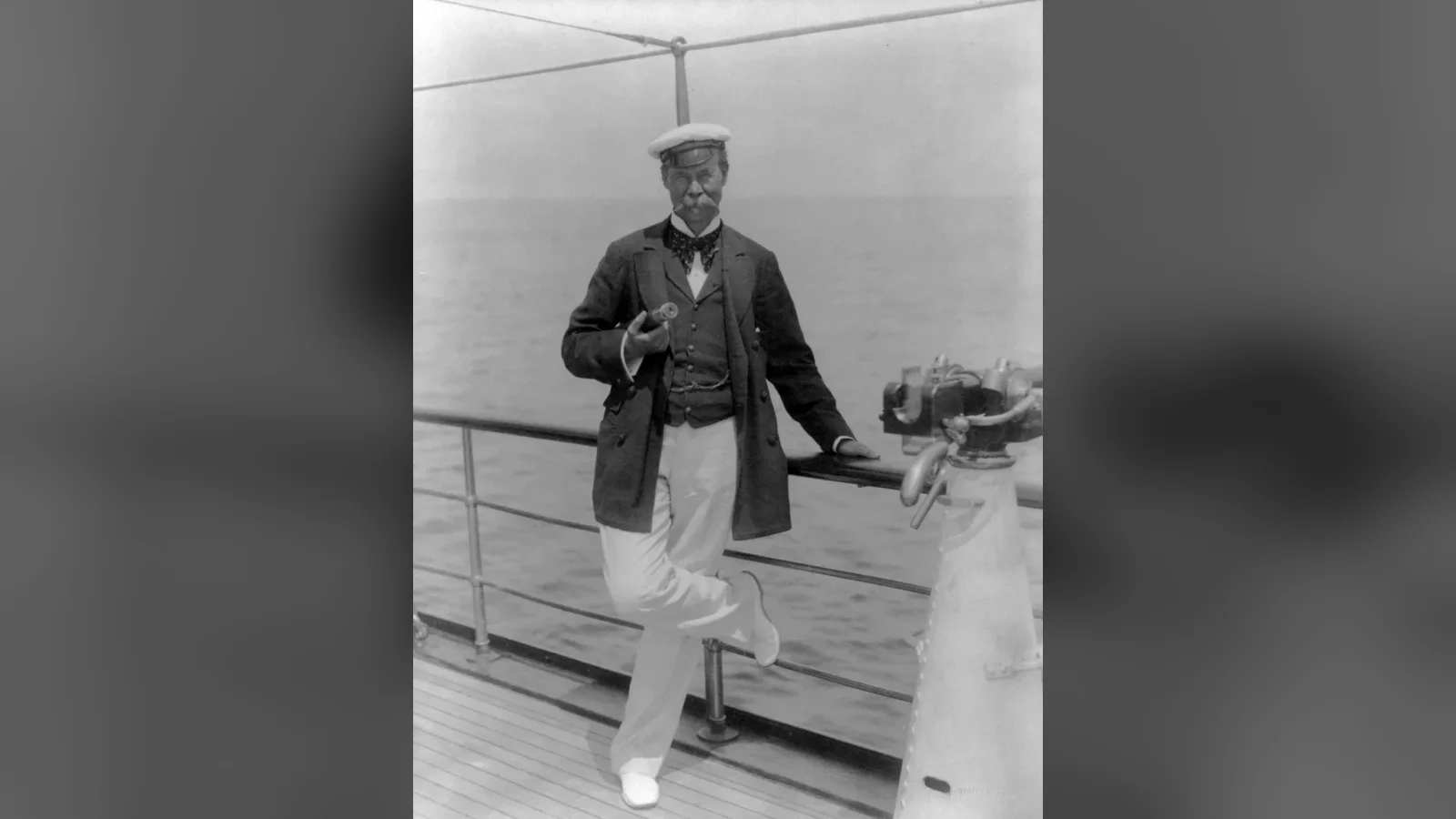

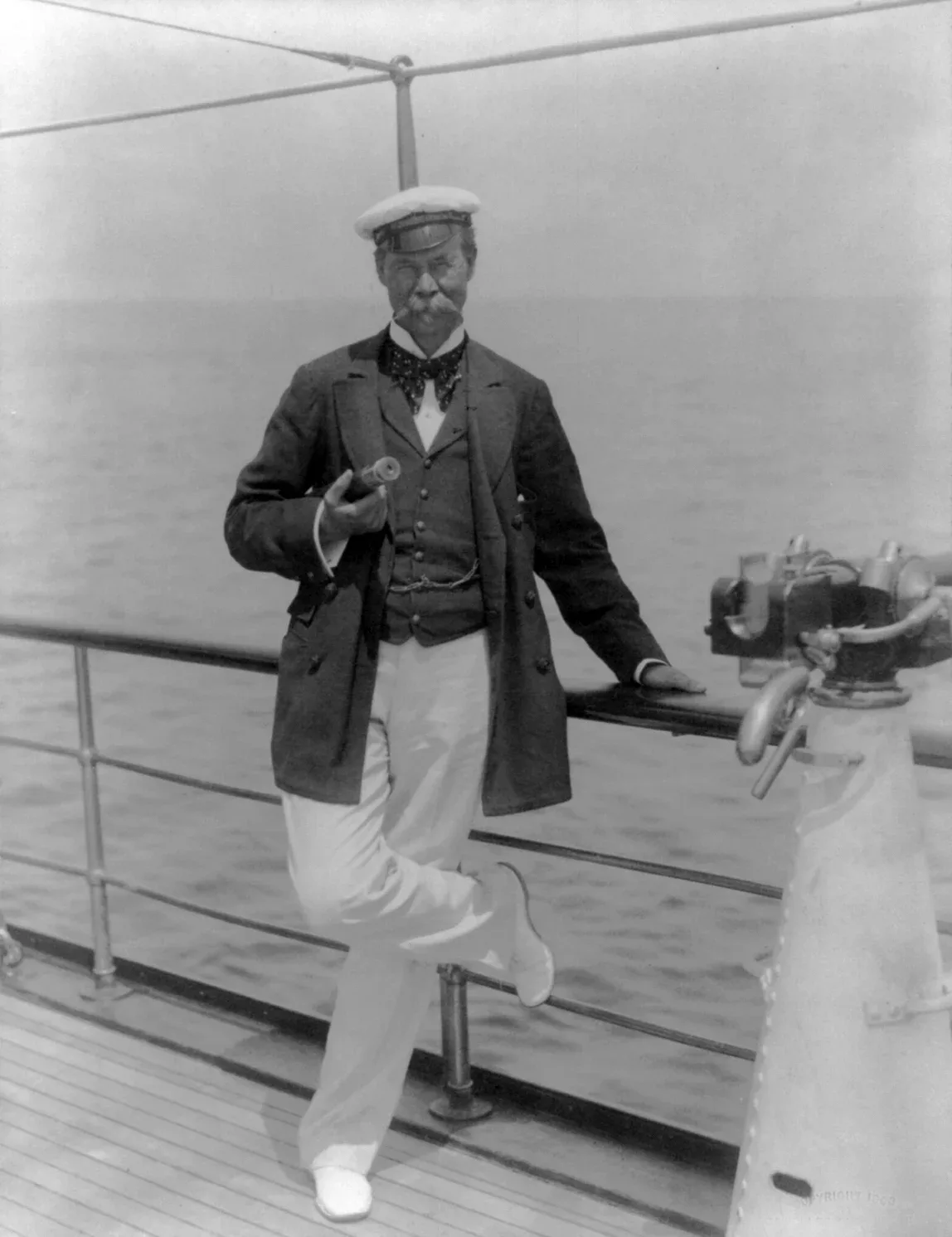
Sir Thomas Lipton (1848–1931)
Contents
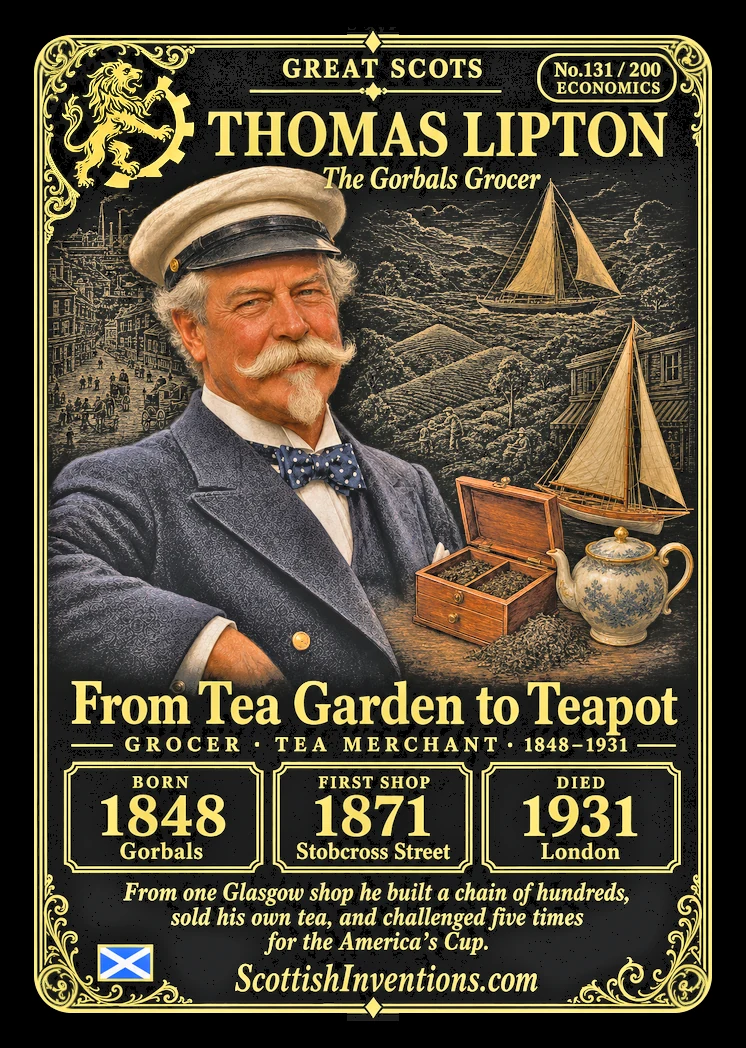
Thomas Lipton was the Gorbals grocer's son who built one of the world's first great retail chains and turned his name into a global tea brand. A genius of publicity, he sold tea "direct from the tea garden to the teapot", and spent a fortune trying five times to win the America's Cup.
TL;DR
- established Born in a tenement in Crown Street, Gorbals, in 1848 to Ulster-born parents who ran a small grocery shop, he left school young and sailed to America at about 16.
- established After five years in the United States he returned to Glasgow and in 1871 opened his first shop, Lipton's Market, at 101 Stobcross Street, Anderston.
- established Using American-style advertising and stunts, he built a chain of around 300 shops by the late 1880s, then bought tea estates in Ceylon and sold cheap, packeted tea under his own name.
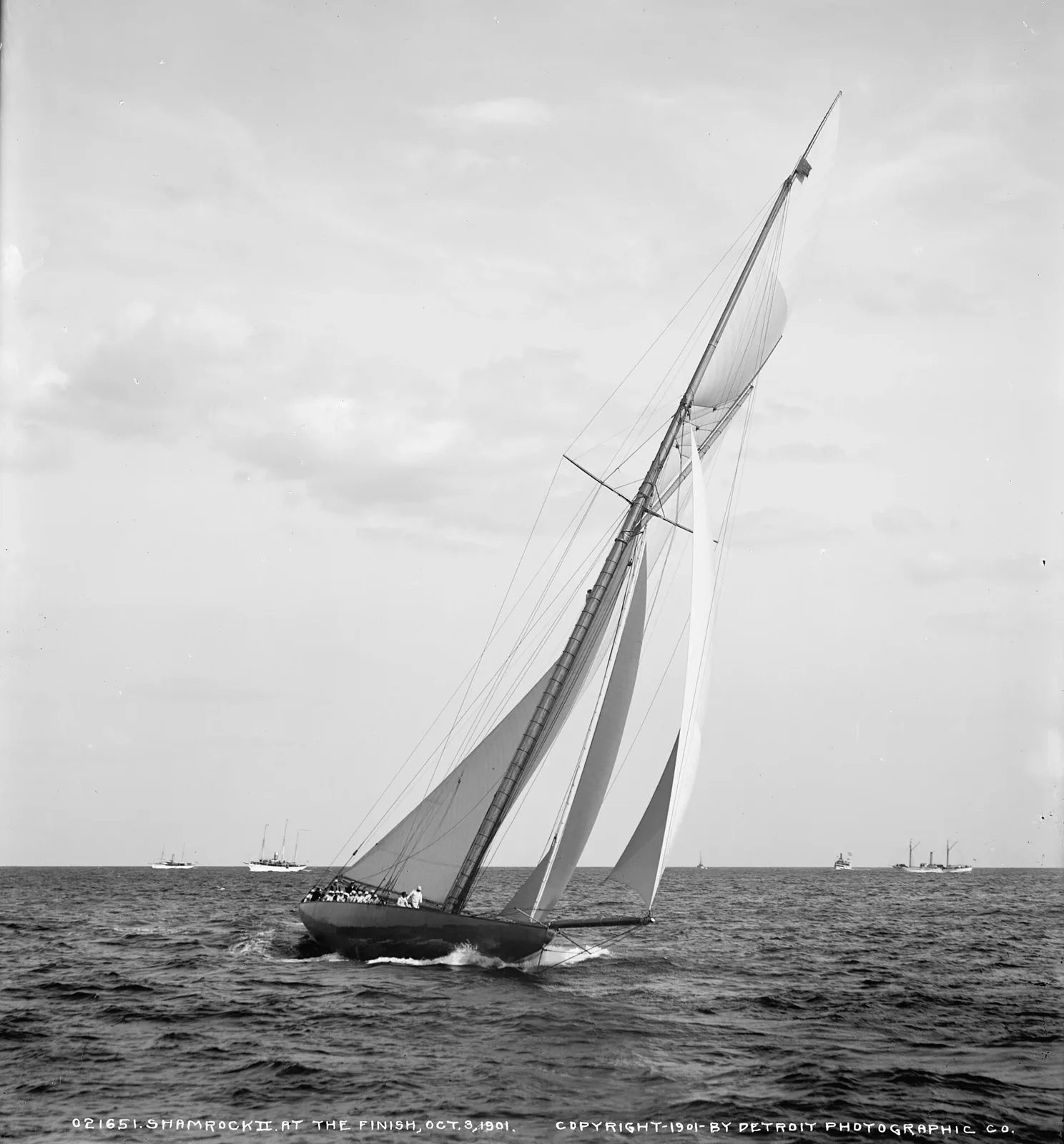
- established He challenged for the America's Cup five times between 1899 and 1930 with yachts named Shamrock, never winning, and was honoured as "the best of all losers".
- established Knighted in 1898 and made a baronet in 1902, he died in 1931 and is buried with his parents in Glasgow's Southern Necropolis.
Key Facts
- Born
- 10 May 1848, Crown Street, Gorbals, Glasgow
- Died
- 2 October 1931, Osidge, Southgate, London (aged 83)
- Full name
- Thomas Johnstone Lipton
- Parents
- Thomas Lipton and Frances Johnstone, from Ulster
- First shop
- Lipton's Market, 101 Stobcross Street, Anderston, 1871
- Business
- Grocery chain; Lipton tea; Ceylon tea estates
- Honours
- Knighted 1898; baronet 1902; KCVO; America's Cup Hall of Fame (1993)
- Buried
- Southern Necropolis, Glasgow
A Note on Claims and Evidence
Each major claim carries one of three labels. established means supported by primary records, official bodies or several independent reliable sources. shared means the core fact is sound but sources disagree on details, dates or interpretation. traditional means widely repeated but not traceable to a primary or independent source.
Lipton told his own story many times, and not always accurately: he sometimes gave his birth year as 1850, though the records point to 1848. The Oxford Handbook of Modern Scottish History places him among Glasgow's most successful sons of Irish immigrants and credits him with bringing American marketing methods to British retailing. Recent research summarised by Grace's Guide suggests that, contrary to the long-held belief that he never married, he married Margaret McAuslan in Glasgow in 1871; this is labelled shared here.
Timeline
Born in Crown Street, Gorbals, on 10 May.
Attends St Andrew's Parish School near Glasgow Green.
Sails to America and works in Virginia, South Carolina, New Orleans, New Jersey and New York.
Returns to Glasgow and helps in his parents' shop.
Opens Lipton's Market at 101 Stobcross Street.
Expands across Scotland and England.
Chain reaches about 300 shops; begins selling his own tea.
Visits Ceylon and buys tea estates.
Lipton Ltd floated; knighted by Queen Victoria.
First America's Cup challenge, with Shamrock.
Created a baronet.
The Sir Thomas Lipton Trophy football tournaments held in Turin.
Fifth and last America's Cup challenge, with Shamrock V.
Dies in London on 2 October; buried in Glasgow.
Details
Crown Street
established Thomas Johnstone Lipton was born in a Gorbals tenement in 1848, the only surviving child of Thomas Lipton and Frances Johnstone, who had come to Glasgow from Ulster. By the early 1860s his parents had a small shop at 11 Crown Street selling ham, butter and eggs. established He went to St Andrew's Parish School and left at about 13 to work as an errand boy and in a shirt-maker's.
America
established In 1865 he sailed to America and spent about five years working his way around the country: on a tobacco plantation in Virginia, on rice fields in South Carolina, in New Orleans and New Jersey, and finally in a New York grocery store. shared There he saw American shopkeeping at its brashest, with bright displays, bold advertising and constant publicity, and he brought those ideas home.
Lipton's Market
established He returned to Glasgow in 1870 and in 1871 opened Lipton's Market at 101 Stobcross Street in Anderston. He bought direct from Irish farmers, cut out middlemen, sold at low prices and kept his shop spotless. established His publicity stunts became famous: pigs paraded through the streets labelled "Lipton's orphans", giant cheeses stuffed with gold sovereigns, and cartoons in the shop windows. By the late 1880s he had about 300 shops across Britain.
Tea
established Tea had become the drink of the masses, helped by the temperance movement. In 1888 Lipton opened a tea-tasting office and began selling his own tea, bypassing the London tea dealers. In 1890 he visited Ceylon and bought plantations, including the Dambatenne estate, so that he could supply his own shops. established He sold tea in cheap, standard packets of fixed weight and quality, which was new at the time, under the slogan "Direct from the tea garden to the teapot". The brand soon spread across Europe and the United States.
established Lipton did not create Ceylon tea. Another Scot had done that a generation earlier. The historian Angela McCarthy, in Global Migrations (2016), tells the story of James Taylor of Fordoun in Kincardineshire, who left Scotland at sixteen and is known in Sri Lanka as the father of the island's tea industry. Taylor had already succeeded with cinchona, the source of quinine, when his employers gave him Assam-hybrid tea seed to try. He planted the first nineteen acres of tea at the Loolecondera estate, which are still cultivated, and built his own leaf-rolling machine, driven by a waterwheel six metres across. He admitted that he learned his early planting from the estate's own workers. Taylor never grew rich and died in 1892, two years after Lipton bought his first estates. shared McCarthy argues that Taylor's parish schooling and artisan background mattered to what he achieved, and notes the same pattern in other Scots of Indian tea: Robert Fortune and Archibald Campbell in Darjeeling and Charles Alexander Bruce in Assam.
Shamrock and the America's Cup
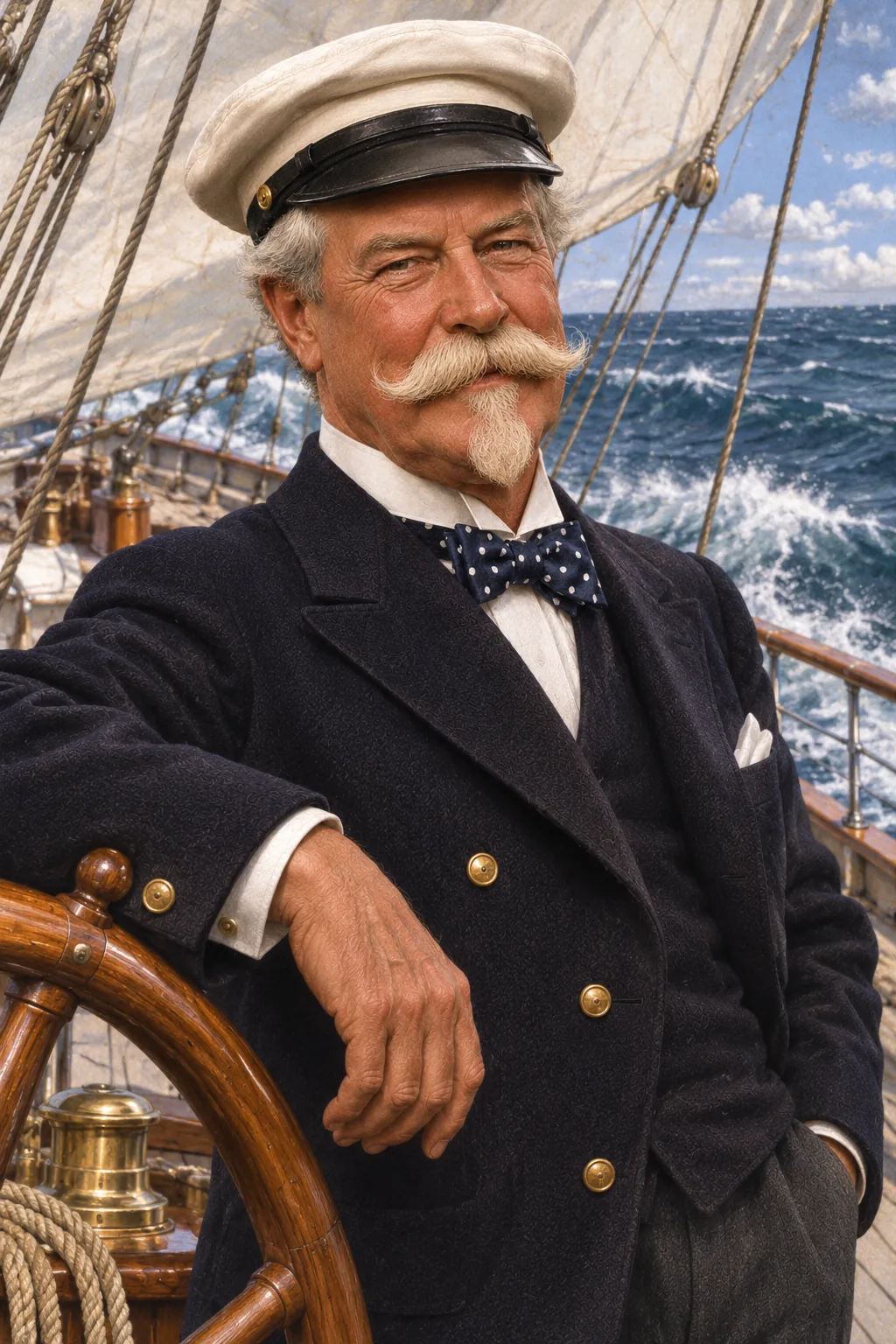
established Lipton challenged for the America's Cup, sailing's most famous trophy, five times between 1899 and 1930, each time with a yacht named Shamrock, through the Royal Ulster Yacht Club. He lost every time. established His good humour in defeat made him hugely popular in America and did wonders for his tea sales. After his last challenge in 1930, Americans presented him with a special gold cup as "the best of all losers". His yachting trophies are displayed at Kelvingrove Art Gallery and Museum.
Football
established Lipton also sponsored football. The Sir Thomas Lipton Trophy was contested in Turin in 1909 and 1911 by club sides from several countries, and both were won by the English amateur club West Auckland. shared The tournament is sometimes called the first "World Cup", although it was not an official international competition.
Fame and honours
established Lipton became one of the best-known men in the world. He was knighted in 1898 and created a baronet in 1902, and he was a friend of Edward VII. shared His knighthood is usually linked to his gift of £25,000 to a fund providing dinners for London's poor during Queen Victoria's Diamond Jubilee in 1897. established He appeared on the cover of Time magazine in 1924 and was inducted into the America's Cup Hall of Fame in 1993.
Private life and death
shared He was long believed never to have married, but recent research suggests he married Margaret McAuslan in 1871 and that they separated after the death of an infant son. established He died at his home, Osidge, in Southgate, London, in October 1931, and was buried beside his parents and siblings in the Southern Necropolis, less than a mile from where he was born. He left most of his fortune to Glasgow.
Did You Know?
- He was born in a Gorbals tenement on Crown Street.
- He worked on plantations in America as a teenager.
- He paraded pigs through Glasgow as "Lipton's orphans".
- He bought his own tea estates in Ceylon.
- He challenged for the America's Cup five times and lost every time.
- He was presented with a cup as "the best of all losers".
- His football trophy was played for in Turin in 1909 and 1911.
From the archive
Original documents and images from the period.
FAQ
1Who was Sir Thomas Lipton?
A Glasgow-born grocer and tea merchant (1848–1931) who founded the Lipton brand.
2Where was he born?
In a tenement on Crown Street, in the Gorbals, Glasgow.
3Where was his first shop?
At 101 Stobcross Street, Anderston, Glasgow, opened in 1871.
4Did he grow his own tea?
Yes. He bought tea estates in Ceylon (Sri Lanka) from 1890.
5Did he win the America's Cup?
No. He challenged five times between 1899 and 1930 and lost each time.
6What was the "first World Cup"?
A nickname for the Sir Thomas Lipton Trophy football tournaments in Turin in 1909 and 1911.
7Was he Irish?
He was born in Glasgow to parents from Ulster, and proud of both.
8Was he knighted?
Yes, in 1898, and made a baronet in 1902.
9Where is he buried?
In the Southern Necropolis, Glasgow.
10Does the Lipton brand still exist?
Yes, as a tea brand owned today by a multinational company.
Sources and Further Reading
Primary/Institutional
- Grace's Guide to British Industrial History, "Thomas Lipton (1848–1931)" (opened November 2026).
- Glasgow Museums, Kelvingrove: Lipton yachting trophies collection.
- Thomas Lipton, Leaves from the Lipton Logs (1931).
Scholarly/Critical
- Angela McCarthy, 'The Importance of Scottish Origins in the Nineteenth Century: James Taylor and Ceylon Tea', in Angela McCarthy and John M. MacKenzie (eds), Global Migrations: The Scottish Diaspora since 1600 (Edinburgh University Press, 2016), pp. 117–137
- T. M. Devine and Jenny Wormald (eds), The Oxford Handbook of Modern Scottish History (2012), chapters on Irish immigration and on Scotland and empire.
- Michael D'Antonio, A Full Cup: Sir Thomas Lipton's Extraordinary Life and His Quest for the America's Cup (2010).
- Carol Foreman, Made in Scotland: Household Names That Began in Scotland.
Caveats: Myths and Disputed Claims
- Disputed: birth year. He sometimes said 1850; records point to 1848.
- Disputed: marriage. Long said never to have married; recent research suggests otherwise.
- Myth: the "first World Cup". The Lipton Trophy was a club tournament, not an international competition.
- Caution: his own stories. Many anecdotes come from his memoirs and publicity.
Finished reading? Try the Fact Machine: three reels, one surprising Scottish connection →
Card 131 · Great Scots