
Scotland & the British Empire: Partners, Profiteers and the "Non-Commissioned Officers" of Empire
Contents
For a long time Scots told their history as one of victims: of English conquest, of the Clearances, of emigration forced by poverty. Since the 1990s historians have insisted on another side. After the Union of 1707 opened England's colonies to them, Scots took to the British Empire with energy, as soldiers, merchants, administrators, doctors, engineers, missionaries and settlers, and often in numbers far beyond their share of the British population. They also owned plantations and enslaved people, traded opium and took part in violence against Indigenous peoples. The story includes the achievements, the profits and the costs.
TL;DR
- established Scotland's own colonial ventures, Nova Scotia in the 1620s and above all the Darien scheme of the 1690s, failed. The Union of 1707 gave Scots legal access to England's empire, and they used it.
- established Scots were prominent, and by many measures over-represented, in the East India Company, the army, colonial government, medicine and trade across the empire, from the Caribbean and North America to India, China, Africa and Australasia.
- established Scots were deeply involved in Atlantic slavery as plantation owners, managers and merchants, especially in Jamaica and the Guianas, and Glasgow's tobacco and sugar trades rested on enslaved labour. When slavery was abolished in 1833, a disproportionate share of the £20 million compensation went to Scots.
- established Scottish missionaries, most famously David Livingstone and Mary Slessor, and Scottish-founded schools and colleges spread across Africa and Asia. Some of their students later led independence movements.
- shared The historian Tom Devine argues that Scots were, per head, more involved in empire than the English, and calls them its "non-commissioned officers". How much imperial profit shaped Scotland's own industrial growth is still debated.
- established Scots were about one in ten of the UK population in 1801, yet in Bengal 47 per cent of the East India Company's writers appointed between 1774 and 1785 were Scots. The Irish, not the Scots, supplied most of the empire's private soldiers.
- shared Scotland let the empire go with little public protest. Devine argues that the welfare state, not imperial nostalgia, became the new anchor of the Union, and that empire's end was not the main cause of devolution.
Key Facts
- Failed Scottish colonies
- Nova Scotia (1620s); Darien, Panama (1698–1700)
- Access to English colonies
- Treaty of Union, 1707
- Key institutions
- East India Company; the army; colonial civil services; trading houses
- Atlantic trades
- Tobacco (Glasgow, 18th century), sugar and cotton, all using enslaved labour
- Abolition compensation
- Slavery Abolition Act 1833: £20 million paid to slave owners; Scots received a disproportionate share
- Asian trade
- Jardine Matheson (founded Canton, 1832), including opium
- Missionaries
- David Livingstone, Mary Slessor and many others; mission schools in Africa and India
- Scottish share of UK population, 1801
- About one in ten (1.6 million of 15.7 million)
- Scots among Bengal writers
- 47 per cent of those appointed 1774–85
- Scots in the West Indies
- Between 15,000 and 20,000, c.1800; Devine (2003) tentatively puts emigration there from the 1750s to 1800 at 12,000–20,000
- British subjects of empire
- About 700 million in 1945; fewer than 5 million two decades later
- Key historian
- T. M. Devine, Scotland's Empire, 1600–1815 (2003) and To the Ends of the Earth (2011)
- End of empire
- Decolonisation, 1940s–1960s
Scottish Impact Index (SI Score)
- National Impact
- 10/10
- Enduring Significance
- 10/10
- Material Consequences
- 10/10
- Historical Distinctiveness
- 8/10
- Legacy for Scotland
- 10/10
- Recognition
- 9/10
57/60
Ranked =12th of 25 in History
A Note on Claims and Evidence
Each major claim carries one of three labels. established means supported by primary records, official bodies or several independent reliable sources. shared means the core fact is sound but sources disagree on details, dates or interpretation. traditional means widely repeated but not traceable to a primary or independent source.
Specific percentages, such as the share of East India Company officials or Jamaican planters who were Scots, vary widely between sources and periods, and many popular figures have no traceable origin. Unsupported percentages are avoided; those given come from T. M. Devine's To the Ends of the Earth (2011), which compares Scottish shares of imperial posts with the Scottish share of the UK population. It relies on the work of historians such as Tom Devine, John MacKenzie and the research behind the University of Glasgow's 2018 report on slavery.
Timeline
Sir William Alexander's attempt to found a Scottish colony in Nova Scotia, which ends when the territory is handed back to France in 1632.
The Darien scheme, Scotland's colony in Panama, collapses with heavy loss of life and capital.
The Treaty of Union opens English colonial trade to Scots.
Glasgow's "tobacco lords" dominate the British tobacco trade with Virginia and Maryland.
Scots serve in large numbers in the East India Company in India.
The Earl of Bute, the first Scottish-born Prime Minister after the Union, holds office for less than a year amid fierce anti-Scottish caricature in London.
Scots make up 47 per cent of the East India Company writers appointed in Bengal.
Henry Dundas, a leading member of the new Board of Control for India from 1784 and its President from 1793, holds Indian patronage, though the Scottish share of Company appointments does not rise under him (Devine, 2003).
Sir Hector Munro of Novar builds the Fyrish monument above Evanton, modelled on a gate at Negapatnam in India.
Scots, about 15 per cent of the British population, provide 36 per cent of the volunteer soldiery.
78 per cent of the Hudson's Bay Company's overseas employees are from Orkney.
Scots own and manage plantations in Jamaica, Grenada, Tobago and the Guianas.
William Jardine and James Matheson found Jardine Matheson in Canton.
Slavery Abolition Act; £20 million compensation to owners.
Coffee mania in Ceylon draws many north-east Scots as planters and overseers.
Scottish missions expand in India and Africa after the Disruption of 1843.
The Warrigal Creek massacre of Aboriginal people in Gippsland, Australia, by men led by a Scottish settler.
David Livingstone's travels in central Africa.
Mary Slessor works in Calabar, Nigeria.
Scots are settled on the Eastern Cape frontier, on land from which Xhosa had recently been displaced.
The Empire Settlement Act provides state aid for emigration within the empire.
The Scottish National War Memorial at Edinburgh Castle lists those who served in Scottish and dominion regiments.
Andrew Dewar Gibb's Scottish Empire is published; no further book on the subject appears until Michael Fry's The Scottish Empire (2001).
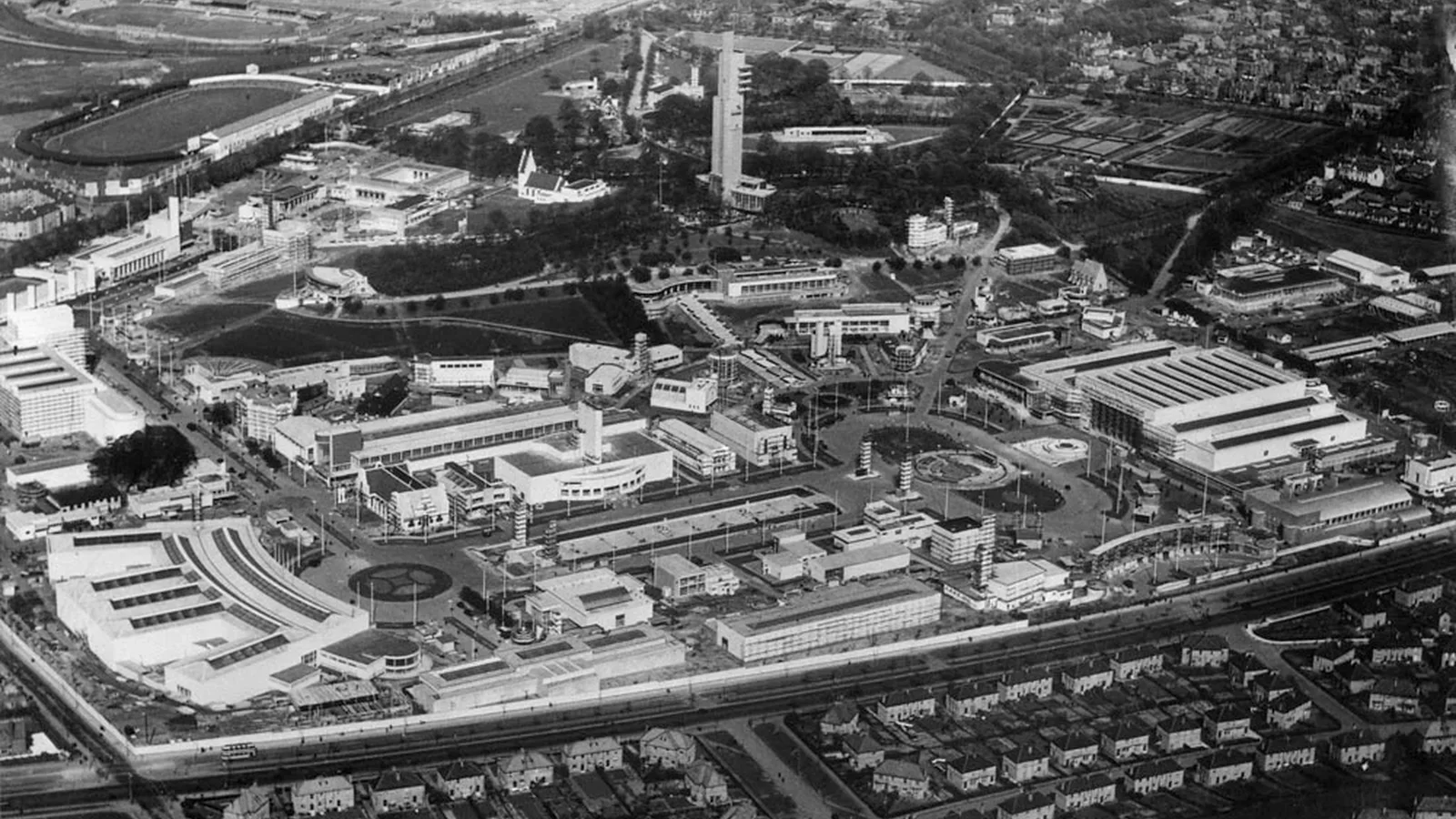
The Empire Exhibition is held in Glasgow.
Indian independence begins decolonisation.
The Church of Scotland's General Assembly and the Scottish Trades Union Congress criticise British policy in Nyasaland and Kenya.
The band of the Black Watch plays at the handover of Hong Kong to China.
The University of Glasgow publishes a report on its historical benefits from slavery.
Details
Failure first
established Scotland tried to build its own empire before it joined England's. A colony in Nova Scotia in the 1620s came to little, and the Darien scheme, an attempt to found a trading colony on the isthmus of Panama in 1698–1700, collapsed in disease, Spanish hostility and English indifference, swallowing a large part of Scotland's available capital. The disaster was one of the pressures that led to the Union of 1707, which gave Scots full access to English colonial markets.
Making empire work
established After 1707 Scots moved into every corner of the empire. In the eighteenth century Glasgow's tobacco lords dominated the import of Virginia and Maryland tobacco. Scots served in large numbers in the East India Company, as soldiers, surgeons, clerks ("writers") and officials; Scots were placed in the Company from the 1720s; their share peaked under Warren Hastings in the 1770s, not under Henry Dundas, who controlled Indian patronage from 1784. Highland regiments, raised from 1739 onward, fought across the empire. Scots were prominent as colonial governors, engineers, doctors, bankers, botanists and surveyors.
established In the nineteenth century Scots-run trading houses dominated much Asian commerce. Jardine Matheson, founded in Canton in 1832 by two Scots, William Jardine and James Matheson, made its early fortune largely from smuggling opium into China and pressed the British government into the First Opium War.
established Military service and settlement were tied together. After 1746, the historian Marjory Harper notes in Adventurers and Exiles (2003), many Highland tacksmen crossed the Atlantic as officers in Highland regiments. At the end of the Seven Years War captains were allowed 3,000 acres of colonial land, subalterns 2,000 and private soldiers fifty, and officers came home to recruit settlers for their grants, creating clusters of Highland landholding in strategic parts of British North America.
shared Devine and other historians argue that Scots were, relative to population, more heavily involved in empire than the English. Devine calls them the "non-commissioned officers" of empire, prominent in the middle ranks of administration, trade and the military rather than at the very top.
Measuring the Scottish share
established The historian T. M. Devine, in To the Ends of the Earth (2011), warns against what he calls "The Burns Supper School of Scottish History" and tests the claim of over-representation against numbers. At the 1801 census Scotland had 1.6 million of the UK's 15.7 million people, about one in ten. Against that baseline:
- India. In Bengal, three in eight of the Company's writers in 1750 were Scots, and 47 per cent of those appointed in 1774–85. By 1813, 37 per cent of Calcutta's private merchant houses were Scottish. All the principal medical officers in Madras from 1720 to 1757 were Scots, and in 1806 Scots took 22 per cent of writers', 16 per cent of cadets' and 27 per cent of assistant surgeons' appointments. Seven of the fourteen royal regiments in India between 1754 and 1784 had been raised in Scotland.
- The Caribbean. Between 15,000 and 20,000 Scots lived in the West Indies around 1800, and Scots were over-represented among governors, plantation managers, overseers, officers and physicians.
- North America. In 1799, 78 per cent of the Hudson's Bay Company's overseas payroll came from Orkney, and 62 per cent of the 225 men active in the rival North West Company were Scots, mostly from Inverness, Banff and Aberdeenshire. Scots led early reform movements in almost every colony, and nearly half the institutions of higher learning in British North America before 1914 had Scots involved in their foundation.
shared Devine stresses that the pattern was uneven, not a steady march to dominance, and that it began before the great Indian conquests, with a visible Scottish presence in the Company from the 1720s. The Irish were the main comparison. Irish emigrants far outnumbered Scots in the eighteenth-century Atlantic empire, 42 per cent of British soldiers were Irish in 1830, and by 1815 over half the Crown forces in India were Irishmen. But the Irish were largely absent from the Company's civil service and its commerce, partly because of limits on Catholic recruitment: between 1809 and 1850 they made up only 5 per cent of new Haileybury recruits. An Act of 1696 also barred plantation goods from being landed directly in Ireland, and Irish merchants were kept out of the direct tobacco and sugar trades until 1780.
shared One contributor to Global Migrations (2016) questions the whole picture. The Irish historian David Fitzpatrick accepts the headline numbers: at least 2.3 million Scots went overseas between 1825 and 1938, and one estimate suggests that without emigration Scotland's population might have neared 7 million by 1939, about 40 per cent above the real figure. But he argues that the case for a distinctively Scottish diaspora has not been properly tested against the Irish and English. On his reading of the 1911 figures, Scots were far less likely than the Irish to settle in the United States, about three times as likely to choose South Africa and twice as likely to choose Canada. In India, home to 123,000 UK-born residents that year, Scots barely outnumbered the Irish, and all three nations were present roughly in proportion to their populations. That sits awkwardly with the popular idea of India as a Scottish preserve.
established The comparison with England is the clearest measure. Bueltmann, Hinson and Morton, in The Scottish Diaspora (2013), report that between 1853 and 1930 Scotland supplied 19 per cent of Britain's emigrants while holding 14 per cent of its population at the start of the period and 11 per cent at the end. Over the same years Scotland lost about 61 per cent of its natural increase to emigration, against about 36 per cent for England and Wales. Allowing for those who came back, the gap is wider: between 1861 and 1911 Scotland lost 30.2 per cent of its natural increase, England under 9 per cent. Scottish emigration also peaked later. Half of England's emigrants of the period had gone by 1899; Scotland did not reach that point until 1906. More than a third of Scottish emigrants between 1870 and 1914 are thought to have returned.
Why so many Scots?
shared Devine's explanation combines several causes:
- The Union. It gave legal access to protected colonial markets and naval protection, though he judges it a necessary condition, not a sufficient one.
- Younger sons. Primogeniture left non-inheriting sons of the gentry to find genteel careers. Their numbers grew as aristocratic child mortality fell, while small estates were squeezed: Scotland's landowners fell from about 9,500 in 1700 to about 8,000 by 1800, and Aberdeenshire's from 621 to 250 between c.1670 and c.1770. Devine likens imperial employment to an eighteenth-century Barnett formula for the landed classes.
- The European apprenticeship. Centuries of soldiering and trading in Scandinavia, the Baltic, Poland and the Low Countries had taught techniques later used in the Atlantic trades: family networks, credit, tramp-trading and cheap goods in bulk.
- Education. About 211 of 818 university-educated men who came to the American colonies in 1680–1780 had studied at Glasgow, Edinburgh or Aberdeen. More than 150 Scottish doctors went to the American mainland in the eighteenth century, at a time when Scotland may have kept only a third of the physicians it trained.
- Fewer prospects at home. Talented Scots had weaker networks in London and were readier to risk the tropics.
established Anti-Scottish feeling followed. During the brief premiership of the Earl of Bute in 1762–63, London cartoons portrayed Scots as greedy beggars swarming south for places and pensions. Loyalty in the American and French wars changed this: in 1797 Scots, about 15 per cent of the British population, made up 36 per cent of the volunteer soldiery.
Sojourners: making a fortune to bring home
established Many Scots in the tropical empire did not mean to stay. Harper estimates that up to 10,000 Scots may have sojourned in the plantation colonies in the second half of the eighteenth century, aiming to make money and buy land at home. Ministers writing in the Statistical Account of the 1790s credited "the influx of wealth from the East and West Indies" with new houses and improvements from Inverness to Forfar. The Gordons of Buthlaw used Jamaican revenue to become one of Aberdeenshire's largest landowning families, and the Malcolms of Poltalloch improved their Argyll estates with Jamaican profits from the 1780s to the 1840s.
established India played the same part. Sir Walter Scott later called it "the corn chest for Scotland". Sir Hector Munro of Novar built the Fyrish monument above Evanton in 1792, modelled on a gate at Negapatnam where he had won a victory. Over £90,000 of Indian money was invested in Elgin between 1815 and 1924, founding Dr Gray's Hospital and the Anderson Institute, and the Bombay merchant John Forbes bought back his family's Strathdon estates and left £10,000 to Aberdeen Royal Infirmary.
shared Later the coffee estates of Ceylon drew many north-east Scots, some by way of Jamaica or the East India Company. Contemporaries claimed that 95 per cent of Ceylon's plantation overseers were Scots and half of those Aberdonians, as Harper reports; the figure is a period claim, not a count. Not every sojourner prospered. The obituary columns record how quickly many died of tropical disease, and some who did make fortunes found they could not extract them and became settlers by default.
established Observers noted the clannishness of these communities. In Jamaica about 1801 Lady Maria Nugent remarked that "almost all agents, attornies, merchants and shopkeepers" were Scots. A Scottish special magistrate in St Vincent in the 1830s, John Anderson, recorded a fellow Scot who had drowned a runaway enslaved man by throwing the iron weight chained to his neck overboard, and was never called to account.
established Empire at the kitchen table. Sojourners also sent home tastes. The food historian Lizzie Collingham, in Curry: A Tale of Cooks and Conquerors (2005), describes Wilhelmina and Stephana Malcolm, unmarried sisters at the family home of Burnfoot in Dumfriesshire, whose ten brothers included several who made careers in India. The sisters copied their brothers' instructions for "mulgatawy" soup and Indian pickle into their kitchen notebooks beside ordinary British recipes. Collingham also notes that an Indian waiter, Daniel Santiagoe, worked at Glasgow's International Exhibition of 1888, part of the run of exhibitions that brought "Indian" cafés and curries to British cities.
established The fortunes were real, and so were the graves. David Alston, in Global Migrations (2016), follows the rush of young Highlanders to the plantations of Demerara and Berbice, in what is now Guyana, around 1800. James Fraser of Belladrum, near Inverness, was said in 1801 to have made £40,000 on his latest stay and spent £20,000 improving his house. New mansions went up around Inverness and Elgin on plantation profits. Against that, one Inverness letter-writer reported that of sixteen young men who had gone out together all but one were dead within months. shared Alston's argument is that people at home judged the odds by the few who came back rich. A planter in Guyana warned a relative in exactly those terms: "you have only seen the fortunate few". These fortunes were made from the labour of enslaved Africans.
Scots and slavery
established Scots were deeply involved in Atlantic slavery. Younger sons of Scottish landed and merchant families went to the Caribbean in large numbers as planters, overseers, doctors and merchants, especially in Jamaica, Grenada, Tobago and later the Guianas. Glasgow did not send many slave ships, but its tobacco, sugar and cotton trades rested on enslaved labour, and Scots financed and managed the system in disproportionate numbers. Robert Burns came close to taking a post as a bookkeeper on a Jamaican plantation in 1786.
established When slavery was abolished in the British colonies under the Slavery Abolition Act 1833, slave owners were paid £20 million in compensation; the enslaved received nothing. The historian David Alston and others have shown that a disproportionate share of that money went to Scots. In 2018 the University of Glasgow became the first British university to publish a report on its historical benefits from slavery, and launched a programme of reparative justice.
shared Devine argues that the slave-based economies were of fundamental importance to Scotland's early, textile-led industrialisation up to about 1830, through cheap raw cotton, colonial markets for linen and merchant capital, but had little bearing on the later iron, steel and engineering phase. Other historians think their contribution was significant but smaller. The debate is about scale, not about whether the connection existed.
Missionaries and education
established Scottish churches sent missionaries across the world, especially after the Disruption of 1843. David Livingstone became the most famous explorer-missionary of the Victorian age, and Mary Slessor (1848–1915), born in Aberdeen and a mill worker in Dundee from the age of 11, spent nearly forty years in Calabar and died in Nigeria. Missions in India made few converts, but Scottish-founded schools and colleges in Africa and Asia educated generations, some of whom became leaders of independence movements and critics of colonial rule. In central Africa, Scottish missions in Nyasaland (now Malawi) opposed the white-settler-dominated Central African Federation in the 1950s.
established John M. MacKenzie, also in Global Migrations, shows how strongly Scots were represented in southern Africa. The 1911 census of the Union of South Africa recorded that 20 per cent of UK-born white settlers were Scots, against about 12 per cent of the British population. Scottish shipping tied the two together: Donald Currie of Greenock built the line that became Union-Castle on the Cape route, and William Mackinnon, founder of the Mackinnon Mackenzie agency in India, set up the Imperial British East Africa Company in 1888. shared MacKenzie stresses that the influence ran both ways. Presbyterian churches in Africa became self-governing after 1945, often before political independence. After the emergency of 1959 in Nyasaland the Church of Scotland opposed the white-ruled Central African Federation, and MacKenzie sees that history behind the present Scotland–Malawi partnership.
Settlers and Indigenous peoples
established Scots emigrated in large numbers to Canada, Australia, New Zealand and southern Africa, often taking land from Indigenous peoples. Devine has highlighted cases such as the Warrigal Creek massacre of 1843 in Gippsland, Australia, in which Aboriginal people were killed by a party led by a Scottish settler. In Devine's account the killing of Ronald Macalister, a kinsman of local Scottish settlers, brought together a so-called "Highland Brigade", which killed over a hundred men, women and children; accounts of the incident conflict. He has also challenged the comforting myth that Scots, as fellow victims of dispossession in the Highlands, treated Indigenous peoples better than the English did.
established Harper makes the same point: in the celebration of Scottish achievement overseas, "the uncomfortable truth that evicted Highlanders in turn displaced Native Americans and Australian Aborigines is conveniently forgotten". Settlement could be explicitly strategic. In 1877 the government of Cape Colony gave free passages to 361 Scots to settle on the Eastern Cape frontier, partly as a buffer against the Xhosa of the Transkei, on land from which Xhosa had recently been displaced.
shared Two chapters in Global Migrations (2016) test whether Scots behaved differently from other colonists. Ann Curthoys examined Scots and Aboriginal people in New South Wales, Victoria and Queensland between the 1830s and 1861, a period of rapid pastoral expansion. She found Scots on every side: squatters and explorers who took land and took part in killings, and ministers, editors and politicians who protested. Her conclusion is that she could find no distinctively Scottish approach. Scots took up the colonial project with the same enthusiasm, confusion and class tensions as the English. Colin Calloway reaches a similar verdict for the American South, while showing that Scottish traders there married into Creek, Cherokee and Chickasaw society on a scale that left lasting family ties.
The end of empire
established Empire stayed visible in Scottish life well into the twentieth century. From 1907 the Scottish Education Department told schools to teach Scotland's role in the empire, and Cormack's Caledonia Readers were widely used. Empire Day, the Junior Empire League, the Boys' Brigade, Livingstone biographies given as school prizes and the Scottish regiments all carried the message. The Scottish National War Memorial (1927) included dominion regiments in its Roll of Honour, and Glasgow staged an Empire Exhibition in 1938 and a colonial week as late as 1951.
established Yet decolonisation caused little stir. Devine found that the Glasgow Herald and The Scotsman in 1947 did not mention any likely effect of Indian independence on Scotland, and even the Dundee Courier did not allude to the city's long Indian connection through jute. Between Dewar Gibb's book of 1937 and Fry's of 2001, no book on Scotland and empire appeared. In the 1950s the Church of Scotland's General Assembly backed African nationalism in Nyasaland, and the STUC called British policy in Kenya "a war of extermination". The Black Watch band played at the Hong Kong handover in 1997.
shared Devine argues that Scots let go easily for several reasons. Their strongest family ties were with the dominions, which stayed close, not with India or Africa. Depression and war had turned attention to jobs and welfare, so the Beveridge Report and the welfare state became the new anchors of the Union. Empire had also failed to protect Scotland in the 1930s: by the 1890s Bengal had overtaken Dundee as the world centre of jute manufacture. He rejects the idea that imperial decline drove devolution, crediting instead the economic crisis and "democratic deficit" of the 1980s; in his words, Margaret Thatcher has "an infinitely greater claim to be the midwife of Scottish devolution". He disputes Bernard Porter's view, in The Absent-Minded Imperialists (2004), that ordinary Britons knew or cared little about empire, at least for Scotland. These are his readings, written in 2011.
Why it matters
shared For much of the twentieth century Scottish history largely ignored empire; as late as 2001 the Oxford Companion to Scottish History had no index entry for "slavery". The past three decades have changed that. The fair verdict is that empire offered opportunity and wealth to many Scots, and that Scots played a disproportionate part in building it, including its worst aspects. That history belongs alongside the more familiar story of Scotland's own losses.
Did You Know?
-
Two Dumfriesshire sisters, the Malcolms of Burnfoot, copied their brothers' recipes for mulligatawny soup and Indian pickle into their kitchen notebooks.
-
Scotland's own colony at Darien collapsed in 1700, seven years before the Union.
-
Jardine Matheson, founded by two Scots in 1832, began as an opium-trading firm.
-
Robert Burns nearly took a job on a Jamaican slave plantation in 1786.
-
Slave owners received £20 million compensation in 1833; the enslaved received nothing.
-
The University of Glasgow published Britain's first university report on slavery in 2018.
-
Tom Devine calls Scots the "non-commissioned officers" of empire.
FAQ
1Was Scotland a victim or a partner of empire?
Both, but historians now stress that Scots were active and disproportionate partners in building the British Empire.
2Were Scots involved in slavery?
Yes, as plantation owners, managers, merchants and financiers, especially in Jamaica and the Guianas.
3Did empire make Scotland rich?
It brought great wealth to some Scots and contributed to industrialisation; historians debate how much.
4Who were famous Scottish missionaries?
David Livingstone and Mary Slessor are the best known.
5What was Darien?
Scotland's failed colony in Panama, 1698–1700.
6Did Scots in the colonies mean to stay?
In the Caribbean and India many did not. They went as "sojourners" to make money and buy land or status at home.
7Where can empire money be seen in Scotland?
In country houses and estate improvements, and in buildings such as the Fyrish monument, Dr Gray's Hospital in Elgin and the Anderson Institute.
8How were soldiers linked to settlement?
After the Seven Years War, officers and men received colonial land grants, and Highland officers recruited settlers to fill them.
9Were Scots really over-represented?
In the elite posts, yes. Scots were about a tenth of the UK population in 1801 but nearly half of the Bengal writers appointed in 1774–85. The Irish supplied more ordinary soldiers.
10Why did Scotland accept the end of empire so quietly?
T. M. Devine argues that family ties ran mainly to the dominions, which stayed close, and that after 1945 Scots looked to the welfare state and full employment rather than to empire.
Related
Sources and Further Reading
Primary/Institutional
- University of Glasgow, Slavery, Abolition and the University of Glasgow (2018)
- University College London, Legacies of British Slavery database
Scholarly/Critical
- Tanja Bueltmann, Andrew Hinson and Graeme Morton, The Scottish Diaspora (Edinburgh University Press, 2013), chapters 4 and 8, for the emigration and return statistics
- David Alston, "'You Have Only Seen the Fortunate Few and Draw Your Conclusion Accordingly': Behavioural Economics and the Paradox of Scottish Emigration", and David Fitzpatrick, 'What Scottish Diaspora?', in Angela McCarthy and John M. MacKenzie (eds), Global Migrations: The Scottish Diaspora since 1600 (Edinburgh University Press, 2016), pp. 46–62 and 240–271
- John M. MacKenzie, 'Scottish Diasporas and Africa', and Ann Curthoys, 'Conflicts of Interest, Crises of Conscience: Scots and Aboriginal People in Eastern Australia, 1830s–1861', in Angela McCarthy and John M. MacKenzie (eds), Global Migrations: The Scottish Diaspora since 1600 (Edinburgh University Press, 2016), pp. 63–80 and 98–116
- Lizzie Collingham, Curry: A Tale of Cooks and Conquerors (Chatto & Windus, 2005)
- T. M. Devine, Scotland's Empire, 1600–1815 (Allen Lane, 2003)
- T. M. Devine, To the Ends of the Earth: Scotland's Global Diaspora, 1750–2010 (Allen Lane, 2011)
- T. M. Devine (ed.), Recovering Scotland's Slavery Past: The Caribbean Connection (Edinburgh University Press, 2015)
- John M. MacKenzie and T. M. Devine (eds.), Scotland and the British Empire (Oxford University Press, 2011)
- Marjory Harper, Adventurers and Exiles: The Great Scottish Exodus (Profile Books, 2003)
- Douglas Hamilton, "Scotland and the Eighteenth-Century Empire", in T. M. Devine and Jenny Wormald (eds), The Oxford Handbook of Modern Scottish History (Oxford University Press, 2012) — further reading on Scots in the eighteenth-century empire
- Esther Breitenbach, "The Impact of the Victorian Empire", in T. M. Devine and Jenny Wormald (eds), The Oxford Handbook of Modern Scottish History (Oxford University Press, 2012) — further reading on the empire's impact on Victorian Scotland
General
- Neal Ascherson, "The money's still out there", London Review of Books 33/19 (2011) — https://www.lrb.co.uk/v33/n19/neal-ascherson/the-moneys-still-out-there
- Scottish Studies, "Scots in the West Indies" — https://scottishstudies.com/940scotsinthewestindies.htm
Specialist
- Elizabeth Ewan, Rose Pipes, Jane Rendall and Siân Reynolds (eds), The New Biographical Dictionary of Scottish Women (Edinburgh University Press, 2018)
Caveats: Myths and Disputed Claims
- Disputed: Precise percentages of Scots in the empire. Figures for the East India Company or Jamaican planters vary widely between sources and periods. The firmest come from T. M. Devine, who compares them with Scotland's one-in-ten share of the UK population, and they apply to specific posts and periods, such as Bengal writers in 1774–85.
- Myth: The Scots supplied most of the empire's soldiers. Scots were over-represented among officers and in the middle ranks, but the Irish supplied most of the rank and file.
- Disputed: That the end of empire caused devolution. Devine rejects the idea and points instead to the economic crisis and "democratic deficit" of the 1980s.
- Myth: Scots were only victims of empire. Scots were active and disproportionate partners in building it, including its worst aspects, such as slavery and the opium trade.
- Myth: Scots treated Indigenous peoples better than other settlers because they had been dispossessed in the Highlands. Devine and Marjory Harper both challenge this, and Scottish settlers took Indigenous land in Canada, Australia, New Zealand and southern Africa.
- Disputed: That 95 per cent of Ceylon's plantation overseers were Scots. This was a claim by contemporaries, not a count.
- Disputed: How much slavery-derived capital drove Scottish industrialisation. Devine sees it as fundamental to the early, textile-led phase up to about 1830. Other historians think its contribution was significant but smaller. The debate is about scale, not whether the connection existed.
Finished reading? Try the Fact Machine: three reels, one surprising Scottish connection →
Card 010 · History