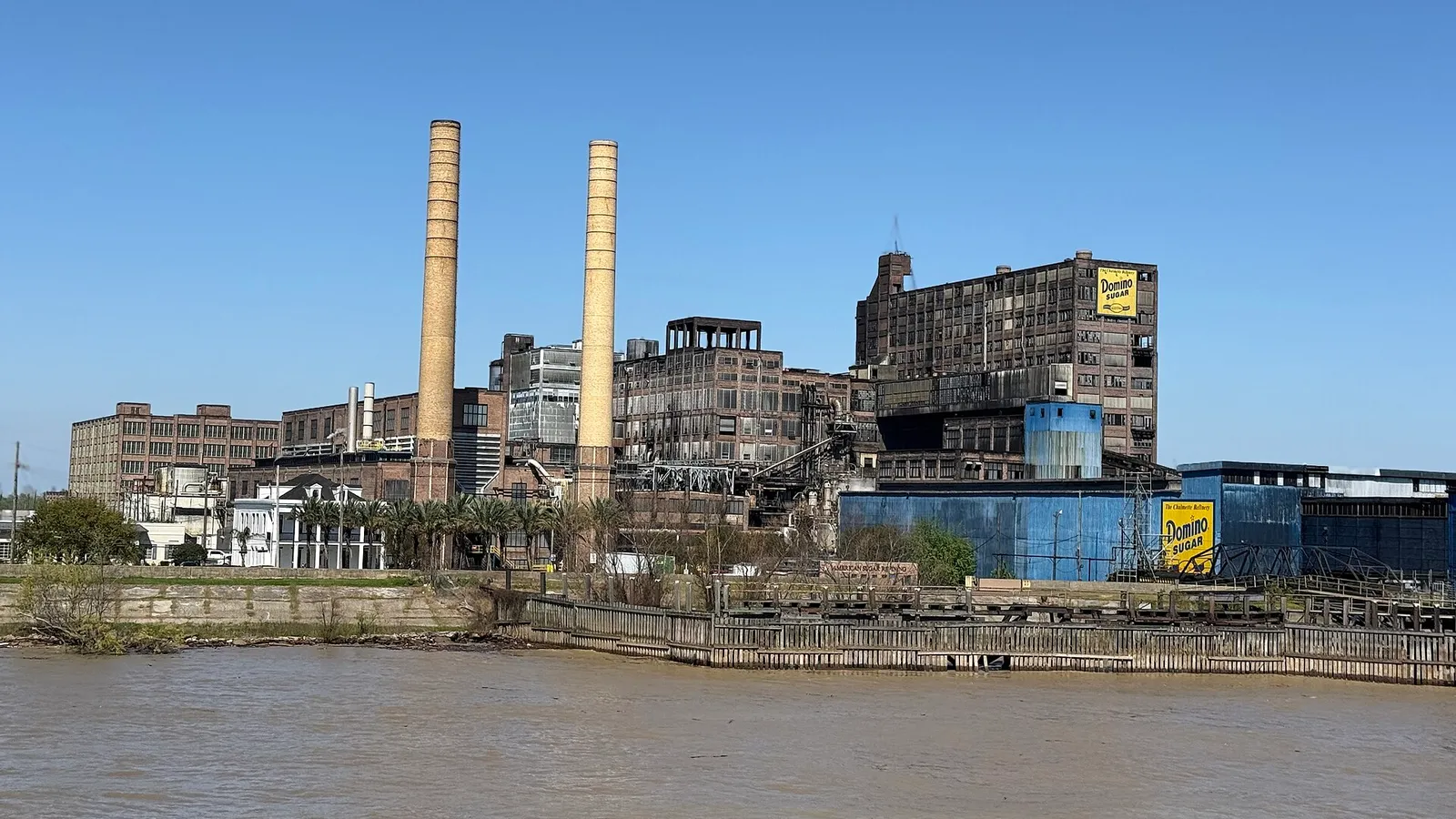

Sugar Refining
Contents
Legend/Myth Opener
Greenock's history as a major sugar-refining centre is sometimes told as a simple story of industrial ingenuity and trade success. It cannot honestly be told that way. Greenock's sugar industry — so large in the 19th century it earned the nickname "Sugaropolis" — existed because of, and was financially dependent on, sugar grown on slave plantations in the Caribbean. That colonial and slavery connection is not incidental background; it is the foundation the industry was built on, and it must be stated plainly rather than politely omitted.
TL;DR
- established Greenock became one of Britain's largest sugar-refining centres by the mid-to-late 19th century, with numerous refineries operating in the town, because this concentration of refining capacity is documented in local heritage records, trade history, and surviving industrial sites such as the Sugar Sheds.
- established Greenock's sugar industry was directly dependent on raw sugar grown on Caribbean plantations using enslaved labour, particularly before the abolition of slavery in the British Empire in 1833–1838, because this supply chain and its reliance on slave-produced sugar are documented historical facts, not a later reinterpretation.
- established Abram Lyle, a Greenock-connected sugar refiner, went on to found a business that became part of Tate & Lyle, one of the industry's major modern successor companies, because this corporate lineage is documented in company history.
- established Greenock's sugar-refining industry declined significantly across the 20th century, with Tate & Lyle's Greenock refinery eventually closing, because this closure and the broader industry contraction are recorded in local economic and industrial history.
- traditional The nickname "Sugaropolis" is sometimes used loosely to suggest Greenock rivalled London as Britain's sugar capital, which is a reasonable characterisation of its 19th-century importance but should be treated as descriptive shorthand rather than a precise ranking.
Key Facts
- Category
- Detail
- Peak Era
- Mid-to-late 19th century through early-to-mid 20th century
- Key Locations
- Greenock, Inverclyde (James Watt Dock area; "Sugar Sheds")
- Key Companies/Figures
- Numerous Greenock refining firms; Abram Lyle (later part of Tate & Lyle)
- Raw Material Source
- Caribbean sugar plantations, historically dependent on enslaved labour before abolition (1833–1838)
- Status Today
- Industry declined across the 20th century; Tate & Lyle's Greenock refinery closed; former refinery buildings (Sugar Sheds) survive and have been considered for heritage/redevelopment use
- SI Score
- 52/60
Scottish Impact Index (SI Score)
- Economic Impact
- 9/10
- Industrial Longevity
- 9/10
- Material Contribution
- 9/10
- Industrial Distinctiveness
- 8/10
- Industrial Legacy
- 9/10
- Recognition
- 8/10
52/60
Ranked =31st of 50 in Industry
A Note on Claims and Evidence
Greenock's sugar-refining history is well documented through company records, local heritage archives, and surviving industrial buildings, and the industry's direct dependence on Caribbean sugar — including, for a substantial early period, sugar produced by enslaved labour before abolition — is an established historical fact, not a disputed interpretation. This article states that connection plainly, in keeping with an accuracy-over-patriotism standard, rather than treating it as an awkward footnote to an otherwise celebratory industrial story. The nickname "Sugaropolis" is traditional/descriptive shorthand for the town's 19th-century importance in sugar refining and is treated here as evocative rather than a precise statistical ranking against other British sugar centres.
Timeline
Scottish merchants and refiners become increasingly involved in the Atlantic sugar trade, importing raw sugar produced on Caribbean plantations.
British sugar consumption per head rises from about four pounds a year to about twenty.
Glasgow's West India merchants found the Glasgow West India Association.
Sugar refining develops as an industry in Greenock, benefiting from the town's port facilities and trade links with the West Indies.
Slavery is abolished across the British Empire (with a transitional "apprenticeship" period), ending the direct legal use of enslaved labour on British Caribbean plantations, though the sugar trade's colonial economic structure persists.
Greenock's sugar-refining industry expands significantly, with multiple refineries operating in the town, processing imported raw sugar at large scale; the town earns the nickname "Sugaropolis."
Abram Lyle, connected to the Greenock sugar trade, establishes a sugar-refining business that develops into a major firm; this lineage later becomes part of Tate & Lyle.
Industry consolidation, changing trade patterns, and competition contribute to a gradual decline in the number of independent Greenock refineries.
Tate & Lyle continues sugar refining operations at Greenock for a period, but the plant eventually closes as part of wider industry contraction.
Former refinery buildings, including the "Sugar Sheds" at the James Watt Dock area, survive as heritage structures; various redevelopment and alternative-use proposals (including industrial reuse) have been considered for the site.
Details
Origins: Greenock, the Clyde, and the Atlantic Sugar Trade
Greenock's emergence as a major sugar-refining centre was a direct consequence of its position within Scotland's Atlantic trade network. From the 18th century, Clyde ports — Greenock prominent among them — grew wealthy on trade with the Americas and the Caribbean, including tobacco, and increasingly sugar. Raw sugar grown on plantations in British Caribbean colonies such as Jamaica, Barbados, and others was shipped to Scottish ports for refining into the white sugar sold to British consumers. Greenock's harbour facilities, its position on the Clyde, and its established merchant class gave it a natural advantage in developing refining capacity close to the point of import.
It is essential to state directly what this supply chain actually was: for most of this formative period, the raw sugar arriving in Greenock had been produced using enslaved African labour on Caribbean plantations, under the brutal and exploitative conditions of the British plantation slavery system. This was not a tangential detail of the sugar trade — it was the economic basis of the entire Atlantic sugar economy that Greenock's refining industry was built to serve. The industry's early growth and the wealth it generated for Greenock merchants and refiners cannot be honestly separated from this origin.
The Eighteenth-Century Sugar Economy
established The historian T. M. Devine, in To the Ends of the Earth (2011), sets out the scale of the market the refiners served. British consumption of sugar per head rose from about four pounds a year in 1700 to ten pounds by 1748 and twenty pounds by 1800. The British islands supplied about 40 per cent of transatlantic sugar shipments in 1700 and 60 per cent by 1815, and imports topped 1.8 million cwt a year in 1771–75. The Navigation Laws protected the home market, where sugar sold in the 1750s at prices about 50 per cent above those in continental Europe. By 1750 Africans made up about 85 per cent of the population of the British West Indies.
established Sugar houses were part of the earliest wave of Clyde industry financed by colonial trade. Devine counts sugar houses among about eighty industrial units in iron, glass, soap and sugar in Glasgow and the west that received investment from tobacco and West India merchants after about 1730, and notes that the tobacco merchants set up sugar refineries alongside tanneries, breweries and bottleworks. After the American War, Glasgow's West India merchants, whom he calls the "sugar princes", became the city's commercial elite: about eighty partners, led by firms such as Alexander Houston and Co., worth £630,000 in 1809. In 1807 they founded the Glasgow West India Association, later a leading opponent of emancipation.
shared The Caribbean's place in British trade then fell sharply. In 1815 the West Indies still supplied £15.4 million, or 17.6 per cent, of Britain's trade; a century later the figure was £6.6 million, less than 1 per cent. Devine's figures from the Clyde Navigation Trust show only 1,002 tons of shipping entering Glasgow from the West Indies in 1911. This suggests that by the time Greenock's refining reached its Victorian peak, much of its raw sugar was coming from other sources, including beet sugar from Europe and cane from outside the British Caribbean; the exact mix by date should be checked against the Watt Library records before it is stated.
Peak Scale: "Sugaropolis"
By the mid-to-late 19th century, Greenock had developed into one of Britain's most significant sugar-refining centres, with numerous refineries operating in the town — a concentration substantial enough to earn Greenock the nickname "Sugaropolis." This period followed the abolition of slavery across the British Empire (1833–1838), but the broader colonial economic structure underpinning sugar production — including systems of indentured labour that in some colonies followed the end of slavery — continued to shape the trade through the 19th century. Greenock's refineries processed large volumes of imported raw sugar, supporting substantial local employment and establishing sugar refining as one of the town's defining industries alongside its shipbuilding.
One of the most significant figures connected to this period was Abram Lyle, whose sugar-refining business, developed in connection with the Greenock trade, would go on to merge with Henry Tate & Sons in 1921 to form Tate & Lyle — a company that remains one of the best-known names in the global sugar and sweetener industry today. This corporate lineage illustrates how Greenock's sugar industry, though eventually declining locally, fed into and helped shape the structure of the modern British sugar industry more broadly.
Decline and Closure
Like much of Scotland's heavy and processing industry, Greenock's sugar refineries faced mounting pressure across the 20th century from changing trade patterns, industry consolidation into larger corporate groups, shifting global sugar markets (including the rise of beet sugar production within Europe and changing tariff and trade arrangements), and the general contraction of traditional manufacturing in west-central Scotland. The number of independent refineries in the town declined steadily, and even as the Tate & Lyle name continued to be associated with Greenock sugar refining for a period into the 20th century, the operation eventually could not be sustained against these pressures, and the Greenock refinery closed. This closure forms part of the wider, well-documented pattern of industrial decline affecting Inverclyde and the lower Clyde through the later 20th century, alongside shipbuilding's own contraction in the same area.
Present-Day Legacy and the Honest Reckoning
Physical traces of Greenock's sugar-refining era survive, most visibly in the "Sugar Sheds" — historic refinery warehouse buildings in the James Watt Dock area — which have been the subject of heritage interest and various redevelopment or alternative-industrial-use proposals in the 21st century, including, at points, consideration for uses entirely unrelated to sugar. These buildings stand as a physical reminder of an industry that was, in its origins, structurally dependent on Caribbean slave labour, and later on a colonial trade system that continued to extract value from the Caribbean long after formal slavery ended. A responsible account of Greenock's sugar-refining history treats this honestly: the industry's wealth and the employment it provided to generations of Greenock workers existed within, and depended upon, a system of colonial exploitation whose human cost was borne thousands of miles away, on plantations rather than in the refineries themselves. Presenting Greenock's sugar history purely as a story of local industrial achievement, without this context, would misrepresent the record.
Did You Know?
- The nickname "Sugaropolis" reflects just how concentrated and significant sugar refining became in 19th-century Greenock, relative to the town's size.
- Abram Lyle, whose name survives today in the Tate & Lyle brand (and in products like Lyle's Golden Syrup), was connected to the Greenock sugar-refining trade before his business grew into a major national firm.
- The raw sugar refined in 19th-century Greenock was, for a substantial period, produced using enslaved labour on British Caribbean plantations — a direct, documented link between Scottish industrial wealth and plantation slavery.
- Slavery was abolished across the British Empire between 1833 and 1838, but Greenock's sugar-refining industry continued to depend on the broader colonial plantation economy for its raw material well beyond that date.
- The surviving "Sugar Sheds" at Greenock's James Watt Dock are among the most tangible physical remnants of the town's sugar-refining past.
- Greenock's sugar and shipbuilding industries developed side by side, both drawing on the town's Clyde-side port infrastructure and Atlantic trade connections.
- Tate & Lyle, the company whose lineage traces partly back to Greenock's sugar trade through Abram Lyle, remains a major global name in sugar and sweeteners today, even though its Greenock operations eventually closed.
- Proposals to redevelop or repurpose former Greenock sugar refinery buildings have, at various times, included entirely unrelated industrial uses, such as food processing for other sectors.
FAQ
1Why did Greenock become a major sugar-refining centre?
Its position as a Clyde port with strong Atlantic trade links to the Caribbean made it a natural location to import raw sugar and refine it for the British market.
2Did Greenock's sugar industry depend on slavery?
Yes, directly and substantially — for much of its formative period, the raw sugar refined in Greenock was grown on Caribbean plantations using enslaved labour, before the abolition of slavery across the British Empire in 1833–1838.
3What does "Sugaropolis" mean?
It is a historical nickname reflecting the scale and concentration of sugar refining in 19th-century Greenock, used descriptively rather than as a precise statistical ranking.
4Who was Abram Lyle?
A sugar refiner connected to the Greenock trade whose business later merged with Henry Tate & Sons in 1921 to form Tate & Lyle, a major sugar company that still exists today.
5When did Greenock's sugar-refining industry decline?
Decline occurred gradually across the 20th century, driven by industry consolidation, changing trade patterns, and broader deindustrialisation in the area, culminating eventually in the closure of the town's Tate & Lyle refinery.
6Are any sugar refineries still operating in Greenock today?
No — large-scale sugar refining in Greenock has ended; former refinery buildings survive mainly as heritage structures.
7What are the "Sugar Sheds"?
Historic refinery warehouse buildings at Greenock's James Watt Dock, among the most visible surviving remnants of the town's sugar-refining past.
8Did slavery's abolition end Greenock's dependence on colonial sugar?
No — abolition (1833–1838) ended the legal use of enslaved labour in British colonies, but Greenock's refining industry continued to depend on the wider colonial Caribbean sugar-production system for decades afterward.
9Is Tate & Lyle still connected to Greenock?
Not operationally today; the company's historical lineage includes a Greenock connection through Abram Lyle, but its Greenock refining operations have closed.
10Why is it important to mention slavery when discussing Greenock's sugar industry?
Because the industry's raw material supply, and much of its early wealth, was directly produced through plantation slavery — omitting this would misrepresent the industry's actual economic foundation.
11Did Greenock refine sugar from sources other than the Caribbean over time?
Over time, global sugar sourcing diversified, including the rise of European beet sugar production, which also affected the competitive position of cane-sugar refiners like those in Greenock.
12How large was the British sugar market?
Very large and growing. Consumption per head rose from about four pounds a year in 1700 to about twenty in 1800, according to figures given by T. M. Devine.
13What happened to the workers when Greenock's sugar refineries closed?
As with other instances of Scottish industrial decline, refinery closures contributed to job losses in the Inverclyde area, compounding the effects of parallel decline in shipbuilding and other local industries.
Sources and Further Reading
Primary/Institutional
- Inverclyde Council, Watt Library local history collection, "Sugar" — https://www.inverclyde.gov.uk/community-life-and-leisure/heritage-services/collections/watt-library/local-history/sugar
- Historic Environment Scotland / Canmore record relating to Greenock sugar refining sites — https://canmore.org.uk/event/645819
Scholarly/Critical
- The British Academy, "Sensing Sugaropolis" research project page — https://www.thebritishacademy.ac.uk/events/sensing-sugaropolis/
- "Sugar, Ships & Slavery — Sugaropolis" (publication listing) — https://buecher.de/artikel/buch/sugar-ships--slavery-sugaropolis/66801236
- Douglas Hamilton, "Scotland and the Eighteenth-Century Empire", in T. M. Devine and Jenny Wormald (eds), The Oxford Handbook of Modern Scottish History (Oxford University Press, 2012) — further reading on the Caribbean sugar trade
- T. M. Devine, To the Ends of the Earth: Scotland's Global Diaspora, 1750–2010 (Allen Lane, 2011)
General
- Wikipedia, "Abram Lyle" — https://en.wikipedia.org/wiki/Abram_Lyle
- Wikipedia, "Tate & Lyle" — https://en.wikipedia.org/wiki/Tate_%26_Lyle
Caveats: Myths and Disputed Claims
- Do not describe Greenock's sugar-refining wealth without acknowledging its direct dependence on Caribbean plantation sugar, including sugar produced by enslaved labour before 1833–1838. Correct phrasing: the industry's raw material supply was structurally dependent on the colonial plantation economy, including slavery during its formative period.
- Do not treat "Sugaropolis" as a precise ranking (e.g., "Britain's biggest sugar town"); use it as descriptive shorthand for the town's significant 19th-century scale.
- Do not imply that abolition in 1833–1838 ended Greenock's dependence on the colonial sugar-production system; the broader economic relationship with Caribbean sugar production continued for decades afterward under different labour arrangements.
- Do not state precise refinery counts or output tonnages without sourcing a specific year, as these figures varied over time and across sources.
Card 035 · Industry