
Joan Eardley: Townhead and Catterline
Contents
Legend vs Myth
Joan Eardley is sometimes presented as a sentimental painter of "cute" Glasgow slum children. Her actual Townhead paintings are considerably tougher and more ambivalent than that — observational, unsentimental, often rough in texture — and her reputation, dismissed or underrated by parts of the art establishment during her lifetime, has risen substantially since her early death, to the point that she is now ranked among the most significant British painters of the mid-20th century.
TL;DR
- established Joan Eardley (1921–1963) produced two major, distinct bodies of work: paintings and drawings of children in Glasgow's Townhead district, and seascapes and landscapes painted at the fishing village of Catterline on the Aberdeenshire coast — this division of her output is well documented through her surviving work and exhibition history.
- established Eardley died of breast cancer in 1963 at age 42, cutting short a career that was still developing in ambition and scale, particularly in her Catterline seascapes — this is a matter of documented biographical fact.
- established Her critical reputation has risen substantially since her death, with major retrospective exhibitions (including at the National Galleries of Scotland) and increasing market and institutional recognition from the later 20th century onward — this posthumous reassessment is well documented.
- traditional Eardley is often described as having had a comparatively difficult relationship with the London-centred art establishment during her lifetime, favouring Glasgow and remote rural Scotland over the more conventional career path of metropolitan exhibition and networking — a widely repeated characterisation supported by her biography, though the degree to which this reflects deliberate choice versus limited opportunity is open to some interpretation.
- established Eardley trained at Glasgow School of Art and was closely associated with Glasgow throughout her career, despite being born in Sussex, England — her English birth and Scottish artistic identity are both well documented facts.
Key Facts
- Born
- 18 May 1921, Warnham, Sussex, England
- Died
- 16 August 1963, Killearn, Scotland (aged 42)
- Training
- Glasgow School of Art (from 1938)
- Major bodies of work
- Townhead, Glasgow (children, street life, tenements); Catterline, Aberdeenshire (seascapes, landscapes)
- Medium
- Oil, pastel, mixed media, often incorporating collage elements (newspaper, found materials)
- Key locations
- Glasgow (Townhead studio) and Catterline (coastal cottage/studio)
- Legacy
- Major posthumous reassessment; now widely ranked among the most significant British painters of the mid-20th century
Scottish Impact Index (SI Score)
- Cultural Impact
- 9/10
- Enduring Relevance
- 9/10
- Artistic / Cultural Contribution
- 10/10
- Artistic Originality
- 10/10
- Artistic Legacy
- 10/10
- Recognition
- 9/10
57/60
Ranked =17th of 50 in Arts
A Note on Claims and Evidence
Eardley's biography, training, two major bodies of work, and early death are well documented through gallery records, biographies, and her surviving correspondence and artworks. Her relative critical standing during her lifetime versus after her death is documented through exhibition history and contemporary and retrospective criticism, though characterising exactly why she occupied a particular position relative to the art establishment of her time (deliberate choice, geography, gender, subject matter, or combinations of these) involves interpretation rather than a single documentable cause, and is treated accordingly.
Timeline
Born in Warnham, Sussex, England.
Family relocates to Scotland following her father's death; Eardley settles in the Glasgow area.
Studies at Glasgow School of Art.
Travels to Italy and France on a travelling scholarship, broadening her technical range.
Establishes a studio in Glasgow's Townhead district, beginning sustained work depicting local children and street life.
Begins working regularly in the fishing village of Catterline, Aberdeenshire, developing an increasingly bold, expressive approach to coastal landscape and seascape painting, often working outdoors in severe weather.
Exhibits with the Society of Scottish Artists and other Scottish exhibiting bodies; gains a regional reputation, with more limited recognition in London compared to some contemporaries.
Diagnosed with breast cancer.
Dies in August, aged 42, at Killearn, Stirlingshire.
Posthumous exhibitions gradually consolidate her reputation within Scotland.
Major retrospectives (including significant exhibitions organised by the National Galleries of Scotland) and growing scholarship substantially elevate her national and international critical standing.
Details
From Sussex to Glasgow
Joan Eardley was born in 1921 in Warnham, Sussex, in the south of England — a biographical fact sometimes overlooked given how completely her artistic identity became associated with Scotland. Following her father's death, her family relocated, and she eventually settled in the Glasgow area, enrolling at Glasgow School of Art in 1938. Her training there, followed by a travelling scholarship that took her to Italy and France in the late 1940s, exposed her to a range of historical and contemporary European painting, but it was her subsequent choice of subject matter — the working-class streets of Glasgow and the wild coastline of northeast Scotland — that defined her mature work and her lasting reputation as one of the most significant painters associated with 20th-century Scotland, regardless of her English birth.
Townhead: children, tenements, and unsentimental observation
From the late 1940s and through the 1950s, Eardley established a studio in Townhead, then a poor, densely populated tenement district near Glasgow city centre, and began an extended body of work depicting the children who lived there — painted and drawn repeatedly, often in groups, playing in streets, doorways, and derelict spaces. These works are frequently rough in texture, incorporating collage elements such as newspaper and other found materials directly into the paint surface, and depict children with grime, patched or ill-fitting clothes, and unglamorous settings rendered without sentimentality or moralising commentary. Eardley came to know many of the children and their families personally over years of repeated visits, and her approach has been described by critics as combining real affection and familiarity with an unflinching, observational honesty about poverty and urban deprivation in postwar Glasgow — closer in spirit to social documentary than to either sentimental genre painting or detached social-realist critique. The redevelopment and eventual demolition of much of the Townhead area in subsequent decades has also given these paintings a documentary value as a record of a vanished urban landscape, in addition to their artistic significance.
Catterline: the sea, the weather, and expressive abstraction
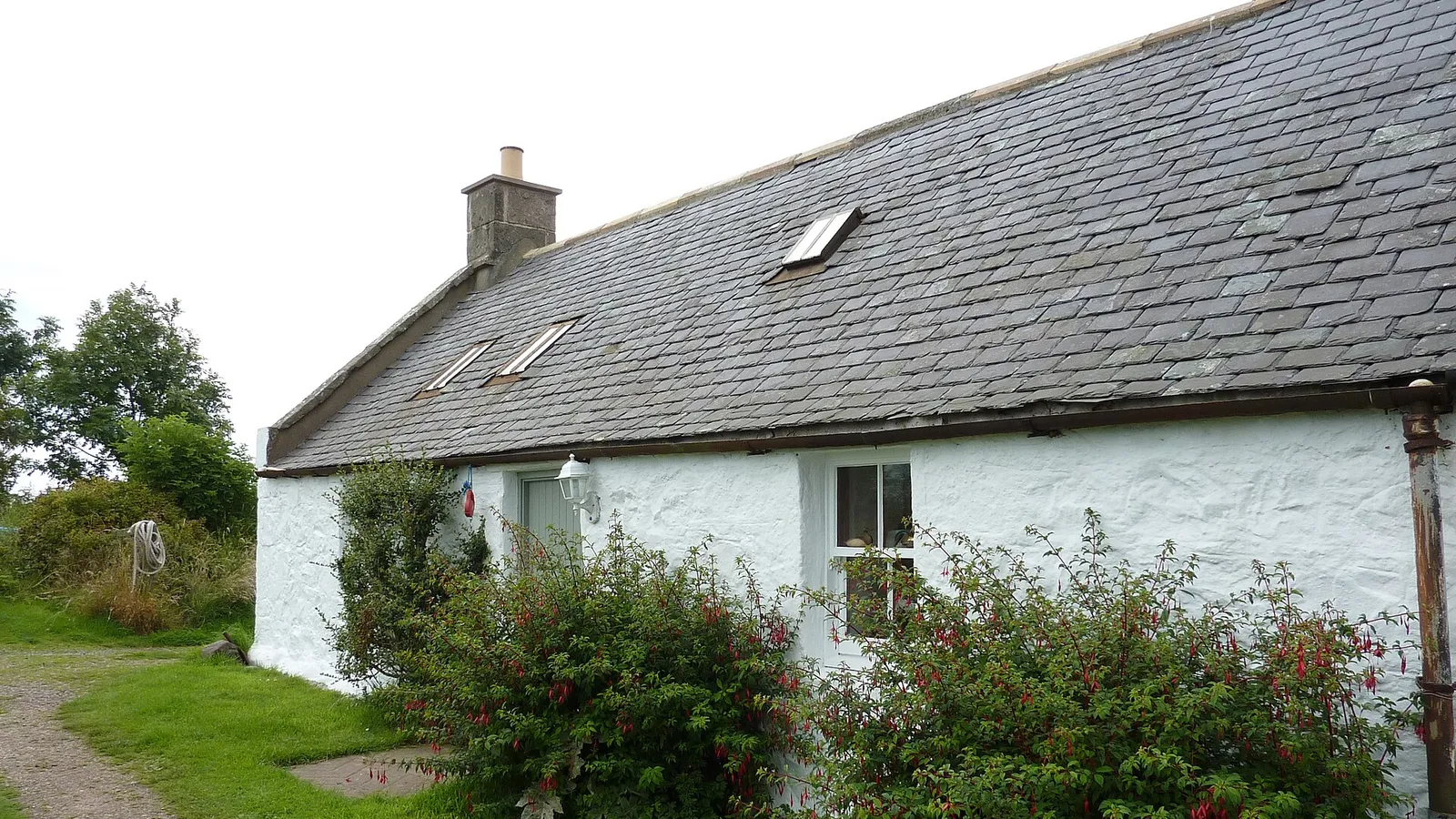
In parallel with the Townhead work, and increasingly dominant in her later career, Eardley developed a second major body of work centred on the small fishing village of Catterline on the Aberdeenshire coast, where she acquired a cottage and worked for extended periods, often painting directly outdoors in harsh coastal weather — wind, rain, and winter storms — rather than working purely from memory or sketches in a studio. Her Catterline paintings grew increasingly bold, thickly textured, and close to abstraction in their handling of sea, sky, and cliff, while generally retaining a recognisable landscape structure. This body of work is often discussed in relation to contemporary international developments in expressive and gestural painting, though Eardley's approach remained grounded in direct, repeated observation of a specific, real place across different seasons and weather conditions rather than in purely abstract or theoretical concerns. Many critics and historians regard her Catterline seascapes, particularly from the final years of her career, as representing her most mature and ambitious achievement, cut short by her early death.
A difficult relationship with the metropolitan establishment
Eardley worked largely outside the main currents of London-centred British art world attention during her lifetime, exhibiting mainly through Scottish institutions such as the Society of Scottish Artists and Scottish commercial galleries, and gaining a strong regional reputation in Scotland well before comparable recognition in London or internationally. The reasons for this relative marginalisation are not reducible to a single cause: her chosen subjects (poor urban children, a remote fishing village) were not fashionable high-art subjects in the London gallery system of the period; she worked for much of her career away from London's networks and exhibiting circuit; and, as with many women artists of her generation, gender almost certainly played some role in how seriously her work was initially weighed by a male-dominated critical and curatorial establishment, though this factor interacts with others rather than standing alone as a complete explanation. Her relatively short career, cut off by her death at 42, also limited the time available for her reputation to develop through sustained metropolitan exposure during her lifetime.
Posthumous reassessment
Since her death in 1963, Eardley's reputation has grown substantially and fairly steadily, a pattern distinct from artists whose fame fades after death. Retrospective exhibitions, particularly those organised by the National Galleries of Scotland and other major Scottish institutions, along with increasing scholarly attention, have progressively raised her critical standing, to the point that she is now widely discussed as one of the most important British painters of the mid-20th century, Scottish or otherwise, and her work commands significant prices and institutional interest. This reassessment has tended to emphasise both bodies of her mature work — Townhead and Catterline — as of comparable significance, rather than treating one as more important than the other, while recognising that her premature death means her full potential development, especially in the increasingly bold Catterline seascapes, remains necessarily a matter of speculation.
Working methods and materials
Eardley's technique is a notable part of her critical significance: her incorporation of collage elements (newspaper fragments, sweet wrappers, and other found materials from the Townhead streets) directly into painted surfaces anticipated and paralleled broader mid-20th-century interest in mixed media and assemblage, while her outdoor painting practice at Catterline — working in situ in extreme weather, sometimes lashing canvases down against wind — reflects a commitment to direct observation under difficult physical conditions that itself became part of her artistic legend, documented through contemporary accounts from those who knew her working practice at Catterline directly.
Did You Know?
- Joan Eardley was born in Sussex, England, not Scotland, despite becoming one of the most closely Scotland-associated painters of her generation.
- She maintained two distinct working bases — a studio in Glasgow's Townhead district and a cottage in the fishing village of Catterline, Aberdeenshire — working in both throughout much of her mature career.
- She incorporated newspaper fragments and other found materials from Townhead's streets directly into some of her paintings.
- Eardley often painted outdoors at Catterline in severe weather, including storms, rather than working solely from memory or sketches indoors.
- She died of breast cancer in 1963 at the age of 42, cutting short a career many critics believe was still developing in ambition.
- Much of the Townhead district she painted was later redeveloped and demolished, giving her paintings additional documentary value as a record of a vanished Glasgow neighbourhood.
- Her critical and market reputation has risen substantially since her death, a pattern distinct from many artists of her generation.
- She exhibited mainly through Scottish institutions during her lifetime, achieving more limited recognition in London compared to some contemporaries.
FAQ
1Was Joan Eardley Scottish?
She was born in Sussex, England, but trained at Glasgow School of Art and spent most of her working life and artistic identity closely associated with Scotland, particularly Glasgow and the Aberdeenshire coast.
2What are Eardley's two main subjects?
Children and street life in Glasgow's Townhead district, and seascapes and landscapes at the fishing village of Catterline, Aberdeenshire.
3How did Eardley die?
She died of breast cancer in 1963, at the age of 42.
4Are Eardley's Townhead paintings sentimental?
Critics generally describe them as unsentimental and observational, combining real affection for her subjects with an unflinching depiction of poverty and urban deprivation, rather than romanticising or moralising about it.
5Did Eardley achieve recognition during her lifetime?
She achieved a solid regional reputation in Scotland but comparatively limited recognition in London and internationally during her lifetime; her reputation has grown substantially since her death.
6What materials did Eardley use in her Townhead paintings?
Oil paint combined with collage elements such as newspaper fragments and other found materials incorporated directly into the painted surface.
7Why is Catterline significant to Eardley's work?
It was the site of her later, increasingly bold and expressive seascape and landscape painting, often produced by working outdoors directly in harsh coastal weather.
8Is Eardley now considered a major British painter?
Yes — posthumous reassessment, including major retrospectives by the National Galleries of Scotland, has elevated her to widespread recognition as one of the most significant British painters of the mid-20th century.
9Did Eardley know the children she painted in Townhead personally?
Yes — she worked in the district over an extended period and developed personal familiarity with many of the families and children she repeatedly painted.
10Why has much of the physical Townhead she painted disappeared?
The district underwent significant postwar urban redevelopment and demolition in subsequent decades, meaning Eardley's paintings now also serve as a visual record of a largely vanished urban landscape.
11Was Eardley part of a particular artistic movement?
She is not typically grouped within a single formal movement; her work is sometimes discussed in relation to international developments in expressive and gestural painting, but she is usually treated as a distinctive individual figure rather than a movement member.
12Where can Eardley's work be seen today?
Major holdings are in Scottish public collections, including the National Galleries of Scotland and Glasgow Museums, alongside works in other UK institutions and private collections.
Sources and Further Reading
Primary/Institutional
- National Galleries of Scotland — collection holdings and retrospective exhibition materials on Joan Eardley
- Glasgow Museums — holdings relating to Eardley's Townhead work
Scholarly/Critical
- Smith, Fiona Pearson (ed.), Joan Eardley (National Galleries of Scotland exhibition catalogue and monograph)
- Common, Christopher Andreae, Joan Eardley — critical biography and study of her work
- Scottish art-historical scholarship on postwar British painting discussing Eardley's place within mid-20th-century British art
General
- Retrospective exhibition catalogues and press coverage from major Eardley exhibitions since the 1990s
- Documentary and biographical material on Eardley's working life in Townhead and Catterline
Caveats: Myths and Disputed Claims
It is a myth, or at least a significant oversimplification, to characterise Eardley's Townhead paintings as merely sentimental depictions of "poor but happy" children; critics and scholars generally emphasise their unsentimental, observational character. It is also worth noting that Eardley's relative lack of recognition during her lifetime compared to her substantial posthumous reputation cannot be attributed to any single cause with certainty — her chosen subject matter, her distance from London's art networks, her gender, and her short career all plausibly played a role, and apportioning these factors precisely is a matter of interpretation rather than settled fact.
Card 018 · Arts