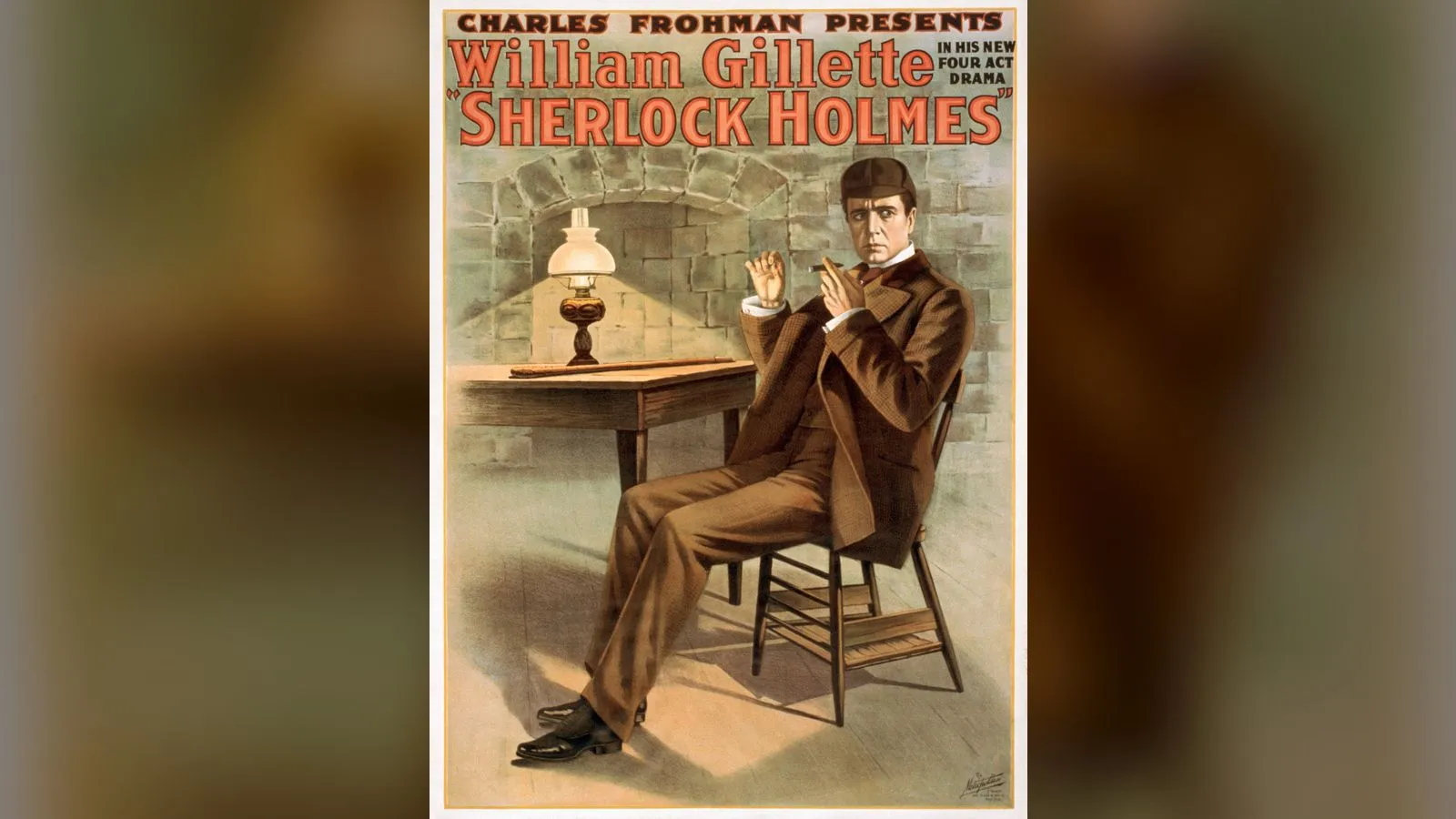

Sherlock Holmes
Contents
More films and television productions have featured Sherlock Holmes than any other human literary character in history, according to Guinness World Records — a staggering legacy for a figure first sketched out by a struggling young Edinburgh-trained doctor trying to supplement his income between patients. Arthur Conan Doyle was Scottish by birth, education, and (by his own account) professional formation, and Holmes's defining method — ruthless observational deduction — traces directly back to a real Edinburgh medical lecturer whose party trick was diagnosing strangers' lives at a glance.
TL;DR
- Arthur Conan Doyle trained in medicine at the University of Edinburgh, where he encountered Dr Joseph Bell, a lecturer famous for diagnostic deduction from close observation. established This is documented through university records and Conan Doyle's own later writings and correspondence.
- Conan Doyle himself explicitly credited Bell as the inspiration for Holmes's deductive method, in his own letters. established A well-documented 1892 letter from Conan Doyle to Bell states plainly that he owed Sherlock Holmes to him.
- Joseph Bell was the sole, complete model for the character of Sherlock Holmes. disputed While Conan Doyle's own statement about Bell's influence is clear and documented, scholars generally treat Holmes as a composite figure also drawing on Conan Doyle's own personality, wider contemporary forensic science, and earlier detective fiction (notably Edgar Allan Poe's), rather than a simple one-to-one real-life portrait.
- Sherlock Holmes first appeared in print in 1887, in the novel A Study in Scarlet. established This is a straightforward publication-history fact.
- Holmes is now the most portrayed human literary character in film and television history. established This is a widely reported and recognised record (associated with Guinness World Records), based on cumulative screen adaptation counts.
Key Facts
- Creator
- Sir Arthur Conan Doyle (1859–1930), born and medically trained in Edinburgh
- Character
- Sherlock Holmes, consulting detective
- First appearance
- A Study in Scarlet (1887)
- Key real-life influence
- Dr Joseph Bell (1837–1911), lecturer at the University of Edinburgh Medical School
- Category
- Literature & Poetry
- Notable works
- A Study in Scarlet, The Sign of Four, The Adventures of Sherlock Holmes, The Hound of the Baskervilles, among many others
- Status/Legacy
- Among the most adapted and globally recognised fictional characters in history; helped define the modern detective fiction genre
Scottish Impact Index (SI Score)
- Cultural Impact
- 10/10
- Enduring Relevance
- 10/10
- Artistic / Cultural Contribution
- 10/10
- Artistic Originality
- 9/10
- Artistic Legacy
- 10/10
- Recognition
- 10/10
59/60
Ranked =9th of 50 in Arts
A Note on Claims and Evidence
The connection between Arthur Conan Doyle's Edinburgh medical education and the creation of Sherlock Holmes is unusually well documented for a question of literary inspiration, resting on Conan Doyle's own direct written statement (an 1892 letter to Joseph Bell, held among papers associated with the Royal College of Surgeons of Edinburgh) rather than purely later critical inference. This makes the Bell connection stronger evidentially than many comparable "real-life inspiration" claims in literary history. That said, the claim that Bell was Holmes's only or complete source should be treated with more caution: Conan Doyle himself also drew on earlier detective fiction (particularly Edgar Allan Poe's Auguste Dupin stories) and on broader developments in contemporary forensic and medical science, and scholars generally describe Holmes as substantially composite rather than a direct, exclusive portrait of any one person, including Conan Doyle himself in some respects. This article therefore treats "Bell as a documented, acknowledged key inspiration" as established, while treating "Bell as the sole source" as a distinct and more disputed claim.
Timeline
Arthur Conan Doyle born in Edinburgh.
Conan Doyle begins medical studies at the University of Edinburgh.
Conan Doyle attends lectures by, and in some accounts works as a clerk/assistant for, Dr Joseph Bell, whose observational diagnostic technique leaves a strong impression on him.
Conan Doyle completes his medical degree.
A Study in Scarlet, the first Sherlock Holmes story, is published, introducing the character to the public.
Conan Doyle writes to Joseph Bell explicitly crediting him with inspiring Holmes's method of deduction.
Conan Doyle, seeking to move on from the character and focus on other writing, kills off Holmes in "The Final Problem" — a decision reversed under public and commercial pressure.
The Hound of the Baskervilles is serialised, becoming one of the most famous individual Holmes stories.
Holmes is revived in "The Adventure of the Empty House," explaining his earlier apparent death.
Conan Doyle publishes the final collection of Holmes stories, The Case-Book of Sherlock Holmes.
Arthur Conan Doyle dies, by which point Holmes has already become an enormously popular and commercially significant literary character worldwide.
Details
An Edinburgh education
Arthur Conan Doyle was born in Edinburgh in 1859 and undertook his medical training at the University of Edinburgh, one of the leading medical schools in the world during this period, beginning his studies in 1876. Edinburgh's medical education in the late 19th century placed strong emphasis on close clinical observation and diagnostic reasoning, partly a legacy of the city's long-standing prominence in anatomy, pathology, and forensic medicine (a tradition with its own, considerably darker history, including the early 19th-century Burke and Hare murders connected to the city's anatomy schools, covered elsewhere in this collection). It was within this specific institutional and intellectual culture — not a generic medical education, but Edinburgh's particular emphasis on observational diagnostic method — that Conan Doyle encountered the figure who would become most directly associated with Holmes's signature deductive technique.
Joseph Bell and the art of deduction
Dr Joseph Bell was a surgeon and lecturer at the University of Edinburgh Medical School, well known among students and colleagues for an almost theatrical ability to deduce a stranger's occupation, recent activities, or personal history from small physical and behavioural details — the condition of their hands, the wear pattern on their clothing or boots, their posture and manner of speech — before the person had said anything to confirm it. Conan Doyle, who by some accounts served as a clerk assisting Bell with his patients, had direct and repeated exposure to this technique in practice, not merely as an abstract teaching example. The connection between this specific real-world method and Holmes's fictional deductive style is not merely a later critical observation: Conan Doyle stated it himself directly, in a documented 1892 letter to Bell, writing plainly that it was to Bell that he owed the character of Sherlock Holmes, and describing how he had built the character "round the centre of deduction and inference and observation" that Bell had modelled. Bell himself appears to have enjoyed the association in later life, reportedly remarking at social occasions that he himself was, in effect, Sherlock Holmes.
Holmes as composite rather than simple portrait
While the documented strength of the Bell connection is unusual for this kind of literary-inspiration claim, scholars and biographers generally caution against treating Holmes as a simple, exclusive real-life portrait of Bell. Conan Doyle was also demonstrably influenced by earlier detective fiction, most significantly Edgar Allan Poe's Auguste Dupin stories from the 1840s, which had already established key genre conventions — the brilliant, somewhat eccentric amateur detective; the less perceptive companion-narrator through whose eyes the reader experiences the detective's genius (a role filled in Conan Doyle's work by Dr Watson) — that Conan Doyle adapted and developed rather than inventing from nothing. Some biographers also note that aspects of Holmes's personality, including certain of his eccentricities and intellectual intensity, plausibly draw on Conan Doyle's own temperament and interests as much as on Bell's specifically clinical demonstration style. The most defensible summary, consistent with the available documentary evidence, is that Bell provided the specific, acknowledged inspiration for Holmes's central deductive method, while the character as a whole is a composite shaped by multiple literary and personal influences.
Creation, early reception, and commercial pressures
A Study in Scarlet, the first Holmes story, was published in 1887 in Beeton's Christmas Annual and attracted only modest initial attention; it was the subsequent short stories, published from 1891 in The Strand Magazine, that made Holmes a genuine popular sensation in Britain and, soon after, internationally. This success became, for Conan Doyle, something of a professional complication: he increasingly regarded himself as a serious historical novelist first and was frustrated that the commercially lucrative detective stories overshadowed work he considered more significant, leading him to kill off Holmes in 1893's "The Final Problem," seemingly ending the character for good. Intense public demand and commercial pressure eventually led Conan Doyle to revive Holmes a decade later, in 1903's "The Adventure of the Empty House," retroactively explaining the detective's apparent death as staged — a now-famous example of an author reversing a character's death under audience and market pressure, long before the practice became a familiar feature of modern serialised popular fiction.
Global cultural impact
Sherlock Holmes's reach extends dramatically beyond the original Conan Doyle canon of 56 short stories and four novels. The character has become one of the most frequently adapted figures in the history of film and television — widely reported, via Guinness World Records recognition, as the most portrayed human literary character on screen of all time — alongside an enormous body of further pastiche fiction, parody, academic "Sherlockian" scholarship (treating the stories with a mock-serious critical apparatus as if investigating a real historical figure), and continued new adaptations updating the character to contemporary settings. Beyond fiction and screen adaptation, Holmes's specific methodology has had a documented real-world influence on the development of forensic science and criminal investigation practice, with several pioneering real forensic scientists explicitly citing the stories' emphasis on careful physical observation and trace evidence as an influence on their own thinking, even though the stories themselves were fiction rather than technical manuals.
Conan Doyle's broader relationship to Scotland
Although much of Holmes's most iconic imagery — London fog, Baker Street, hansom cabs — is thoroughly and deliberately English rather than Scottish, Conan Doyle's own formation as a writer and thinker is inseparably Scottish: his medical training, his direct personal connection to Bell, and his early professional and intellectual environment were all shaped by Edinburgh specifically. This makes Holmes an unusual case among Scottish cultural contributions: a globally dominant fictional character whose setting is not Scottish at all, but whose creator's formative method and inspiration are traceably, specifically Scottish and Edinburgh-rooted.
Did You Know?
- Arthur Conan Doyle's 1892 letter explicitly crediting Dr Joseph Bell for inspiring Sherlock Holmes is held among papers associated with the Royal College of Surgeons of Edinburgh.
- Joseph Bell reportedly enjoyed his association with Holmes so much that he sometimes jokingly declared himself to be Sherlock Holmes at social gatherings.
- Conan Doyle killed off Holmes in 1893, intending to end the character permanently, only to revive him a decade later under sustained public and commercial pressure.
- Sherlock Holmes is recognised by Guinness World Records as the most portrayed human literary character in film and television history.
- Conan Doyle considered his historical novels, not the Holmes stories, to be his most important literary work — a view history has not borne out.
- Edinburgh's medical school in Conan Doyle's time had a strong existing culture of forensic and diagnostic observational training, which shaped the intellectual environment in which he encountered Bell's method.
- Edgar Allan Poe's earlier Auguste Dupin detective stories, from the 1840s, established several genre conventions (the brilliant detective, the narrating companion) that Conan Doyle adapted for Holmes and Watson.
- "Sherlockian" or "Holmesian" scholarship — a mock-serious tradition of analysing the stories as if investigating a real historical figure's biography — has existed as an organised hobby and academic sideline for over a century.
FAQ
1Is it true that Sherlock Holmes was based on a real person?
Conan Doyle himself explicitly credited Dr Joseph Bell, his Edinburgh medical lecturer, as the specific inspiration for Holmes's deductive method, in a documented 1892 letter — though scholars generally treat the character overall as a composite rather than a direct, exclusive portrait of Bell alone.
2Who was Joseph Bell?
A surgeon and lecturer at the University of Edinburgh Medical School, known for diagnosing details about patients' lives and occupations through close observation before they had said anything to confirm it.
3Did Conan Doyle study medicine at Edinburgh?
Yes — he began his medical studies at the University of Edinburgh in 1876 and completed his degree in 1881, during which time he encountered Joseph Bell.
4When did Sherlock Holmes first appear in print?
In the 1887 novel A Study in Scarlet, published in Beeton's Christmas Annual.
5Why did Conan Doyle kill off Holmes?
He wanted to focus on work he considered more significant, particularly historical fiction, and felt the hugely popular detective stories were overshadowing it — though public demand eventually forced a reversal.
6Is Holmes only inspired by Bell, or were there other influences?
Other influences include earlier detective fiction, especially Edgar Allan Poe's Auguste Dupin stories, and plausibly aspects of Conan Doyle's own personality — making Holmes a composite character rather than a single direct real-life portrait.
7How many official Sherlock Holmes stories did Conan Doyle write?
The core canon consists of 56 short stories and four novels, published between 1887 and 1927.
8Why is Holmes considered the most-portrayed fictional character on screen?
Due to the sheer cumulative number of film and television adaptations across more than a century, a record widely reported and associated with Guinness World Records.
9Did Holmes's stories influence real forensic science?
Yes, in documented ways — several real forensic scientists have cited the stories' emphasis on careful observation and trace evidence as an influence on their thinking, despite the stories themselves being fiction.
10Is any of Holmes's setting Scottish?
Not really — his stories are overwhelmingly set in London and England, even though his creator's formative education and inspiration were specifically Scottish and Edinburgh-based.
11Did Joseph Bell ever comment on being linked to Holmes?
Yes — by several accounts he enjoyed the connection and reportedly joked about being Sherlock Holmes himself at social occasions.
12Is the Bell-as-inspiration claim considered solid historical fact or a myth?
It is solidly established as an acknowledged, documented inspiration via Conan Doyle's own letter; the more specific claim that Bell was the sole and complete source for the character is better described as disputed/composite, per mainstream scholarly treatment.
Sources and Further Reading
Primary/Institutional
- Royal College of Surgeons of Edinburgh, archival materials including Conan Doyle's 1892 letter to Joseph Bell
- University of Edinburgh, historical records on Conan Doyle's medical studies and Joseph Bell's career
Scholarly/Critical
- Owen Dudley Edwards, The Quest for Sherlock Holmes: A Biographical Study of Arthur Conan Doyle
- Daniel Stashower, Teller of Tales: The Life of Arthur Conan Doyle
General
- The Scotsman, "Conan Doyle: What Was the Inspiration for Sherlock Holmes?"
- Linda Hall Library, "Joseph Bell" (Scientist of the Day feature)
Caveats: Myths and Disputed Claims
It is frequently stated as settled fact that Joseph Bell "was" Sherlock Holmes, when the better-supported claim, based on Conan Doyle's own documented statement, is that Bell inspired Holmes's specific deductive method rather than providing a complete, exclusive template for the character as a whole. Scholars generally treat Holmes as a composite figure also shaped by earlier detective fiction (notably Poe's Dupin stories) and aspects of Conan Doyle's own personality, and this nuance is often lost in popular retellings that present the Bell connection as a simple one-to-one "real Sherlock Holmes" claim. It is also sometimes assumed that Holmes is in some sense a "Scottish" character because of his creator's background; in fact his stories and settings are almost entirely English, and the Scottish connection lies specifically in Conan Doyle's formative education and acknowledged inspiration rather than in the fiction's content or setting.
Card 007 · Arts