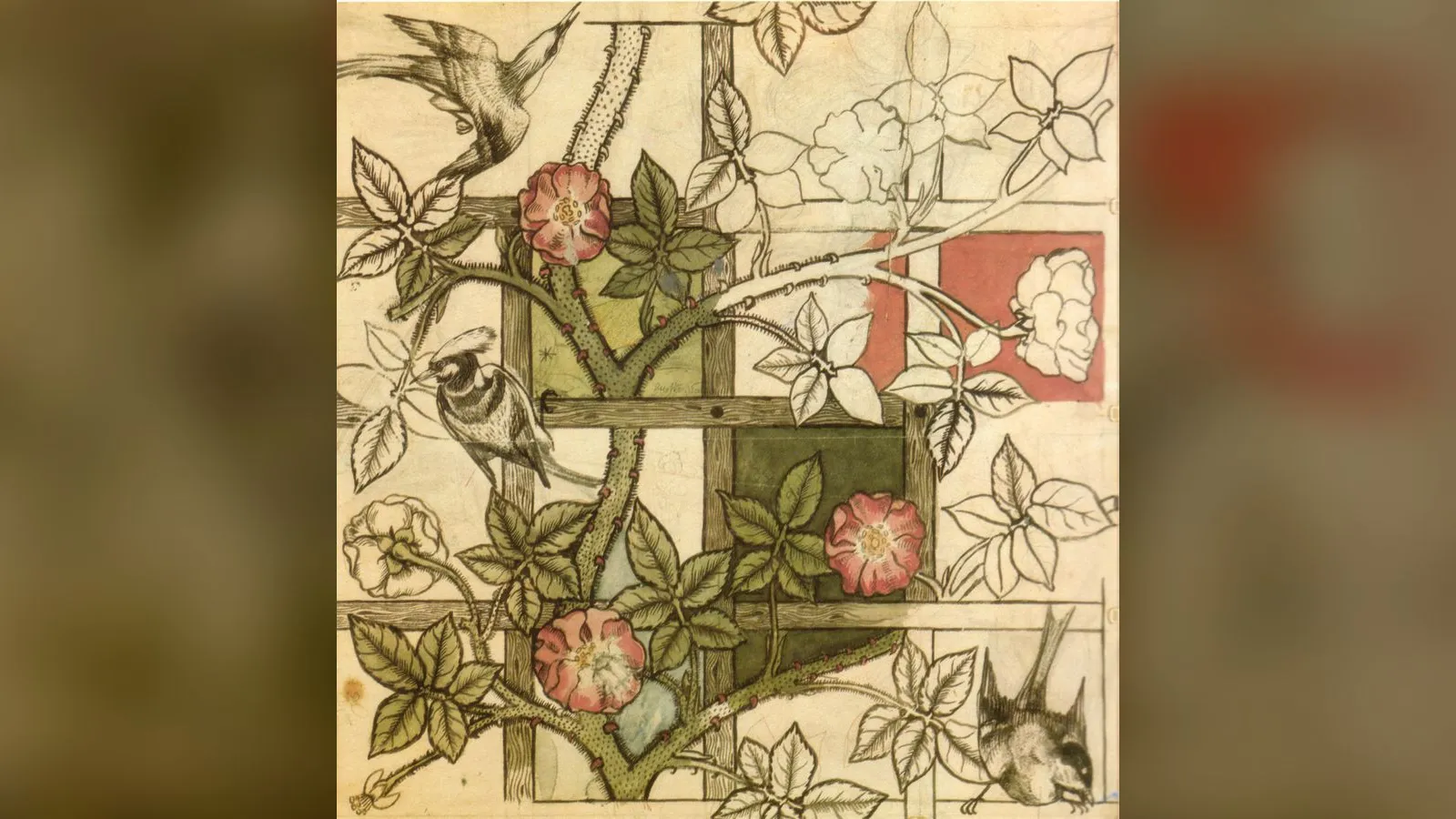

The Arts & Crafts Movement in Scotland
Contents
TL;DR
- established The Arts and Crafts movement arrived in Scotland from the 1880s onward as a Scottish adaptation of the broader British movement pioneered in England by figures such as William Morris, emphasising craftsmanship, honest materials, and a reaction against industrial mass production — this transmission and broad timing are well documented.
- traditional The Scottish strand is generally characterised as more architecturally and institutionally embedded than its English counterpart, with closer ties to vernacular Scottish building tradition and to design education through institutions such as the Glasgow School of Art, as opposed to Morris's more craft-workshop- and textile-centred English model — this comparative characterisation is the broad scholarly consensus rather than a sharply quantifiable fact.
- established Key Scottish figures associated with the movement include architect-designer Robert Stodart Lorimer, and the broader network of Glasgow School of Art-trained designers associated with the Glasgow Style, covered in more detail on a dedicated card — these figures and their output are documented through surviving buildings, furniture, and archives.
- disputed The degree to which the Glasgow Style should be understood as a subset of Scottish Arts and Crafts, versus a related but conceptually distinct movement with its own Art Nouveau-influenced character, is a genuine point of art-historical disagreement rather than a settled classification.
- traditional Scottish Arts and Crafts practitioners are often credited with a particular interest in reviving vernacular Scottish architectural and craft traditions — including Scottish Baronial-adjacent forms and Celtic Revival ornament — as a distinctly national inflection of the wider movement, a characterisation supported by surviving work but involving comparative judgement about "distinctiveness" rather than a single verifiable data point.
Key Facts
- Movement
- Arts and Crafts movement (Scottish strand)
- Broader origin
- English Arts and Crafts movement, associated with William Morris and John Ruskin
- Period in Scotland
- Roughly 1880s–1920s
- Key figures
- Robert Stodart Lorimer (architect); the broader Glasgow School of Art/Glasgow Style network
- Distinctive characteristics
- Closer ties to vernacular Scottish architecture; strong institutional base in art schools; overlap with Celtic Revival ornament
- Related but distinct movement
- The Glasgow Style (Art Nouveau-adjacent), covered in its own dedicated card
- Media covered
- Architecture, furniture, textiles, metalwork, embroidery, stained glass, book arts
- Key publication/scholarship
- The Arts and Crafts Movement in Scotland (Elizabeth Cumming and others), Yale University Press / Paul Mellon Centre
Scottish Impact Index (SI Score)
- Cultural Impact
- 8/10
- Enduring Relevance
- 9/10
- Artistic / Cultural Contribution
- 9/10
- Artistic Originality
- 8/10
- Artistic Legacy
- 9/10
- Recognition
- 8/10
51/60
Ranked =43rd of 50 in Arts
A Note on Claims and Evidence
The existence of a distinct Scottish strand of the Arts and Crafts movement, its approximate chronology, and its key practitioners are well supported by surviving buildings, furniture, decorative work, and dedicated scholarly studies, notably Elizabeth Cumming's work published through the Paul Mellon Centre and Yale University Press. The harder evidentiary territory is classificatory: how cleanly the Scottish Arts and Crafts movement can be separated from the closely overlapping Glasgow Style, and how distinctive the Scottish strand genuinely was compared with regional Arts and Crafts variations elsewhere in Britain (such as in the Cotswolds or Yorkshire). This article treats documented figures, buildings, and dates as established, and treats comparative claims about distinctiveness and movement boundaries as traditional or disputed, in line with ongoing scholarly discussion.
Timeline
William Morris and John Ruskin's ideas about craft, honest materials, and anti-industrial design begin circulating in Britain generally, laying the philosophical groundwork for later Arts and Crafts movements.
The Arts and Crafts movement begins taking distinct root in Scotland, influenced by English developments but adapted to Scottish institutional and architectural contexts.
Francis Newbery becomes Director of the Glasgow School of Art, fostering a design culture that would feed into both Arts and Crafts and, later, Glasgow Style developments.
Robert Stodart Lorimer begins an architectural career that would come to exemplify Scottish Arts and Crafts country-house and ecclesiastical design, often drawing on Scottish Baronial vernacular forms.
Phoebe Anna Traquair (covered on her own dedicated card) produces major mural and embroidery work reflecting Arts and Crafts values of craft integration and total decorative schemes.
Scottish Arts and Crafts architecture and design reach a peak of activity, overlapping with and informing the parallel Glasgow Style movement.
The First World War disrupts the movement's economic base, as with many craft-dependent design movements of the period.
The movement's distinct character gradually fades as modernist design approaches begin to supersede Arts and Crafts aesthetics across Britain.
Renewed scholarly interest, including dedicated exhibitions and publications, works to document and reassess the Scottish Arts and Crafts movement's distinct character and significance.
Details
Importing an English idea, adapting it to Scotland
The Arts and Crafts movement did not originate in Scotland; its philosophical foundations lie with English figures such as John Ruskin and, most influentially, William Morris, whose critique of industrial mass production and advocacy for honest craftsmanship, traditional materials, and the dignity of skilled labour shaped design thinking across Britain from the mid-nineteenth century onward. What happened in Scotland from the 1880s was not a passive reception of this English model but an active adaptation, shaped by distinctly Scottish institutional structures — particularly art schools such as the Glasgow School of Art — and by a different relationship to vernacular building tradition than existed in England.
A more architecturally embedded movement
One useful way of characterising the Scottish strand's distinctiveness, while acknowledging this is a comparative judgement rather than a hard fact, is its closer integration with architecture specifically, as opposed to the more craft-workshop- and textile-centred model associated with Morris's own English practice (Morris & Co. being fundamentally a design and manufacturing firm for wallpaper, textiles, and furnishings). In Scotland, architects such as Robert Stodart Lorimer became central figures in the movement, applying Arts and Crafts principles of craftsmanship and material honesty directly to building design, often drawing self-consciously on Scottish vernacular architectural tradition, including elements related to the Scottish Baronial revival covered elsewhere on this site.
Overlap, not identity, with the Glasgow Style
It would be a mistake to treat Scottish Arts and Crafts and the Glasgow Style as simply two names for the same thing, though the two movements overlapped significantly in personnel, period, and institutional base. The Glasgow Style, covered in its own dedicated card, developed a distinctively Art Nouveau-adjacent visual vocabulary — elongated organic forms, Celtic Revival symbolism, a specific graphic and decorative language associated with figures such as Charles Rennie Mackintosh and his circle — that represents a more specific, time-bound aesthetic development within the wider, longer-running, and more architecturally diffuse Scottish Arts and Crafts movement. Scholars continue to debate exactly how to draw the line between the two, and this article does not attempt to resolve that classificatory debate, instead noting it as a live point of disagreement.
Craft integration and total design
A core shared value across Scottish Arts and Crafts practitioners was the conviction that no decorative medium should be treated as inferior to another — that embroidery, metalwork, stained glass, and book illustration deserved the same serious design attention as architecture or painting. This conviction is visible in the career of muralist and embroiderer Phoebe Anna Traquair (covered on her own dedicated card), whose cross-media practice spanning murals, embroidery, enamel jewellery, and manuscript illumination exemplifies the Arts and Crafts refusal to rank "fine art" above craft, even though her specific visual style and symbolist, Celtic Revival-inflected sensibility differs noticeably from the more austere, material-focused architectural Arts and Crafts work associated with figures like Lorimer.
Reviving Scottish vernacular tradition
A genuinely distinguishing feature of the Scottish movement, relative to its English counterpart, was its particular interest in reviving specifically Scottish vernacular forms — not only the castellated vocabulary associated with Scottish Baronial architecture, but also traditional Scottish decorative motifs, construction techniques, and materials. This gave Scottish Arts and Crafts work a recognisably national character distinct from the more generically "English rural" vernacular revival (half-timbering, thatch, cottage forms) that characterised much English Arts and Crafts architecture in the Cotswolds and elsewhere.
Institutional legacy and decline
The Scottish movement's institutional strength — its close ties to art schools and architectural practice, rather than purely to independent craft workshops — arguably gave it greater longevity and a more lasting influence on Scottish design education than a purely workshop-based movement might have achieved. Nonetheless, like Arts and Crafts movements across Britain generally, the Scottish strand's distinct character faded through the 1920s as modernist design approaches, less interested in revivalist vernacular reference and more interested in functional abstraction, began to dominate architectural and design fashion.
A movement rediscovered
As with the Glasgow Style, and Mackintosh's individual reputation, broader scholarly and curatorial interest in the Scottish Arts and Crafts movement has grown significantly in recent decades, with dedicated publications and exhibitions working to document its distinct character, recover underacknowledged practitioners, and properly situate it within both British and international Arts and Crafts history rather than treating it as a minor regional footnote to the English movement.
Women practitioners and the limits of the historical record
As with the Glasgow Style more specifically, women designers and craftworkers made substantial contributions to the Scottish Arts and Crafts movement generally, working across embroidery, textiles, bookbinding, and metalwork, often within family workshops or informal collaborative networks that left a thinner documentary trail than the architectural commissions of figures like Lorimer. This asymmetry in the surviving record — more complete for architects working on well-documented buildings, thinner for craftworkers whose output was more dispersed and less consistently attributed at the time — means that any account of the movement's full roster of significant contributors should be read as provisional and subject to ongoing archival recovery, rather than as a closed and finished list.
Why the comparison with England matters
Scholars continue to draw comparisons between the Scottish and English strands of the Arts and Crafts movement not merely as an academic exercise but because doing so clarifies what, specifically, was regionally distinctive about Scottish practice, as opposed to simply assuming that "Arts and Crafts" meant the same thing everywhere it appeared across Britain. Morris's own Kelmscott-centred, workshop- and textile-focused English model differed in emphasis from the more architecturally embedded, institutionally supported Scottish approach, and recognising this difference helps explain why Scotland's Arts and Crafts legacy is visible today primarily through buildings and design-school lineages, rather than through a single dominant commercial workshop brand comparable to Morris & Co.
Did You Know?
- The Arts and Crafts movement's philosophical roots lie with English writers John Ruskin and William Morris, not with any Scottish originator.
- Architect Robert Stodart Lorimer is a central figure in Scottish Arts and Crafts architecture, applying the movement's principles across both grand and modest building commissions.
- Phoebe Anna Traquair's cross-media practice — murals, embroidery, enamel jewellery, and book illumination — exemplifies the Arts and Crafts refusal to rank any decorative medium below "fine art."
- Scottish Arts and Crafts architecture often drew self-consciously on Scottish vernacular tradition, including elements related to the Scottish Baronial revival.
- The Glasgow Style overlaps with, but is not identical to, the Scottish Arts and Crafts movement — the two are related but distinct in scholarly classification.
- William Morris's own practice was more workshop- and textile-centred than the more architecturally embedded Scottish movement.
- The movement's distinctive character faded through the 1920s as modernist design approaches gained dominance.
- Recent decades have seen significant renewed scholarly interest in recovering the Scottish movement's distinct character and underacknowledged practitioners.
FAQ
1Is the Scottish Arts and Crafts movement the same as English Arts and Crafts?
No — it is a Scottish adaptation of the same broader British movement, sharing core philosophical roots with figures like William Morris but developing distinct institutional ties and vernacular references.
2Who are the key figures in Scottish Arts and Crafts?
Architect Robert Stodart Lorimer is among the most central; the wider Glasgow School of Art-connected design network also contributed significantly.
3Is the Glasgow Style part of Scottish Arts and Crafts?
The two overlap substantially in period, personnel, and institutional base, but scholars debate exactly how to classify their relationship; this card and the dedicated Glasgow Style card treat them as related but distinct.
4What makes the Scottish strand different from the English movement?
It is generally characterised as more architecturally embedded, with closer institutional ties to art schools, and a stronger emphasis on reviving specifically Scottish vernacular forms rather than generic rural English vernacular.
5Did the Scottish movement involve craft media beyond architecture?
Yes — furniture, textiles, metalwork, embroidery, stained glass, and book arts were all significant areas of Scottish Arts and Crafts practice.
6How does Phoebe Anna Traquair relate to this movement?
She exemplifies its cross-media craft-integration values, though her specific symbolist and Celtic Revival visual style differs from the more austere architectural Arts and Crafts work of figures like Lorimer.
7When did the movement peak in Scotland?
Roughly the 1890s through the 1910s, before fading through the 1920s as modernist design approaches gained ground.
8Who wrote the key modern scholarly study of this movement?
Elizabeth Cumming's work, published through the Paul Mellon Centre and Yale University Press, is a central modern scholarly reference.
9Did the First World War affect the movement?
Yes — like many craft-dependent design movements of the period, it suffered economic disruption from the war, contributing to its decline.
10Was Scottish Baronial architecture part of the Arts and Crafts movement?
Scottish Baronial is a distinct, earlier nineteenth-century revival style in its own right, but later Scottish Arts and Crafts architects, including Lorimer, drew on related vernacular Scottish forms.
11Why is this movement less well known than its English counterpart internationally?
Largely a matter of historiography and promotion — William Morris's fame and the volume of English Arts and Crafts scholarship have historically overshadowed Scottish developments, a gap recent scholarship has worked to close.
12Is there a dedicated card about the Glasgow Style specifically?
Yes — the broader Glasgow Style design movement is covered on its own dedicated card, distinct from this general Scottish Arts and Crafts overview.
Sources and Further Reading
Primary/Institutional
- Arts & Crafts Movement (artscrafts.org.uk) — "The Scottish Movement" — https://artscrafts.org.uk/ac/node/244.html
- Dovecot Studios — "Would William Morris Approve? The Arts and Crafts Movement in Scotland" — https://dovecotstudios.com/whats-on/would-william-morris-approve
Scholarly/Critical
- Elizabeth Cumming, The Arts and Crafts Movement in Scotland, Yale University Press / Paul Mellon Centre — https://yalebooks.yale.edu/9780300195767/the-arts-and-crafts-movement-in-scotland
- 19th-Century Art Worldwide — review of The Arts and Crafts Movement in Scotland — https://www.19thc-artworldwide.org/autumn14/ranogajec-reviews-the-arts-and-crafts-movement-in-scotland
General
- Regional Furniture Society — "Robert Lorimer and Scott Morton Company" (Christina M. Anderson) — https://regionalfurnituresociety.org/wp-content/uploads/2017/03/robert-lorimer-and-scott-morton-company-christina-m-anderson.pdf
Caveats: Myths and Disputed Claims
The most common confusion around this topic is treating "Scottish Arts and Crafts" and "the Glasgow Style" as interchangeable terms; they overlap substantially but are conceptually distinct in current scholarship, and this card and the dedicated Glasgow Style card should be read as complementary rather than duplicative. A second point of caution concerns comparative claims about the Scottish movement's "distinctiveness" relative to the English movement or other regional British variants — these are reasonable, broadly supported scholarly characterisations, but they rest on qualitative comparison rather than a single measurable fact, and should be presented with appropriate hedging rather than stated as settled certainty.
Card 028 · Arts