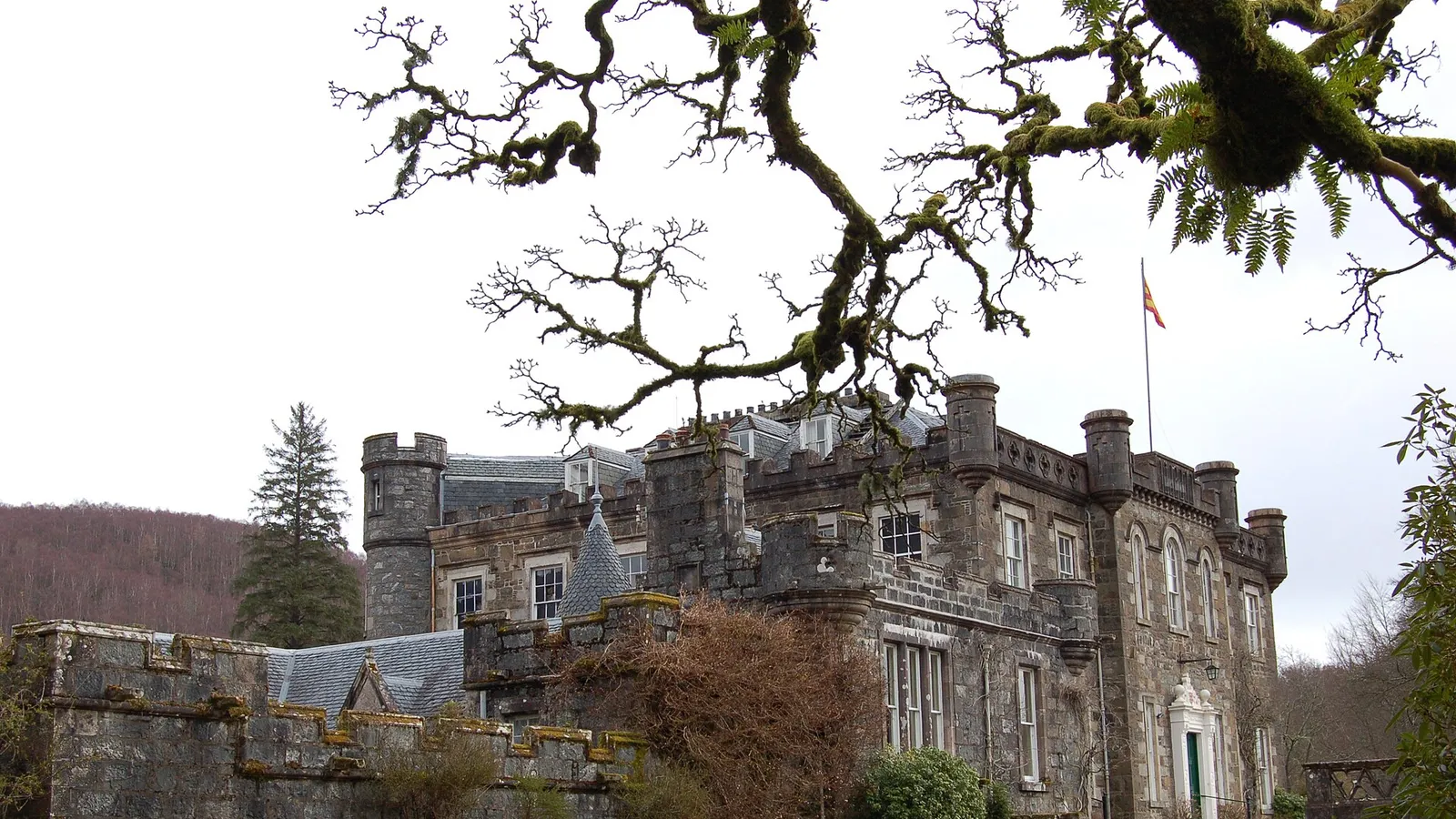

The Commando Basic Training Centre, Achnacarry
TL;DR
- [Documented] Achnacarry Castle in Lochaber, the seat of Cameron of Lochiel, Chief of Clan Cameron, became the centralised home of British Commando training when the first courses of the new centralised regime began in February/March 1942; the site had been in military use since 1940 and was redesignated the Commando Depot (December 1941) and then the Commando Basic Training Centre (December 1943).
- [Documented] More than 25,000 British, Allied and US personnel passed through Achnacarry before it closed in 1946; it trained US Army Rangers under Major William Darby and Allied volunteers who became French, Dutch, Belgian, Norwegian and Polish commandos, and is widely regarded as a forerunner of modern special-forces selection.
- [Documented but widely exaggerated] Live ammunition WAS used deliberately in training (opposed-landing exercises, sniper/ambush serials, demolitions); training deaths were real but relatively few, and most were drownings rather than the product of live fire — popular "death toll" claims require significant caveat.
- [Documented] This card is the dedicated treatment of Achnacarry as an institution, distinct from Card #25's broader WWII overview; the Clan Cameron/Lochiel context in Lochaber is entirely separate from the Atholl family/Blair Castle material on Card #19.
- [Documented] Achnacarry is today the private seat of the Cameron of Lochiel family (not a military base); the Clan Cameron Museum interprets the commando story, and the Commando Memorial stands about a mile from Spean Bridge — a separate but related site overlooking the old training grounds.
Key Facts
- Period/dates covered: 1940 (first military use) – 1946 (closure); centralised commando course from February/March 1942.
- Key institution: Commando Depot / Commando Basic Training Centre (CBTC), Achnacarry Estate, Lochaber, Inverness-shire.
- Notable feature: The centralised six-week Commando Course — speed marches, the Tarzan Course (Death Slide and toggle-rope bridge), opposed-landing and cliff-assault training, all under live fire.
- Current status/legacy: Private Cameron of Lochiel seat; Clan Cameron Museum on the estate; Commando Memorial near Spean Bridge; regarded as a foundational influence on Allied and modern special-forces training.
Scottish Impact Index (SI Score)
- Military Impact
- 8/10
- Enduring Significance
- 9/10
- Strategic Importance
- 8/10
- Military Distinctiveness
- 9/10
- Military Legacy
- 10/10
- Recognition
- 8/10
52/60
Ranked =16th of 43 in Defence
Claim Status
The central facts of this card are established: Achnacarry's location on the Cameron of Lochiel estate, its establishment as the centralised commando training depot, the scale of throughput (25,000+), the training of US Rangers and Allied contingents, and the existence and use of live ammunition are all supported by the National Army Museum, the Imperial War Museum, the Commando Veterans Archive (which works from Commonwealth War Graves Commission records, National Archives WO 417 casualty lists, Scottish statutory death registers and unit war diaries), and by the memoirs of centre instructors (Major James Dunning, It Had to Be Tough; Captain Donald Gilchrist, Castle Commando).
Disputed / requiring caveat: the popular narrative that live ammunition caused a large "death toll." This is the mythbusting task flagged for this card. The evidence shows live ammunition was genuinely used, and deaths did occur, but the recorded fatalities were relatively few relative to 25,000+ trained, and the largest single cause was drowning, not gunfire. The often-cited figure of "27" is a 2024 memorial-campaign figure (the Scott Sutherland Project, reported in The Scotsman) that blends several sites and includes deaths that pre-date the formal centralised course. There is no single official death total.
A note on related figures: Lord Lovat is frequently attached to Achnacarry in popular memory, but his documented instructional role was at STC Lochailort (fieldcraft), not as an Achnacarry instructor — see Caveats.
Timeline
Sir Donald Walter Cameron of Lochiel gives hospitality to No. 1 Independent Company at Achnacarry.
Achnacarry and nearby Achdalieu Lodge brought into use as a Training and Holding Wing for the Special Training Centre (STC) Lochailort.
Four men — Gunner Alan Haydon (29, Royal Artillery), Private Patrick McCarthy (18, Prince of Wales's Own), Fusilier James Scullion (18, Royal Inniskilling Fusiliers) and Corporal Frederick Turner (27, 12 Commando) — drown in the Loch Linnhe/River Lochy area while at the Commando Depot, before the centralised course begins.
Achnacarry redesignated the Commando Depot, under the Special Service Brigade.
First centralised Commando Course intakes begin under Lieutenant Colonel Charles Vaughan.
US 1st Ranger Battalion under Major William Darby trains at Achnacarry; No. 10 (Inter-Allied) Commando contingents pass through.
Commando Depot redesignated the Commando Basic Training Centre (CBTC).
CBTC disbanded; a peacetime commando capability judged unnecessary at Achnacarry.
Commando Memorial commissioned (Scott Sutherland won the 1949 competition and a first prize of £200) and unveiled by Queen Elizabeth The Queen Mother on 27 September 1952 near Spean Bridge.
Clan Cameron Museum opens on the Achnacarry estate.
Scott Sutherland Project campaigns for a dedicated memorial to those who died in commando training.
Details
Origins and the Cameron of Lochiel / Achnacarry context
Achnacarry Castle sits on the banks of the River Arkaig in Lochaber, between Loch Lochy and Loch Arkaig, and is the ancestral seat of the Cameron of Lochiel family, chiefs of Clan Cameron. The present Scottish baronial house was designed by James Gillespie Graham and built from 1802 for the clan chief, replacing the earlier house burned by government troops in 1746 after Culloden — Donald Cameron of Lochiel, the "Gentle Lochiel," having committed the clan to the Jacobite rising of 1745. This is a wholly different family and place from the Atholl/Murray family and Blair Castle of Card #19: Achnacarry is Cameron country in the west Highlands, not the Atholl estate of Highland Perthshire.
In June 1940 Sir Donald Walter Cameron of Lochiel gave hospitality to No. 1 Independent Company. As commando training was then run unit-by-unit, Achnacarry and Achdalieu Lodge were brought into use in December 1940 as a Training and Holding Wing for the Special Training Centre at Lochailort. With Lochailort scheduled to close and a recognised need to centralise training behind a single Commando Course that every volunteer must pass, Achnacarry was redesignated the Commando Depot in December 1941 under the Special Service Brigade, with the first centralised course intakes in February/March 1942. The remote, rugged, wet terrain and the concealment it offered made it ideal; Ben Nevis, some 18 miles away, served as a final challenge on many courses.
Lieutenant Colonel Vaughan and the training regime
The centre's commandant was Lieutenant Colonel Charles Edward Vaughan (born 1893), a First World War veteran of the retreat from Mons who had risen from drill sergeant to Regimental Sergeant Major in The Buffs before being commissioned. Originally attached to No. 7 Commando and briefly second-in-command of No. 4 Commando, Vaughan was promoted lieutenant colonel to take up the commandant's post. Some trainees nicknamed him the "Rommel of the North" for his exacting standards. He founded the Commando Association at Achnacarry on 20 June 1943 (holding membership number one) and was later awarded the OBE (1946). Instructors and memoirists who served under him include Major James Dunning and Captain Donald Gilchrist.
Volunteers arrived at Spean Bridge railway station and were speed-marched roughly seven miles to Achnacarry carrying full kit; those who failed to make the time were put back on the train to their units. The grounds were transformed: the castle lawn became an asphalt drill square ringed by Nissen huts (over 50 buildings at peak) housing 25–40 men each. Trainees were allocated to one of three training "Commandos" — Keyes, Haydon and Sturges — named after Combined Operations pioneers, each organised into four troops. A Demonstration Troop assisted instructors and doubled as the centre's pipe band.
The live ammunition and training fatalities question, examined
Live ammunition was genuinely and deliberately used at Achnacarry. Contemporary sources — including the Imperial War Museum's own film record of an "opposed landing" exercise with live ammunition, the National Army Museum, and the Commando Veterans Archive — confirm that opposed-landing serials, sniper and ambush exercises laid on by instructors, and demolition training used live rounds and explosives to instil realism. On arrival, trainees were confronted with a line of mock gravestones bearing cautionary "lessons" about carelessness — a motivational and instructional prop, not a literal tally of the dead.
But the popular leap from "live ammunition was used" to "many men were shot dead in training" is not supported. The Commando Veterans Archive — the most rigorous available source, working from CWGC records, National Archives WO 417 casualty lists, the statutory Register of Deaths for the district of Kilmallie, and unit war diaries — documents on the order of two dozen named training deaths connected to Achnacarry. The single largest cause was drowning, in the fast, cold River Arkaig, Loch Lochy, the River Lochy and Loch Eil. For example, Lance Corporal Norman Drew "died by drowning… found dead on 27 October 1942 in the River Arkaig, Achnacarry, 100 yards South of the Iron Bridge," and Privates Kenneth Drysdale and Charles Sweeney drowned at Mucomir Falls on the River Lochy in a fishing-boat accident. Deaths involving live ammunition or explosives — accidental gunshot wounds (e.g. Fusilier Charles Bleakley, "accidentally killed by a gunshot wound (instantaneous) at Bunarkaig, Achnacarry"), 2-inch mortar accidents, and premature demolition-charge explosions — were real but a minority, and were accidents rather than evidence that live-fire exercises routinely killed trainees.
Two important caveats attach to the widely-quoted figure of "27 died." First, it is a 2024 campaign figure from the Scott Sutherland Project, reported in The Scotsman, which states that "for the 27 men who never made it out of training alive, a memorial will be created for them for the first time"; the same account blends deaths across multiple locations, including a march on Ben Nevis and an accident in Fort William. Second, four of the most-cited deaths — Gunner Alan Haydon, Private Patrick McCarthy, Fusilier James Scullion and Corporal Frederick Turner, who died in the Loch Linnhe area on 28 November 1941 — occurred before the centralised Commando Course formally began in February/March 1942, when Achnacarry was still only a Training and Holding Wing. The honest, evidence-tiered conclusion: training was genuinely dangerous and lives were lost, but fatalities were proportionally few given 25,000+ trained, and were predominantly drownings and accidents rather than a direct product of live ammunition.
The training programme and its distinctive elements
The Commando Course lasted around six weeks and combined physical hardening with weapons handling, fieldcraft and amphibious skills. Distinctive elements included:
- Speed marches — formed-body marches at pace carrying weapons and kit, a defining commando test that survives in today's course.
- The Tarzan Course — an aerial confidence and agility course through an avenue of beech trees, including the Death Slide (a rope descent from a tree platform) and the toggle-rope bridge across the River Arkaig, built from the commando's own toggle ropes. Physical training was overseen by CSM Instructor Alexander Frickleton, who is credited with devising the course.
- Opposed-landing and cliff-assault training — small-boat work on Loch Lochy at Bunarkaig, and rock and cliff climbing, conducted under simulated (and real) fire.
- Fieldcraft and survival — 36-hour cross-country schemes with improvised bivouacs and living off the land, taught by staff such as CSM "Ossie" Moon.
- Close combat and weapons — unarmed combat, use of British and captured weapons, and demolitions. The Fairbairn–Sykes silent-killing system and fighting knife originated in the Scottish special-training world (principally STC Lochailort under William Fairbairn and Eric Sykes); those methods and manuals circulated through the commando syllabus, and Sykes is recorded as having worked at both Lochailort and Achnacarry.
Successful trainees earned the green beret, which during the war was issued specifically to those who completed the Commando Course.
The international / Allied training dimension
Achnacarry's reputation extended across the Allied world. In the summer of 1942, following a visit to the depot by US Army Chief of Staff General George C. Marshall and the initiative of Brigadier-General Lucian Truscott, the newly-formed US 1st Ranger Battalion under Major William O. Darby trained at Achnacarry — a founding moment for the US Rangers. Of the 600 volunteers Darby brought to Achnacarry, 500 (about 83 per cent) completed the commando course; one Ranger was killed and several were wounded by live fire during training "so realistic, it was actually executed under live fire." Darby insisted his officers tackle every obstacle first.
Achnacarry also trained the volunteers of No. 10 (Inter-Allied) Commando, whose national troops seeded post-war Allied special forces. Philippe Kieffer's Free French naval volunteers (1er Compagnie de Fusiliers Marins) trained there and are the direct ancestors of today's French Commandos Marine; the No. 2 (Dutch) Troop is commemorated as the origin of the Korps Commandotroepen. Belgian, Norwegian and Polish troops, and the German-speaking No. 3 (X) Troop (largely Jewish refugees from Nazism), also passed through. The Commando Veterans Archive records trainees "from the USA, France, Holland, Belgium, Poland, Norway, and surprisingly, some Germans… 'Free' Germans and included Jews who had escaped the tyranny in their own country." Achnacarry is thus reasonably described as a wellspring of Allied special-forces training doctrine.
Legacy and modern status, including the Commando Memorial
The CBTC was disbanded in 1946. Achnacarry reverted to the Cameron of Lochiel family and remains their private seat today (the castle is not open to the public). The Clan Cameron Museum, opened in 1989 in an old listed building on the estate — the fulfilment of a project by Donald Hamish Cameron of Lochiel and Lady Cecil Cameron — interprets the clan's history alongside the commando story and displays commando material. Around 25,000 men trained on the estate; the museum records that men who trained at Achnacarry went on to win multiple Victoria Crosses.
The Commando Memorial, designed by the Scottish sculptor Scott Sutherland (who won the 1949 competition and a first prize of £200) and cast by H. H. Martyn & Co. of Cheltenham, stands about a mile from Spean Bridge at the junction of the A82 and B8004 — a separate but related site overlooking the training grounds, on ground the volunteers passed on their march from the station. The figures themselves are 9 feet 4 inches high, and the finished memorial approximately 17 feet high; the bronze group of three commandos was unveiled by Queen Elizabeth The Queen Mother on 27 September 1952. Its plaque reads: "In memory of the officers and men of the commandos who died in the Second World War 1939–1945. This country was their training ground," with "United We Conquer" on the plinth. A remembrance garden alongside now commemorates commandos of later conflicts.
Achnacarry's training legacy endures: elements of the modern All Arms Commando Course (speed march, Tarzan Course, rope regain) trace directly to the wartime regime, and the wartime green beret was adopted in tribute by later special forces. The modern SAS founding story is covered separately on Card #20; here it is enough to note the shared Scottish special-training ecosystem — Achnacarry, Lochailort, Arisaig — from which many early special-forces personnel and methods emerged.
Did You Know?
- Volunteers were deliberately detrained on the "wrong side" of Spean Bridge station so their very first task was to jump onto the tracks and up the far platform — before a seven-mile speed march to camp.
- The toggle-rope bridge over the River Arkaig used the very same toggle ropes each commando carried as personal kit, threaded and looped into a crossing.
- Some German nationals trained at Achnacarry — the "Free" Germans of No. 3 (X) Troop, many of them Jewish refugees from Nazism.
- Lieutenant Colonel Vaughan founded the Commando Association at Achnacarry in 1943 and was given membership number one.
- The Commando Memorial's three bronze figures look south towards Ben Nevis and Aonach Mòr; from the rear the group forms a V-shaped "cutting edge" formation.
- The obstacle courses and equipment at Achnacarry were largely home-made by the staff from local timber.
- It was at Achnacarry that Lord Lovat is said to have met Piper Bill Millin, who would famously pipe the D-Day landings on Sword Beach.
- The mock gravestones at the camp entrance carried instructional warnings — a piece of psychological staging, not a record of real deaths.
FAQ
1Where is Achnacarry, and whose land is it?
Achnacarry is in Lochaber in the western Scottish Highlands, on the River Arkaig between Loch Lochy and Loch Arkaig. It is the ancestral seat of the Cameron of Lochiel family, chiefs of Clan Cameron. This is distinct from the Atholl family's Blair Castle in Highland Perthshire covered on Card #19.
2When did commando training begin at Achnacarry?
The site was in military use from 1940 as a training and holding wing for STC Lochailort. It became the Commando Depot in December 1941, and the first centralised Commando Course intakes began in February/March 1942. It was renamed the Commando Basic Training Centre in December 1943 and closed in 1946.
3Who ran the centre?
Lieutenant Colonel Charles Vaughan was the commandant, under the authority of the Special Service Brigade. A veteran of the First World War, he was known for exacting standards and was nicknamed the "Rommel of the North" by some trainees.
4Was live ammunition really used in training?
Yes. Opposed-landing exercises, instructor-laid sniper and ambush serials, and demolition training used live ammunition and explosives to instil realism. This is documented by the Imperial War Museum, the National Army Museum and the Commando Veterans Archive.
5Did many men die in training at Achnacarry?
Deaths did occur, but were relatively few given that over 25,000 men trained there. The Commando Veterans Archive records roughly two dozen named training deaths connected to Achnacarry; the largest single cause was drowning, not gunfire. Popular "death toll" claims are often exaggerated or conflate several sites.
6Where does the figure of "27 deaths" come from?
It is a 2024 memorial-campaign figure from the Scott Sutherland Project, reported in The Scotsman. It blends deaths across several locations and includes some that pre-date the formal centralised course, so it should be treated with caution rather than as an official Achnacarry tally.
7Did US Army Rangers train there?
Yes. In summer 1942 the US 1st Ranger Battalion under Major William Darby trained at Achnacarry, a founding moment for the US Rangers, after General George Marshall visited the depot. Of 600 volunteers Darby brought, 500 completed the course; training was realistic and conducted under live fire, and one Ranger was killed and several wounded.
8Which other nations trained at Achnacarry?
Volunteers of No. 10 (Inter-Allied) Commando trained there — French, Dutch, Belgian, Norwegian, Polish and German-speaking refugee troops. The French Commandos Marine and the Dutch Korps Commandotroepen trace their origins to these Achnacarry-trained units.
9What was the Tarzan Course?
An aerial obstacle and confidence course through beech trees, including the Death Slide (a rope descent) and a toggle-rope bridge over the River Arkaig. Elements survive in the modern Royal Marines' All Arms Commando Course.
10Was Lord Lovat an instructor at Achnacarry?
Not in the documented sense often claimed. Lord Lovat's instructional role (fieldcraft) was at STC Lochailort; he commanded No. 4 Commando and led at Dieppe and on D-Day. He is linked to Achnacarry in memory, but the instructor legend is best treated as traditional rather than established.
11Is Achnacarry still a military base?
No. It reverted to the Cameron of Lochiel family in 1946 and is their private seat. The Clan Cameron Museum on the estate interprets the commando story; the castle itself is not open to the public.
12Where is the Commando Memorial, and is it at Achnacarry?
The Commando Memorial is about a mile from Spean Bridge, at the A82/B8004 junction — a separate site roughly six miles from Achnacarry, overlooking the old training grounds. Designed by Scott Sutherland, it was unveiled by Queen Elizabeth The Queen Mother on 27 September 1952.
Sources
Primary / Institutional
- Imperial War Museums — film record "Commando: The Story of the Green Beret" (opposed-landing exercise with live ammunition at Achnacarry) and related collections.
- National Army Museum — photographs of the Commando Basic Training Centre, Achnacarry (assault course, weapons training), 1942–45.
- Commando Veterans Archive (commandoveterans.org) — Commando Basic Training Centre; Lt Col Charles Vaughan; Commando Dark Mile training areas; Training Centre Deaths during WW2; Commando Memorial pages (sourced to CWGC, National Archives WO 417 casualty lists, and statutory death registers).
- Commonwealth War Graves Commission — individual casualty records for men who died at the CBTC.
Scholarly
- T. R. Moreman, British Commandos 1940–46 (Osprey, 2006).
- Hilary St George Saunders, The Green Beret: The Story of the Commandos 1940–1945.
General further reading
- Major James Dunning, It Had to Be Tough (CBTC instructor's memoir).
- Captain Donald Gilchrist, Castle Commando (CBTC instructor's memoir).
- Clan Cameron Museum, Achnacarry (clancameronmuseum.co.uk).
- Undiscovered Scotland — Commando Memorial and Clan Cameron Museum feature pages.
Honest Caveats
- The live-ammunition "death toll" myth. It is true that live ammunition and explosives were deliberately used at Achnacarry. It is not true that this produced heavy fatalities. The recorded training deaths were relatively few relative to 25,000+ trained, and the largest single cause was drowning, followed by accidental gunshot, mortar and demolition accidents. The frequently-quoted "27 deaths" is a 2024 memorial-campaign figure (Scott Sutherland Project, via The Scotsman) that combines several locations and includes deaths pre-dating the formal centralised course; there is no single official Achnacarry death total. Treat "many were killed by live fire" as legend/exaggeration; treat "training was genuinely dangerous and lives were lost, mostly to drowning and accidents" as documented.
- The Lord Lovat instructor legend. Lord Lovat is popularly cast as an Achnacarry commando instructor. His documented instructional role was at STC Lochailort; his fame rests on commanding No. 4 Commando at Dieppe and leading the 1st Special Service Brigade on D-Day. His Achnacarry association is traditional, not established as an instructor role.
- Geographic/clan distinction from Card #19. Achnacarry is Cameron of Lochiel/Clan Cameron territory in Lochaber (west Highlands). It has no connection to the Atholl family, the Murrays, or Blair Castle in Highland Perthshire (Card #19). The two should never be conflated.
- Distinction from Card #25 and Card #20. This card is the dedicated institutional treatment of Achnacarry; Card #25 covered Scotland's broader WWII contribution thematically, and Card #20 covered the SAS founding story. Achnacarry's influence on modern special forces is noted here in outline only, to avoid duplicating Card #20.
Card 029 · Defence