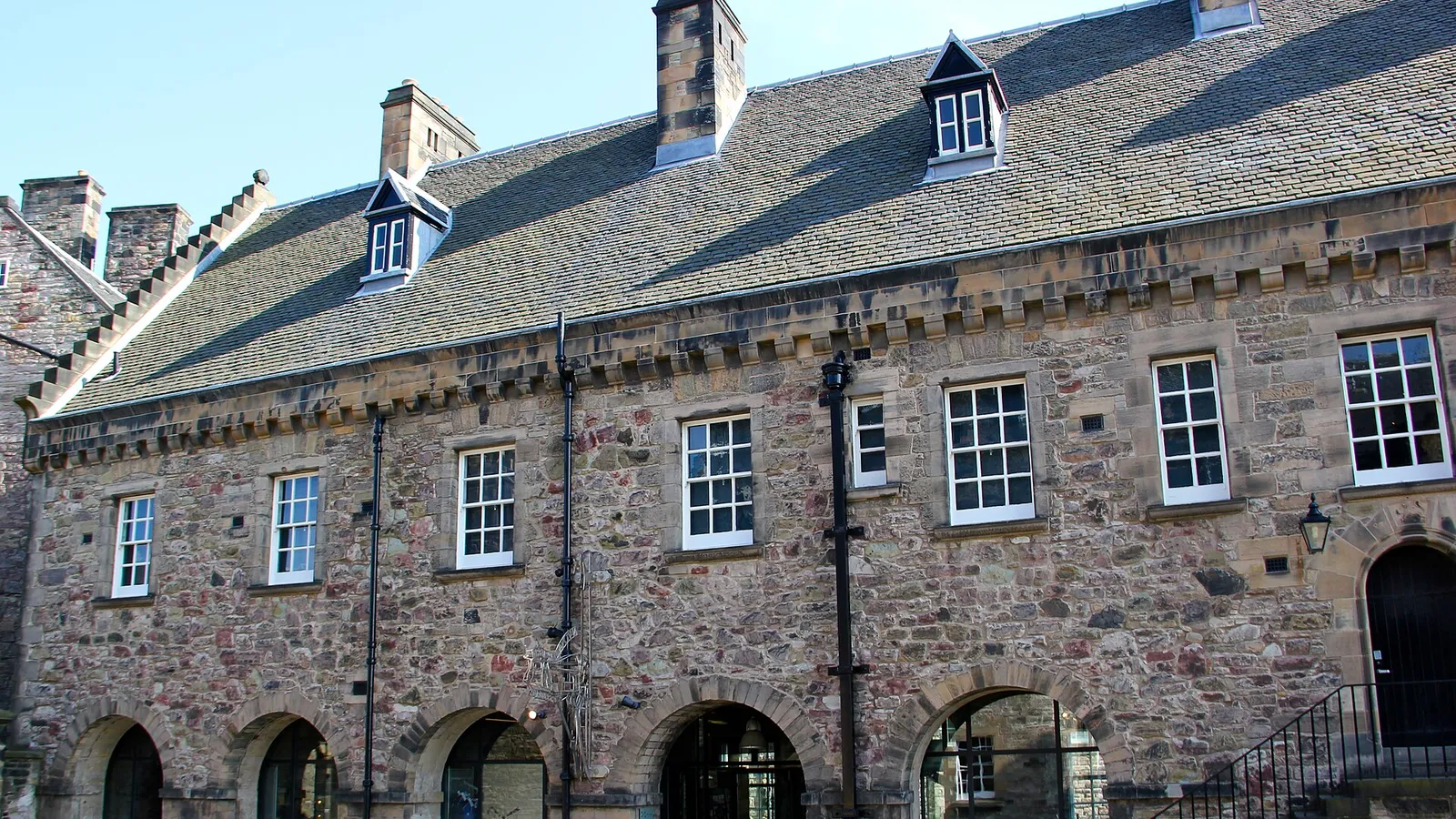

The National War Museum, Edinburgh Castle: Scotland's National Military Collection
The National War Museum (known for years as the National War Museum of Scotland) is a museum and national collection run by National Museums Scotland. It opened on 23 May 1933 as the Scottish Naval and Military Museum and later became the Scottish United Services Museum. It is a separate institution from the fortress around it, which is Card #32, and from the Scottish National War Memorial beside it, which is Card #24. Most of its popular "origin story" is correct, but several widely repeated details are wrong or muddled.
TL;DR
- What it is (Established): A national museum of Scotland's military history, telling "over 400 years of conflict" through objects, art and personal stories. It is part of National Museums Scotland (NMS). It is not the castle (owned by Scottish Ministers and run by Historic Environment Scotland) and not the War Memorial (an independent charity).
- How it got here (Established, with one unresolved date): Planning began in 1917 but was shelved in favour of the Memorial. The museum opened in 1933 in the Queen Anne Building on Crown Square and was renamed the Scottish United Services Museum after the Second World War. It joined the Royal Scottish Museum in 1970 and moved in 1998–2000 into the former Ordnance Storehouses and military hospital in Hospital Square, where it reopened as the National War Museum. The date of the renaming is disputed: HES says 1945, other sources say 1949.
- How it interprets (Established from its own gallery texts): The museum's themes deliberately cover how Highland soldiers went from "Highland rebel" to "military exemplar", how imperial service shaped Scottish identity, and the individual human experience of war. That makes it the natural place to see the traditions covered on Cards #47 and #48 as material evidence, not as romance.
Key Facts
- Institution
- National War Museum (formerly Scottish Naval and Military Museum; Scottish United Services Museum; National War Museum of Scotland)
- Parent body
- National Museums Scotland (NMS), alongside the National Museum of Scotland, National Museum of Flight and National Museum of Rural Life
- Location
- Hospital Square, western part of Edinburgh Castle; south range (two main storeys) plus ground floor of north range, linked by a corridor on the west side
- Building
- Former Ordnance Storehouses (William Skinner, 1748/1753–54), rebuilt as a military hospital 1893–97 (E. Ingress Bell; T. Ivor-Moore); listed Category B, 14 December 1970 (HES LB48223)
- Opened
- 23 May 1933, by John Buchan as Lord High Commissioner (as the Scottish Naval and Military Museum, in the Queen Anne Building)
- Collection scope
- c. 17th century to the present, with galleries described as covering "over 400 years of conflict"
- Permanent galleries
- 1 A Nation in Arms; 2 A Grand Life for a Scotsman; 3 Tools of the Trade; 4 Highland Soldier; 5 In Defence; 6 Active Service
- Notable holdings
- Robert Gibb, The Thin Red Line (1881), donated by Diageo; Bob, the Crimean War mascot of the Scots Fusilier Guards; Highland broadswords; chemical-warfare protective suits; soldiers' letters; medals
- Access
- Free with Edinburgh Castle ticket; daily 09:45–17:45 (Apr–Sep), 09:45–16:45 (Oct–Mar); closed 25–26 Dec
- Current status
- Operating; Maps: Memories from the Second World War runs to 4 October 2026; The Art of Commemoration opens 5 December 2026
Scottish Impact Index (SI Score)
- Military Impact
- 4/10
- Enduring Significance
- 8/10
- Strategic Importance
- 4/10
- Military Distinctiveness
- 8/10
- Military Legacy
- 8/10
- Recognition
- 7/10
39/60
Ranked =38th of 43 in Defence
Claim Status
- Established (documented): That NMS runs the museum; the 1933 opening and its first name; the 1998 move to the Ordnance Storehouses and the 2000 reopening; the building history; the six gallery themes; the Diageo gift of The Thin Red Line. These rest on NMS's own pages, Historic Environment Scotland's (HES) Statement of Significance for the Queen Anne Building, and the HES listing text.
- Shared/Traditional: The museum's origins as part of a wider national act of First World War remembrance. The documents support this as a motive, but it is often overstated as the museum being "part of" the Memorial. The same applies to the stories attached to individual objects, such as the popular claim that Bob the dog's medal was cast from Russian musket balls; NMS's own collection record confirms only a "silver medal on collar".
- Disputed or wrong: The year of the renaming to "Scottish United Services Museum" (1945 or 1949). The claim, repeated in several guides and by NMS itself, that the museum was "founded in 1930 as the Scottish United Services Museum". The claim that it opened in 1933 in the ordnance storehouse. The claim that it was "the first war museum in Britain". Unverified object counts, such as "seven Victoria Crosses".
Timeline
William Skinner builds the powder magazine and twin ordnance storehouses around a quadrangle at the castle's north-west corner — Documented
Magazine demolished; storehouses rebuilt as a military hospital with Scottish Baronial details; the space becomes Hospital Square — Documented
A. O. Curle, of the Royal Scottish Museum and National Museum of Antiquities, drafts preliminary ideas for a Scottish war museum; an Edinburgh civic committee works on it through 1918–19 — Documented (secondary: Wellington 2017; The Scotsman, 7 March 1917)
Museum project paused while the Scottish National War Memorial takes priority — Documented (secondary)
Scottish National War Memorial opens (14 July); the museum project is revived by the 8th Duke of Atholl in the late 1920s — Documented
Queen Anne Building gutted and converted by Office of Works architect J. Wilson Paterson — Documented (HES)
Opened by John Buchan as the Scottish Naval and Military Museum — Documented
Museum closed for the duration of the war — Documented (HES)
Renamed Scottish United Services Museum to reflect the Royal Air Force — Disputed date
A. V. B. Norman, later Master of the Armouries, serves as assistant curator — Documented (secondary)
Becomes part of the Royal Scottish Museum; the storehouse/hospital building is listed (14 December) — Documented (NMS; HES)
Royal Scottish Museum and National Museum of Antiquities merge to form the National Museums of Scotland — Documented (NMS)
Museum leaves the Queen Anne Building and relocates to the former Ordnance Storehouses — Documented (HES)
Reopens after refurbishment as the National War Museum (of Scotland) — Documented (NMS; Gazetteer for Scotland)
NMS curators Stuart Allan and Allan Carswell publish The Thin Red Line: War, Empire and Visions of Scotland — Documented
First World War centenary programme, including the touring exhibition Next of Kin (18 April 2014 – 20 May 2017) — Documented (NMS)
Diageo announces the gift of Gibb's The Thin Red Line, on loan to the museum since 2000 — Documented (press)
Maps: Memories from the Second World War — Documented (NMS)
The Art of Commemoration, on the making of the Scottish National War Memorial, ahead of its 2027 centenary — Announced (NMS, 14 July 2026)
Details
1. Origins: a war museum postponed for a war memorial
The idea of a Scottish war museum arose during the First World War, when war-museum movements across Britain generally agreed that such collections should be regional. In 1917 Alexander Ormiston Curle, who then directed both of Edinburgh's national museums, drew up preliminary proposals with advice from organisers in London. A civic committee set up by Edinburgh's Lord Provost, John Lorne MacLeod, carried the idea forward through 1918 and 1919, including plans for gathering exhibits. After the Armistice, however, energy and money went into the Scottish National War Memorial. Its organising committee first met in January 1919, and one of its six sub-committees was explicitly for "museums". The museum was put on hold until the Memorial opened in 1927.
The 8th Duke of Atholl, a driving force behind the Memorial, revived the museum in the late 1920s. The building chosen was not the one the museum occupies today. HES records that in 1928–30 the Queen Anne Building, an early-18th-century officers' and gunners' barracks on the west side of Crown Square, was "almost entirely gutted and converted into the Scottish National Naval and Military Museum", "to complement the adjacent Scottish National War Memorial". It opened on 23 May 1933, performed by John Buchan as Lord High Commissioner. The original name stated its scope: navy and army, with no air force.
Interpretation: the documents support a close kinship between museum and Memorial. They were conceived in the same wartime moment, promoted by overlapping people and built side by side on Crown Square. But they were separate projects with separate purposes: one was a collection for learning, the other a shrine for mourning. That distinction matters for the rest of this card.
2. From "Naval and Military" to "United Services" to "National War Museum"
The museum closed throughout the Second World War. It reopened as the Scottish United Services Museum, a name meant to take in the Royal Air Force alongside the Royal Navy and the Army. HES dates the reopening under the new name to 1945, while Wikipedia and Wikidata give 1949, citing a different HES document. Our research could not settle the conflict from primary sources, so this card treats the date as disputed and gives both.
Institutionally, the museum became part of the Royal Scottish Museum in 1970, and so became part of the National Museums of Scotland when that body was formed by merger in 1985. It was renamed National Museums Scotland in 2006. The museum's staff also left a mark on the wider field. Arms historian A. V. B. Norman was assistant curator of the Scottish United Services Museum in 1957–63 before becoming the first professional arms historian to serve as Master of the Armouries.
The decisive physical change came at the end of the century. HES records that in 1998 "the museum relocates to the Ordnance Storehouses (as the National War Museum)". The Queen Anne Building was then refitted as an education centre, café and function kitchen for the Great Hall. The refurbished museum reopened in April 2000 as the National War Museum of Scotland. NMS now normally uses the shorter "National War Museum", while the HES listing keeps "of Scotland". We found no dated source for when the shorter form was adopted.
3. The building it occupies now
The museum sits in Hospital Square at the western end of the castle, with the equestrian statue of Field Marshal Earl Haig in the centre. The statue originally stood on the Esplanade, and its listing calls the space "Museum Square". The buildings began as William Skinner's powder magazine of 1748 and twin ordnance storehouses of 1753–54, part of the post-1745 military build-up. After the military hospital moved out of the restored Great Hall, the War Office architect E. Ingress Bell designed a conversion that T. Ivor-Moore carried out, with changes, in 1897. It demolished the magazine, raised the north range by a storey in Scottish Baronial style and gave the south range matching crowsteps, while keeping its arcaded ground floor. Today the museum occupies the two main storeys of the south range and the ground floor of the north range, joined by a modern link along the west side.
Card #32 handles the castle's fortress history; the building history is included here only because it explains the museum's physical home.
4. Three institutions, one rock: a precise distinction
| National War Museum (this card) | Scottish National War Memorial (Card #24) | Edinburgh Castle as fortress (Card #32) | |
|---|---|---|---|
| What it is | A museum and national collection | A commemorative shrine and Rolls of Honour | A historic fortified site and scheduled monument |
| Who runs it | National Museums Scotland | An independent charity | Owned by Scottish Ministers; run by Historic Environment Scotland; parts still in Army use |
| Purpose | To collect, research, interpret and display Scotland's military history | To commemorate Scots, and those in Scottish units, who died from 1914 onwards | Its historic military and royal function; today a visitor attraction |
| Building | Former Ordnance Storehouses/hospital, Hospital Square | Former North Barracks, Crown Square (Lorimer, opened 1927) | Whole site, from medieval fabric to 18th-century batteries |
| Admission | Free with castle ticket | Free "Memorial only" visits can be arranged via HES | Paid castle ticket |
The distinction is not trivial. A museum's job is to question, contextualise and sometimes revise the story its objects tell. A memorial's job is to honour the dead. The two now cooperate openly: The Art of Commemoration (from 5 December 2026) is a National War Museum exhibition about the Memorial, made with the Memorial's charity. That is itself proof that they are separate bodies. The castle also houses separate regimental museums, including the Royal Scots Museum and the Royal Scots Dragoon Guards Museum, which opened in the New Barracks in 1995. Some of that cavalry material was previously shown as part of the Scottish United Services Museum. These, like the Argyll and Sutherland Highlanders museum at Stirling discussed on Card #13, are regimental collections. The National War Museum is the national, all-services, cross-regimental collection.
5. Collection scope and significant holdings
NMS describes the galleries as exploring "over 400 years of conflict through a unique collection of military objects, artwork and personal stories". They span two floors. In practice that means roughly the 17th century to the present, covering the Army, Royal Navy and Royal Air Force, home-defence forces and civilians. Highlights documented by NMS and HES include:
- Robert Gibb, The Thin Red Line (1881): the famous image of the 93rd Highlanders at Balaclava in 1854. It was lent by Diageo from 2000 until 2016 and given to the national collection, as announced in November 2016. An NMS spokeswoman, quoted in the Edinburgh News, called it "such a tremendous addition" to the museum's Scottish military paintings and "the classic representation of Highland military heroism as an icon of Scotland".
- Bob the dog: the preserved terrier mascot of the Scots Fusilier Guards in the Crimean War, highlighted by name in NMS's gallery text for A Grand Life for a Scotsman.
- Equipment "to equip the individual for war": Highland broadswords through to modern rifles, protective (chemical-warfare) suits and medical kits (Tools of the Trade).
- Personal material: uniforms, souvenirs, possessions and letters home, used to trace service "from recruitment to retirement".
- Medals and memorabilia relating to individuals (Active Service), home-front medals and photographs (In Defence), and large objects including a 17-pounder anti-tank gun and a Scorpion light tank.
- A research library that serves the collection.
Cross-references: the Highland Soldier gallery explicitly includes "bagpipe music" alongside paintings and Highland uniforms, which makes it the physical counterpart to Card #47 (Pipes & Drums). Campaign honours on drums and flags appear among the displays, relevant to Card #48 (Regimental Colours & Battle Honours). Those cards cover the traditions themselves; this card notes only that the national collection preserves examples of them.
6. Interpretive approach: how the museum handles a contested history
The museum's own gallery texts show a clear interpretive position. Much of it matches the "accuracy over patriotism" standard of this series.
- Highland identity as constructed, not timeless. The Highland Soldier gallery states that "in the 17th and 18th centuries, the Highlands were often beyond government control and seen as a threat to the British state", and presents "the dramatic change from Highland rebel to military exemplar". This is the museum's version of the "invention of tradition" argument: the kilted soldier as an icon made in the service of the British state after 1745, not an unbroken ancient inheritance.
- Geography and politics, not destiny. A Nation in Arms explains Scotland's military history through terrain, the Highland–Lowland divide, a long coastline and sea routes, and through Scotland's often turbulent relationship with England.
- Empire as the frame. The museum's curators' flagship book, Allan and Carswell's The Thin Red Line: War, Empire and Visions of Scotland (NMS, 2004), is framed as a history of "the relationship between Scottish society and the growth and decline of British imperial military power". Its subject is how war and military service shaped Scottish cultural identity. The NMS curator Stuart Allan, who began his museum career at the National War Museum, has since written on "the Scottish military tradition in decline" and on military collecting and appropriation in the British Empire. Allan now leads Scottish History & Archaeology at NMS. He has also lectured on David Stewart of Garth as "both a real Highlander and a conscious shaper of the Highland myth".
- The individual and the home front. A Grand Life for a Scotsman asks why so many Scots served. In Defence asks "who was left to defend Scotland", and Active Service acknowledges that fighting "is difficult to imagine for those who have not gone through it themselves".
Where this card is cautious: we found no single published NMS curatorial manifesto for the museum. Its approach has to be inferred from gallery texts, exhibitions and curators' publications. We also found no evidence that the permanent galleries give Scottish casualty statistics the sustained critical treatment that historians apply, for example to the disputed Great War figures discussed on Card #24. Visitor-review sites praise the displays for avoiding glorification of the British Empire, but that is anecdote, not documentation. Readers should treat the museum's approach as documented in its texts and see its depth for themselves.
7. Visiting today, and why it matters
Entry is free with an Edinburgh Castle ticket, and tickets are sold through the castle, not NMS. The museum opens daily from 09:45 to 17:45 between April and September, and 09:45 to 16:45 between October and March, closing on 25–26 December. There is a lift between the two gallery floors, low lighting throughout, and a looped, subtitled film with an induction loop in A Nation in Arms. Schools can book facilitated sessions such as Second World War Explorer. The Association of Leading Visitor Attractions (ALVA), in its 2025 figures released on 20 March 2026, recorded 830,699 visits to the museum (42nd in the UK, up 10%) against 2,044,963 for the castle (15th, up 3%). They suggest that a large minority of castle visitors do not go in.
Its significance is that it is the only national, all-services collection of Scottish military history. It sits above and alongside the country's regimental museums, keeps the objects behind the popular images (from Gibb's canvas to the pipes and tartans), and interprets them in a way that increasingly examines the myth as well as the history. The gallery title "In Defence" echoes home-front themes used by other British military museums. Here, though, it is a specifically Scottish account of volunteers, fencibles and civilians.
Did You Know?
- The museum has moved house. It opened in 1933 in the Queen Anne Building on Crown Square, next to the War Memorial, and moved to Hospital Square only in 1998–2000.
- Its first name left out the RAF. "Scottish Naval and Military Museum" (1933) became "United Services" after the Second World War precisely to include the air force.
- The museum's building was once the castle hospital. The Ordnance Storehouses were rebuilt as a military hospital in the 1890s after the hospital left the Great Hall.
- The Thin Red Line was a gift from a drinks company. Diageo lent Gibb's painting from 2000 and announced its donation in November 2016, in the same month as its controversial plan to sell The Monarch of the Glen at Christie's. After a public outcry, Diageo agreed on 17 November 2016 to give National Galleries Scotland £4m of that painting's £8m value, as reported by The Scotsman and Apollo.
- Bob the dog is a Crimean veteran. The Scots Fusilier Guards' terrier is a named highlight of the gallery on everyday military life. A Victorian account says he was first displayed in the United Service Museum in Whitehall.
- The museum exhibited the Memorial. From December 2026 it hosts an exhibition on the Scottish National War Memorial, including cast-iron sample angels designed by Alice Meredith Williams for the Memorial's casket.
- A future Master of the Armouries trained here. A. V. B. Norman was assistant curator of the Scottish United Services Museum in 1957–63.
FAQ
1What is the National War Museum?
The National War Museum is Scotland's national museum of military history, run by National Museums Scotland inside Edinburgh Castle. Its six permanent galleries use objects, artworks and personal stories to explore "over 400 years of conflict", covering the Army, Navy, Air Force, home defence and civilian experience from about the 17th century to the present.
2Is the National War Museum the same as the Scottish National War Memorial?
No. The Memorial (Card #24) is a commemorative shrine in the former North Barracks on Crown Square, opened in 1927 and run by an independent charity. It holds Rolls of Honour of Scots who died from 1914 onwards. The museum is a separate NMS collection in Hospital Square whose purpose is to collect and interpret, not commemorate.
3Is the museum part of Edinburgh Castle?
It is inside the castle but not of it. The castle is owned by Scottish Ministers and run by Historic Environment Scotland, which cares for the fabric and fortress history covered on Card #32. The museum is a tenant institution run by National Museums Scotland, with its own curators, collections and exhibitions programme.
4When was the museum founded?
The documented opening was 23 May 1933, performed by John Buchan as the Scottish Naval and Military Museum, after conversion work in 1928–30. Plans date back to 1917. NMS's own history says "founded in 1930 as the Scottish United Services Museum", which misplaces the later name; 1930 is best read as the end of the building works.
5What was the Scottish United Services Museum?
It was the museum's post-Second World War name, adopted to include the Royal Air Force alongside the Navy and Army. HES dates the change to 1945 and other sources to 1949. Under that name the museum joined the Royal Scottish Museum in 1970, and in 2000 it reopened in new premises as the National War Museum.
6Which buildings does the museum occupy?
The former Ordnance Storehouses of the 1750s by William Skinner, rebuilt as a military hospital in the 1890s, around Hospital Square at the castle's western end. It uses the two main storeys of the south range and the ground floor of the north range, joined by a link corridor. The building is listed Category B (HES LB48223).
7Does it replace Scotland's regimental museums?
No. Regimental museums, such as the Royal Scots and Royal Scots Dragoon Guards museums elsewhere in the castle, or the Argyll and Sutherland Highlanders museum at Stirling (Card #13), keep individual regiments' collections. The National War Museum is the national, cross-service collection and places regimental stories in a wider Scottish and British context.
8How does the museum treat Highland military myth?
Its Highland Soldier gallery presents the Highlander's shift "from Highland rebel to military exemplar" after the Jacobite era, treating the kilted soldier as an icon shaped by the British state. That position is developed in NMS curators' scholarship on war, empire and Scottish identity.
9What are the most famous objects?
Robert Gibb's The Thin Red Line (1881), depicting the 93rd Highlanders at Balaclava, is the best known. It was donated by Diageo. Others include Bob, the Scots Fusilier Guards' Crimean mascot; Highland broadswords; chemical-warfare suits; soldiers' letters; medals; and large objects such as a 17-pounder gun and a Scorpion tank.
10How much does it cost to visit?
The museum itself is free, but it can only be reached with an Edinburgh Castle ticket, which is bought through the castle's website. It opens daily at 09:45, closing at 17:45 from April to September and at 16:45 from October to March, and is closed on 25–26 December. A lift connects its two floors.
11What exhibitions are on now?
Maps: Memories from the Second World War runs until 4 October 2026. The Art of Commemoration, from 5 December 2026 to 14 January 2029, traces the Scottish National War Memorial's creation from 1917 to its opening in 1927, ahead of the Memorial's centenary.
12Is it "the first war museum in Britain"?
No. That claim appears on some listings but is not credible: IWM's own history records that the Imperial War Museum was founded on 5 March 1917 and opened at the Crystal Palace by King George V on 9 June 1920, and regimental museums existed earlier. The Edinburgh museum is better described as Scotland's national military museum.
Sources
Primary / Institutional
- National Museums Scotland, "History" (about-us/history): institutional chronology, 1930/1970/2000 statements.
- National Museums Scotland, "National War Museum": visitor information, and "Explore the galleries": texts for all six galleries.
- National Museums Scotland Media, "New display explores the creation of the Scottish National War Memorial" (14 July 2026).
- National Museums Scotland, "First World War centenary" programme page (Next of Kin, Common Cause).
- Historic Environment Scotland, Statement of Significance: Edinburgh Castle – Queen Anne Building (last reviewed 2012).
- Historic Environment Scotland, listing LB48223, "Edinburgh Castle, National War Museum of Scotland (Former Hospital and Ordnance Store), including Sentry Boxes and Urns", and LB48231, "Edinburgh Castle, United Services Museum".
- Scottish National War Memorial, "History" and visitor pages (snwm.org).
- Edinburgh Castle (HES), "National War Museum" highlight page.
Scholarly
- Jennifer Wellington, Exhibiting War: The Great War, Museums, and Memory in Britain, Canada, and Australia (Cambridge University Press, 2017), pp. 252–53.
- Stuart Allan and Allan Carswell, The Thin Red Line: War, Empire and Visions of Scotland (NMS, 2004).
- Stuart Allan, "Scottish military collections", in E. M. Spiers, J. A. Crang and M. J. Strickland (eds), A Military History of Scotland (Edinburgh University Press, 2012).
- Stuart Allan, "Beating retreat: the Scottish military tradition in decline", in B. S. Glass and J. M. MacKenzie (eds), Scotland, Empire and Decolonisation in the Twentieth Century (Manchester University Press, 2015).
- Gordon Ewart and Dennis Gallagher, Fortress of the Kingdom: Archaeology and Research at Edinburgh Castle (Historic Scotland, 2014).
- Stuart Allan and David Forsyth, Common Cause: Commonwealth Scots and the Great War (NMS, 2014); Stuart Allan, Commando Country (NMS, 2007).
General further reading
- Undiscovered Scotland, "National War Museum" (building layout and gallery themes).
- Gazetteer for Scotland, "National War Museum of Scotland".
- Iain MacIvor, Edinburgh Castle (Batsford, 1993).
Honest Caveats
- "Founded in 1930 as the Scottish United Services Museum" (Inaccurate as worded). NMS's own history page says this, but HES and contemporary press show that it opened in 1933 as the Scottish Naval and Military Museum. The "United Services" name came only after the Second World War. Treat 1930 as the end of conversion works.
- "Opened in 1933 in the ordnance storehouse" (Wrong location). Repeated by Wikipedia and implied by some castle guides, this conflates two buildings. From 1933 to 1998 the museum was in the Queen Anne Building on Crown Square and moved to the Hospital Square storehouses only in 1998–2000. Claims that it was "established here in 1930" are wrong for the same reason.
- 1945 vs 1949 renaming (Disputed). HES gives 1945; Wikipedia and Wikidata give 1949, citing another HES document we could not check. It is unresolved pending newspaper or annual-report evidence.
- "Part of the War Memorial" (Overstated). The museum was conceived alongside the Memorial and was meant to "complement" it. But it was a separate project with a separate purpose and today a separate institution.
- "The first war museum in Britain" (Not credible). This claim appears on at least one arts listing. The Imperial War Museum predates it.
- "Seven Victoria Crosses", including Piper James Richardson's (Unverified, probably wrong in part). This comes from an unofficial aggregator. Richardson's VC is documented in Canadian custody, and his pipes are in Victoria, British Columbia. Some individual VCs, such as those of William Robertson and Duncan Millar, are reported by secondary sources as displayed at the museum. Confirm any count with NMS.
- Bob's "musket-ball Victoria Cross" (Traditional). Popular accounts say his medal was cast from Russian musket balls. NMS's own collection record describes a "Stuffed dog 'Bob', regimental pet of the Scots Fusilier Guards, 1st Battalion, from 1853 - 1860, with silver medal on collar", which confirms a silver medal but says nothing of musket balls. The Scots Guards record that he survived the Crimea "only to die under the wheels of a butcher's cart" in 1860.
- Visitor figures (Confirmed). The 2025 figure of 830,699 is confirmed by ALVA's own 2025 visitor figures table, released on 20 March 2026, which also gives Edinburgh Castle 2,044,963.
- This card's scope. This card covers the museum and its collection only. The castle's sieges and fortress development belong to Card #32. The Memorial's architecture, shrine, Rolls of Honour and First World War commemoration belong to Card #24. The traditions of piping and colours are covered on Cards #47–48 and are mentioned here only where the museum holds or interprets examples.
Card 049 · Defence