
The Seaforth Highlanders (Ross-shire Buffs, The Duke of Albany's)
Defence Series · Card #10 of 50 · ScottishInventions.com
TL;DR
- The Seaforth Highlanders were a genuinely kilted, clan-territory Highland regiment of Clan Mackenzie and Ross-shire, formed in 1881 by amalgamating two earlier Mackenzie-raised regiments — the 72nd (raised 1778 by Kenneth Mackenzie, Earl of Seaforth) and the 78th (raised 1793 by Francis Humberston Mackenzie) — and distinct in identity from the Perthshire-rooted Black Watch (Cards #3–4) and from the trews-wearing Highland Light Infantry (Card #9). established
- The regiment's founding is inseparable from the harsh realities of 18th- and 19th-century Highland estate management: recruits were drawn largely from Mackenzie/Seaforth tenants in Ross-shire and Lewis (of 1,130 men in 1778, 500 came from the Seaforth estates and 200 of those were Lewismen), partly under pressure, and the same Seaforth chiefs who raised the regiments later cleared their tenantry (Uig, Lewis) for sheep — so the "loyal clan raising a regiment" story must be told honestly alongside coercion and Clearance-adjacent context. [Documented, with traditional overlay]
- Within months of raising, the 1778 regiment mutinied on Arthur's Seat, Edinburgh, over a dispute about terms of service and being sent to India — the "Affair of the Macraes" — a well-documented episode (reported in the London press, with articles by James Boswell), though popular retellings vary in detail. [Documented; some detail traditional]
- The Seaforths served heavily as an imperial regiment — India (Assaye 1803; the 1857–58 Rebellion, especially Cawnpore and the First Relief of Lucknow, where the 78th won eight Victoria Crosses), Egypt and the Sudan, the Second Anglo-Afghan War, and the Boer War — and fought in both World Wars, with the 2nd Battalion captured at St Valery in June 1940 (see Card #21). established
- In 1961 the Seaforth Highlanders amalgamated with The Queen's Own Cameron Highlanders (Card #12) to form The Queen's Own Highlanders (Seaforth and Camerons), later merged into The Highlanders in 1994 and absorbed into the Royal Regiment of Scotland in 2006 (Card #23). established
Key Facts
- Period/dates covered: 1778 (raising of the 72nd) / 1793 (raising of the 78th) — 1881 (formation of the Seaforth Highlanders) — 1961 (amalgamation into the Queen's Own Highlanders)
- Key institutions: Clan Mackenzie / the Earls and Barons of Seaforth; the British Army; regimental depot at Fort George, near Inverness; The Highlanders' Museum (Queen's Own Highlanders Collection), Fort George
- Recruiting area: Ross and Cromarty (heartland), plus Sutherland, Caithness, Inverness-shire, Moray, Nairn, Orkney and Shetland, and the Isle of Lewis
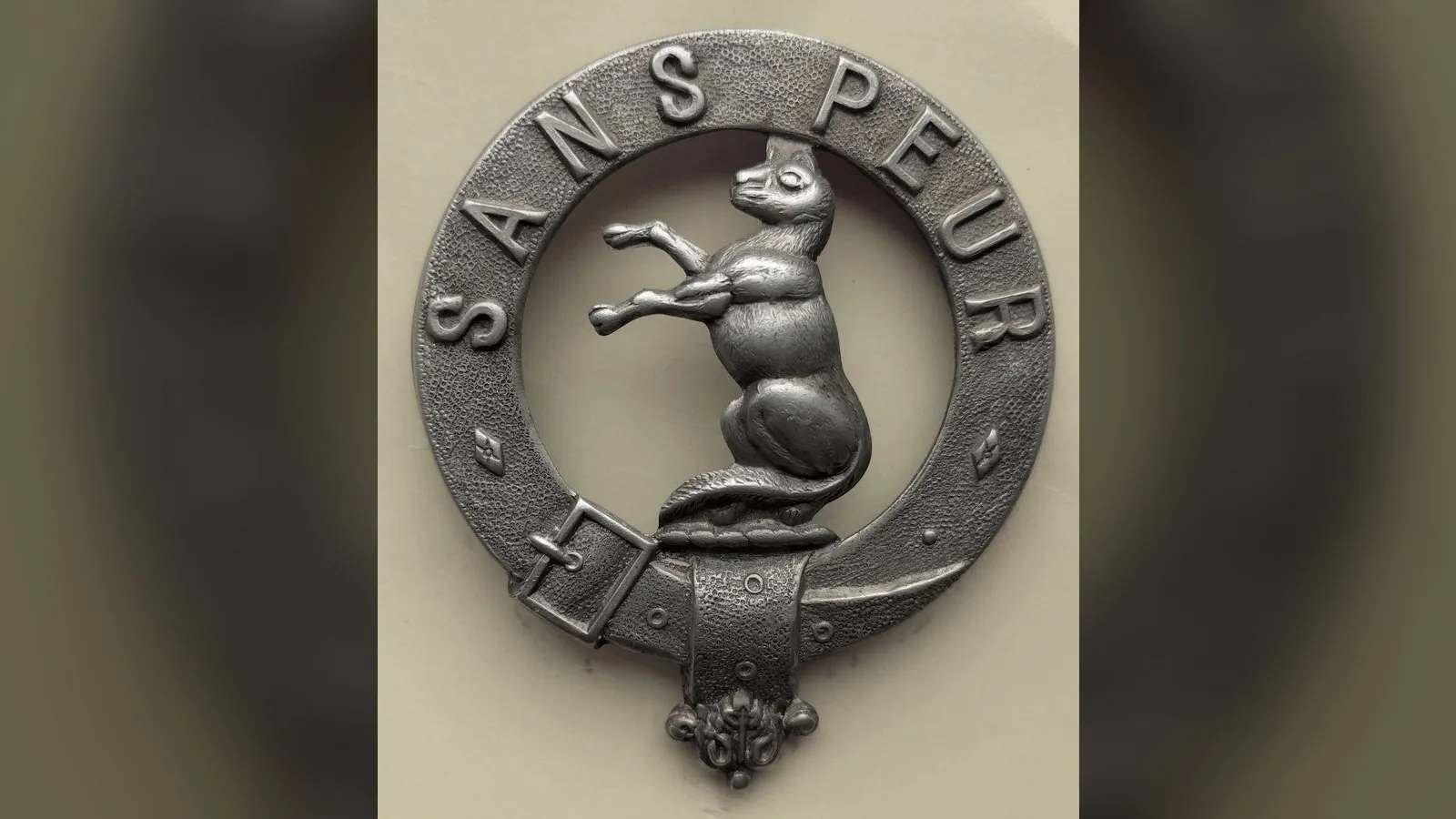
- Notable features: Mackenzie tartan kilt; stag's-head cap badge ("Hector"); Gaelic motto Cuidich 'n Righ ("Help the King"); regimental march/charge Cabar Fèidh; nickname "Ross-shire Buffs" from the buff facings of the 78th
- Current status/legacy: Lineage continued through The Queen's Own Highlanders (1961), The Highlanders (1994), and today's Royal Regiment of Scotland (2006); perpetuated overseas by The Seaforth Highlanders of Canada
Scottish Impact Index (SI Score)
- Military Impact
- 8/10
- Enduring Significance
- 9/10
- Strategic Importance
- 8/10
- Military Distinctiveness
- 9/10
- Military Legacy
- 9/10
- Recognition
- 8/10
51/60
Ranked =19th of 43 in Defence
Claim Status
The regiment's core institutional facts are established and documented in primary and institutional sources (the National Army Museum, The Highlanders' Museum at Fort George, the London Gazette, and the standard regimental history by Colonel J. M. Sym). These include the 1778 and 1793 raisings, the founders' identities, the 1881 amalgamation and title, the recruiting area, the tartan and motto, and the campaign record.
Several elements are Shared/Traditional: the origin legend of the Cuidich 'n Righ motto and stag's-head badge (a 13th-century hunting rescue of King Alexander III), and some colourful details of the 1778 mutiny, rest on tradition and later retellings rather than contemporaneous documentation, and are flagged as such.
One area requires honest handling rather than romantic framing (Documented context, contested emphasis): the connection between clan-chief regimental raising and Highland estate management, emigration pressure and, later, the Clearances. That Seaforth recruits came substantially from the chief's own tenants — and that the same Seaforth family later cleared parts of Lewis — is documented; the moral framing has long been debated.
Casualty figures, especially for the First World War, vary by source and by what is being counted (dead vs. total casualties; regular battalions vs. all battalions). These are presented with explicit caveats below.
Timeline
Kenneth Mackenzie has the forfeited Seaforth earldom (lost after the 1715 Jacobite rising) restored to him.
Kenneth Mackenzie, Earl of Seaforth, receives a letter of service and raises the Seaforth (Highland) Regiment, first numbered the 78th.
Regiment established/passed as fit for service at Elgin.
At Leith, en route for India, roughly half the men march back to Edinburgh and take up a protest position on Arthur's Seat: the "Affair of the Macraes." After negotiation and pardons, order is restored.
The regiment sails for India; Kenneth Mackenzie (d. 27 August 1781, buried at sea) and 247 of his men die of scurvy on the passage before reaching Madras in 1782.
The regiment is renumbered the 72nd (later styled the Duke of Albany's Own Highlanders).
Francis Humberston Mackenzie raises a new 78th (Highlanders) Regiment of Foot; from 1796 subtitled the Ross-shire Buffs.
The 78th distinguishes itself under Arthur Wellesley at Assaye in the Second Anglo-Maratha War.
Francis Humberston Mackenzie becomes Lord Lieutenant of Ross; he is later ennobled as Lord Seaforth and in 1800 appointed Governor of Barbados.
The 78th fights at Maida (Italy) and in the invasion of Java.
72nd/78th men involved in the Waterloo-era campaign (garrison duties at Nieuwpoort).
The 78th plays a leading role at Cawnpore and the First Relief of Lucknow in the Indian Rebellion; eight Victoria Crosses awarded.
The 72nd serves in the Second Anglo-Afghan War (including the march to Kandahar).
The Childers Reforms amalgamate the 72nd and 78th into the Seaforth Highlanders (Ross-shire Buffs); on 22 November 1881 Queen Victoria approves the style "Seaforth Highlanders (Ross-shire Buffs, The Duke of Albany's)."
Tel el-Kebir (Egypt); Atbara and Omdurman (Sudan); Magersfontein and Paardeberg (Boer War).
The regiment fights on the Western Front, in Mesopotamia and Palestine; seven Victoria Crosses.
The 2nd and 4th Battalions are captured with the 51st (Highland) Division at St Valery-en-Caux (see Card #21).
Reconstituted and Territorial battalions fight at El Alamein, in Tunisia, Sicily, Italy, Normandy and North-West Europe; the 1st Battalion serves in the Burma campaign.
The Seaforth Highlanders amalgamate with The Queen's Own Cameron Highlanders (Card #12) to form The Queen's Own Highlanders (Seaforth and Camerons).
Details
1778: the Mackenzie/Seaforth founding, told honestly
The Seaforth Highlanders trace their senior line to a regiment raised in the winter of 1777–78 by Kenneth Mackenzie, 1st Earl of Seaforth (1744–1781), Chief of Clan Mackenzie. In 1771 the Crown had restored to him the Seaforth title and family estates, which had been forfeited after the family's involvement in the Jacobite rising of 1715; raising a regiment was explicitly an act of gratitude and a demonstration of loyalty and usefulness to the state. The regiment was first numbered the 78th and later (1786) renumbered the 72nd. Per the regimental record (as cited by Wikipedia's 72nd Regiment article), "a corps of 1,130 men was raised of whom 900 were Highlanders and the remainder came from the Lowlands: it was established at Elgin, its first base, in May 1778."
The romantic version — a loyal chief calling out his devoted clansmen — needs qualification. Recruits came substantially from Mackenzie/Seaforth tenants across Ross-shire and the family's Lewis estates: Hebridean Connections records that "of 1130 men, 500 came from his estates and 200 of these were Lewismen," and recruitment leaned heavily on the landlord–tenant relationship. One institutional history states that of the 1778 regiment "nearly half of the men were forcibly conscripted on the Seaforth Estates," and scholarship on Highland recruiting (e.g. the International Review of Scottish Studies article "Continuity, Coercion and Myth") documents coercion, the threat of naval impressment, and estate pressure as recurring features of raising Highland regiments in this period. Highland historians have shown that landlords valued a large tenant population partly as a recruiting pool; military service and rent/tenancy concessions were bound together. Crucially, the same Seaforth family later became notorious Clearance landlords: in 1793 Francis Humberston Mackenzie advertised the whole parish of Uig on Lewis as a sheep farm and in 1796 issued scores of removal summonses, and further Seaforth clearances followed into the 19th century. The men who filled the ranks and their descendants were, in many cases, precisely the tenant population later displaced. The card therefore presents clan-chief regimental raising not as simple heroic tradition but as an instrument of estate strategy in a hard age.
Recruiting as estate business: Devine's account
The historian T. M. Devine, in To the Ends of the Earth (2011), uses the Seaforths as a leading example of what he calls landowners acting as "military entrepreneurs rather than patriarchal chieftains" shared. In his reading, Highland proprietors harvested their tenantry for the army much as they set up sheepwalks or kelp shores, while presenting it as clan loyalty because that image was what sold Highland soldiers to government. Mackenzie of Seaforth is his clearest case of the rewards established: heavily indebted like most Highland landowners, he became Lord Lieutenant of Ross in 1794, a peer as Lord Seaforth, and in 1800 Governor of Barbados. (Devine dates the peerage to 1794; standard references give 1797 for the barony of Seaforth.)
Devine also cites evidence from inside the Mackenzie world that recruitment was not freely given established. When a battalion of the 78th was raised, Sir George Mackenzie, a kinsman of the colonel, concluded in his General View of the Agriculture of the Counties of Ross and Cromarty (1813) that the young men had joined to save their parents from being turned out of their farms. By 1813, another observer of Ross-shire wrote that the inhabitants had "a strong aversion to a military life". Devine places this within a wider Highland practice of "land for sons", in which tenancies were promised in exchange for recruits; when such bargains were later broken, the sense of betrayal sharpened bitterness over the Clearances.
The 1778 mutiny: the "Affair of the Macraes"
Within months of raising, the regiment mutinied. Ordered in August 1778 to Leith to embark — the men believed for the East Indies — around half the corps disputed the terms and marched back to Edinburgh, taking up a defensive position on Arthur's Seat, where they remained for several days, supplied with food by sympathetic townspeople. Because many of the men belonged to the Macrae kindred (a sept associated with the Mackenzies), the episode became known as the "Affair of the Macraes." The protest was reported in the London newspapers, including articles contributed by James Boswell, and after three days of negotiations a compromise was reached and the soldiers were pardoned. The Highlanders' Museum holds "a hand written petition dating back to 1778, just months after the regiment's formation," relating to the men's protest against being sent to India. This is a well-documented event (contemporary press reported a "Mutiny in Scotland" in September 1778); some popular retellings ("400 men," "a week," "tricked into going to India") vary in their specifics and should be treated with mild caution. The regiment eventually sailed for India in 1781; Kenneth Mackenzie died at sea (27 August 1781) and 247 of his men died of scurvy before the survivors reached Madras in 1782.
The second regiment and the 1881 formation
The junior line, the 78th (Highlanders) Regiment of Foot, was raised on 7–8 March 1793 by Francis Humberston Mackenzie (1754–1815), Chief of Clan Mackenzie and later 1st Baron Seaforth, following the outbreak of the French Revolutionary Wars. First assembled at Fort George, it was uniquely a two-battalion unit early in its life and was subtitled the "Ross-shire Buffs" from 1796 — the "Buffs" referring to the buff-coloured facings on its collar and cuffs.
Under the Childers Reforms, on 1 July 1881 the 72nd and 78th were amalgamated to form the Seaforth Highlanders (Ross-shire Buffs), the 72nd becoming the 1st Battalion and the 78th the 2nd. On 22 November 1881 Queen Victoria approved the fuller style "Seaforth Highlanders (Ross-shire Buffs, The Duke of Albany's)" — the "Duke of Albany's" honouring Prince Leopold, Queen Victoria's youngest son, who became the regiment's colonel-in-chief. The Highland Rifle Militia (raised in Ross-shire by Lord Seaforth in 1798) became the 3rd Battalion, and local Rifle Volunteers became Volunteer Battalions.
Ross-shire and the Mackenzie associations
The regiment was, from first to last, a Mackenzie and Ross-shire formation. Its heartland recruiting county was Ross and Cromarty, with three-quarters of the men in the founding regiments said to have come from the Mackenzie family's Ross-shire estates; the recruiting district later formally embraced Sutherland, Caithness, Inverness-shire, Moray, Nairn, Orkney and Shetland, and the Isle of Lewis. Its symbols are Clan Mackenzie's: the stag's-head cap badge (affectionately "Hector"), and the Gaelic motto Cuidich 'n Righ ("Help the King"), which — according to clan legend — originated when a 13th-century Mackenzie chief, Colin of Kintail, rescued King Alexander III from a charging stag. This origin story is traditional/legendary, not documented, and is flagged as such. The regimental depot for most of the regiment's life was Fort George, near Inverness, which today houses The Highlanders' Museum (the Queen's Own Highlanders Collection), the largest regimental museum in Scotland outside Edinburgh Castle.
Highland dress: a genuinely kilted regiment
Unlike the Highland Light Infantry (Card #9), which for much of its history wore tartan trews rather than the kilt, the Seaforth Highlanders were fully kilted Highland infantry. Their tartan was the Mackenzie sett — a dark, Black Watch–based government pattern with added red and white (or buff/white) over-stripes, long associated with the Mackenzie regiments (the Seaforths and, in trews, the HLI). The 78th's dress featured red doublets, kilts, sporrans, feather bonnets and red-and-white diced hose, with pipers in the customary contrasting green. This kilted Mackenzie identity is one of the clearest markers distinguishing the Seaforths both from the HLI and from the Perthshire-rooted Black Watch.
European and imperial campaigns
The Seaforth lineage is, above all, an imperial-service story, and the card presents it as such. Napoleonic-era service is well attested: the 78th fought in the Netherlands (1794), helped capture the Dutch Cape Colony (1795–96), and distinguished itself under Arthur Wellesley at Assaye (1803) in the Second Anglo-Maratha War, for which the East India Company awarded an honorary third colour bearing an elephant. A second battalion of the 78th fought at Maida in Italy (1806) and in Egypt (1807); the regiment took part in the invasion of Java (1811) and held garrison duties during the Waterloo campaign of 1815.
The regiment's greatest 19th-century renown — and its most morally complex service — came in India during the Rebellion of 1857–58. Under Sir Henry Havelock, the 78th was central to the recapture of Cawnpore (July 1857) and the First Relief of Lucknow (September 1857), where the men fought their way into and then helped defend the Residency. Eight Victoria Crosses were awarded to the 78th for this campaign (the National Army Museum states "eight officers and men of the 78th won the Victoria Cross"; The Highlanders' Museum cites nine VCs for the regiment in the 1857–58 Uprising, within a regimental total of eighteen across 1857–1918), and the regiment was lionised in Victorian Britain (celebrated by Tennyson as "Havelock's glorious Highlanders"). This service should be understood honestly as the armed suppression of a major anti-colonial revolt, conducted amid extreme violence on both sides. Devine (2011) notes that the Highland legend of 1857 was built partly on sanitised reporting: dispatches said little about the fate of prisoners after the recapture of Cawnpore or the brutality inflicted on sepoys and civilians, while the massacre of British women and children at Cawnpore on 15 July 1857 dominated coverage at home shared. The 72nd, meanwhile, served in southern Africa (Cape Frontier wars) and in the Second Anglo-Afghan War (1878–80), including operations around Kabul and Kandahar. After 1881 the united regiment fought at Tel el-Kebir (1882) in Egypt, at Atbara and Omdurman (1898) in the reconquest of the Sudan, and — with heavy losses — at Magersfontein (1899) and Paardeberg (1900) in the Second Boer War.
The First World War
On the outbreak of war the 2nd Battalion deployed straight to the Western Front (August 1914) and the 1st Battalion followed from India in October 1914, later serving in Mesopotamia (the Siege of Kut, the fall of Baghdad) and Palestine. The Territorial 1/4th (Ross Highland), 1/5th (Sutherland and Caithness) and 1/6th (Morayshire) Battalions served with the famous 51st (Highland) Division, and New Army battalions (7th, 8th, 9th) served with the 9th and 15th (Scottish) Divisions. The regiment was awarded seven Victoria Crosses and roughly 60 battle honours for the war.
Battalion counts and casualty figures vary by source and by what is counted. The National Army Museum states the regiment "raised 13 Reserve, Territorial and New Army battalions" (i.e. in addition to the two regular battalions); other sources say the regiment reached about seventeen battalion-designations at its wartime peak, while accounts of battalions that actually fought overseas cite around nine. On losses, the regiment's own First World War memorial at Dingwall (IWM War Memorials Register, ref. 65973) is dedicated "TO THE UNDYING MEMORY OF 8432 COMRADES BELONGING TO THE TEN BATTALIONS OF THE REGIMENT WHO GAVE THEIR LIVES FOR THEIR COUNTRY IN THE GREAT WAR" — i.e. 8,432 dead, a figure of the same order of magnitude as the neighbouring Gordon Highlanders' documented ~9,000. (A closely related commemorative figure of ~8,830 also circulates; the memorial's 8,432 should be preferred.) A figure of "1,031" that appears in some lists (from Martin Middlebrook's Your Country Needs You, ranking the Seaforths fourth among the ten British infantry regiments with the heaviest losses) is not the regiment's total dead — a two-battalion Guards regiment tops that same list — but reflects a per-battalion loss ranking, and is far too low to represent aggregate regimental deaths.
The Second World War (brief; see Card #21)
In 1939 the 2nd Battalion went to France with the British Expeditionary Force as part of the 51st (Highland) Division and, with the 4th Territorial Battalion, was captured at St Valery-en-Caux on 12 June 1940 when the division, cut off and under French command, surrendered to Rommel's forces — the worst single military disaster to befall Scotland in the war. Because Card #21 covers the 51st (Highland) Division in full (including the persistent myth that Churchill deliberately sacrificed the Highlanders), this card keeps the episode brief and cross-refers. The 2nd Battalion was reconstituted and, with the Territorial 5th, 6th and 7th Battalions, went on to fight at El Alamein (1942), in Tunisia, Sicily and Italy, and from June 1944 in Normandy and North-West Europe. The 1st Battalion, in China at the outbreak of war, was deployed to Malaya and then India, serving in the Burma campaign until 1945. The regiment earned around 25 additional battle honours across these theatres.
The 1961 merger (brief; see Card #12)
On 7 February 1961, at Redford Barracks, Edinburgh, the 1st Battalion, Seaforth Highlanders amalgamated with the 1st Battalion, Queen's Own Cameron Highlanders — a consequence of the 1957 Defence White Paper's reductions — to form The Queen's Own Highlanders (Seaforth and Camerons). In a simple ceremony the two stands of Colours were combined to symbolise the union. This card treats the merger only as its endpoint; the Camerons' own distinct history and their side of the amalgamation are covered on Card #12. For completeness: The Queen's Own Highlanders was itself merged with the Gordon Highlanders on 17 September 1994 to form The Highlanders (Seaforth, Gordons and Camerons), which in 2006 was absorbed as the 4th Battalion of the Royal Regiment of Scotland (see Card #23). The Seaforth kilted Mackenzie identity survives in the Royal Regiment of Scotland's traditions and in The Seaforth Highlanders of Canada, an affiliated Canadian reserve regiment founded in 1910.
Did You Know?
- The regiment was born in a mutiny. The 1778 protest on Arthur's Seat — the "Affair of the Macraes" — happened within months of the regiment's raising, and the trench and breastwork the soldiers threw up were reportedly still traceable on the hill in the 19th century. Edinburgh's "Piper's Walk" on Arthur's Seat is named for it.
- Eight Victoria Crosses in a single campaign. The 78th won eight VCs during the Indian Rebellion of 1857–58, chiefly at the First Relief of Lucknow — one of the highest concentrations of the award for one regiment in one campaign.
- "Hector" the stag. Soldiers nicknamed the stag's-head badge "Hector"; senior NCOs wore a three-dimensional silver "Hector" with a separate banner bearing the motto.
- A poet's regiment. The 78th's defence of the Lucknow Residency was immortalised by Tennyson (who called them "Havelock's glorious Highlanders") and by the American poet John Greenleaf Whittier in "The Pipes at Lucknow."
- Assaye's elephant colour. For its conduct at Assaye in 1803, the 78th received an honorary third colour from the East India Company bearing an elephant — a rare distinction shared with only one other regiment.
- The chief who raised the regiment cleared the tenants. Francis Humberston Mackenzie, who raised the 78th in 1793 partly from his Lewis tenantry, advertised the parish of Uig as a sheep farm that same year and issued removal summonses in 1796 — a stark illustration of how regimental raising and the Clearances were intertwined.
- A royal colonel and a future king. Prince Leopold, Duke of Albany, gave the regiment part of its title in 1881; Edward, Prince of Wales (briefly Edward VIII), was Colonel of the Regiment from 1920 to 1936.
- Its motto is one of only two Gaelic mottoes in the British Army. Cuidich 'n Righ ("Help the King") passed down through the Seaforths to the Queen's Own Highlanders and The Highlanders; the only other Gaelic regimental motto belonged to the Royal Irish Regiment.
FAQ
1When and by whom were the Seaforth Highlanders founded?
The regiment's senior line was raised in the winter of 1777–78 by Kenneth Mackenzie, 1st Earl of Seaforth, Chief of Clan Mackenzie, first numbered the 78th and later the 72nd. A second regiment, the 78th (Ross-shire Buffs), was raised in 1793 by his cousin Francis Humberston Mackenzie. The two were amalgamated in 1881 to create the Seaforth Highlanders (Ross-shire Buffs, The Duke of Albany's).
2Why is the regiment called the "Ross-shire Buffs"?
The nickname comes from the second regiment, the 78th, raised in 1793 in Ross-shire and subtitled the "Ross-shire Buffs" from 1796. "Buffs" refers to the buff (dull yellow) colour of the regiment's uniform facings on collar and cuffs — the same naming logic that produced the East Kent "Buffs." The name was carried into the amalgamated regiment's full title in 1881.
3What tartan did the Seaforth Highlanders wear, and were they a kilted regiment?
They wore the Mackenzie tartan and were fully kilted Highland infantry — a dark, Black Watch–based sett with added red and white over-stripes. This distinguishes them clearly from the Highland Light Infantry (Card #9), which for most of its history wore Mackenzie tartan trews rather than the kilt, and from the Black Watch, which wore its own government tartan.
4Did the Seaforth Highlanders really mutiny?
Yes. In 1778, within months of raising, about half the men disputed their terms of service and, at Leith en route overseas, marched back to Edinburgh and occupied Arthur's Seat for several days. Because many were of the Macrae kindred it became the "Affair of the Macraes." After three days of negotiation and pardons the men returned to duty. It is well documented (even reported by James Boswell), though popular versions differ on numbers and details.
5Were the Seaforths connected to the Highland Clearances?
Indirectly but significantly. The Seaforth/Mackenzie chiefs raised the regiments largely from their own Ross-shire and Lewis tenants, often under estate pressure and coercion. The same family later became notorious Clearance landlords — advertising the Lewis parish of Uig as a sheep farm in 1793 and clearing tenants over subsequent decades. Regimental raising and Clearance were part of the same estate-management story, not separate heroic and tragic tales.
6What was the Seaforths' most famous imperial campaign?
The Indian Rebellion of 1857–58. Under Sir Henry Havelock, the 78th helped recapture Cawnpore and led the First Relief of Lucknow, defending the Residency until relieved. The regiment won eight Victoria Crosses and became a Victorian byword for Highland gallantry. Presented honestly, this was the armed suppression of a major anti-colonial revolt.
7What did raising a regiment gain the Seaforth chiefs?
A great deal, according to T. M. Devine (2011): commissions for kinsmen, local patronage, and for Francis Humberston Mackenzie the lord lieutenancy of Ross (1794), a peerage and the governorship of Barbados (1800). Devine argues landowners acted as military entrepreneurs behind a façade of clan loyalty.
8Did recruits join willingly?
Not always. A Mackenzie kinsman, Sir George Mackenzie, wrote in 1813 that recruits to a battalion of the 78th had joined to save their parents from eviction.
9Where was the regiment based, and where can I see its collection today?
Its depot for most of its life was Fort George, near Inverness. Fort George today houses The Highlanders' Museum (Queen's Own Highlanders Collection), which holds the Seaforths' artefacts — including the 1778 mutiny petition, uniforms, medals and the "Cabar Feidh" regimental publications.
10How many Victoria Crosses did the Seaforths win?
The 78th won eight VCs in the Indian Rebellion of 1857–58; the amalgamated Seaforth Highlanders won seven in the First World War. Counting the predecessor and successor units, regimental sources total eighteen VCs across the Seaforth story up to the 1961 amalgamation.
11What happened to the Seaforths in the Second World War?
The 2nd and 4th Battalions were captured with the 51st (Highland) Division at St Valery-en-Caux in June 1940. Reconstituted and Territorial battalions then fought at El Alamein, in Tunisia, Sicily, Italy and North-West Europe, while the 1st Battalion fought in the Burma campaign. Card #21 covers the 51st Division and St Valery in full.
12When did the Seaforth Highlanders cease to exist as a separate regiment?
On 7 February 1961, when they amalgamated with The Queen's Own Cameron Highlanders to form The Queen's Own Highlanders (Seaforth and Camerons). That regiment merged with the Gordon Highlanders in 1994 to form The Highlanders, which was absorbed into the Royal Regiment of Scotland in 2006.
13How is this regiment different from the Black Watch and the Highland Light Infantry?
The Black Watch (Cards #3–4) was rooted in Perthshire and the central Highlands and wore its own government tartan; the Highland Light Infantry (Card #9) was a Highland–Lowland hybrid that for most of its history did not wear the kilt. The Seaforths were a distinct Ross-shire/Clan Mackenzie regiment, fully kilted in Mackenzie tartan.
14How many men of the regiment died in the First World War?
The regiment's own memorial at Dingwall records 8,432 dead across its ten battalions — consistent in order of magnitude with the neighbouring Gordon Highlanders' documented ~9,000. A figure of "1,031" seen in some lists is not the total dead but a per-battalion loss ranking from Martin Middlebrook's work. Treat any single headline total with care, as sources differ.
Sources
Primary / Institutional
- National Army Museum — regimental pages for the Seaforth Highlanders (Ross-shire Buffs, The Duke of Albany's), the 72nd (Duke of Albany's Own Highlanders), and the 78th (Highlanders) Regiment of Foot (Ross-shire Buffs).
- The Highlanders' Museum (Queen's Own Highlanders Collection), Fort George — Seaforth Highlanders and Seaforth-and-Cameron WWI/WWII pages; holdings including the 1778 mutiny petition.
- The London Gazette — 1881 notice of the regiment's approved title.
- Imperial War Museum War Memorials Register — Seaforth Highlanders WWI memorial, Dingwall (ref. 65973), and WWI Book of Remembrance.
- The Long, Long Trail — Seaforth Highlanders battalion movements, 1914–1918.
- Commonwealth War Graves Commission — Seaforth Highlanders casualty records.
Scholarly
- Colonel J. M. Sym (ed.), Seaforth Highlanders (Gale & Polden, 1962) — the standard regimental history.
- A. Fairrie, "Cuidich 'n Righ": A History of the Queen's Own Highlanders (Seaforth and Camerons) (Regimental HQ, 1983).
- Andrew Mackillop, on Highland recruitment (e.g. International Review of Scottish Studies / "Continuity, Coercion and Myth: The Recruitment of Highland Regiments").
- Finlay McKichan, Lord Seaforth: Highland Landowner, Caribbean Governor (Edinburgh University Press).
- T. M. Devine, To the Ends of the Earth: Scotland's Global Diaspora, 1750–2010 (Allen Lane, 2011)
- G. J. Barclay, "'Churchill abandoned the fighting Scots': The Mythology and Reality of the Surrender of the 51st Highland Division at St Valery-en-Caux," Scottish Affairs (2023).
General Further Reading
- James Grant, The 78th Highlanders, or Ross-shire Buffs (via Electric Scotland).
- Hebridean Connections — Seaforth Highlanders / Lewis recruitment and emigration.
- Clan Mackenzie Society — the Mackenzie tartan and Cabar Fèidh.
Honest Caveats
- Founding dates and lineage precision. The Seaforth Highlanders as such date from 1881; the regiment has two distinct founding regiments (1778 and 1793), both Mackenzie-raised. Loose statements that "the Seaforths were founded in 1778" are true only of the senior predecessor line, and the confusing renumbering (78th → 72nd in 1786; a new 78th in 1793) is a genuine trap. One institutional-adjacent source erroneously dates the raising to 1788; the correct dates are 1778 and 1793.
- Clan-chief raising is not simple heroic tradition. The documented record shows coercion, estate pressure and the threat of impressment in the raising of these regiments, and the same Seaforth family later cleared its tenantry. We deliberately avoid romanticising the "loyal clan regiment" narrative.
- Lord Seaforth's peerage date. Devine (2011) gives 1794; standard references give 1797 for the barony. Cite 1797 or say "in the 1790s".
- The mutiny's details are partly traditional. The core event (the 1778 Arthur's Seat protest, three days, pardons, James Boswell's press coverage) is documented; specifics such as exact numbers of men involved vary between retellings.
- The motto/badge origin legend is traditional. The 13th-century stag-rescue story behind Cuidich 'n Righ and the stag's-head badge is clan legend, not documented history.
- Casualty and battalion figures vary. WWI dead are best cited from the regiment's own Dingwall memorial (8,432, "ten battalions"); a related figure of ~8,830 also circulates. "1,031" is a per-battalion loss ranking, not a total. Battalion counts range from nine (fought overseas) to thirteen (wartime-raised, per the NAM) to seventeen (all designations) depending on definition. WWI VCs (seven) and battle honours (~60) are consistently reported; VC totals for 1857–58 are given as eight (NAM) or nine (Highlanders' Museum).
- St Valery myths. The claim that Churchill deliberately sacrificed the 51st (Highland) Division at St Valery is a persistent myth addressed in scholarship (Barclay 2023) and covered on Card #21; the force lost there was also not exclusively Scottish.
- Distinctions from other cards. This regiment is a Ross-shire/Clan Mackenzie, fully kilted formation — distinct from the Perthshire Black Watch (Cards #3–4) and from the largely trews-wearing Highland Light Infantry (Card #9).
Card 010 · Defence