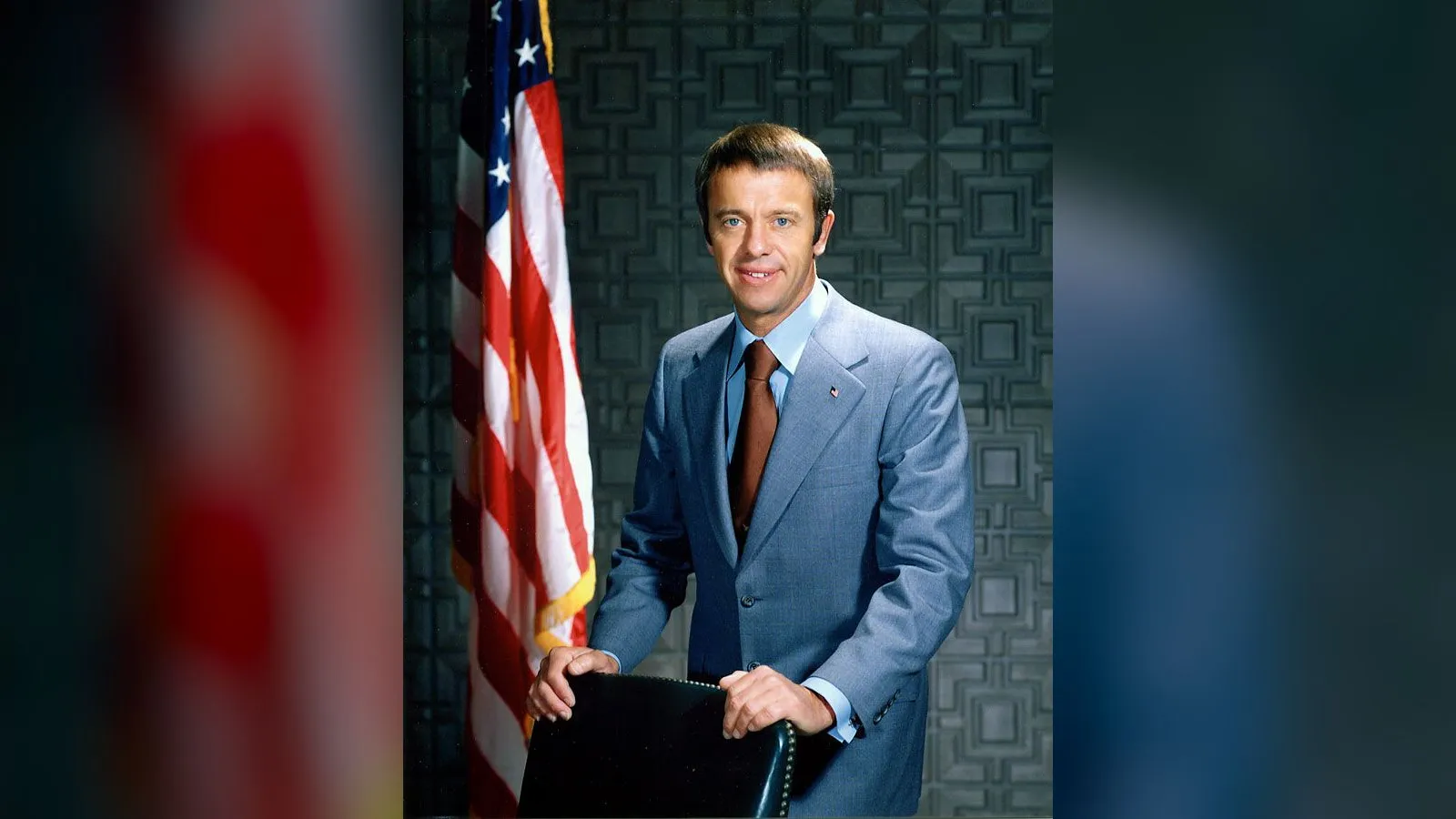

Alan Shepard (1923–1998)
Contents
TL;DR
- established Alan Shepard's documented Scottish ancestry traces, through the Shepard paternal line, to emigrants from Berneray, an island in the Outer Hebrides, a specific connection sourced to the Scottish Gaelic heritage archive Tobar an Dualchais — this article names this real place and source directly, rather than a vague, unsupported claim of general Scottish heritage, though the exact date of the family's emigration from Berneray is not specified in the sources consulted.
- established On 5 May 1961, Shepard piloted Freedom 7 on a 15-minute suborbital flight, becoming the first American in space, a specific, documented milestone this article states directly, distinct from being the first person to orbit the Earth, an achievement that belonged to John Glenn roughly ten months later.
- established In late 1963, Shepard was grounded from flight status after developing Ménière's disease, a severe inner-ear condition causing dizziness and nausea, and only regained clearance in May 1969 following a 1968 surgical procedure — this article names this real, documented medical setback and its multi-year resolution directly, rather than presenting Shepard's path from Freedom 7 to Apollo 14 as uninterrupted.
- established Commanding Apollo 14 from 31 January to 9 February 1971, Shepard became, at age 47, the fifth and oldest person to walk on the Moon and the only Mercury Seven astronaut to do so, famously striking two golf balls on the lunar surface with a makeshift club — a specific, documented achievement this article states directly.
- established After retiring from NASA in 1974 as the first astronaut promoted to rear admiral, Shepard built a substantial business career in banking and real estate through his company Seven Fourteen Enterprises, and co-founded the Astronaut Scholarship Foundation in 1984 — this article names this documented post-NASA career directly, rather than defining Shepard's life by his astronaut years alone.
Key Facts
- Born
- 18 November 1923, Derry, New Hampshire, USA
- Died
- 21 July 1998, Pebble Beach, California, USA
- Category
- Science, Technology & Invention
- Scottish ancestry
- Documented, paternal line to Berneray, Outer Hebrides (via Tobar an Dualchais archive)
- Key achievement
- First American in space (Freedom 7, 5 May 1961)
- Other key achievement
- Fifth person, and oldest, to walk on the Moon (Apollo 14, 1971)
- Medical setback
- Ménière's disease grounding, 1963–1969
Scottish Impact Index (SI Score)
- Global Influence
- 9/10
- Enduring Connection
- 5/10
- Material Contribution
- 9/10
- Scottish Diaspora Distinctiveness
- 6/10
- Diaspora Legacy
- 8/10
- Recognition
- 9/10
46/60
Ranked =38th of 45 in Diaspora
A Note on Claims and Evidence
Family background and the Berneray, Outer Hebrides ancestral connection are drawn from Wikipedia's published biographical record, which cites the Tobar an Dualchais Scottish Gaelic heritage archive as its source; this article states the connection with the specificity the record supports, while noting that the exact date of the family's emigration from Scotland is not given in the sources consulted. Education, military service, the Mercury program and Freedom 7 flight, the Ménière's disease grounding and recovery, Apollo 14 and the lunar golf shot, and later business career are drawn from Wikipedia's published research record.
Timeline
Alan Bartlett Shepard Jr. is born in Derry, New Hampshire; his documented ancestry includes, through the Shepard paternal line, descent from Scottish emigrants from Berneray in the Outer Hebrides.
Shepard attends Pinkerton Academy in Derry, then the United States Naval Academy at Annapolis, graduating in 1944.
Shepard serves aboard the destroyer USS Cogswell in the Pacific, participating in combat operations including the Battle of Okinawa.
Shepard becomes a naval aviator.
Shepard becomes a test pilot, eventually logging over 3,600 flight hours before joining NASA.
Shepard is selected as one of NASA's "Mercury Seven."
Shepard pilots Freedom 7 on a 15-minute suborbital flight reaching 101.2 nautical miles in altitude, becoming the first American in space.
Shepard develops Ménière's disease, a severe inner-ear condition, and is grounded from flight status.
Dr. William F. House performs surgery on Shepard's inner ear to drain excess fluid.
Shepard regains flight clearance.
Shepard commands Apollo 14, becoming, at age 47, the fifth and oldest person to walk on the Moon, and striking two golf balls on the lunar surface with a makeshift six-iron.
Shepard is promoted to rear admiral, the first astronaut to reach that rank, and serves as Chief of the Astronaut Office.
Shepard retires from NASA and builds a business career in banking and real estate through Seven Fourteen Enterprises.
Shepard co-founds the Astronaut Scholarship Foundation (originally the Mercury Seven Foundation).
Shepard dies from complications of chronic lymphocytic leukemia in Pebble Beach, California, at age 74; his widow, Louise, dies 35 days later.
Details
A specific, named ancestral place stated with real documentation
This article names Alan Shepard's Scottish ancestry with real specificity rather than a vague claim of general heritage: the documented connection, through the Shepard paternal line, traces to emigrants from Berneray, an island in the Outer Hebrides, sourced to the Tobar an Dualchais Scottish Gaelic heritage archive. This article states this named place because it represents the genuine documented record, while also noting honestly that the exact emigration date is not specified in the sources consulted, rather than inventing a precision the record does not support.
A historic first distinguished from a later, different milestone
This article states precisely what Shepard's Freedom 7 flight achieved rather than letting it blur with John Glenn's later achievement: Shepard became the first American in space on 5 May 1961, a 15-minute suborbital flight, while Glenn became the first American to orbit the Earth roughly ten months later. This article names this distinction because conflating "first American in space" with "first American to orbit" would misstate the real, documented sequence of Mercury program milestones.
A real medical setback named rather than smoothed over
This article states directly that Shepard's path from Freedom 7 to Apollo 14 was interrupted by a genuine, multi-year medical crisis: Ménière's disease grounded him in late 1963, and he did not regain flight clearance until May 1969, following 1968 surgery. This article names this documented setback because omitting it would present an inaccurately uninterrupted account of Shepard's astronaut career.
A substantial post-NASA career named beyond the Moon landing
This article names Shepard's documented business career and philanthropic work directly, rather than letting his legacy end with Apollo 14: his banking and real estate company, Seven Fourteen Enterprises, and his 1984 co-founding of the Astronaut Scholarship Foundation. This article states this because it represents a real, substantial chapter of Shepard's life distinct from his NASA years.
Did You Know?
- Alan Shepard's documented Scottish ancestry traces, on his father's side, to emigrants from Berneray, an island in the Outer Hebrides.
- Shepard became the first American in space on 5 May 1961 — but it was John Glenn, roughly ten months later, who became the first American to orbit the Earth.
- A severe inner-ear condition, Ménière's disease, grounded Shepard from flight status for nearly six years, from 1963 to 1969.
- At age 47, Shepard became the fifth and oldest person to walk on the Moon, during the Apollo 14 mission in 1971.
- Shepard famously hit two golf balls on the lunar surface using a makeshift six-iron club head attached to a sample-collection tool.
- After retiring from NASA, Shepard became a successful businessman in banking and real estate.
- Shepard was the first astronaut ever promoted to the rank of rear admiral.
FAQ
1Was Alan Shepard actually of Scottish descent?
Yes, documented — his paternal Shepard line traces to emigrants from Berneray in the Outer Hebrides, sourced to a Scottish Gaelic heritage archive.
2Was Alan Shepard the first person in space?
No — he was the first American in space, flying just over three weeks after Soviet cosmonaut Yuri Gagarin became the first person in space overall.
3Did Alan Shepard orbit the Earth?
No — his Freedom 7 flight was a 15-minute suborbital mission. John Glenn became the first American to orbit the Earth about ten months later.
4Why was there such a long gap between Shepard's Mercury flight and his Moon landing?
He was grounded for nearly six years, from 1963 to 1969, by Ménière's disease, a severe inner-ear condition, before recovering and commanding Apollo 14.
5Is it true Shepard played golf on the Moon?
Yes — during Apollo 14 in 1971, he struck two golf balls on the lunar surface using a makeshift club.
6What did Shepard do after leaving NASA?
He built a successful business career in banking and real estate and co-founded the Astronaut Scholarship Foundation in 1984.
7When did Alan Shepard die?
21 July 1998, in Pebble Beach, California, from complications of leukemia, at age 74.
Sources and Further Reading
Caveats: Myths and Disputed Claims
- Clarification: This article does not credit Alan Shepard as the first American to orbit the Earth; that distinct milestone belongs to John Glenn, roughly ten months after Shepard's suborbital Freedom 7 flight.
- Clarification: This article does not present the exact date of the Shepard family's emigration from Berneray, Outer Hebrides, as known; the documented source confirms the place of origin but not a specific emigration date.
Card 012 · Diaspora