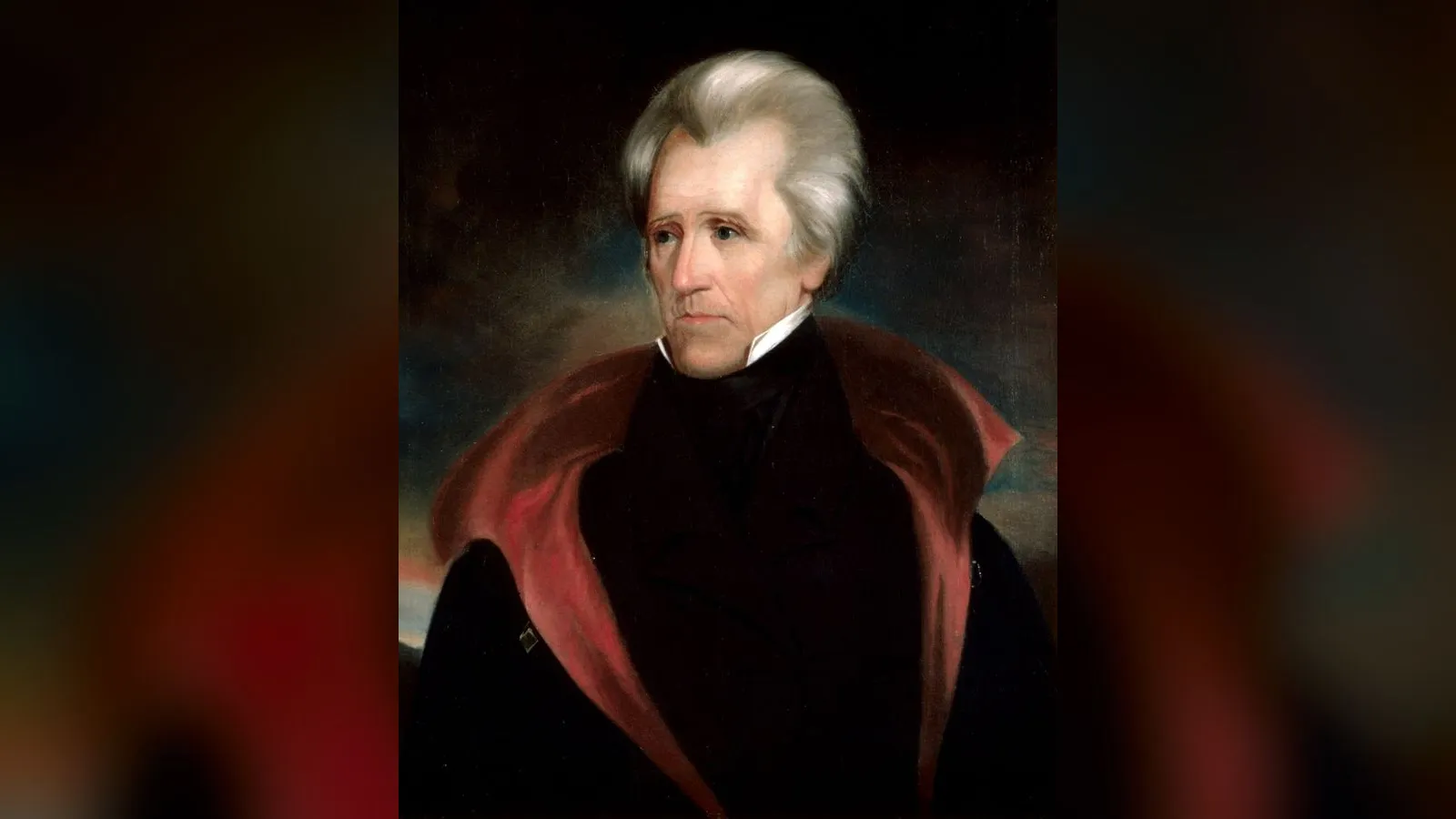

Andrew Jackson (1767–1845)
Contents
TL;DR
- established Andrew Jackson's Scots-Irish ancestry is documented with real specificity: his parents were Presbyterian colonists from Ulster, Ireland, who emigrated in 1765, and his father was born in Carrickfergus, County Antrim, around 1738 — this article states this specific, documented place of origin directly, correctly identified as Ulster-Scots rather than a vague general "Scottish" claim.
- established Jackson was orphaned by age fourteen, his father dying before his birth and his mother dying from illness contracted while nursing American prisoners during the Revolutionary War, a documented early hardship that historians connect directly to Jackson's lifelong hostility toward British authority — this article names this specific, formative adversity directly.
- established Jackson's 1815 victory at the Battle of New Orleans, in which his roughly 5,000 troops inflicted over 2,000 British casualties against 71 American losses, made him a national war hero and propelled his later political career — a specific, documented military achievement this article states directly.
- disputed Jackson's presidency is genuinely and sharply contested by historians: supporters credit him with expanding democratic participation and preserving the Union during the Nullification Crisis, while critics emphasise his authoritarian use of executive power and, above all, his signing of the 1830 Indian Removal Act, which displaced roughly 70,000 Native Americans and led to thousands of deaths in forced relocations including the Cherokee Trail of Tears — this article presents this full, unminimised record directly rather than letting Jackson's military and political achievements overshadow this documented human cost.
- established Jackson personally killed a man, Charles Dickinson, in an 1806 duel over a horse-race dispute, a specific, documented act of lethal personal violence this article states directly rather than treating Jackson's reputation for combativeness as merely rhetorical.
- shared The historian David Hackett Fischer, in Albion's Seed (1989), treats Jackson as the archetype of a "North British" borderland culture carried to the American backcountry, citing his family's standing in Ulster, his upbringing, his courtship of Rachel Donelson Robards and his political style. This is an influential but contested interpretation, not settled fact.
Key Facts
- Born
- 15 March 1767, Waxhaws region, North/South Carolina border, USA
- Died
- 8 June 1845, Nashville, Tennessee, USA
- Category
- Statesmen, Politicians & Public Figures
- Scots-Irish ancestry
- Documented, specific — father born Carrickfergus, County Antrim, Ulster, c. 1738
- Key achievement
- Victory at the Battle of New Orleans (1815)
- Presidency
- 7th US President (1829–1837)
- Most consequential and disputed policy
- Indian Removal Act (1830)
Scottish Impact Index (SI Score)
- Global Influence
- 9/10
- Enduring Connection
- 8/10
- Material Contribution
- 9/10
- Scottish Diaspora Distinctiveness
- 9/10
- Diaspora Legacy
- 9/10
- Recognition
- 10/10
54/60
Ranked =15th of 45 in Diaspora
A Note on Claims and Evidence
Family background and the specific, documented Ulster-Scots ancestral connection to Carrickfergus, County Antrim, are drawn from Wikipedia's published biographical record. Childhood hardship, military career and the Battle of New Orleans, presidency, the Indian Removal Act and its documented human cost, personal controversies, and legacy and historiographical reassessment are drawn from Wikipedia's published research record. Material on the Jackson family's standing in Ulster, Jackson's upbringing, his marriage and his political style is drawn from David Hackett Fischer's Albion's Seed (1989), which relies mainly on the biographies by James Parton (1859) and Robert Remini (1977). Fischer's dating and family details sometimes differ from other accounts, and these differences are flagged below.
Timeline
Jackson's parents, Scots-Irish Presbyterian colonists, emigrate from Ulster, Ireland, to the Waxhaws region of the Carolinas; his father had been born in Carrickfergus, County Antrim, around 1738.
Andrew Jackson is born in the Waxhaws region, shortly after his father's death.
Jackson's mother dies from an illness contracted while nursing American prisoners of war, orphaning Jackson at age fourteen and shaping his lifelong hostility toward British authority.
Jackson collects an inheritance from his grandfather Hugh Jackson in Ireland, which Fischer puts at three or four hundred pounds sterling.
Jackson marries Rachel Donelson Robards before her divorce from Lewis Robards is complete; the couple marry again in January 1794 once it is final.
Jackson kills Charles Dickinson in a duel following a dispute over a horse race.
Jackson commands roughly 5,000 troops to a decisive victory at the Battle of New Orleans against a British force of about 10,000, inflicting over 2,000 British casualties against 71 American losses, and earning the Congressional Gold Medal.
Jackson is elected the seventh president of the United States.
Jackson's administration introduces the spoils system, replacing roughly ten percent of federal employees with political loyalists in his first year; the "Petticoat affair" begins consuming his cabinet over the social ostracism of Margaret Eaton.
Jackson signs the Indian Removal Act, authorising the forced relocation of Native American nations from the southeastern United States.
The resulting forced relocations, including the Cherokee Trail of Tears, displace roughly 70,000 Native Americans and cause thousands of deaths from disease and harsh conditions.
Jackson confronts South Carolina during the Nullification Crisis, asserting federal authority over the state's attempt to nullify federal tariff law.
Jackson's administration pays off the entire national debt, a historically unique achievement.
Jackson serves two terms as president.
Jackson dies at the Hermitage, his Tennessee estate, at age 78.
Details
A documented Ulster-Scots origin stated with real precision
This article names Andrew Jackson's ancestry with real specificity rather than a vague "Scottish" claim: his parents were Presbyterian colonists who emigrated from Ulster, Ireland, in 1765, and his father was born specifically in Carrickfergus, County Antrim, around 1738. This article states this precise, documented Scots-Irish origin because it reflects the real, specific record, distinct from the direct-Scotland ancestry claimed by other figures in this series.
Fischer's "border chieftain": the Albion's Seed reading of Jackson
shared The historian David Hackett Fischer, in Albion's Seed (1989), argues that Jackson did not come from poor or humble people. He records that the grandfather, Hugh Jackson, described himself as a "weaver and merchant of Carrickfergus" and left the future president a legacy later reckoned at three or four hundred pounds sterling. In Fischer's account the father held a large property near Castlereagh, in County Down, and led a whole party of emigrants to America in 1765. Fischer is not consistent on the detail: elsewhere he calls Hugh a weaver of Castlereagh, and he gives the father's dates as 1730–1767, against the more usual birth date of about 1738.
shared Fischer uses the family to illustrate a naming custom he finds on both sides of the Irish Sea: eldest sons named after the paternal grandfather, later sons after the father. The Jacksons fit it. The eldest son was Hugh, after the grandfather, and the future president, born after his father's death, was named Andrew. Fischer calls him the second son; he was in fact the third, after Hugh and Robert.
shared On upbringing, Fischer argues that Jackson's mother raised him on old tales of courage and of oppression by landlords in Ireland, and that the games of his boyhood were wrestling, running and fighting. A schoolfellow remembered, as quoted by Fischer: "I could throw him three times out of four, but he would never stay throwed." Fischer also repeats the advice his mother is said to have given him: never lie, never take what is not yours, and never sue for slander or assault, but "settle them cases yourself". That saying comes from later recollection and should be read as traditional.
shared Fischer reads Jackson's marriage to Rachel Donelson Robards as an example of what he calls "voluntary abduction", an old borderland practice in which a woman left with a man without her family's consent. Rachel was then married to Lewis Robards, whom Jackson threatened. Fischer, following Jackson's biographer Robert Remini, stresses that the backcountry community did not condemn the couple at the time; the marriage only became a scandal in the 1828 campaign. The "abduction" label is Fischer's interpretation, not a description used by anyone at the time.
shared On temperament, Fischer quotes James Parton, Jackson's nineteenth-century biographer, who called Jackson's anger "a Scotch-Irish anger. It was fierce, but never had any ill effect upon his purposes." A friend of forty years said that no man knew better "when to get into a passion and when not". Fischer presents this controlled anger as a borderland style of leadership. He also cites Parton's eyewitness account of a night-time stable fire at Jonesborough, Tennessee, on a court day, when Jackson took command of a bucket chain and knocked down a drunk who kept giving contrary orders. Fischer dates the episode to the late eighteenth century, although the eyewitness already calls him "General Jackson".
shared Fischer adds, on Remini's authority, that Jackson admired the Scottish chieftains and required his wards to read their history. He does not name the book.
shared These are illustrations of an argument, not proof of it. Fischer's "borderland" thesis has been criticised for treating Lowland Scots, Ulster Presbyterians and English borderers as one culture, and for leaning on English Cumbrian evidence and hostile observers. Many of the traits he finds in Jackson could equally be explained by frontier conditions, by war or by Jackson's own personality.
Severe childhood orphanhood named as a formative, documented hardship
This article states Jackson's early life plainly: his father's death before his birth, and his mother's death from illness contracted nursing American prisoners during the Revolutionary War, leaving him orphaned at fourteen. This article names this specific hardship directly because historians connect it to Jackson's documented, lifelong hostility toward British authority, a real causal thread rather than an incidental biographical detail.
A full, unminimised accounting of the Indian Removal Act's human cost
This article states the documented human consequences of the 1830 Indian Removal Act directly and in full, rather than treating it as a minor or merely controversial policy footnote: roughly 70,000 Native Americans were displaced, and the resulting forced relocations, including the Cherokee Trail of Tears, caused thousands of documented deaths from disease and harsh conditions. This article names this consequence with its real, documented scale because minimising it would misrepresent the genuine, serious historical record central to any honest account of Jackson's presidency.
A genuinely contested historical reputation presented from multiple sides
This article states directly that Jackson's presidency remains sharply disputed among historians, rather than resolving the dispute in either direction: supporters emphasise his expansion of democratic participation and his defence of federal authority during the Nullification Crisis, while critics emphasise his authoritarian tendencies and the human cost of his Native American policies. This article presents both documented positions because Jackson's historical reputation is a genuinely contested question, not a settled one.
Did You Know?
- Andrew Jackson's father was documented as having been born specifically in Carrickfergus, County Antrim, in Ulster, Ireland, before the family emigrated in 1765.
- Jackson was orphaned by age fourteen after his mother died nursing American prisoners of war during the Revolutionary War.
- At the 1815 Battle of New Orleans, Jackson's troops inflicted over 2,000 British casualties while suffering only 71 American losses.
- Jackson personally killed a man, Charles Dickinson, in an 1806 duel over a dispute involving a horse race.
- As president, Jackson signed the 1830 Indian Removal Act, which led to the forced relocation and deaths of thousands of Native Americans, including the Cherokee Trail of Tears.
- Jackson's administration was the only one in US history to pay off the entire national debt, in 1835.
- Jackson's standing among historians has declined significantly since the late twentieth century, as his Native American removal policies have received greater scholarly scrutiny.
- Jackson's eldest brother was named Hugh, after their grandfather in Ireland; Andrew, the youngest, was named after the father he never knew.
- His biographer James Parton described Jackson's temper as "a Scotch-Irish anger", fierce but always serving his purposes.
- Jackson's Tennessee home was called the Hermitage, and Fischer reads the name as typical of a backcountry taste for living well apart from neighbours.
FAQ
1Was Andrew Jackson actually of Scottish descent?
Specifically Scots-Irish — his parents were Ulster Presbyterian colonists, and his father was documented as born in Carrickfergus, County Antrim, around 1738.
2Did Andrew Jackson have a difficult childhood?
Yes — his father died before his birth, and his mother died from illness contracted nursing American prisoners during the Revolutionary War, orphaning him at fourteen.
3What is Andrew Jackson best known for militarily?
His decisive 1815 victory at the Battle of New Orleans against a much larger British force.
4What was the Indian Removal Act, and what did it actually do?
A law Jackson signed in 1830 authorising the forced relocation of Native American nations; it led to the displacement of roughly 70,000 people and thousands of deaths, including during the Cherokee Trail of Tears.
5Did Andrew Jackson really kill someone in a duel?
Yes — he killed Charles Dickinson in 1806 following a dispute over a horse race.
6Is Andrew Jackson's presidency viewed positively by historians today?
It's genuinely disputed — some credit his expansion of democracy and defence of federal authority, while others emphasise his authoritarian tendencies and the human cost of his Native American removal policies; his historical ranking has declined in recent decades.
7When did Andrew Jackson die?
8 June 1845, at his Tennessee estate, the Hermitage, at age 78.
8Was Jackson's family poor?
Not according to David Hackett Fischer, who argues that the family had real standing in Ulster: the grandfather was a weaver and merchant who left Jackson a legacy of several hundred pounds. Campaign biographies stressed humble origins; Fischer's reading is that the Jacksons emigrated to keep their status, not to escape poverty.
9What does Albion's Seed say about Jackson?
Fischer presents him as the archetypal backcountry leader, shaped by a culture carried from the borders of Scotland, England and Ulster: proud, quick to fight, loyal to kin and impatient of institutions. It is an influential argument, but historians have challenged how far it can be pinned on a single "borderland" inheritance.
10Did Jackson really "abduct" his wife?
No in any criminal sense. Rachel Donelson Robards left an unhappy marriage to live with Jackson, apparently of her own will. Fischer calls this a "voluntary abduction", by analogy with old borderland custom; that is his label, not a contemporary charge.
Sources and Further Reading
Primary/Institutional
Scholarly/Critical
- Trail of Tears — National Park Service
- Andrew Jackson: Domestic Affairs — Miller Center
- David Hackett Fischer, Albion's Seed: Four British Folkways in America (Oxford University Press, 1989)
General
Caveats: Myths and Disputed Claims
- Content note: This article states the full, documented human cost of the Indian Removal Act directly, including the roughly 70,000 people displaced and the thousands of deaths during forced relocations such as the Cherokee Trail of Tears, consistent with this series' standard of presenting uncomfortable findings with full weight rather than minimising them.
- disputed This article does not resolve Jackson's genuinely contested historical reputation in either direction; it presents both the case made by his supporters and the case made by his critics, as scholarly assessment of his presidency remains actively divided.
- Do not present Fischer's borderland thesis as settled; it is an interpretation, and critics argue it overstates continuity between the British borders and the American backcountry.
- Do not call Jackson the second son, as Albion's Seed does; he was the third, after Hugh and Robert.
- Do not treat the mother's "settle them cases yourself" advice as a verbatim record; it survives through later recollection.
Card 017 · Diaspora