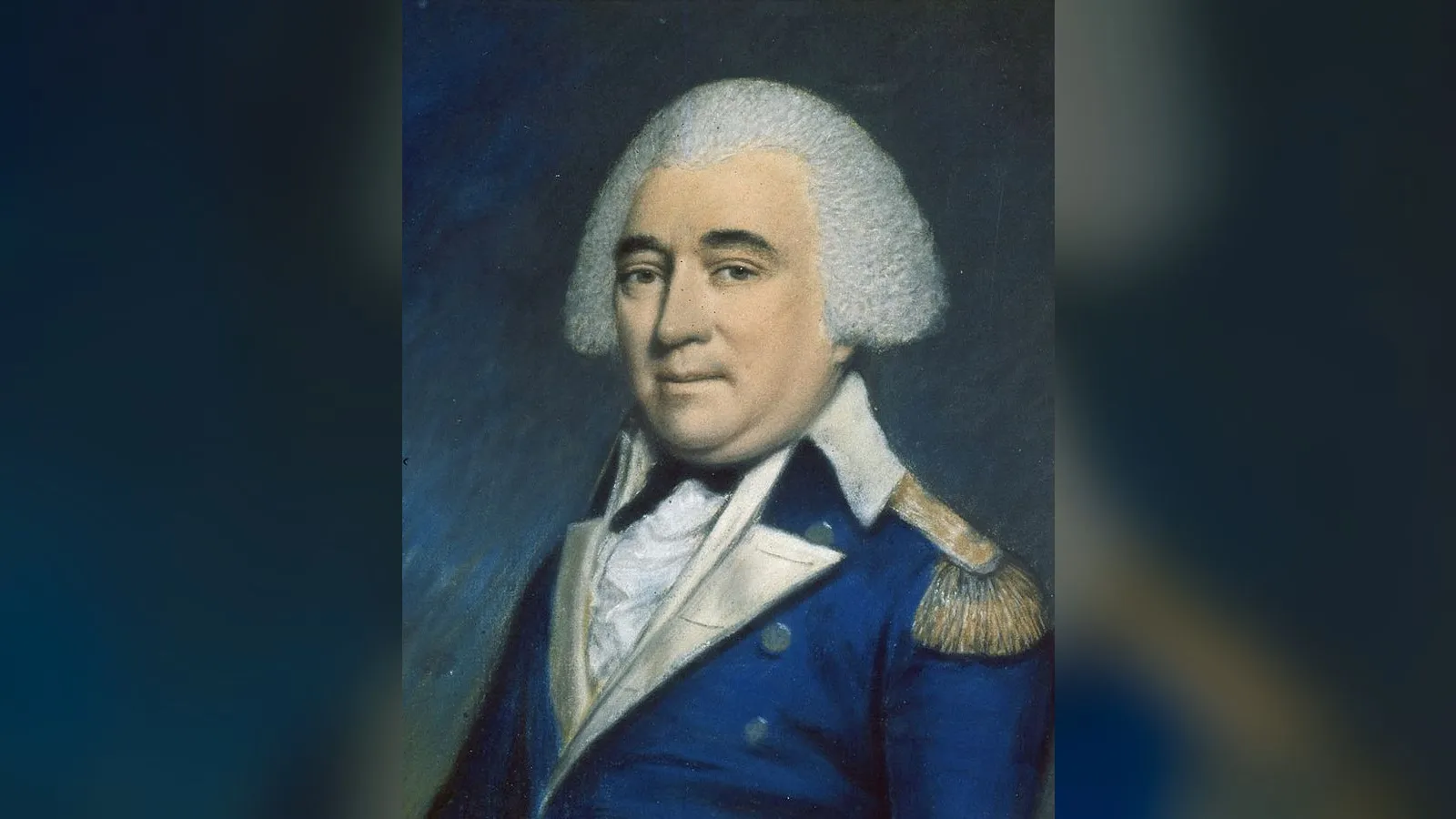

Anthony Wayne (1745–1796)
Contents
Legend/Myth
- Anthony Wayne's ancestry is documented as Irish Protestant, but no source consulted specifically confirms it as Scottish or Scots-Irish rather than English or another Protestant settler background. His great-grandfather, Captain Anthony Wayne, was a veteran of the 1690 Battle of the Boyne who later emigrated with his family to Pennsylvania, settling in Easttown Township; his son (Anthony's grandfather) briefly remained in England to complete his education before rejoining the family. No source consulted names a specific Irish county or town of origin, and Ireland's Protestant settler population of that era, particularly those associated with the Williamite cause at the Boyne, included English, Scottish, and other backgrounds, not exclusively Scots-Irish ones. This article states this honestly unresolved ancestral question directly rather than assuming "Irish Protestant" automatically means Scottish, and includes Wayne on the strength of his substantial military career rather than a confirmed Scottish ancestral claim.
TL;DR
- established Wayne earned his nickname "Mad Anthony" through his aggressive military tactics during the American Revolution, most notably his 1779 nighttime bayonet attack at the Battle of Stony Point, a specific, documented action this article names directly.
- established Wayne's 1794 victory at the Battle of Fallen Timbers ended the Northwest Indian War and led to the Treaty of Greenville, a specific, documented military and diplomatic achievement this article states directly.
- disputed Modern scholarship describes Wayne's conduct during the Northwest Indian War as contributing to ethnic cleansing and the displacement of Native American peoples, with the Miami tribe characterising him as possessing "the cunning" of a predator stalking its prey — this article states this full, documented assessment directly rather than presenting Wayne's frontier campaigns as uncomplicated military successes.
- disputed Wayne personally enslaved at least 47 people on Georgia plantations, a specific, documented fact this article names directly as a central complication of his legacy.
- established Wayne suffered a significant defeat at the 1777 Battle of Paoli before his later successes, a specific, documented setback this article states directly rather than presenting his military career as a record of uninterrupted triumph.
Key Facts
- Born
- 1 January 1745, Easttown Township, Pennsylvania, USA
- Died
- 15 December 1796, Presque Isle, Pennsylvania, USA
- Category
- Founding Figures & Revolutionary Era
- Documented ancestry
- Irish Protestant, general — specifically Scottish/Scots-Irish origin unconfirmed
- Key achievement
- 1779 Battle of Stony Point; 1794 Battle of Fallen Timbers; Treaty of Greenville
- Documented controversy
- Enslaved at least 47 people; conduct during Northwest Indian War described as ethnic cleansing
- Nickname
- "Mad Anthony," for his aggressive military tactics
Scottish Impact Index (SI Score)
- Global Influence
- 8/10
- Enduring Connection
- 8/10
- Material Contribution
- 8/10
- Scottish Diaspora Distinctiveness
- 9/10
- Diaspora Legacy
- 9/10
- Recognition
- 8/10
50/60
Ranked =27th of 45 in Diaspora
A Note on Claims and Evidence
Family background is drawn from Wikipedia's published biographical record, which describes Anthony Wayne's ancestry as Irish Protestant and documents his great-grandfather, Captain Anthony Wayne, as a veteran of the 1690 Battle of the Boyne who emigrated to Pennsylvania, without naming a specific Irish county or town of origin or specifically identifying the family as Scottish or Scots-Irish rather than another Protestant settler background; this article states that ambiguity directly rather than assuming "Irish Protestant" automatically means Scottish. Early life, Revolutionary War service, the Northwest Indian War and Battle of Fallen Timbers, his documented record on slavery and on Native American displacement, death, and legacy are drawn from Wikipedia's published research record.
Timeline
Captain Anthony Wayne, Anthony Wayne's great-grandfather, fights at the Battle of the Boyne in Ireland as a Williamite veteran.
Captain Anthony Wayne emigrates with his family to the Province of Pennsylvania, settling on a 1,600-acre parcel in Easttown Township.
Isaac Wayne, Anthony's father, is born; he briefly remains in England to complete his education before rejoining the family in Pennsylvania.
Anthony Wayne is born in Easttown Township, Pennsylvania, to Isaac Wayne and his wife, a family of documented but not specifically Scottish Irish Protestant ancestry.
Wayne trains as a surveyor and attends the College of Philadelphia before working in the family tannery and surveying lands.
Wayne suffers a significant defeat at the Battle of Paoli.
Wayne personally leads a nighttime bayonet attack at the Battle of Stony Point, capturing British fortifications and earning the nickname "Mad Anthony."
Wayne is promoted to brigadier general and later major general, eventually receiving a Congressional Gold Medal for his achievements.
President Washington recalls the retired Wayne to reorganize the US Army following earlier frontier defeats; Wayne commands the newly formed Legion of the United States and establishes the first formal basic training facility for army recruits at Legionville.
Wayne achieves a decisive victory at the Battle of Fallen Timbers, ending the Northwest Indian War; modern scholarship describes his broader campaign conduct as contributing to the ethnic cleansing and displacement of Native American peoples.
Wayne negotiates the Treaty of Greenville with Native American tribes.
Wayne dies from a stomach ulcer while returning to Pennsylvania.
Details
An ancestry honestly left unresolved rather than assumed
This article states directly that Anthony Wayne's documented ancestry is Irish Protestant, tracing to a great-grandfather who fought at the Battle of the Boyne, but that no source consulted specifically confirms this as Scottish or Scots-Irish rather than English or another Protestant settler background common among the Boyne's Williamite veterans. This article names this because treating "Irish Protestant" as automatically equivalent to "Scottish" would misrepresent the genuinely more ambiguous and undocumented state of the family's specific ethnic origin.
A nickname earned through specific, documented battlefield aggression
This article states directly the specific episode behind Wayne's famous nickname: his personally led, 30-minute nighttime bayonet assault at the 1779 Battle of Stony Point. This article names this because it represents the concrete, documented basis for a reputation that might otherwise read as a vague characterisation.
A frontier victory and its full, documented human cost
This article states both sides of Wayne's 1794 Northwest Indian War campaign: his decisive military victory at Fallen Timbers and the resulting Treaty of Greenville, and the documented assessment by modern historians and the Miami tribe that his broader conduct contributed to the ethnic cleansing and displacement of Native American peoples. This article names both because presenting only the military achievement would omit a serious, documented human cost central to understanding Wayne's historical legacy.
A full, unminimised accounting of Wayne's personal record on slavery
This article states directly that Wayne personally enslaved at least 47 people on Georgia plantations. This article names this because it represents a documented complication of Wayne's legacy as a celebrated military commander, consistent with this series' standard of giving uncomfortable findings full weight.
Did You Know?
- Anthony Wayne's great-grandfather fought at the 1690 Battle of the Boyne in Ireland, but no source confirms whether the family was specifically Scottish, Scots-Irish, or another Protestant background before emigrating to Pennsylvania.
- Wayne personally led a 30-minute nighttime bayonet attack at the 1779 Battle of Stony Point, earning him the nickname "Mad Anthony."
- Despite his aggressive reputation, Wayne suffered a significant defeat at the Battle of Paoli in 1777 before his later successes.
- Wayne established the first formal basic training facility for US Army recruits, at Legionville, in the 1790s.
- Wayne's 1794 victory at the Battle of Fallen Timbers ended the Northwest Indian War and led to the Treaty of Greenville.
- The Miami tribe has characterised Wayne's conduct during the Northwest Indian War as possessing "the cunning" of a predator stalking its prey.
- Wayne personally enslaved at least 47 people on Georgia plantations.
FAQ
1Was Anthony Wayne actually of Scottish descent?
Unconfirmed — his family is documented as Irish Protestant, with a great-grandfather who fought at the Battle of the Boyne, but no source specifically identifies the family as Scottish or Scots-Irish rather than another Protestant settler background.
2Why was Anthony Wayne called "Mad Anthony"?
For his aggressive military tactics, most famously a personally led nighttime bayonet attack at the 1779 Battle of Stony Point.
3What was Wayne's most significant later military achievement?
His 1794 victory at the Battle of Fallen Timbers, which ended the Northwest Indian War and led to the Treaty of Greenville.
4Did Anthony Wayne own enslaved people?
Yes — he personally enslaved at least 47 people on Georgia plantations.
5How do historians view Wayne's conduct toward Native Americans?
Modern scholarship describes his campaign conduct during the Northwest Indian War as contributing to ethnic cleansing and displacement, a serious complication of his military legacy.
6Did Wayne suffer any major defeats?
Yes — he suffered a significant defeat at the Battle of Paoli in 1777 before his later victories.
7When did Anthony Wayne die?
15 December 1796, from a stomach ulcer while returning to Pennsylvania.
Sources and Further Reading
Primary/Institutional
Scholarly/Critical
General
Caveats: Myths and Disputed Claims
- Myth/gap flagged: This article does not assert a specifically Scottish or Scots-Irish ancestral connection for Anthony Wayne; his documented ancestry is Irish Protestant, tracing to a Battle of the Boyne veteran, without confirmation of the specific ethnic background within Ireland's mixed Protestant settler population.
- Content note: This article states Anthony Wayne's documented personal slaveholding and the modern historical assessment of his conduct toward Native Americans directly and in full, consistent with this series' standard of giving uncomfortable findings full weight.
Card 040 · Diaspora