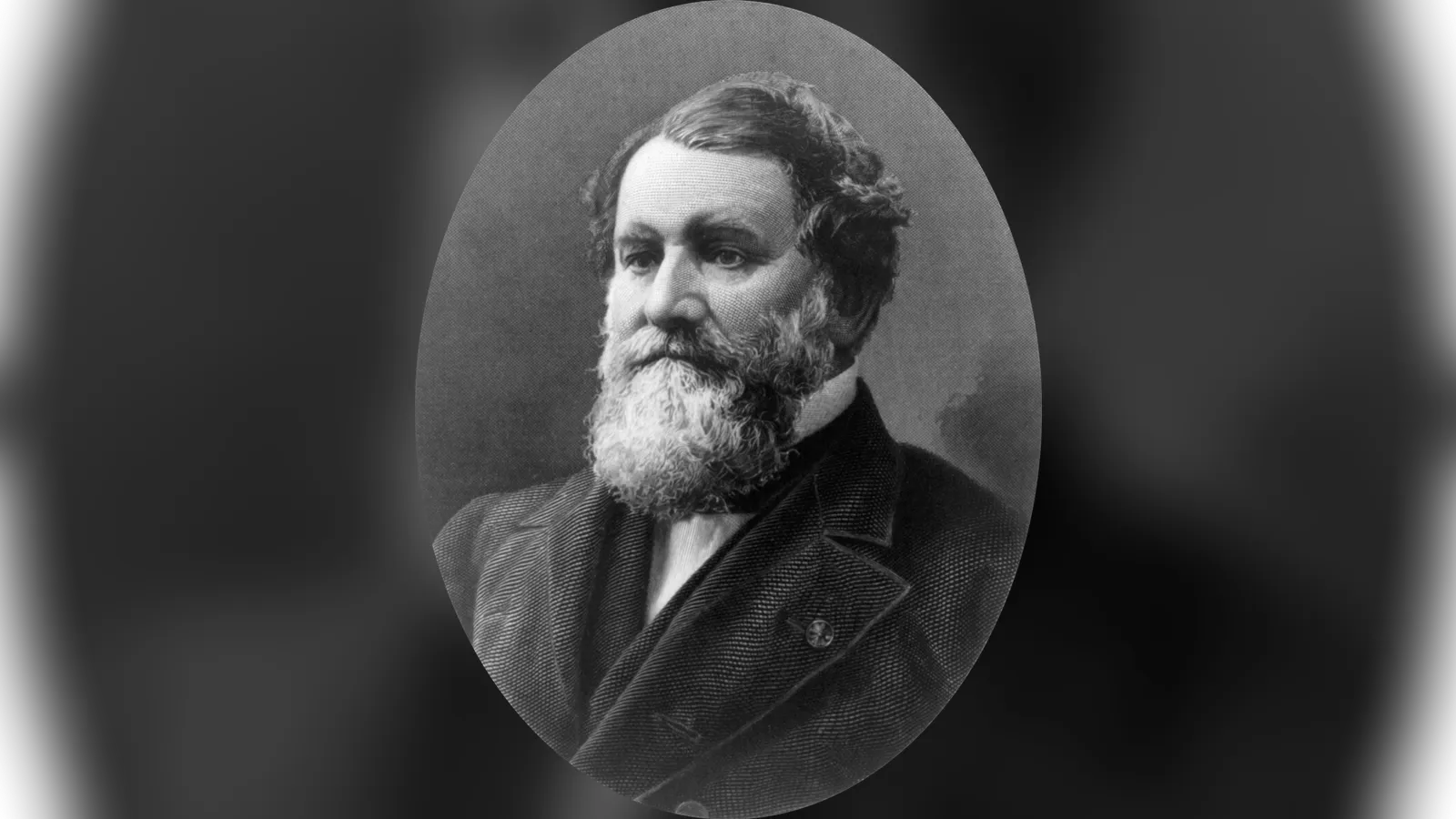

Cyrus McCormick (1809–1884)
Contents
TL;DR
- established Cyrus McCormick's documented ancestry traces to Ballygawley, County Tyrone, in Ulster, his family settling in Virginia's Shenandoah Valley, an area of documented Ulster-Scots settlement — a specific, documented ancestral origin this article states directly rather than a vague claim that his family "came from Scotland."
- disputed McCormick's claim to sole credit as inventor of the mechanical reaper is genuinely contested: he built directly on 28 years of unsuccessful experimentation by his own father, Robert McCormick Jr., competed against other working reaper designs developed independently in the 1830s, including one by Patrick Bell of Scotland, and faced ongoing patent disputes with rivals including Obed Hussey — this article presents this disputed priority directly rather than treating McCormick as the reaper's singular, uncontested inventor.
- established McCormick's development of the mechanical reaper was assisted by Jo Anderson, an enslaved African-American man held by the McCormick family, whose contribution is documented but has historically received limited formal recognition — this article names Jo Anderson directly and states the uncomfortable context of enslaved labour behind the invention's development, rather than presenting the reaper as solely the product of McCormick's own individual ingenuity.
- established McCormick's real commercial breakthrough came not from the reaper's initial 1831 demonstration or 1834 patent, both of which failed to gain traction because the machine "could not handle varying conditions," but from his documented pioneering of modern sales and marketing techniques, including an organised sales network and field support, which drove growth from seven reapers sold in 1842 to over 4,000 produced annually by 1856 — a specific, documented business achievement this article states directly rather than attributing his success to the invention alone.
- established In 1902, McCormick's son, Cyrus Jr., partnered with J.P. Morgan to merge the family's reaper business into the International Harvester Corporation, a specific, documented corporate consolidation this article names directly rather than treating the McCormick reaper business and International Harvester as the same continuous entity without explanation.
Key Facts
- Born
- 15 February 1809, Raphine, Virginia, USA
- Died
- 13 May 1884, Chicago, Illinois, USA
- Category
- Science, Technology & Invention
- Ancestral origin
- Ballygawley, County Tyrone, Ulster (Ulster-Scots)
- Key invention
- Mechanical reaper (patented 1834)
- Key uncredited contributor
- Jo Anderson (enslaved)
- Company founded
- McCormick Harvesting Machine Company → International Harvester (1902)
Scottish Impact Index (SI Score)
- Global Influence
- 9/10
- Enduring Connection
- 6/10
- Material Contribution
- 10/10
- Scottish Diaspora Distinctiveness
- 8/10
- Diaspora Legacy
- 9/10
- Recognition
- 9/10
51/60
Ranked =24th of 45 in Diaspora
A Note on Claims and Evidence
Ulster-Scots ancestral origin is drawn from the Ulster-Scots Agency's published biographical assessment, which identifies Ballygawley, County Tyrone, as the family's documented point of origin. Family background, the reaper's development and disputed invention credit, Jo Anderson's documented but under-recognised contribution, the business's commercial development, and the International Harvester merger are drawn from Wikipedia's published research record.
Timeline
The McCormick family's documented ancestral origin lies in Ballygawley, County Tyrone, Ulster; the family subsequently settles in Virginia's Shenandoah Valley, itself a documented area of Ulster-Scots settlement in colonial America.
Cyrus Hall McCormick is born in Raphine, Virginia, the eldest of eight children of Robert McCormick Jr. and Mary Ann "Polly" Hall.
Robert McCormick Jr. spends 28 years experimenting with a horse-drawn mechanical reaper, never producing a reliable working version, laying the groundwork his son will build on.
Cyrus McCormick conducts the first public demonstration of his mechanical reaper at Steeles Tavern, Virginia.
McCormick receives a patent for his reaper, though the machine initially fails to gain commercial traction because it cannot handle varying field conditions; around this period, Patrick Bell of Scotland and others independently develop competing working reaper designs.
Sales begin to grow, from seven reapers in 1842 to 29 in 1843 and 50 in 1844, as McCormick develops an organised sales network and field support system; Jo Anderson, an enslaved man held by the McCormick family, assists in the reaper's ongoing development during this period.
McCormick and his brother Leander relocate the business to Chicago, chosen for its water transportation links via the Great Lakes and western railroad connections.
The Chicago factory is producing more than 4,000 reapers annually.
McCormick is elected a corresponding member of the French Academy of Sciences, honoured as having "done more for the cause of agriculture than any other living man," and is made an Officier de la Légion d'honneur.
McCormick dies in Chicago following a stroke; his widow, Nettie, continues his philanthropic work, eventually donating approximately $8 million to religious and educational causes.
McCormick's son, Cyrus Jr., partners with J.P. Morgan to merge the family business into the International Harvester Corporation.
Details
An ancestral origin named with its real documented specificity
This article names Cyrus McCormick's ancestry with real specificity rather than a vague claim that his family "came from Scotland": the documented origin is Ballygawley, County Tyrone, in Ulster, with the family subsequently settling in Virginia's Shenandoah Valley, itself a documented area of Ulster-Scots settlement. This article states this specific place because it represents the real, documented genealogical record, not a generalised diaspora claim.
A disputed invention credit presented without resolving it
This article presents McCormick's claim to sole credit for the mechanical reaper as genuinely contested rather than settled: he built directly on his own father's 28 years of unsuccessful experimentation, competed against other independently developed working designs including one by Patrick Bell of Scotland, and faced ongoing patent disputes with rivals including Obed Hussey. This article states this disputed priority because treating McCormick as the reaper's singular inventor would misrepresent a genuinely contested and documented history of parallel invention.
An enslaved contributor named directly, not omitted
This article names Jo Anderson, an enslaved African-American man held by the McCormick family, as a documented contributor to the reaper's development, rather than presenting the invention as solely the product of McCormick's individual ingenuity. This article states this uncomfortable context plainly because omitting the enslaved labour behind the reaper's development would present an incomplete and misleadingly clean account of its real documented history.
A commercial success attributed to its real, documented cause
This article names the real reason behind McCormick's commercial breakthrough rather than crediting his success to the invention alone: his initial reaper failed to gain traction due to real mechanical limitations, and his growth instead came from pioneering organised sales networks and field support, driving output from seven reapers in 1842 to over 4,000 annually by 1856. This article states this specific business mechanism because it clarifies that McCormick's documented legacy rests as much on marketing innovation as on the reaper's original mechanical design.
A corporate transition named rather than assumed continuous
This article states directly that International Harvester was formed in 1902 through a specific merger, led by McCormick's son Cyrus Jr. in partnership with J.P. Morgan, rather than treating the McCormick reaper business and International Harvester as the same uninterrupted entity. This article names this transition because it represents a real, documented corporate event distinct from Cyrus McCormick's own lifetime achievements.
Did You Know?
- Cyrus McCormick's documented ancestry traces to Ballygawley, County Tyrone, in Ulster, part of the historic Ulster-Scots settlement of Virginia's Shenandoah Valley.
- His father spent 28 years unsuccessfully trying to build a working mechanical reaper before Cyrus succeeded.
- McCormick's claim to sole invention credit is genuinely disputed — a Scottish inventor, Patrick Bell, independently developed a competing working reaper around the same time.
- An enslaved man, Jo Anderson, is documented as having assisted in developing the reaper, though his contribution has historically received limited recognition.
- McCormick's real commercial breakthrough came from pioneering organised sales networks and farmer support, not the original 1834 patent alone.
- His son later partnered with J.P. Morgan to form the International Harvester Corporation in 1902.
- The French Academy of Sciences honoured McCormick in 1878 as having "done more for the cause of agriculture than any other living man."
FAQ
1Was Cyrus McCormick really the sole inventor of the mechanical reaper?
That claim is genuinely disputed — he built on his father's decades of work, competed against other independently developed reapers including one by Scotland's Patrick Bell, and faced patent challenges from rivals.
2Who was Jo Anderson?
An enslaved African-American man held by the McCormick family, documented as having assisted in developing the mechanical reaper, though his contribution has historically received limited formal recognition.
3Where did Cyrus McCormick's family actually come from?
Ballygawley, County Tyrone, in Ulster, settling later in Virginia's Shenandoah Valley, an area of documented Ulster-Scots settlement.
4Why did McCormick's reaper succeed commercially when his early demonstrations failed?
Mainly because he pioneered organised sales networks and farmer support, not because of the original invention alone.
5Is McCormick's company still around today?
Not under his name — his son merged the business into the International Harvester Corporation in 1902, partnering with J.P. Morgan.
6When did Cyrus McCormick die?
13 May 1884, in Chicago, following a stroke.
7What recognition did McCormick receive in his lifetime?
Election to the French Academy of Sciences in 1878 and the French honour Officier de la Légion d'honneur.
Sources and Further Reading
Primary/Institutional
Scholarly/Critical
- Jo Anderson: The Mysterious Slave of Cyrus McCormick — Mysterious Chicago
- McCormick reaper — Wikipedia
General
Caveats: Myths and Disputed Claims
- disputed This article does not present Cyrus McCormick as the mechanical reaper's sole or uncontested inventor; he built on his father's work, competed against other independent designs including a Scottish inventor's, and faced ongoing patent disputes.
- Content note: This article names Jo Anderson, an enslaved man, as a documented contributor to the reaper's development, consistent with this series' standard of presenting the full, documented history behind an invention rather than an individually flattering simplification.
Card 004 · Diaspora