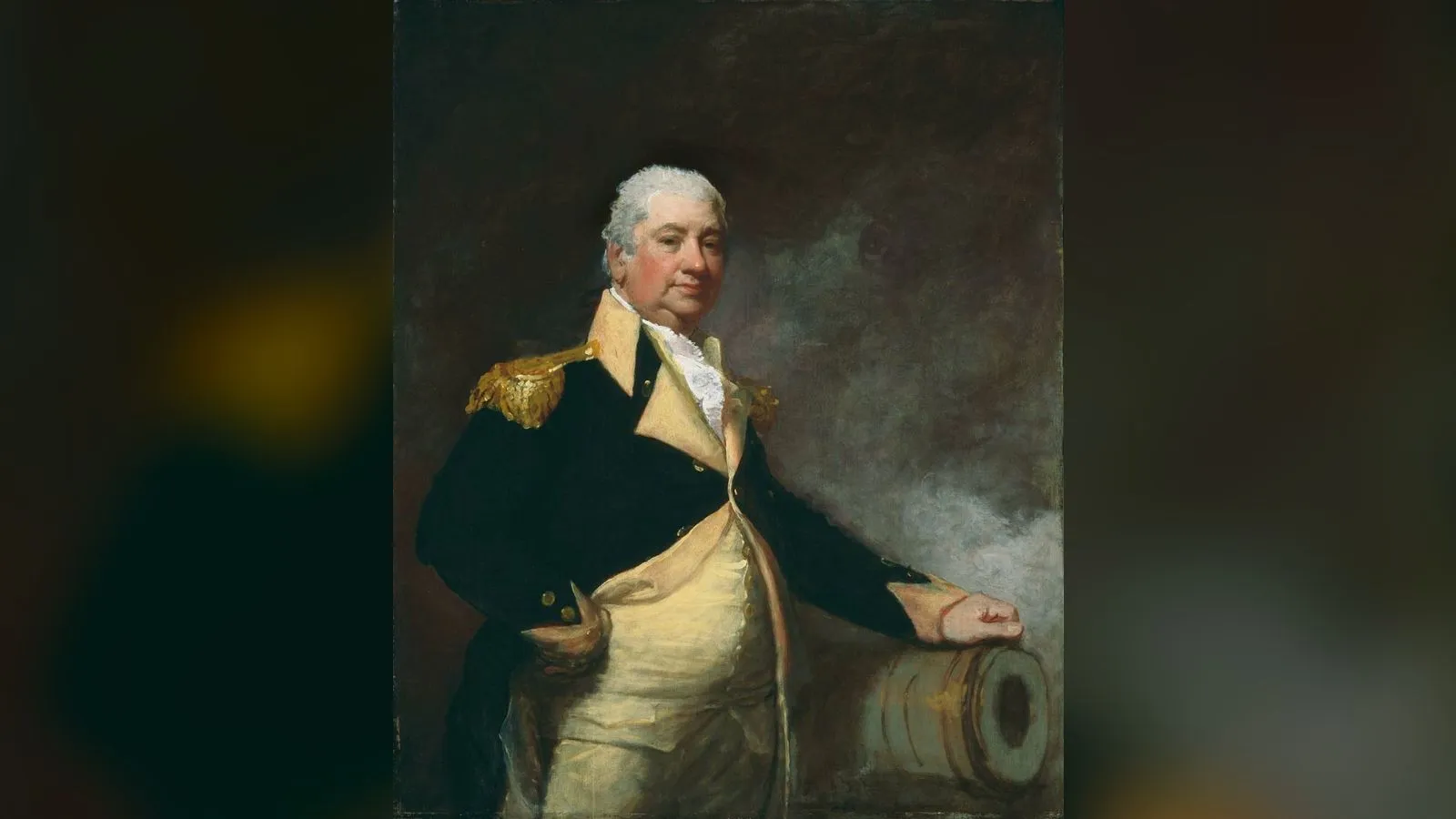

Henry Knox (1750–1806)
Contents
TL;DR
- established Henry Knox's Ulster-Scots ancestry is documented with real specificity: his parents, William Knox and Mary Campbell, emigrated from Derry (Londonderry) to Boston in 1729, a specific, named place and date this article states directly rather than a vague general claim of Scottish heritage.
- established Knox left school at age nine to support his mother after his father, a shipbuilder facing financial difficulties, abandoned the family for the West Indies, where he died in 1762 — this article names this specific, documented hardship directly rather than presenting Knox's rise as emerging from a conventional, stable childhood.
- established In the winter of 1775–1776, Knox engineered the transport of captured British cannons across 300 miles of frozen terrain from Fort Ticonderoga to Boston, an operation historians describe as "one of the most stupendous feats of logistics" of the Revolutionary War, directly forcing the British evacuation of Boston — this article states this specific, documented achievement directly.
- established Knox had no prior formal military training before the Revolutionary War, having run a Boston bookstore immediately beforehand, yet rose to become Washington's chief artillery officer and, in 1782, the Continental Army's youngest major general — this article names this specific, documented and unconventional career trajectory directly.
- established Knox served as Secretary of War both under the Articles of Confederation (1785–1789) and as the first Secretary of War under the US Constitution (1789–1794), a specific, documented continuity of federal office this article states directly rather than treating his cabinet role as beginning only with the new constitutional government.
Key Facts
- Born
- 25 July 1750, Boston, Massachusetts, USA
- Died
- 25 October 1806, Thomaston, Maine, USA
- Category
- Statesmen, Politicians & Public Figures
- Ulster-Scots ancestry
- Documented, specific — parents emigrated from Derry, 1729
- Key achievement
- "Noble Train of Artillery" — Fort Ticonderoga cannons to Boston (1775–76)
- Other key role
- First US Secretary of War (1789–1794)
- Military rank
- Major General, Continental Army's youngest (1782)
Scottish Impact Index (SI Score)
- Global Influence
- 9/10
- Enduring Connection
- 9/10
- Material Contribution
- 9/10
- Scottish Diaspora Distinctiveness
- 10/10
- Diaspora Legacy
- 10/10
- Recognition
- 8/10
55/60
Ranked =10th of 45 in Diaspora
A Note on Claims and Evidence
Family background and the specific, documented Ulster-Scots ancestral connection — his parents' emigration from Derry in 1729 — are drawn from Wikipedia's published biographical record. His bookselling career, the Noble Train of Artillery, his military leadership and promotion, his federal government service as Secretary of War under both the Articles of Confederation and the Constitution, and his death are drawn from Wikipedia's published research record.
Timeline
William Knox and Mary Campbell, Henry Knox's parents, emigrate from Derry to Boston, part of the Ulster-Scots settlement tradition.
Henry Knox is born in Boston.
Knox's father, a shipbuilder, faces financial difficulties and abandons the family for the West Indies, where he later dies in 1762; at age nine, Knox leaves school to support his mother, working as a bookstore clerk.
At eighteen, Knox opens the London Book Store in Boston, which becomes popular among British officers and Tory society.
Knox marries Lucy Flucker, daughter of wealthy Loyalists, despite her father's opposition; his bookselling business suffers after boycotts triggered by the Boston Port Bill.
Knox engineers the transport of captured British cannons 300 miles from Fort Ticonderoga to Boston over frozen terrain, a six-week operation that forces the British evacuation of Boston.
Knox serves as Washington's chief artillery officer, establishing training centres and manufacturing facilities crucial to American victory.
Knox is promoted to major general, becoming the youngest officer to hold that rank in the Continental Army.
Knox serves as Secretary of War under the Articles of Confederation.
Knox serves as the first Secretary of War under the US Constitution, managing frontier conflicts and Native American relations.
Knox dies in Thomaston, Maine, at age 56, from a fatal infection after swallowing a chicken bone.
Details
A specific, named ancestral place and date stated with precision
This article names Henry Knox's ancestry with real specificity rather than a vague general claim: his parents, William Knox and Mary Campbell, emigrated from Derry to Boston in 1729, part of the documented Ulster-Scots settlement tradition. This article states this specific place and date directly because it represents a precise, traceable connection consistent with this series' standard of naming the real level of specificity the evidence supports.
A documented childhood hardship named as the real foundation of Knox's self-made rise
This article states Knox's early family hardship directly rather than presenting his later achievements as emerging from a stable, conventional upbringing: his father's abandonment and death abroad, and Knox's own departure from school at age nine to support his mother through bookstore work. This article names this because it is the real, documented foundation of a career notable for its lack of formal preparation.
A specific logistical achievement named with its real documented scale
This article names the precise, documented scale of the Noble Train of Artillery directly rather than a vague claim of wartime contribution: 300 miles of frozen terrain, roughly six weeks, and a direct causal link to the British evacuation of Boston. This article states this because it represents one of the most striking and well-documented individual achievements of the Revolutionary War.
An unconventional military rise named without smoothing over its lack of preparation
This article states directly that Knox had no formal military training and was running a bookstore immediately before the Revolutionary War, rather than presenting his rise to major general as a natural progression from an established military career. This article names this because it reflects the real, documented and genuinely unusual nature of Knox's path to high command.
Did You Know?
- Henry Knox's parents emigrated from Derry, in Ulster, to Boston in 1729, a documented and specific point of origin.
- Knox left school at age nine to support his mother after his father abandoned the family and later died abroad.
- Before the Revolutionary War, Knox ran a Boston bookstore and had no formal military training whatsoever.
- Knox's winter 1775–1776 transport of cannons from Fort Ticonderoga to Boston, across 300 miles of frozen terrain, directly forced the British to evacuate the city.
- Knox became the Continental Army's youngest major general in 1782.
- Knox served as Secretary of War continuously across two different American governments — first under the Articles of Confederation, then under the Constitution.
- Knox died from an infection after accidentally swallowing a chicken bone.
FAQ
1Was Henry Knox actually of Scottish descent?
Yes, Ulster-Scots, documented with real specificity — his parents emigrated from Derry to Boston in 1729.
2Did Henry Knox have military training before the Revolutionary War?
No — he ran a Boston bookstore immediately beforehand and had no formal military background at all.
3What was the Noble Train of Artillery?
Knox's winter 1775–1776 operation transporting captured British cannons 300 miles from Fort Ticonderoga to Boston, which directly forced the British evacuation of the city.
4What government roles did Knox hold?
Secretary of War under both the Articles of Confederation (1785–1789) and the new US Constitution (1789–1794), making him the first Secretary of War under the Constitution.
5Why are Fort Knox and Knoxville named after him?
In recognition of his Revolutionary War service and his role as the first US Secretary of War.
6Did Henry Knox have a difficult childhood?
Yes — his father abandoned the family and later died abroad, and Knox left school at age nine to support his mother.
7How did Henry Knox die?
From an infection after accidentally swallowing a chicken bone, in 1806.
Sources and Further Reading
Caveats: Myths and Disputed Claims
- Clarification: This article does not present Henry Knox's rise to major general as a natural progression from an established military career; the documented record shows he had no formal military training and ran a bookstore immediately before the Revolutionary War.
Card 028 · Diaspora