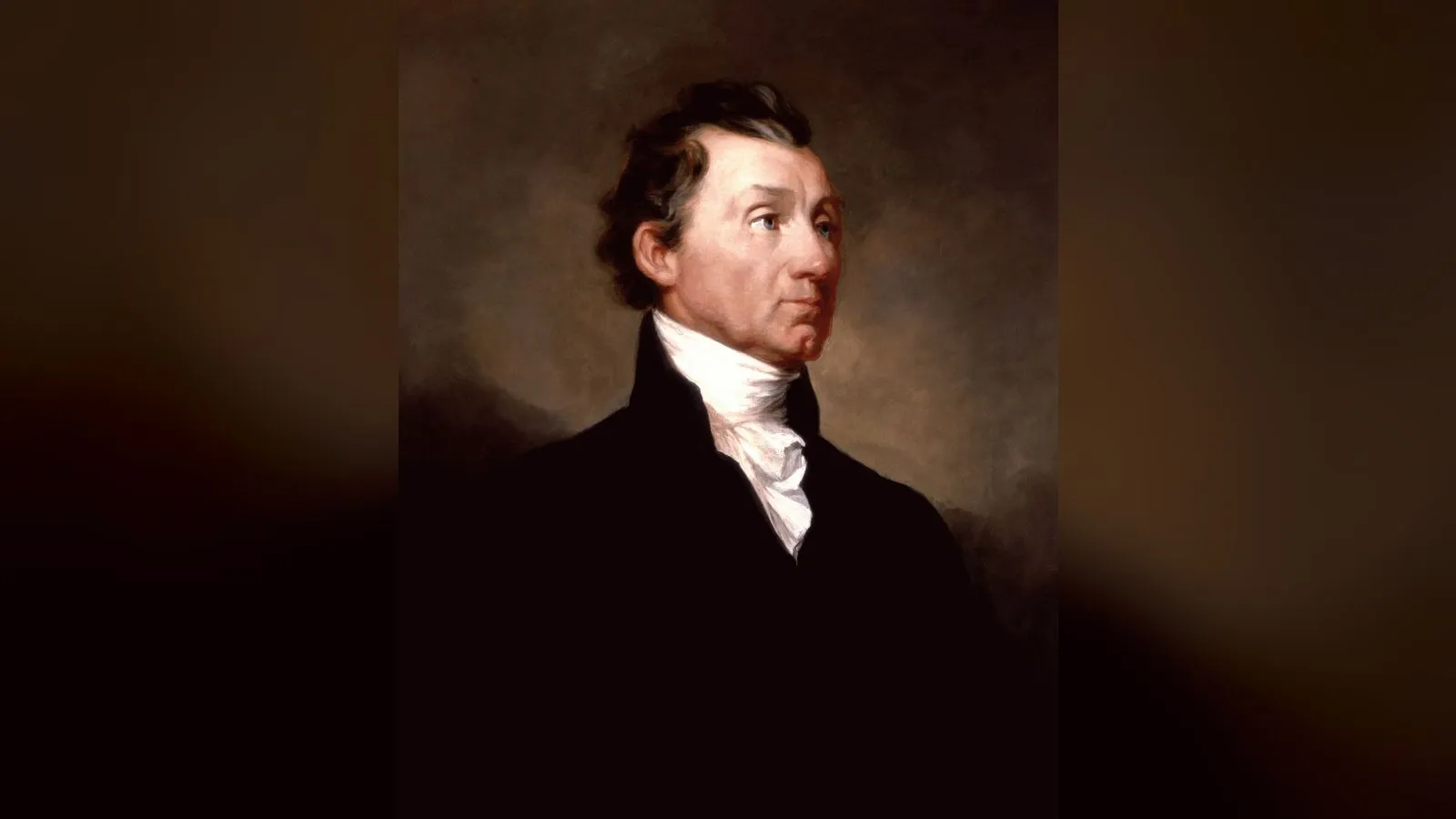

James Monroe (1758–1831)
Contents
TL;DR
- established James Monroe's Scottish ancestry is documented with real specificity: his paternal great-great-grandfather, Patrick Andrew Monroe, emigrated from Scotland in the mid-17th century as a Royalist following Charles I's defeat in the English Civil War, part of Clan Munro, and patented land in Westmoreland County, Virginia, in 1650 — this article states this named, dated, and specifically clan-affiliated connection directly.
- established Monroe was severely wounded at the 1776 Battle of Trenton, suffering a severed artery and nearly dying, before being promoted to captain for his bravery — this article names this specific, documented wartime injury directly as a formative early experience.
- established As president, Monroe articulated the Monroe Doctrine in 1823, declaring that European powers should not pursue new colonization in the Western Hemisphere and that the United States would oppose any recolonization attempt — this article states this specific, documented foreign policy declaration directly.
- disputed As Governor of Virginia in 1800, Monroe responded to Gabriel's Rebellion, a planned uprising by enslaved people, by calling out the militia; between 26 and 35 enslaved individuals were executed, though Monroe also influenced pardons for roughly 50 others following a direct plea for mercy from Thomas Jefferson — this article states this full, documented episode directly rather than presenting only one side of Monroe's response.
- disputed Monroe personally owned dozens of enslaved people throughout his life, including several brought to the White House during his presidency, and supported the American Colonization Society's project of African colonization, after which Liberia's capital, Monrovia, was named in his honor — this article names this full, documented record directly.
Key Facts
- Born
- 28 April 1758, Westmoreland County, Virginia, USA
- Died
- 4 July 1831, New York City, USA
- Category
- Founding Figures & Revolutionary Era / Statesmen
- Scottish ancestry
- Documented, specific — great-great-grandfather Patrick Andrew Monroe, Clan Munro, emigrated mid-17th century, patented Virginia land in 1650
- Key achievement
- Monroe Doctrine (1823); Adams-Onís Treaty securing Florida; Missouri Compromise
- Documented controversy
- Executed enslaved rebels after Gabriel's Rebellion; lifelong slaveholder
- Presidency
- 5th US President (1817–1825), the "Era of Good Feelings"
Scottish Impact Index (SI Score)
- Global Influence
- 10/10
- Enduring Connection
- 8/10
- Material Contribution
- 10/10
- Scottish Diaspora Distinctiveness
- 9/10
- Diaspora Legacy
- 10/10
- Recognition
- 10/10
57/60
Ranked =2nd of 45 in Diaspora
A Note on Claims and Evidence
Family background and the documented, specific Scottish ancestral connection to Clan Munro and the Monroe family's mid-17th-century emigration and 1650 Virginia land patent are drawn from Wikipedia's published biographical record. Early life, education, Revolutionary War service, political career, his presidency and the Monroe Doctrine, his documented record on slavery including Gabriel's Rebellion, later life, death, and legacy are drawn from Wikipedia's published research record.
Timeline
Patrick Andrew Monroe, James Monroe's paternal great-great-grandfather and a member of Clan Munro, emigrates from Scotland as a Royalist following Charles I's defeat in the English Civil War.
Patrick Andrew Monroe patents a large tract of land in Washington Parish, Westmoreland County, Virginia.
French Huguenot immigrants arrive in Virginia on Monroe's maternal side.
James Monroe is born in Westmoreland County, Virginia; he loses both parents by age 16, after which his maternal uncle Joseph Jones becomes his guardian.
Monroe attends the College of William & Mary, forming a lifelong friendship with future Chief Justice John Marshall, before joining the Continental Army's 3rd Virginia Regiment.
Monroe is severely wounded at the Battle of Trenton, suffering a severed artery and nearly dying, and is promoted to captain for his bravery.
Monroe studies law under Thomas Jefferson.
Monroe serves as a delegate to the Continental Congress.
Monroe is elected US Senator, becoming a Democratic-Republican leader.
Monroe serves as US minister to France, securing the release of American citizens imprisoned during the French Revolution.
Monroe serves as Governor of Virginia.
Monroe responds to Gabriel's Rebellion, a planned uprising by enslaved people, by calling out the militia; between 26 and 35 enslaved people are executed, though Monroe influences pardons for roughly 50 others after Thomas Jefferson's plea for mercy.
Monroe serves as US minister to Britain, negotiating the Monroe-Pinkney Treaty.
Monroe is appointed Secretary of State under President Madison, later also serving as Secretary of War during the War of 1812.
Monroe becomes the 5th US president, ushering in the "Era of Good Feelings."
Monroe negotiates the Rush-Bagot Treaty, demilitarizing the US-Canadian border.
Monroe secures Florida through the Adams-Onís Treaty with Spain.
Monroe signs the Missouri Compromise and is reelected virtually unopposed, with only one dissenting electoral vote.
Monroe articulates the Monroe Doctrine in his annual message to Congress.
Monroe concludes the Russo-American Treaty, establishing Russian territorial limits in North America.
Monroe's wife, Elizabeth, dies; facing severe financial difficulties, Monroe sells his Highland Plantation to the Second Bank of the United States and moves to New York.
Monroe dies in New York City at age 73, from heart failure and tuberculosis, becoming the third US president to die on Independence Day.
Details
A specific, named, and clan-affiliated Scottish origin
This article names James Monroe's ancestry with real specificity rather than a vague general claim: his great-great-grandfather, Patrick Andrew Monroe, a member of Clan Munro, emigrated from Scotland in the mid-17th century as a Royalist following the English Civil War, and patented land in Westmoreland County, Virginia, in 1650. This article states this because it represents an unusually well-documented, dated, and clan-specific ancestral connection among the figures in this series.
A severe, near-fatal wartime injury named as formative experience
This article states directly that Monroe was severely wounded at the Battle of Trenton, suffering a severed artery and nearly dying, before his promotion to captain for bravery. This article names this because it represents a documented, formative early experience that shaped Monroe's subsequent public reputation, distinct from his later diplomatic and political career.
A defining foreign policy doctrine named with precision
This article states the specific, documented substance of the Monroe Doctrine: Monroe's 1823 declaration opposing new European colonization in the Western Hemisphere and any attempt at recolonization. This article names this because it represents a concrete, lasting foreign policy framework rather than a vague characterisation of American assertiveness.
A full, two-sided accounting of Monroe's response to Gabriel's Rebellion
This article states both documented sides of Monroe's response as governor to Gabriel's Rebellion: the execution of between 26 and 35 enslaved people, and Monroe's own influence in securing pardons for roughly 50 others following Thomas Jefferson's direct plea for mercy. This article names both because presenting only the executions, or only the pardons, would each give an incomplete account of this documented episode.
Did You Know?
- James Monroe's great-great-grandfather, a member of Clan Munro, emigrated from Scotland in the mid-17th century as a Royalist and patented land in Virginia in 1650.
- Monroe was severely wounded at the Battle of Trenton in 1776, suffering a severed artery and nearly dying.
- Monroe formed a lifelong friendship with future Chief Justice John Marshall at the College of William & Mary, later wintering with him at Valley Forge.
- Monroe studied law under Thomas Jefferson before entering Virginia politics.
- Monroe was reelected in 1820 virtually unopposed, receiving all but one electoral vote.
- As Virginia's governor, Monroe oversaw the execution of between 26 and 35 enslaved people following Gabriel's Rebellion, though he also influenced pardons for roughly 50 others.
- Liberia's capital, Monrovia, was named in Monroe's honor due to his support for the American Colonization Society.
- Monroe died on 4 July 1831, becoming the third US president to die on Independence Day.
FAQ
1Was James Monroe actually of Scottish descent?
Yes, documented with real specificity — his great-great-grandfather, a member of Clan Munro, emigrated from Scotland in the mid-17th century and patented land in colonial Virginia in 1650.
2What is Monroe best known for as president?
The Monroe Doctrine, his 1823 declaration opposing new European colonization in the Western Hemisphere, alongside securing Florida and negotiating the Missouri Compromise.
3Was Monroe wounded during the Revolutionary War?
Yes — he was severely wounded at the Battle of Trenton in 1776, suffering a severed artery and nearly dying.
4Did James Monroe own enslaved people?
Yes — he owned dozens throughout his life, including several brought to the White House, and as governor he oversaw the execution of enslaved rebels after Gabriel's Rebellion while also influencing pardons for others.
5What was the "Era of Good Feelings"?
The period of reduced partisan political tension during Monroe's presidency, following the War of 1812.
6Did Monroe face financial difficulties?
Yes — after his presidency, he faced severe debts from his years of diplomatic service and was forced to sell his Highland Plantation.
7When did James Monroe die?
4 July 1831, in New York City, at age 73, becoming the third US president to die on Independence Day.
Sources and Further Reading
Caveats: Myths and Disputed Claims
- disputed This article does not present Monroe's response to Gabriel's Rebellion as either purely punitive or purely merciful; the documented record includes both the execution of enslaved rebels and Monroe's own influence in securing pardons for others.
- Content note: This article states James Monroe's documented lifelong slaveholding, including enslaved people brought to the White House, directly and in full, consistent with this series' standard of giving uncomfortable findings full weight.
Card 042 · Diaspora