
Norman Bethune (1890–1939)
Contents
TL;DR
- established Norman Bethune's Scottish ancestry is documented with unusual depth and specificity: genealogical research traces his family back to the Bethunes of Skye, members of the historical Bethune/Beaton medical kindred that practised hereditary medicine in the Highlands and Islands of Scotland from the Middle Ages into the Early Modern era — this article names this specific, multi-generational medical lineage directly, a documented connection notably stronger than many figures in this series, and fitting for a man who himself became a pioneering surgeon.
- established Bethune developed or modified more than a dozen new surgical tools during his 1928–1936 tenure at McGill University's Royal Victoria Hospital, including the Bethune Rib Shears, which remain in medical use today — a specific, documented technical legacy this article states directly, independent of his later political fame.
- established During the Spanish Civil War, after being unable to secure an initial position as a surgeon, Bethune founded the Servicio canadiense de transfusión de sangre, a pioneering mobile blood transfusion service that delivered blood supplies directly to frontline wounded soldiers — a specific, documented medical innovation this article states directly rather than treating Bethune's wartime role as limited to ordinary battlefield surgery.
- established Bethune died on 12 November 1939 from septicemia after cutting his finger during battlefield surgery in China, the infection worsened by his own malnourishment and exhaustion while serving as medical advisor to the Communist Eighth Route Army during the Second Sino-Japanese War — this article states this specific, documented cause of death directly.
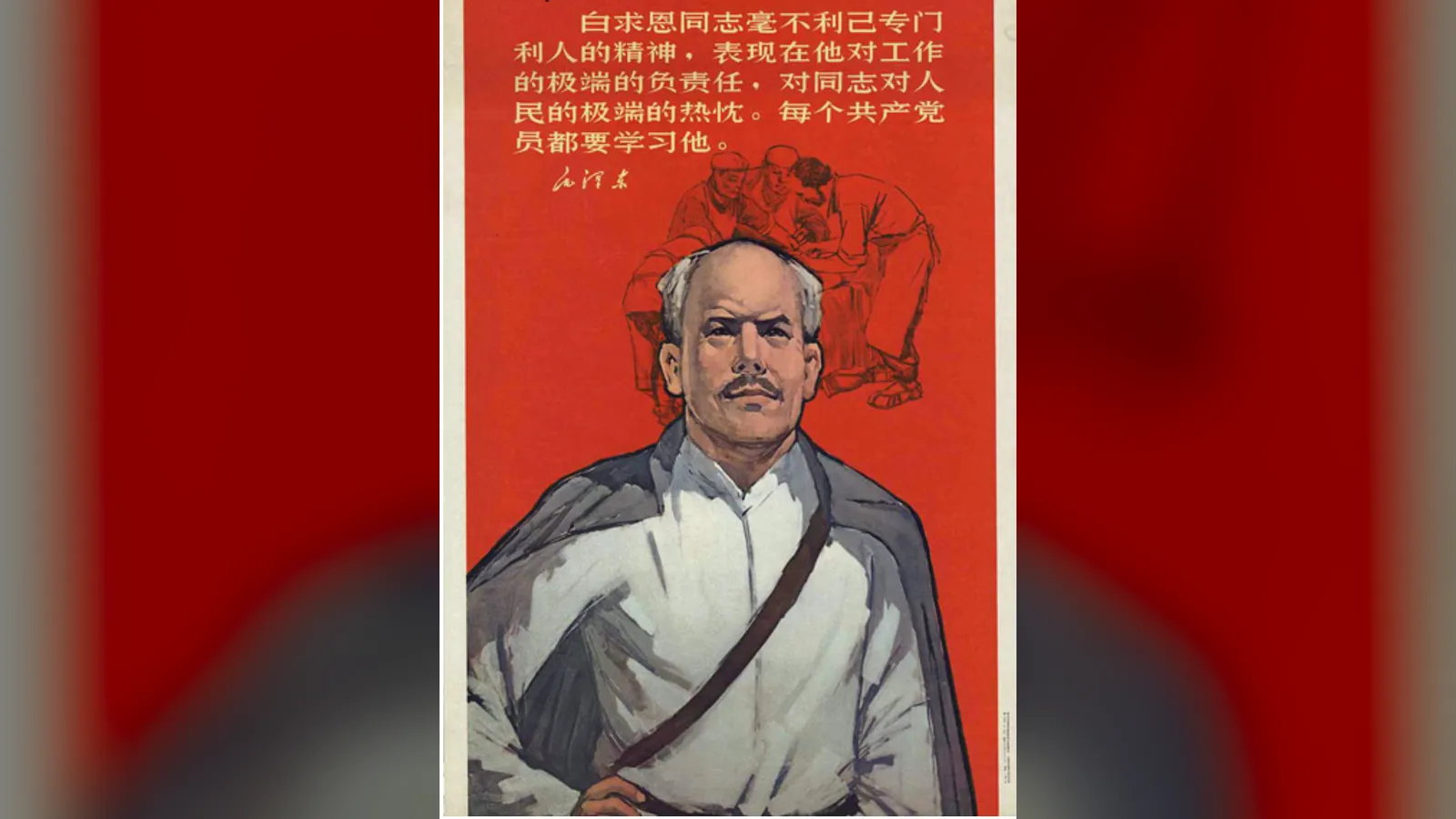
- established Mao Zedong's 1939 eulogy "In Memory of Norman Bethune" was incorporated into Chinese elementary school textbooks from the 1960s onward, transforming Bethune into an enduring symbol of selfless internationalist service still actively commemorated in China today, including through the Bethune Medal, China's highest medical honour — this article names this specific, documented and unusually durable legacy directly.
Key Facts
- Born
- 4 March 1890, Gravenhurst, Ontario, Canada
- Died
- 12 November 1939, Tang County, Hebei, China
- Category
- Science, Technology & Invention
- Scottish ancestry
- Documented, traced to the Bethunes of Skye and the Bethune/Beaton medical kindred
- Key achievement
- Pioneering mobile blood transfusion service (Spanish Civil War, 1936–37)
- Other key legacy
- Bethune Rib Shears and other surgical instruments still in use
- Legacy in China
- Subject of Mao Zedong's eulogy; namesake of China's highest medical honour
Scottish Impact Index (SI Score)
- Global Influence
- 9/10
- Enduring Connection
- 8/10
- Material Contribution
- 9/10
- Scottish Diaspora Distinctiveness
- 9/10
- Diaspora Legacy
- 10/10
- Recognition
- 9/10
54/60
Ranked =15th of 45 in Diaspora
A Note on Claims and Evidence
Family background and the specific, documented ancestral connection to the Bethunes of Skye and the Bethune/Beaton medical kindred are drawn from Wikipedia's published biographical record and published genealogical research on Bethune's ancestry. Education, medical career and surgical innovations, Spanish Civil War service, work with the Chinese Communist Party and Eighth Route Army, death, and his enduring legacy and veneration in China are drawn from Wikipedia's published research record.
Timeline
Henry Norman Bethune is born in Gravenhurst, Ontario, to Reverend Malcolm Nicolson Bethune and Elizabeth Ann Goodwin, an English immigrant; his documented ancestry traces to the Bethunes of Skye, part of the historical Bethune/Beaton medical kindred of the Scottish Highlands and Islands.
Bethune graduates from Owen Sound Collegiate Institute.
Bethune enrols at University College, University of Toronto, to study physiology and biochemistry.
Bethune interrupts his studies to volunteer as a teacher at a lumber camp near Whitefish, Sudbury.
With the outbreak of the First World War, Bethune enlists with the Royal Canadian Army Medical Corps, serving as a stretcher-bearer in France.
Bethune suffers shrapnel wounds at the Second Battle of Ypres and is repatriated to Canada.
Bethune receives his MD from the University of Toronto.
Bethune contracts tuberculosis and recovers through the then-innovative pneumothorax procedure.
Bethune joins thoracic surgical pioneer Edward William Archibald at McGill University's Royal Victoria Hospital in Montreal.
Bethune develops or modifies more than a dozen new surgical tools, including the Bethune Rib Shears, and publishes 14 articles on thoracic surgical innovations.
Bethune arrives in Madrid during the Spanish Civil War, backed by the North American Committee to Aid Spanish Democracy.
Unable to secure an initial surgical post, Bethune founds the Servicio canadiense de transfusión de sangre, a pioneering mobile blood transfusion service delivering blood directly to frontline wounded soldiers.
Bethune returns to Canada to raise support for the Republican cause.
Bethune travels to Yan'an, China, during the Second Sino-Japanese War, to support Mao Zedong's Chinese Communist Party, joining the Eighth Route Army to perform battlefield surgery and organise medical training.
Bethune is appointed medical advisor to the Jin-Cha-Ji Border Region Military District.
Bethune cuts his left middle finger while retrieving bone fragments from a wounded soldier during surgery.
Weakened by malnourishment, Bethune dies of septicemia from the infected wound, at age 49, in Tang County, Hebei.
Mao Zedong writes the eulogy "In Memory of Norman Bethune," praising his "utter devotion to others without any thought of self."
Mao's eulogy is incorporated into Chinese elementary school textbooks, cementing Bethune as an enduring model figure.
The biennial Bethune Medal, China's highest medical honour, is established in his name.
Details
An unusually deep and specific ancestral medical lineage named directly
This article states Norman Bethune's Scottish ancestry with a level of documented specificity notably stronger than many figures in this series: genealogical research traces his family to the Bethunes of Skye, part of the historical Bethune/Beaton medical kindred that practised hereditary medicine in the Scottish Highlands and Islands from the Middle Ages into the Early Modern era. This article names this specific lineage directly because it represents a real, documented, and strikingly fitting ancestral thread for a man who himself became a pioneering surgeon, rather than a coincidence left unremarked.
A surgical innovator's legacy named independent of his later political fame
This article names Bethune's specific, documented surgical contributions directly, rather than treating his medical career as a footnote to his political activism: over a dozen new surgical tools developed or modified at McGill's Royal Victoria Hospital, including the Bethune Rib Shears, still in use today, and 14 published articles on thoracic innovation. This article states this because it reflects Bethune's substantial, independent technical legacy within Western medicine.
A wartime medical innovation named with its real documented scope
This article states precisely what Bethune accomplished in Spain rather than presenting his role as generic battlefield surgery: after failing to secure a surgical post, he founded a specific, pioneering mobile blood transfusion service that delivered blood supplies directly to the front lines. This article names this because it represents a real, documented medical innovation distinct from and arguably more significant than conventional frontline surgery.
An enduring foreign legacy named with its real documented scale
This article states the specific, documented scale of Bethune's veneration in China directly, rather than treating it as a minor historical footnote: Mao Zedong's eulogy entered elementary school textbooks for decades, and China's highest medical honour, the Bethune Medal, bears his name today. This article names this because it reflects a genuinely unusual and well-documented cross-cultural legacy, distinct from how most other diaspora figures in this series are remembered.
Did You Know?
- Norman Bethune's ancestry is documented with unusual specificity, tracing to the Bethunes of Skye, members of a historical Scottish medical dynasty that practised hereditary medicine in the Highlands and Islands for centuries.
- Bethune developed the Bethune Rib Shears and more than a dozen other surgical tools, several of which remain in medical use today.
- During the Spanish Civil War, Bethune pioneered a mobile blood transfusion service that delivered blood directly to wounded soldiers at the front lines.
- Bethune died from blood poisoning after cutting his finger during battlefield surgery in China in 1939.
- Mao Zedong's eulogy for Bethune was taught in Chinese elementary schools for decades, making Bethune one of the most widely known Canadians in Chinese history.
- China's highest medical honour, the Bethune Medal, is named after him and established in 1991.
- Bethune became an atheist despite being raised by a Presbyterian minister father, in a family whose ancestors had founded some of Canada's earliest Presbyterian congregations.
FAQ
1Was Norman Bethune actually of Scottish descent?
Yes, documented with real specificity — genealogical research traces his family to the Bethunes of Skye, part of a historical Scottish medical dynasty.
2What is Norman Bethune best known for?
Pioneering a mobile blood transfusion service during the Spanish Civil War and later serving as a battlefield surgeon with China's Communist Eighth Route Army, where he died in 1939.
3Did Bethune make lasting contributions to surgery itself?
Yes — he developed over a dozen new surgical tools, including the Bethune Rib Shears, still used in medicine today.
4How did Norman Bethune die?
From septicemia (blood poisoning), after cutting his finger during battlefield surgery in China in October 1939; he died of the infection two weeks later.
5Why is Bethune so famous in China specifically?
Mao Zedong wrote a eulogy praising his selflessness that was taught in Chinese schools for decades, making Bethune an enduring symbol of international solidarity there.
6Did Bethune have a religious upbringing?
Yes — his father was a Presbyterian minister, and his ancestors had founded some of Canada's earliest Presbyterian congregations, though Bethune himself became an atheist.
7What honours exist in Bethune's name today?
The biennial Bethune Medal, China's highest medical honour, along with the Norman Bethune University of Medical Sciences and numerous statues throughout China.
Sources and Further Reading
Caveats: Myths and Disputed Claims
- Clarification: This article does not present Bethune's political fame in China as the whole of his legacy; his independent surgical innovations at McGill, including instruments still used today, represent a substantial and separate documented achievement.
- Context note: This article names Mao Zedong's eulogy and its specific, documented role in Chinese education as the primary mechanism behind Bethune's enduring fame there, rather than presenting that veneration as arising from Bethune's medical work in China alone.
Card 015 · Diaspora