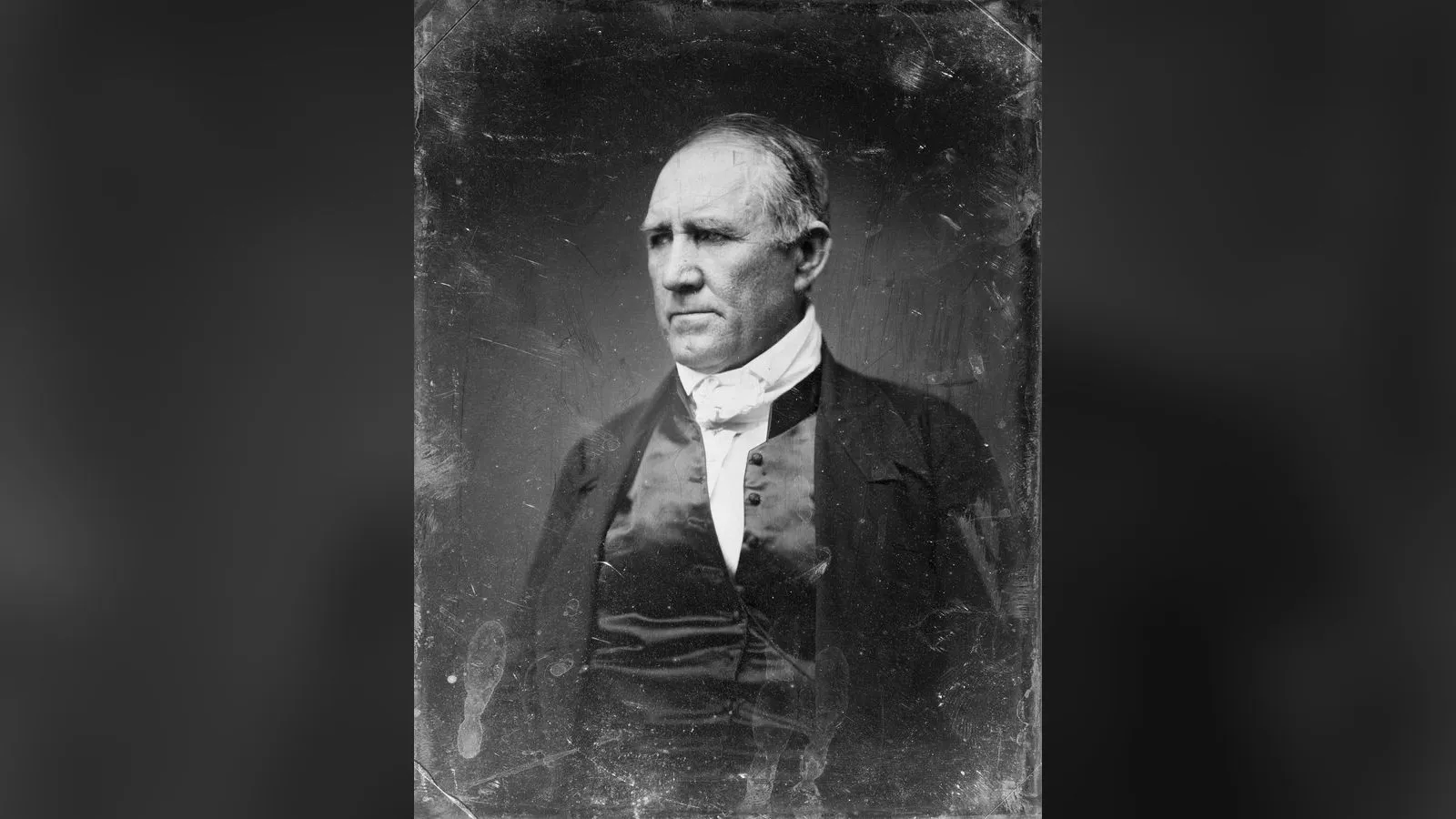

Sam Houston (1793–1863)
Contents
TL;DR
- established Sam Houston's ancestry is documented with real specificity on his father's side: the line traces to Ulster Scots colonists and connects further back to the Houston baronets of Scotland, a hereditary title line, with both parents' families holding colonial American roots dating to the 1730s — this article states this specific, documented connection directly rather than a vague general claim of Scottish heritage.
- established At age sixteen, Houston ran away from home to live with Chief John Jolly's Cherokee community on Hiwassee Island for roughly three years, learning their language and customs and earning the name "Raven," a relationship he maintained for the rest of his life — this article names this specific, documented formative experience directly rather than presenting Houston's later career as emerging from a conventional American upbringing.
- established As commander of Texian forces, Houston led the decisive 1836 Battle of San Jacinto against Mexican General Santa Anna, in which his outnumbered army achieved a decisive victory securing Texian independence — a specific, documented military achievement this article states directly.
- disputed Houston was himself a documented slaveholder, yet as a US Senator and later governor he genuinely and publicly opposed Southern secession, warning it could bring "a sea of blood and smoking ruin," a position that cost him his governorship when he refused to swear loyalty to the Confederacy in 1861 — this article presents this real, documented tension directly rather than simplifying Houston into either an uncomplicated Unionist hero or omitting his slaveholding.
- established Houston served as president of the Republic of Texas twice, as a US Senator, and as governor of Texas, becoming the only person in American history to have served as governor of two different states (Tennessee and Texas) — this article names this specific, documented and historically unusual political distinction directly.
- traditional A family legend, repeated by Houston's biographer Marquis James and by the historian David Hackett Fischer in Albion's Seed (1989), says that Sam Houston's great-grandfather John Houston crossed the Atlantic with a keg of gold sovereigns and, when the crew tried to steal it, organised the passengers and seized the ship. There is no contemporary record of the episode.
Key Facts
- Born
- 2 March 1793, Rockbridge County, Virginia, USA
- Died
- 26 July 1863, Huntsville, Texas, USA
- Category
- Statesmen, Politicians & Public Figures
- Scottish ancestry
- Documented, specific — paternal line: Ulster Scots, connected to the Houston baronets of Scotland
- Key achievement
- Commander, Battle of San Jacinto (1836); secured Texian independence
- Political distinction
- Only person to serve as governor of two different US states (Tennessee and Texas)
- Documented tension
- Slaveholder who publicly and consequentially opposed Southern secession
Scottish Impact Index (SI Score)
- Global Influence
- 9/10
- Enduring Connection
- 8/10
- Material Contribution
- 9/10
- Scottish Diaspora Distinctiveness
- 9/10
- Diaspora Legacy
- 10/10
- Recognition
- 9/10
54/60
Ranked =15th of 45 in Diaspora
A Note on Claims and Evidence
Family background and the specific, documented ancestral connection — Ulster Scots origin further linked to the Houston baronets of Scotland — are drawn from Wikipedia's published biographical record. His time among the Cherokee, Texas Revolution and the Battle of San Jacinto, leadership of the Republic of Texas, his Senate career and documented opposition to secession despite being a slaveholder, his removal as governor, and death are drawn from Wikipedia's published research record. Material on the emigrant John Houston comes from David Hackett Fischer's Albion's Seed (1989), which relies on Marquis James's biography The Raven (1929), and from Wikipedia's article on John Houston; the emigration date differs between them and is flagged below.
Timeline
Houston's parents' families establish colonial roots in America; his father's line traces to Ulster Scots colonists, connected further back to the Houston baronets of Scotland.
Sam Houston's great-grandfather John Houston sails from Ulster with his wife and children; Fischer, following Marquis James, gives 1730, while other accounts give about 1735. The family settles first near Lancaster, Pennsylvania.
John Houston moves to the Valley of Virginia, in what became Rockbridge County, and founds Timber Ridge.
John Houston is killed by a falling tree while clearing land.
Sam Houston is born in Rockbridge County, Virginia, to Samuel Houston Sr., owner of the Timber Ridge plantation.
The Houston family relocates to Tennessee.
Houston runs away to live with Chief John Jolly's Cherokee community on Hiwassee Island, spending roughly three years there, learning their language and customs, and earning the name "Raven."
Houston serves under Andrew Jackson and is wounded at the Battle of Horseshoe Bend.
Houston serves as Governor of Tennessee.
Houston moves to Texas.
Houston commands Texian forces to a decisive victory at the Battle of San Jacinto against Mexican General Santa Anna, securing Texian independence; he is wounded but recovers.
Houston serves two terms as president of the Republic of Texas, stabilising finances and managing relations with Mexico.
Texas is annexed by the United States, a policy Houston strongly supported.
Houston serves as one of Texas's first US Senators, voting against the Kansas-Nebraska Act and championing unionism despite being a slaveholder himself.
Houston is elected Governor of Texas.
Following Lincoln's election, Houston refuses to swear loyalty to the Confederacy; the Texas legislature declares his office vacant, forcing his removal.
Houston dies of pneumonia in Huntsville, Texas, at age 70, largely shunned by Texas's political leadership in his final years.
Details
A documented ancestral line traced to a specific Scottish title
This article names Sam Houston's ancestry with real specificity rather than a vague general claim: his father's line is documented as Ulster Scots, connected further back to the Houston baronets of Scotland, a specific hereditary title line, with both parents' families holding colonial American roots dating to the 1730s. This article states this because it represents a documented connection with real traceable structure, distinct from the thinner, more general ancestry claims found elsewhere in this series.
John Houston, "Gent.", in Albion's Seed
shared The historian David Hackett Fischer, in Albion's Seed (1989), names Sam Houston's great-grandfather John Houston as one of the founders of a backcountry elite: families who had some standing in Ulster or Scotland and who quickly rose to the top of frontier society in America. Fischer records that John Houston arrived with his wife and six children, signed himself "John Houston, Gent.", and in the Valley of Virginia "instantly assumed the station of county justice" and acquired large holdings of rich land. Fischer dates the arrival to 1730, following Marquis James; other accounts give about 1735, with a first settlement near Lancaster, Pennsylvania, before the move to Virginia. John Houston died in 1754, aged about sixty-five, when a tree fell on him.
traditional The family legend, as Fischer retells it from James, is that John Houston carried a small keg of gold sovereigns, that the captain and crew tried to steal it, and that he organised the passengers, seized the ship and sailed it to America. No contemporary record supports it, and it should be read as family tradition.
shared Fischer calls the Houstons "a family of border baronets". The baronetcy usually linked to them, the Houstouns of Houstoun, belonged to Renfrewshire in the west of Scotland, not to the Anglo-Scottish Border, and the family had lived in Ulster before emigrating. Fischer's wider claim that the Houstons, like the Polks and Calhouns, carried a "borderland" culture to the backcountry is an interpretation that other historians have questioned.
A formative Cherokee relationship named rather than treated as incidental
This article states Houston's documented years living among the Cherokee directly, rather than presenting his later political career as emerging from an entirely conventional American upbringing: his three years with Chief John Jolly's community, his adopted name "Raven," and the lifelong ties he maintained afterward. This article names this because it represents a real, documented, and formative influence on a man whose later political and diplomatic life repeatedly intersected with Native American affairs.
A genuine, documented personal tension presented without simplifying it
This article states directly that Sam Houston was himself a slaveholder who nonetheless genuinely and publicly opposed Southern secession, a stance that cost him his governorship. This article names both halves of this real, documented tension because presenting Houston only as an uncomplicated Unionist hero, or only as a slaveholder, would each misrepresent the genuinely contradictory and well-documented historical record.
An unusual political distinction named with its real documented scale
This article states precisely what makes Houston's political career historically unusual rather than a generalised claim of "political success": he remains the only person in American history to have served as governor of two different states. This article names this specific, documented fact because it reflects the real, unusual shape of Houston's career across Tennessee and Texas.
Did You Know?
- Sam Houston's paternal ancestry is documented as Ulster Scots, with a further connection to the Houston baronets, a hereditary Scottish title line.
- At sixteen, Houston ran away to live with the Cherokee for roughly three years, earning the name "Raven" and maintaining close ties with the tribe for the rest of his life.
- Houston led the decisive 1836 Battle of San Jacinto, which secured Texian independence from Mexico in a surprise attack against a numerically superior force.
- Houston is the only person in American history to have served as governor of two different states: Tennessee and Texas.
- Despite being a slaveholder himself, Houston publicly and consequentially opposed Southern secession, warning it would bring "a sea of blood and smoking ruin."
- Houston lost his governorship in 1861 specifically because he refused to swear loyalty to the Confederacy.
- The city of Houston, Texas — now the fourth-largest city in the United States — is named in his honour.
- Houston's great-grandfather, the emigrant John Houston, signed himself "John Houston, Gent." and became a county justice in the Valley of Virginia.
- A family legend says the emigrant John Houston foiled a plot by the ship's crew to steal his gold by seizing the ship; it is tradition, not record.
FAQ
1Was Sam Houston actually of Scottish descent?
Yes, documented with real specificity — his father's line was Ulster Scots, with a further documented connection to the Houston baronets of Scotland.
2Did Sam Houston really live with the Cherokee?
Yes — at sixteen, he ran away to live with Chief John Jolly's community for about three years, learning their language and customs and maintaining ties with them for life.
3What is Sam Houston best known for?
Commanding the decisive 1836 Battle of San Jacinto, which secured Texian independence from Mexico.
4Was Sam Houston a slaveholder?
Yes — and despite this, he genuinely and publicly opposed Southern secession, a stance that ultimately cost him his governorship in 1861.
5Did Sam Houston serve as governor of more than one state?
Yes — he is the only person in American history to have served as governor of two different states, Tennessee and Texas.
6Why was Houston removed as Texas governor?
He refused to swear loyalty to the Confederacy after Lincoln's election, and the Texas legislature declared his office vacant in 1861.
7When did Sam Houston die?
26 July 1863, of pneumonia, in Huntsville, Texas, at age 70.
8Who was the first Houston in America?
Sam Houston's great-grandfather John Houston, who sailed from Ulster with his family in about 1730–1735, settled first in Pennsylvania and then at Timber Ridge in the Valley of Virginia, and died there in 1754.
9Is the story of the keg of gold true?
It cannot be confirmed. The tale that John Houston seized the emigrant ship from a thieving crew comes from family tradition, retold by Marquis James and by David Hackett Fischer in Albion's Seed (1989).
Sources and Further Reading
Primary/Institutional
- Sam Houston — Wikipedia
- Sam Houston: A Legacy of Leadership in Texas History — Texas State Historical Association
Scholarly/Critical
- Sam Houston — American Battlefield Trust
- Sam Houston — Humanities Texas
- David Hackett Fischer, Albion's Seed: Four British Folkways in America (Oxford University Press, 1989)
Specialist
General
Caveats: Myths and Disputed Claims
- Content note: This article names Sam Houston's documented status as a slaveholder directly, alongside his genuine and consequential public opposition to secession, rather than simplifying him into an uncomplicated Unionist hero.
- Clarification: This article does not present Houston's years among the Cherokee as a brief youthful episode; the documented record describes a formative, multi-year relationship he maintained for the rest of his life.
- Do not present the keg-of-gold and ship-seizure story as fact; it is family tradition.
- Do not call the Houstons a Border family on Fischer's authority; the baronetcy associated with them was in Renfrewshire, and the emigrants came from Ulster.
- Do not present Fischer's borderland thesis as settled; it is a contested interpretation.
Card 022 · Diaspora