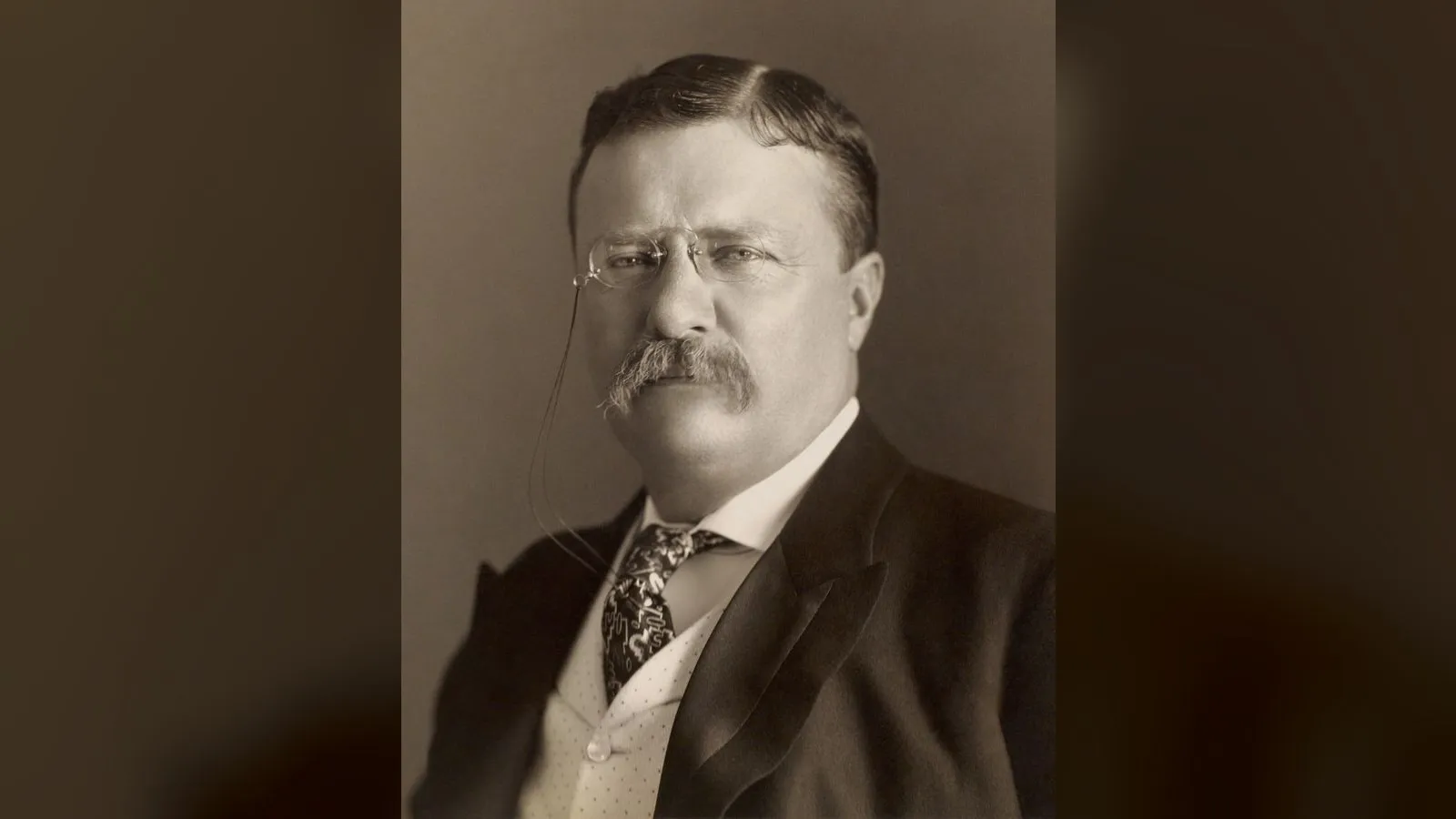

Theodore Roosevelt (1858–1919)
Contents
TL;DR
- established Theodore Roosevelt's Scottish ancestry runs through his mother's line, several generations back: his maternal great-great-grandfather, James Bulloch, emigrated from Scotland to South Carolina in the 1720s, a documented connection with a specific decade of emigration but no named Scottish town or clan in the sources consulted — this article states this honestly as a real but generationally distant maternal thread, distinct from Roosevelt's paternal Roosevelt line, which is of Dutch, not Scottish, origin.
- established Roosevelt transformed himself from a sickly, asthmatic child into the embodiment of his own "strenuous life" philosophy through deliberate, rigorous physical training, a documented personal reinvention this article names directly as foundational to his later public persona.
- established As president from 1901 to 1909, Roosevelt brought 44 antitrust suits against business monopolies, compared to just 18 prosecuted by all three of his predecessors combined, earning him the nickname "Trust Buster," and he protected approximately 230 million acres of public land through five national parks, 51 bird reserves, 150 national forests, and 18 national monuments — this article names these specific, documented achievements directly rather than a vague claim of "reform" and "conservation."
- established Roosevelt became the first non-European recipient of the Nobel Peace Prize in 1906, for mediating an end to the Russo-Japanese War, while simultaneously articulating the Roosevelt Corollary to the Monroe Doctrine, which positioned the United States as an interventionist power in the Western Hemisphere — this article names both the peacemaking achievement and the assertive foreign policy doctrine directly, rather than presenting only the more flattering half of this record.
- established After leaving office, Roosevelt's 1912 third-party "Bull Moose" presidential campaign split the Republican vote and directly enabled Democrat Woodrow Wilson's victory, a specific, documented political consequence this article states directly.
Key Facts
- Born
- 27 October 1858, Manhattan, New York, USA
- Died
- 6 January 1919, Oyster Bay, New York, USA
- Category
- Statesmen, Politicians & Public Figures
- Scottish ancestry
- Documented, maternal line, several generations back (great-great-grandfather emigrated 1720s); paternal line is Dutch
- Key achievement
- 26th US President (1901–1909); conservation and antitrust reform
- Key honour
- Nobel Peace Prize, 1906 (first non-European recipient)
- Military fame
- Leader of the "Rough Riders," Spanish-American War, 1898
Scottish Impact Index (SI Score)
- Global Influence
- 10/10
- Enduring Connection
- 7/10
- Material Contribution
- 10/10
- Scottish Diaspora Distinctiveness
- 8/10
- Diaspora Legacy
- 10/10
- Recognition
- 10/10
55/60
Ranked =10th of 45 in Diaspora
A Note on Claims and Evidence
Family background and ancestry, including the maternal Bulloch family's documented Scottish origin, are drawn from Wikipedia's published biographical record and the New Georgia Encyclopedia's published entry on Archibald Bulloch; this article states the Scottish connection at the generational distance and specificity the sources actually support, noting that Roosevelt's paternal line is of Dutch origin. Childhood, education, military service, presidency and its specific achievements, post-presidency, and death are drawn from Wikipedia's published research record.
Timeline
James Bulloch, Theodore Roosevelt's maternal great-great-grandfather, emigrates from Scotland to South Carolina.
Theodore Roosevelt Jr. is born in Manhattan, New York, to Martha Stewart Bulloch and Theodore Roosevelt Sr., a businessman of Dutch descent.
A sickly child with severe asthma, Roosevelt transforms himself through rigorous physical training, developing what later becomes his "strenuous life" philosophy.
Roosevelt attends Harvard University, graduating magna cum laude with Phi Beta Kappa honours.
Roosevelt serves in the New York State Assembly.
Roosevelt serves as Police Commissioner of New York City.
Roosevelt forms and leads the First U.S. Volunteer Cavalry Regiment, the "Rough Riders," during the Spanish-American War, gaining fame for the charge up San Juan Heights in Cuba.
Roosevelt serves as Governor of New York.
Roosevelt serves as Vice President under William McKinley.
Following McKinley's assassination, Roosevelt becomes president at age 42, the youngest person ever to assume the office.
As president, Roosevelt brings 44 antitrust suits against monopolies, champions the Pure Food and Drug Act and Meat Inspection Act of 1906, and protects approximately 230 million acres of public land.
Roosevelt mediates an end to the Russo-Japanese War and is awarded the Nobel Peace Prize, becoming its first non-European recipient.
Roosevelt declines to seek a third term, supporting William Howard Taft as his successor.
Frustrated with Taft, Roosevelt forms the Bull Moose Party and runs for president, splitting the Republican vote and enabling Woodrow Wilson's victory.
Roosevelt leads a scientific expedition to the Amazon basin, nearly dying from tropical illness.
Roosevelt dies at his Sagamore Hill home in New York, at age 60.
Roosevelt is posthumously awarded the Medal of Honor for his service with the Rough Riders.
Details
A real but generationally distant maternal ancestry named honestly
This article states Theodore Roosevelt's Scottish ancestry at its real, documented generational distance rather than presenting it as close or defining: his maternal great-great-grandfather, James Bulloch, emigrated from Scotland to South Carolina in the 1720s, several generations before Roosevelt's own birth, and no specific Scottish town or clan is named in the sources consulted. This article also names Roosevelt's paternal Roosevelt line as Dutch in origin, because presenting Roosevelt simply as "of Scottish descent" without this context would misrepresent the real, mixed, and generationally layered nature of his documented ancestry.
A documented personal transformation named as foundational
This article states Roosevelt's childhood asthma and his deliberate, rigorous self-transformation directly, rather than presenting his famously vigorous public persona as an inborn trait. This article names this because it represents the real, documented foundation of the "strenuous life" philosophy Roosevelt later championed as a defining element of his public identity.
Specific presidential achievements named rather than vague reform claims
This article names the precise, documented scale of Roosevelt's domestic achievements rather than a generalised claim of "reform": 44 antitrust suits compared to his predecessors' combined 18, and approximately 230 million acres of public land protected through specific, countable national parks, forests, monuments, and reserves. This article states these figures because they represent the real, documented scale of Roosevelt's presidency, not an impressionistic summary.
A dual foreign policy record named without picking only the flattering half
This article names both halves of Roosevelt's documented foreign policy record directly: his Nobel Peace Prize-winning mediation of the Russo-Japanese War, and his assertive Roosevelt Corollary, which positioned the United States as an interventionist power in the Western Hemisphere. This article states both because presenting only the peacemaking achievement, or only the assertive doctrine, would each give an incomplete account of Roosevelt's real, documented approach to foreign policy.
Did You Know?
- Theodore Roosevelt's Scottish ancestry traces through his mother's side to a great-great-grandfather who emigrated from Scotland in the 1720s; his father's Roosevelt line was Dutch, not Scottish.
- Roosevelt was a sickly, asthmatic child who deliberately transformed himself through rigorous physical training, later championing what he called "the strenuous life."
- As president, Roosevelt brought more antitrust lawsuits than his three predecessors combined.
- Roosevelt became the first non-European to win the Nobel Peace Prize, in 1906, for mediating the end of the Russo-Japanese War.
- Roosevelt became president at 42, the youngest person ever to hold the office, following President McKinley's assassination.
- Roosevelt's 1912 third-party presidential campaign split the Republican vote and helped elect his rival, Woodrow Wilson.
- Roosevelt received the Medal of Honor for his Rough Riders service in 1898 — but not until 2001, posthumously.
FAQ
1Was Theodore Roosevelt actually of Scottish descent?
Yes, documented but generationally distant — through his mother's side, a great-great-grandfather emigrated from Scotland in the 1720s; his father's Roosevelt family was Dutch.
2What is Theodore Roosevelt best known for as president?
Trust-busting against business monopolies, major conservation of public lands, and an assertive foreign policy that included winning the Nobel Peace Prize.
3Did Theodore Roosevelt really lead troops in combat?
Yes — he led the "Rough Riders" cavalry regiment during the Spanish-American War in 1898, gaining fame for the charge up San Juan Heights in Cuba.
4How did Roosevelt become president?
He became Vice President in 1901 and ascended to the presidency that September after President McKinley's assassination, becoming the youngest president in US history at the time.
5Did Theodore Roosevelt win the Nobel Peace Prize?
Yes — in 1906, for mediating an end to the Russo-Japanese War, becoming its first non-European recipient.
6Why did Roosevelt run for president again in 1912?
Frustrated with his chosen successor William Howard Taft's conservative approach, Roosevelt formed the Bull Moose Party, though this ultimately split the Republican vote and helped elect Woodrow Wilson instead.
7When did Theodore Roosevelt die?
6 January 1919, at his Sagamore Hill home in New York, at age 60.
Sources and Further Reading
Caveats: Myths and Disputed Claims
- Clarification: This article does not present Theodore Roosevelt's ancestry as straightforwardly Scottish; his documented Scottish connection runs through his mother's line, several generations back, while his father's Roosevelt family was Dutch in origin.
- Context note: This article names both the celebrated and the more aggressive elements of Roosevelt's foreign policy record together, rather than presenting only his Nobel Peace Prize without the interventionist Roosevelt Corollary that accompanied it.
Card 018 · Diaspora