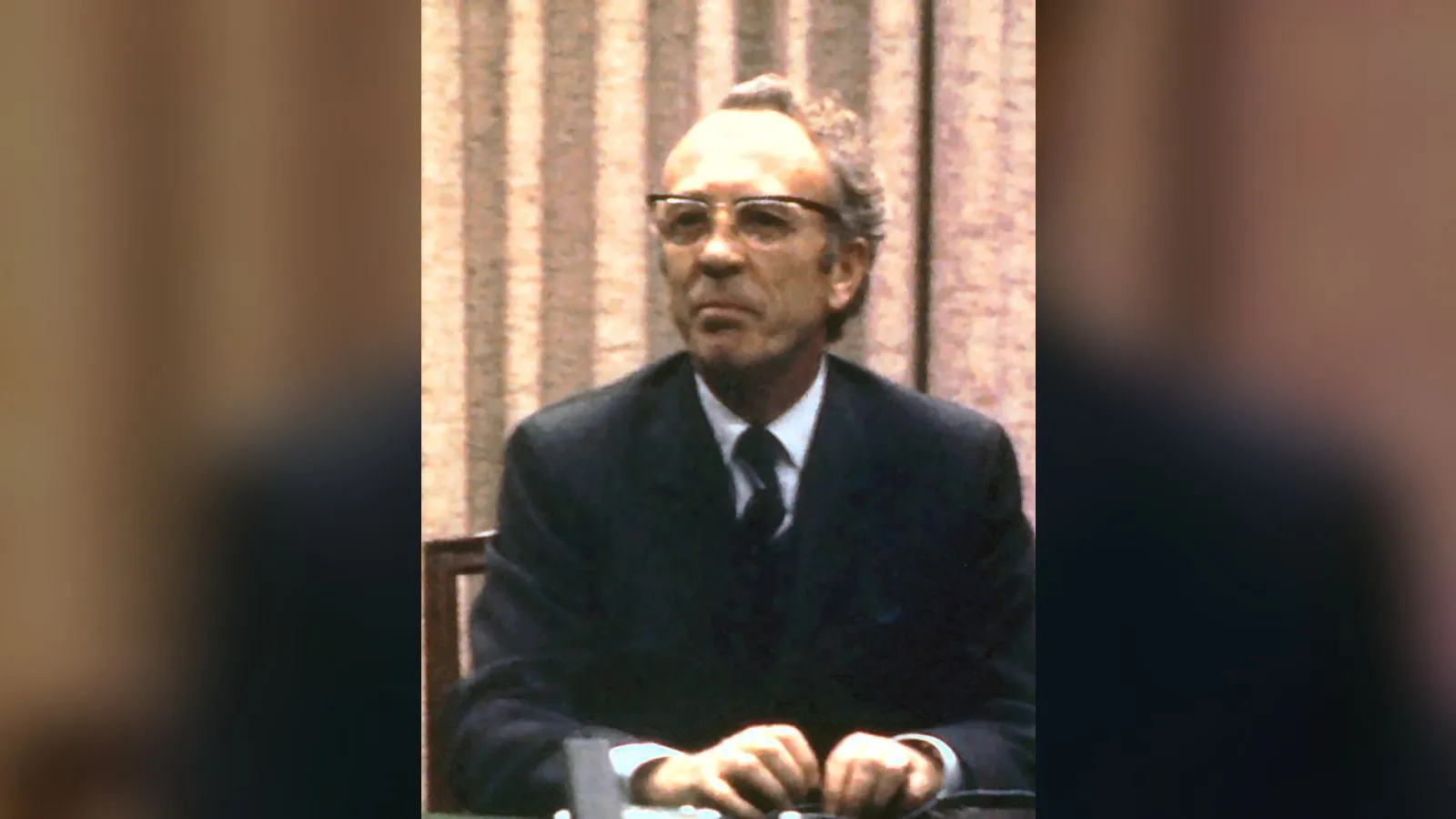

Tommy Douglas (1904–1986)
Contents
TL;DR
- established Tommy Douglas was himself born in Falkirk, Stirlingshire, Scotland, in 1904, and personally emigrated with his family to Canada in 1910, briefly returning to Scotland before the family's permanent emigration to Winnipeg in 1919 — this article states this direct, first-generation immigrant connection plainly, since Douglas is not a descendant of a Scottish emigrant but an immigrant himself.
- established As Premier of Saskatchewan from 1944 to 1961, Douglas led North America's first socialist government and, in 1962, introduced the continent's first single-payer universal public healthcare system, a specific, documented achievement this article names directly as the foundation of Canada's national Medicare system.
- disputed In his 1933 master's thesis, Douglas proposed eugenicist policies, including the sterilization and segregation of people he described as "mentally and morally subnormal" — this article states this full, documented early position directly, alongside the documented fact that, unlike Alberta and British Columbia, Saskatchewan under Douglas's own government never passed a eugenics sterilization act — a genuine historical paradox this article names rather than omitting either side.
- established A childhood bone infection in his leg, which doctors initially planned to amputate, was treated for free by a surgeon willing to take on his case as a teaching opportunity, an experience Douglas later cited directly as motivating his lifelong advocacy for universal healthcare — this article states this specific, documented formative experience directly.
- established In a 2004 national CBC television poll, Douglas was voted "The Greatest Canadian" in history, a specific, documented public recognition this article names directly.
Key Facts
- Born
- 20 October 1904, Falkirk, Stirlingshire, Scotland
- Died
- 24 February 1986, Ottawa, Ontario, Canada
- Category
- Statesmen, Politicians & Public Figures
- Scottish origin
- Direct — Douglas was born in Scotland and personally emigrated to Canada
- Key achievement
- Introduced North America's first universal public healthcare system (Saskatchewan, 1962)
- Documented controversy
- 1933 thesis proposed eugenicist sterilization policies, though his government never enacted them
- Public recognition
- Voted "The Greatest Canadian" in a 2004 CBC national poll
Scottish Impact Index (SI Score)
- Global Influence
- 9/10
- Enduring Connection
- 10/10
- Material Contribution
- 10/10
- Scottish Diaspora Distinctiveness
- 10/10
- Diaspora Legacy
- 10/10
- Recognition
- 9/10
58/60
Ranked #1 of 45 in Diaspora
A Note on Claims and Evidence
Family background and the documented fact of Douglas's own Scottish birth and emigration are drawn from Wikipedia's published biographical record and the Dictionary of Canadian Biography's published research. Early life, including his childhood illness, his political career as Premier of Saskatchewan, the introduction of universal healthcare, his documented eugenicist thesis and Saskatchewan's actual legislative record on the subject, his later federal political career, death, and legacy are drawn from Wikipedia's published research record and the Canadian Journal of Neurological Sciences' published scholarly research on Douglas and eugenics.
Timeline
Thomas Clement Douglas is born in Falkirk, Stirlingshire, Scotland.
The Douglas family emigrates to Winnipeg, Manitoba, Canada.
Douglas develops a serious bone infection (osteomyelitis) in his leg; doctors initially plan amputation, but a surgeon treats him for free as a teaching case, saving his leg — an experience Douglas later cites as central to his advocacy for universal healthcare.
The Douglas family returns briefly to Scotland before permanently emigrating back to Winnipeg in 1919.
Douglas becomes a Baptist minister in Weyburn, Saskatchewan.
Douglas completes a master's thesis at McMaster University proposing eugenicist policies, including sterilization and segregation of people he describes as "mentally and morally subnormal."
Douglas is elected to the House of Commons of Canada as a Co-operative Commonwealth Federation (CCF) member.
Douglas becomes Premier of Saskatchewan, leading North America's first socialist government; notably, Saskatchewan under his premiership never enacts a eugenics sterilization law, unlike neighbouring Alberta and British Columbia.
Douglas's government introduces numerous social programs, laying groundwork for Canada's broader social safety net.
Douglas's government introduces Medicare, North America's first single-payer universal public healthcare system, in Saskatchewan.
Douglas serves as the first federal leader of the New Democratic Party (NDP), Canada's major social-democratic party.
Douglas dies in Ottawa, Ontario, at age 81.
In a national CBC television poll, Douglas is voted "The Greatest Canadian" in Canadian history.
Details
A direct, personal Scottish origin rather than an inherited ancestral claim
This article states plainly that Tommy Douglas's connection to Scotland is of a different, more direct kind than most figures in this series: he himself was born in Falkirk and personally emigrated to Canada as a child, later returning briefly before his family's permanent emigration in 1919. This article names this because it represents Douglas's own lived immigrant experience, not an ancestral claim inherited from a parent or more distant forebear.
A formative childhood illness named as the real origin of a landmark policy
This article states directly that Douglas's advocacy for universal healthcare traces to a specific, documented personal experience: a childhood bone infection that nearly cost him his leg, saved only because a surgeon treated him without charge as a teaching opportunity. This article names this because Douglas himself identified this experience as central to his later political mission, rather than presenting his healthcare policy as emerging from abstract ideology alone.
A genuine historical paradox named without resolving it either way
This article states directly both sides of a documented contradiction in Douglas's record: his 1933 thesis proposed eugenicist sterilization and segregation policies, yet Saskatchewan under his own government never passed the kind of eugenics sterilization law enacted in neighbouring Alberta and British Columbia. This article names both because presenting only the thesis, or only the absence of enacted eugenics legislation, would each give an incomplete and misleading account of this documented historical paradox.
A landmark healthcare achievement named with its specific, lasting scope
This article states the precise, documented significance of Douglas's 1962 Medicare program: it was North America's first single-payer universal public healthcare system, later expanded nationally across Canada. This article names this because it represents a concrete, lasting institutional legacy rather than a general claim of progressive reform.
Did You Know?
- Tommy Douglas was born in Falkirk, Scotland, and personally emigrated to Canada as a child — he is an immigrant himself, not merely a descendant of one.
- A childhood bone infection nearly cost Douglas his leg; it was saved only because a surgeon treated him for free as a teaching case, an experience he later cited as motivating his healthcare advocacy.
- Douglas's 1933 master's thesis proposed eugenicist sterilization policies, yet Saskatchewan under his own government never enacted the sterilization laws passed in neighbouring Alberta and British Columbia.
- Douglas led North America's first socialist government as Premier of Saskatchewan from 1944 to 1961.
- Douglas introduced North America's first single-payer universal public healthcare system in Saskatchewan in 1962, the foundation of Canada's national Medicare system.
- Douglas served as the first federal leader of Canada's New Democratic Party.
- In a 2004 national CBC poll, Douglas was voted "The Greatest Canadian" in Canadian history.
FAQ
1Was Tommy Douglas actually born in Scotland?
Yes — he was born in Falkirk, Scotland, in 1904 and personally emigrated to Canada as a child, making his connection to Scotland direct rather than inherited.
2What is Tommy Douglas best known for?
Introducing North America's first single-payer universal public healthcare system, as Premier of Saskatchewan in 1962, which became the foundation of Canada's national Medicare system.
3Did Tommy Douglas support eugenics?
His 1933 master's thesis proposed eugenicist sterilization and segregation policies, though Saskatchewan under his own later government never enacted a eugenics sterilization law, unlike some neighbouring provinces.
4Why did Douglas become an advocate for universal healthcare?
He cited a childhood bone infection that nearly cost him his leg, saved only by a surgeon who treated him for free, as central to his later political mission.
5What other political role did Douglas hold?
He served as the first federal leader of Canada's New Democratic Party from 1961 to 1971.
6Was Tommy Douglas popular in Canada?
Yes — in a 2004 national CBC poll, he was voted "The Greatest Canadian" in Canadian history.
7When did Tommy Douglas die?
24 February 1986, in Ottawa, Ontario, at age 81.
Sources and Further Reading
Primary/Institutional
Scholarly/Critical
- A Canadian Paradox: Tommy Douglas and Eugenics — Canadian Journal of Neurological Sciences
- Tommy Douglas — The Canadian Encyclopedia
General
Caveats: Myths and Disputed Claims
- Content note: This article states Tommy Douglas's documented 1933 eugenicist thesis directly, alongside the equally documented fact that his own government never enacted Saskatchewan eugenics legislation, presenting this as a genuine historical paradox rather than resolving it in either direction.
- Clarification: This article does not present Douglas as a descendant of Scottish emigrants in the manner of most other figures in this series; he was himself born in Scotland and personally emigrated to Canada.
Card 046 · Diaspora