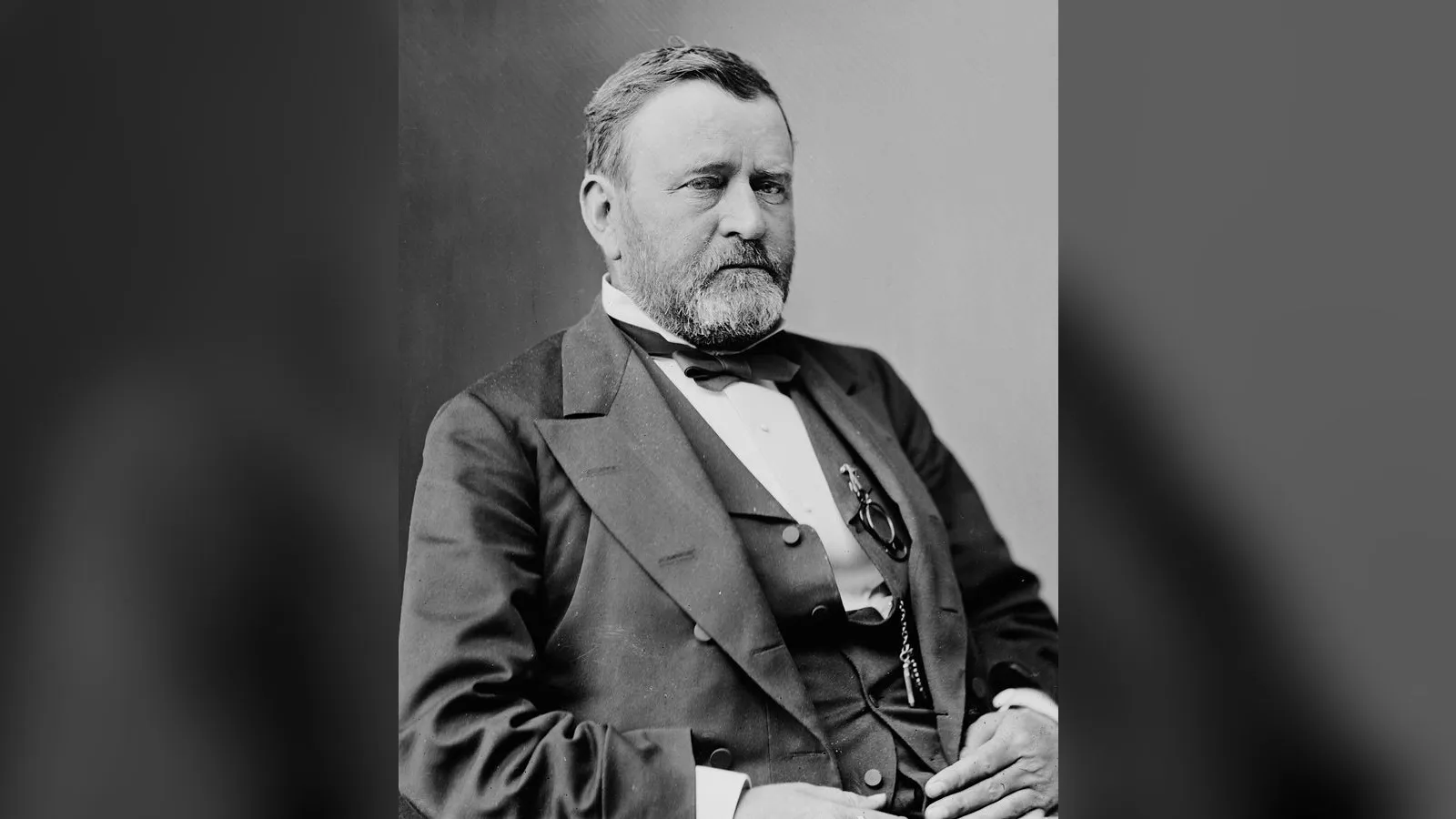

Ulysses S. Grant (1822–1885)
Contents
TL;DR
- established Ulysses S. Grant's real documented Scottish connection runs through his mother's side, not his surname: his maternal great-grandfather, John Simpson, was born in Dergenagh, near Dungannon, County Tyrone, in Ulster, emigrating to the United States in 1760, a specific, documented Ulster-Scots origin — this article states this directly, while also correcting a common surname-based assumption, since Grant's own paternal Grant line is documented as English, descending from Matthew Grant, a 17th-century immigrant from Exeter, Devon.
- established During his 1879 world tour as a former president, Grant personally visited his maternal ancestral homestead in Dergenagh, which still stands today as a heritage tourist site — a specific, documented act of diaspora homecoming this article names directly.
- established As commanding general of all Union armies from 1864, Grant orchestrated coordinated multi-theatre offensives and accepted Confederate General Robert E. Lee's surrender at Appomattox Court House in April 1865, offering generous terms that allowed Confederate soldiers to return home — a specific, documented military and diplomatic achievement this article states directly.
- established As president, Grant's administration prosecuted the Ku Klux Klan, supported the Fifteenth Amendment, and created the Department of Justice, substantial documented civil rights achievements this article names directly, which earlier, Confederate-sympathetic historiography long minimised.
- disputed Grant's second presidential term was marred by extensive, documented corruption scandals among members of his administration, even though historians generally agree Grant himself remained personally honest — this article states this genuine tension directly rather than letting Grant's personal integrity obscure the real scale of the corruption around him, or letting the scandals erase his substantial policy achievements.
Key Facts
- Born
- 27 April 1822, Point Pleasant, Ohio, USA
- Died
- 23 July 1885, Moreau, New York, USA
- Category
- Statesmen, Politicians & Public Figures
- Scottish ancestry
- Documented, maternal line — great-grandfather born Dergenagh, Co. Tyrone, emigrated 1760; paternal Grant line is English
- Key achievement
- Commanding General, Union Army; accepted Lee's surrender at Appomattox (1865)
- Presidency
- 18th US President (1869–1877); civil rights enforcement during Reconstruction
- Documented controversy
- Extensive corruption scandals among his administration's officials
Scottish Impact Index (SI Score)
- Global Influence
- 10/10
- Enduring Connection
- 8/10
- Material Contribution
- 10/10
- Scottish Diaspora Distinctiveness
- 9/10
- Diaspora Legacy
- 10/10
- Recognition
- 10/10
57/60
Ranked =2nd of 45 in Diaspora
A Note on Claims and Evidence
Family background and the specific, documented maternal Ulster-Scots ancestral connection to Dergenagh, County Tyrone, including Grant's 1879 visit there, are drawn from Wikipedia's published research record; this article also corrects a common surname-based assumption by naming the documented English origin of Grant's own paternal Grant line. Education, military career, Civil War command, presidency and Reconstruction achievements, the documented corruption scandals of his second term, and his later memoirs are drawn from Wikipedia's published research record.
Timeline
John Simpson, Grant's maternal great-grandfather, emigrates from Dergenagh, near Dungannon, County Tyrone, Ulster, to the United States.
Hiram Ulysses Grant is born in Point Pleasant, Ohio, to Jesse Root Grant and Hannah Simpson.
Grant graduates from West Point, ranking 21st in his class of 39; his name is altered to "U.S. Grant" during enrolment, earning him the nickname "Sam" among army colleagues.
Grant serves in the Mexican-American War, earning two brevet promotions for bravery.
Grant resigns from the army amid struggles with alcohol and separation from his family, followed by a financially difficult decade.
Grant rejoins the military following the Confederate attack on Fort Sumter.
Grant achieves prominence through western-theatre victories, including the Vicksburg campaign, giving Union forces control of the Mississippi River.
Following his success at Chattanooga, Lincoln promotes Grant to lieutenant general and gives him command of all Union armies.
The costly Overland Campaign wears down Confederate forces through Grant's strategy of relentless pressure.
Grant accepts Robert E. Lee's surrender at Appomattox Court House, offering generous terms.
Grant is elected president, serving two terms from 1869 to 1877.
Grant's administration supports the Fifteenth Amendment, prosecutes the Ku Klux Klan, and creates the Department of Justice.
Grant establishes the first Civil Service Commission.
The Panic of 1873 triggers a long depression that Grant's administration struggles to address effectively; corruption scandals increasingly mar his second term.
Grant leaves office and undertakes a world tour, becoming the first former US president to circumnavigate the globe.
During his world tour, Grant personally visits his maternal ancestral homestead in Dergenagh, County Tyrone.
Dying of throat cancer, Grant completes his memoirs shortly before his death.
Grant dies at Mount McGregor, New York, at age 63.
Details
A surname-based assumption corrected with the real documented ancestry
This article names Ulysses S. Grant's actual documented Scottish connection precisely rather than assuming his surname "Grant" — itself a well-known Scottish clan name — reflects his own family's origin: his paternal Grant line descends from Matthew Grant, documented as English, from Exeter, Devon. The real, strong Scottish connection instead runs through his mother's side, to a great-grandfather born in Dergenagh, Ulster. This article states this distinction because conflating the surname with the actual ancestral line would misrepresent the real, documented family history.
A specific documented homecoming named directly
This article names Grant's 1879 visit to his maternal ancestral homestead in Dergenagh directly, rather than treating his Ulster-Scots ancestry as an abstract genealogical fact. This article states this because it represents a real, documented act of diaspora connection, and the homestead's continued existence as a heritage site today gives the connection an unusually concrete, visitable form.
A military achievement named with its real documented terms
This article states the specific, documented terms of Lee's surrender directly rather than a vague claim of "ending the war": Grant's decision to allow Confederate soldiers to return home and retain their horses, a documented act of magnanimity that shaped postwar reconciliation. This article names this because it reflects the real, specific character of Grant's leadership at the war's conclusion.
A genuine tension between personal honesty and administrative corruption presented directly
This article states the real, documented tension of Grant's presidency without resolving it in either direction: historians broadly agree Grant himself remained personally honest, yet his second term was genuinely marred by extensive corruption among officials in his administration. This article names both facts together because presenting only Grant's personal integrity, or only the scandals, would each misrepresent the real, documented complexity of his presidential record, particularly given how Confederate-sympathetic historiography long distorted assessment of his presidency.
Did You Know?
- Ulysses S. Grant's documented Scottish ancestry runs through his mother's side — his great-grandfather was born in Dergenagh, Ulster — while his own paternal "Grant" line is actually documented as English.
- Grant personally visited his maternal ancestral homestead in Dergenagh during his 1879 world tour; it still stands today as a heritage tourist site.
- Grant's birth name was Hiram Ulysses Grant; a congressman's enrolment error at West Point changed it to "Ulysses S. Grant," earning him the nickname "Sam" among fellow officers.
- Grant's administration prosecuted the Ku Klux Klan and supported the Fifteenth Amendment, achievements long minimised by Confederate-sympathetic historiography.
- Despite his own personal honesty, Grant's second presidential term was marred by extensive corruption scandals among administration officials.
- After leaving office, Grant became the first former US president to circumnavigate the globe.
- Dying of throat cancer, Grant completed his memoirs shortly before his death; they became both a critical and financial success.
FAQ
1Was Ulysses S. Grant actually of Scottish descent?
Yes, documented through his mother's side — his great-grandfather was born in Dergenagh, Ulster, in 1760. His own paternal "Grant" surname, however, is documented as English in origin.
2Did Grant ever visit his ancestral homeland?
Yes — during his 1879 world tour, he personally visited his maternal ancestral homestead in Dergenagh, which still stands as a heritage site today.
3What is Ulysses S. Grant best known for?
Commanding Union armies to victory in the Civil War and accepting Robert E. Lee's surrender at Appomattox in 1865.
4Was Grant's presidency corrupt?
Historians generally agree Grant himself remained personally honest, but his second term was marred by extensive, documented corruption among officials within his administration.
5Did Grant support civil rights as president?
Yes — his administration prosecuted the Ku Klux Klan, supported the Fifteenth Amendment, and created the Department of Justice.
6Why is Grant's name "Ulysses S. Grant" instead of his birth name?
A congressman's enrolment error at West Point changed his name from Hiram Ulysses Grant; he kept the altered version for the rest of his life.
7When did Ulysses S. Grant die?
23 July 1885, of throat cancer, shortly after completing his memoirs.
Sources and Further Reading
Primary/Institutional
- Ulysses S. Grant — Wikipedia
- A Brief Life of Ulysses S. Grant — Ulysses S. Grant Presidential Library
Scholarly/Critical
General
Caveats: Myths and Disputed Claims
- Clarification: This article does not treat the surname "Grant" as evidence of Ulysses S. Grant's own Scottish ancestry; his paternal Grant line is documented as English, while the real, strong Scottish connection runs through his mother's side.
- disputed This article does not resolve the genuine tension between Grant's documented personal honesty and the extensive corruption scandals of his second term in either direction; both are part of the real, documented historical record.
Card 023 · Diaspora