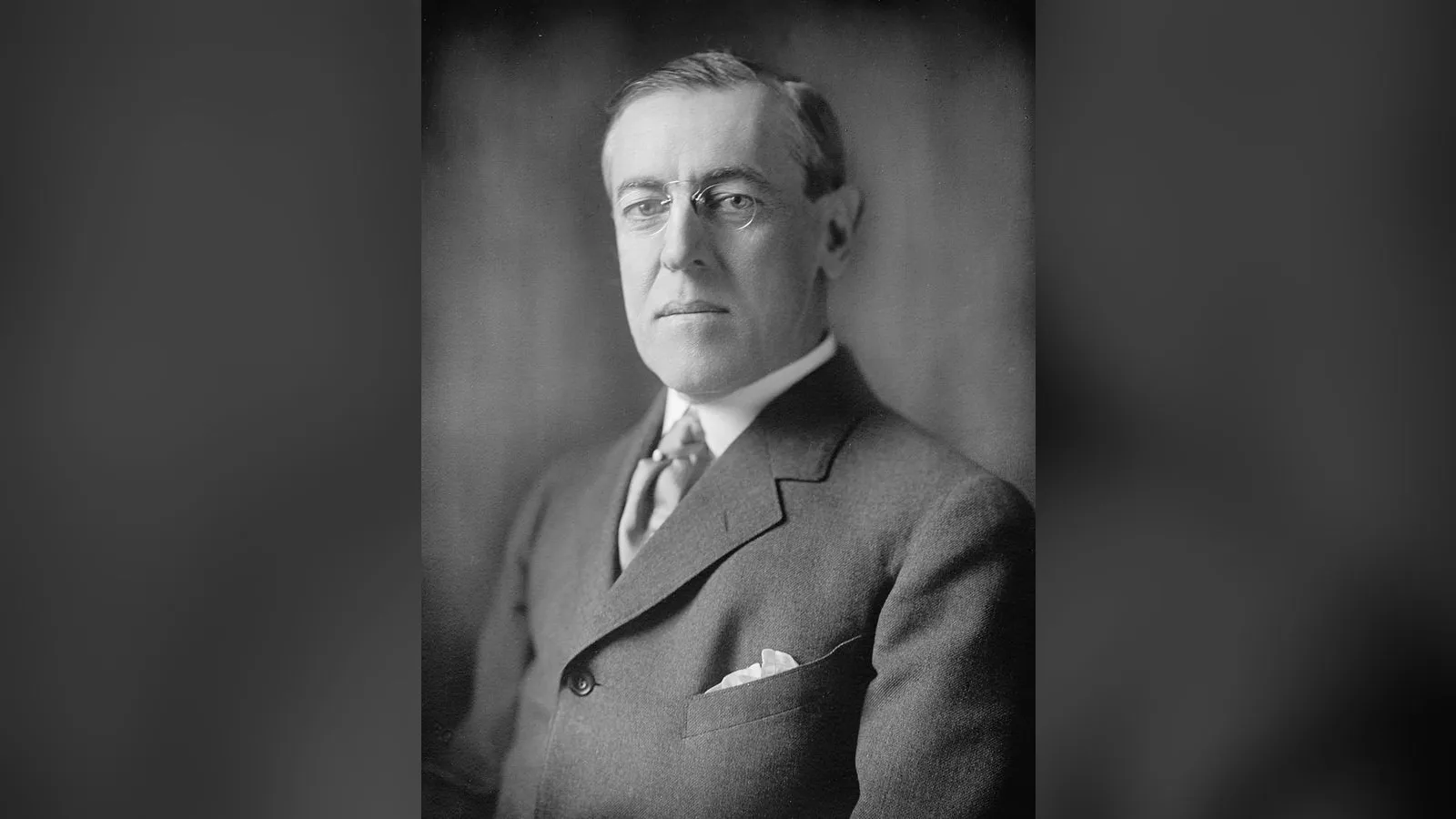

Woodrow Wilson (1856–1924)
Contents
TL;DR
- established Woodrow Wilson's ancestry carries a documented dual Scottish connection rare in this series: his paternal grandfather, James Wilson, emigrated from Strabane, County Tyrone, Ireland, in 1807, making the paternal line Scots-Irish, while his maternal grandfather, Reverend Thomas Woodrow, migrated directly from Scotland to Ohio in the late 1830s — this article names both specific, documented lines directly, rather than collapsing them into a single generalised "Scottish heritage" claim.
- established Wilson remains the only US president to hold a doctorate, earning a PhD in history and government from Johns Hopkins University in 1886, and he served as Princeton University's 13th president from 1902 to 1910 before entering politics — a specific, documented academic career this article states directly as the unusual foundation of his later political rise.
- established As president, Wilson signed into law the Federal Reserve Act, the Revenue Act of 1913 establishing the modern federal income tax, and the Clayton Antitrust Act, specific, documented domestic reforms this article names directly rather than a vague claim of "progressive achievement."
- disputed Wilson authorised the widespread imposition of racial segregation within the federal bureaucracy during his first year in office, and had earlier worked to exclude Black applicants from Princeton even as peer Ivy League institutions admitted small numbers of Black students — this article states this documented record with full, unminimised weight, directly alongside Wilson's internationally celebrated achievements, rather than treating it as a minor footnote to his presidency.
- established Wilson suffered a severe, incapacitating stroke in October 1919 that left him unable to perform many presidential duties for the remainder of his term, during which his wife Edith Wilson and his physician controlled access to him and most major decisions, a specific, documented constitutional crisis this article names directly rather than presenting Wilson's presidency as uninterrupted through its final years.
Key Facts
- Born
- 28 December 1856, Staunton, Virginia, USA
- Died
- 3 February 1924, Washington, D.C., USA
- Category
- Statesmen, Politicians & Public Figures
- Scottish ancestry
- Documented, dual lines — paternal: Scots-Irish (Strabane, Co. Tyrone, 1807); maternal: direct Scottish immigrant (Rev. Thomas Woodrow, late 1830s)
- Key achievement
- Federal Reserve Act; Fourteen Points; League of Nations
- Key honour
- Nobel Peace Prize, 1919
- Documented controversy
- Imposed federal workplace racial segregation; excluded Black applicants at Princeton
Scottish Impact Index (SI Score)
- Global Influence
- 10/10
- Enduring Connection
- 8/10
- Material Contribution
- 10/10
- Scottish Diaspora Distinctiveness
- 9/10
- Diaspora Legacy
- 10/10
- Recognition
- 10/10
57/60
Ranked =2nd of 45 in Diaspora
A Note on Claims and Evidence
Family background and the specific, documented dual ancestral lines — the paternal Scots-Irish connection via Strabane, County Tyrone, and the direct maternal Scottish connection via Reverend Thomas Woodrow — are drawn from Wikipedia's published biographical record. Education, academic career, presidential domestic reforms, World War I leadership, his documented record on racial segregation, the 1919 stroke and its effects, and death are drawn from Wikipedia's published research record.
Timeline
James Wilson, Woodrow Wilson's paternal grandfather, emigrates from Strabane, County Tyrone, Ireland, part of the Scots-Irish Ulster tradition.
Reverend Thomas Woodrow, Wilson's maternal grandfather, migrates directly from Scotland to Ohio.
Thomas Woodrow Wilson is born in Staunton, Virginia, to Joseph Ruggles Wilson and Jessie Janet Woodrow.
Wilson earns his bachelor's degree from the College of New Jersey (now Princeton University).
Wilson earns a PhD in history and government from Johns Hopkins University, becoming the only US president to hold a doctorate; his dissertation, Congressional Government, receives significant academic acclaim.
Wilson serves as Princeton University's 13th president, instituting academic reforms, while also working to exclude Black applicants from the institution.
Wilson becomes president; his administration signs the Revenue Act establishing the modern federal income tax.
Within his first year in office, Wilson authorises the widespread imposition of racial segregation within the federal bureaucracy.
Wilson signs the Federal Reserve Act, creating the US central banking system, and the Clayton Antitrust Act and Federal Trade Commission Act.
Wilson declares war on Germany following unrestricted submarine warfare, bringing the United States into the First World War.
Wilson articulates the Fourteen Points as Allied war objectives.
Wilson champions the League of Nations at the Paris Peace Conference and is awarded the Nobel Peace Prize for his role as its founder.
Wilson suffers a severe, incapacitating stroke; his wife Edith and his physician control access to him and most major presidential decisions for the remainder of his term.
Wilson leaves office.
Wilson dies in Washington, D.C., at age 67.
Details
A documented dual Scottish ancestral line named precisely
This article names Woodrow Wilson's ancestry with unusual dual specificity rather than a single generalised claim: his paternal grandfather, James Wilson, emigrated from Strabane, County Tyrone, part of the Scots-Irish Ulster tradition, while his maternal grandfather, Reverend Thomas Woodrow, migrated directly from Scotland itself. This article states both documented lines separately because conflating them would obscure the real, specific, and genuinely dual nature of Wilson's Scottish heritage, a combination notably more detailed than many figures in this series.
An unusual academic foundation named before his political career
This article states Wilson's doctoral degree and Princeton presidency directly, rather than presenting his political rise as following a conventional path: he remains the only US president to hold a PhD, and he led Princeton for eight years before entering elected politics. This article names this because it represents the real, documented and distinctive foundation of Wilson's later political career.
A full, unminimised accounting of a documented racial record
This article states Wilson's documented record on race directly and without softening: his authorisation of federal workplace segregation and his earlier efforts to exclude Black applicants from Princeton, even as peer institutions admitted small numbers of Black students. This article names this record with its real documented weight because omitting or minimising it would misrepresent a serious and well-documented part of Wilson's historical legacy, consistent with this series' standard of giving uncomfortable findings full weight.
A constitutional crisis named rather than smoothed into an uninterrupted term
This article states directly that Wilson's final years in office were defined by a severe, documented health crisis: his October 1919 stroke left him incapacitated, with his wife and physician controlling access and most major decisions for the remainder of his term. This article names this because it represents a real, documented, and constitutionally significant episode rather than a minor footnote to an otherwise uninterrupted presidency.
Did You Know?
- Woodrow Wilson's ancestry includes two separate, documented Scottish lines: a paternal Scots-Irish line from Strabane, County Tyrone, and a direct Scottish line through his maternal grandfather, a minister who emigrated to Ohio.
- Wilson remains the only US president to have held a doctoral degree.
- Before entering politics, Wilson served as president of Princeton University for eight years.
- In his first year as president, Wilson authorised the widespread segregation of the federal workforce.
- Wilson won the Nobel Peace Prize in 1919 for his role in founding the League of Nations.
- A severe stroke in October 1919 left Wilson incapacitated for the remainder of his presidency, with his wife controlling access to him.
- Wilson's Fourteen Points helped shape the terms ending the First World War, though the US Senate ultimately rejected the League of Nations he championed.
FAQ
1Was Woodrow Wilson actually of Scottish descent?
Yes, documented through two separate lines — his paternal grandfather was a Scots-Irish immigrant from County Tyrone, and his maternal grandfather emigrated directly from Scotland.
2What is Woodrow Wilson best known for as president?
Leading the United States through the First World War, founding the Federal Reserve system, and championing the League of Nations, for which he won the Nobel Peace Prize.
3Did Woodrow Wilson support racial equality?
No — he authorised the widespread segregation of the federal workforce during his presidency and had earlier worked to exclude Black applicants from Princeton University.
4Was Wilson really incapacitated near the end of his presidency?
Yes — a severe stroke in October 1919 left him unable to perform many duties, with his wife and physician controlling access to him for the remainder of his term.
5Did the League of Nations succeed?
Not for the United States — despite Wilson's advocacy and Nobel Peace Prize, the US Senate ultimately refused to ratify US membership in the League.
6What was unusual about Wilson's path to the presidency?
He held a PhD, the only US president to do so, and served as president of Princeton University before entering elected politics.
7When did Woodrow Wilson die?
3 February 1924, in Washington, D.C., at age 67.
Sources and Further Reading
Primary/Institutional
Scholarly/Critical
- Textbook Myths About President Woodrow Wilson — Zinn Education Project
- Woodrow Wilson's racist legacy and decolonising modern sanctions — Al Jazeera
General
Caveats: Myths and Disputed Claims
- Content note: This article states Woodrow Wilson's documented record of imposing federal workplace segregation and excluding Black applicants from Princeton with full weight, consistent with this series' standard of presenting uncomfortable findings directly rather than minimising them.
- Clarification: This article does not present Wilson's presidency as continuing uninterrupted through its final years; his October 1919 stroke left him severely incapacitated, with his wife and physician controlling most major decisions for the remainder of his term.
Card 019 · Diaspora