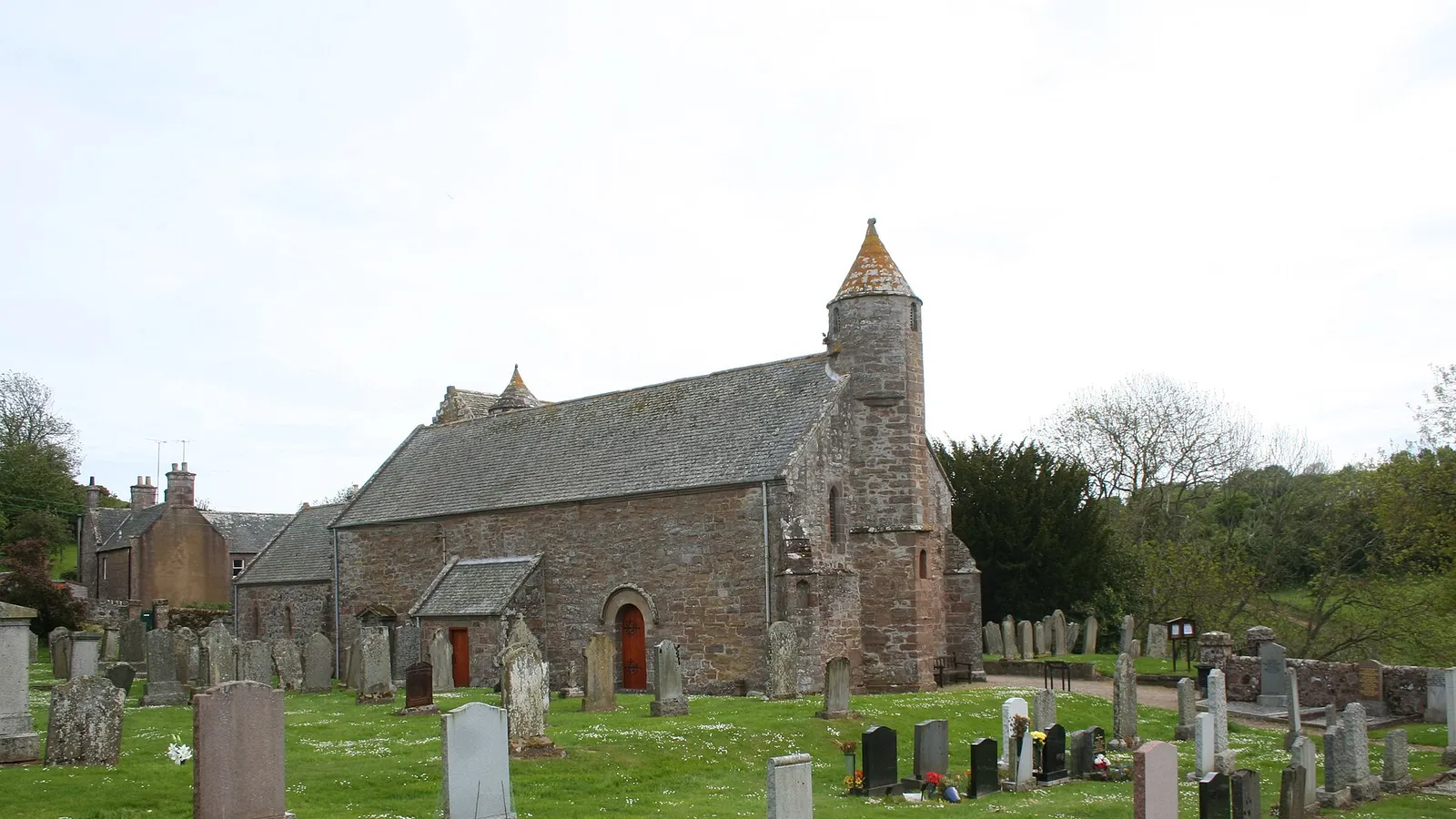

The Parish Kirk
Contents
Legend/Myth: "The minister ran the village"
A popular image of old Scotland has the parish minister as an all-powerful local despot, single-handedly controlling every aspect of villagers' lives. The reality is more institutional: power in the parish was exercised collectively, through the kirk session (the minister and a body of lay elders), and overlapped with — rather than replaced — the authority of landowners, burgh councils, and later, civil Poor Law boards. The minister was a powerful figure, but he did not act alone.
TL;DR
- established After the 1560 Reformation, the parish kirk (church) became Scotland's basic unit of religious, social, and administrative life, with the minister and kirk session (elders) governing both worship and local discipline — this is well documented in kirk session minute books, many of which survive from the late sixteenth century onward.
- established Kirk sessions administered poor relief at parish level for roughly three centuries before the state took over this function in 1845 (Poor Law Amendment (Scotland) Act), funded by church-door collections, legacies, and local assessments — this is confirmed by surviving kirk session and heritors' records held at National Records of Scotland.
- established The parish structure was tightly linked to education: the Education Act of 1696 required heritors (landowners) in each parish to fund a school, usually working alongside the kirk session, which is why Scotland's early literacy rates were comparatively high — this is a documented legislative and administrative fact.
- traditional The "lad o' pairts" myth — of a poor rural boy educated via the parish school system into a minister, professor, or professional — reflects a real pathway that existed for some, but is often overstated as the typical experience rather than a celebrated exception; historians treat it with caution because it was popularised retrospectively in nineteenth-century romantic literature.
- shared Kirk sessions policed penny weddings, festival revels and mixed ("promiscuous") dancing, but the dance historian George S. Emmerson argues that they seldom banned dancing outright, and dancing carried on throughout the 17th century.
- disputed The extent and severity of kirk session "moral discipline" (summoning parishioners for fornication, Sabbath-breaking, slander, etc.) varied considerably by period, region, and individual session, and should not be generalised into a single uniform picture of oppressive surveillance — this is disputed among historians because surviving records show wide local variation.
Key Facts
- Category
- Detail
- Key Date(s)/Origin
- 1560 Reformation Parliament; parish structure substantially pre-dated the Reformation (medieval Catholic parishes) but was repurposed under Reformed governance
- Key Figures/Bodies
- The minister; the kirk session (minister + lay elders); heritors (landowners responsible for church fabric and school funding); the presbytery (regional oversight body)
- Key Source (text/Act/practice)
- First Book of Discipline (1560); Second Book of Discipline (1578); Education Act 1696; Poor Law Amendment (Scotland) Act 1845
- Core Functions
- Public worship; kirk session discipline; poor relief administration; parish schooling oversight; registration of births, marriages, deaths (pre-1855 civil registration)
- Status Today
- The Church of Scotland retains a parish system nationally, though many historic civil functions (poor relief, education, registration) were transferred to secular/state bodies between 1845 and 1929
- Related Cards in Series
- Kirk Session (discipline in depth); Communion Seasons; Reformed Worship in Scotland; Sabbath observance
A Note on Claims and Evidence
This card uses a three-tier framework: documented claims rest on surviving primary sources — kirk session minute books, Acts of Parliament, and General Assembly records, many preserved at the National Records of Scotland and in local archives; traditional claims describe practices that are well attested in general outline but whose precise frequency, universality, or lived texture is less certain, often because record survival is patchy and heavily weighted toward sessions that happened to keep (and preserve) good minutes; legend/myth claims are popular images — often retrospective, nostalgic, or satirical — that circulate as history but are not supported, or are actively contradicted, by the documentary record. Given how uneven surviving kirk session records are across Scotland, generalising from the best-documented parishes to "Scotland as a whole" is a common trap this article tries to avoid.
Timeline
Medieval Catholic parish structure already divides Scotland into roughly 1,000 parishes, each with a church building and (nominal) priest.
Scottish Reformation Parliament abolishes papal jurisdiction; the First Book of Discipline proposes a reformed parish and kirk session structure.
Kirk sessions are gradually established across most Lowland parishes; Highland and island parishes are reformed more slowly and unevenly.
The General Assembly orders presbyteries to put penny bridals (pay weddings) under strict restraint.
The presbyteries of Haddington and Dunbar limit penny bridals to twenty guests and forbid piping and dancing at them.
The General Assembly refers the censure of "promiscuous" (mixed) dancing to the presbyteries.
Parliament formalises a statutory basis for parish poor relief, building on earlier 1579 and 1592 Acts, administered through kirk sessions and heritors.
Education Act requires a school and schoolmaster in every parish, funded by heritors, closely tied to kirk oversight of doctrine and conduct.
The Disruption splits the Church of Scotland; the Free Church establishes a rival (non-established) parallel structure of congregations, straining the old single-parish model.
Poor Law Amendment (Scotland) Act transfers poor relief from kirk sessions to statutory parochial boards, ending roughly three centuries of church-administered welfare.
Education (Scotland) Act transfers schooling to civil school boards, ending direct kirk oversight of most parish schools.
Church of Scotland Act and union of the Church of Scotland with the United Free Church consolidate the modern parish system still in use.
Details
Origins and Context
The parish as a unit of Scottish life did not begin with the Reformation — it was inherited from the medieval Catholic Church, which had divided the country into roughly a thousand parishes, each nominally served by a priest and supported by tithes (teinds). What changed in and after 1560 was not the geography but the governance. The reformers, drawing on Calvinist models developed in Geneva and refined in Scotland by figures associated with John Knox, set out their vision in the First Book of Discipline (1560) and, in more developed form, the Second Book of Discipline (1578). These documents proposed that each parish be overseen not by a bishop-appointed priest alone but by a minister working alongside a kirk session — a body of lay elders, usually respected men of the parish, elected or chosen to share in both worship oversight and moral discipline. In practice, implementation was slow and uneven: well-resourced Lowland burghs acquired functioning kirk sessions and literate, settled ministers relatively quickly, while remote Highland and island parishes often went decades with vacant pulpits, visiting preachers, or ministers who had little Gaelic and found establishing a session or school far harder.
The Kirk Session and Civic Life
The genius — and the controversy — of the Scottish parish system lay in how much civic business flowed through the kirk session rather than through a separate secular authority. Kirk session minute books (many of which survive, some continuously from the 1570s–1590s) record an extraordinary range of parish business beyond worship: summoning parishioners accused of fornication, adultery, slander, or Sabbath-breaking; distributing money to the poor, the sick, and the orphaned from the collection taken at the church door; certifying good character for parishioners moving between parishes; and keeping the parish registers of baptisms, marriages, and (less consistently) deaths that remain invaluable to genealogists today. This administrative role on poor relief deserves particular emphasis because it functioned, in effect, as Scotland's pre-modern welfare system for roughly three centuries. Funding came from church-door collections, fines levied for discipline offences, bequests, and — where that proved insufficient — voluntary or compulsory assessments on heritors (landowners). The system was not charitable goodwill alone; it had real administrative structure, record-keeping, and (eventually, after 1845) statutory successor institutions. The kirk session's discipline function — separately covered in depth elsewhere in this series — should not be read as uniform or constant: surviving records show considerable variation in how actively, and how harshly, individual sessions pursued moral offences, and activity levels rose and fell with the enthusiasm of particular ministers and elders, periods of religious revival, and wider social pressures.
The Kirk, weddings and "promiscuous dancing"
established Session discipline reached into weddings, fairs and festivals, and the records are full of dancing. The dance historian George S. Emmerson, in A Social History of Scottish Dance (1972), collects many cases. Penny bridals, at which guests paid their share of the feast, were the chief target: in 1574 the Edinburgh session accused Niel Laing of "superfluous banqueting" at a wedding; at Galston in 1635 the session complained that great crowds at bridals made food dear and took men from their work; in 1645 the General Assembly told presbyteries to restrain penny bridals; and in 1647 the presbyteries of Haddington and Dunbar limited them to twenty guests and ordered that piping, dancing and loose songs should cease. Sessions took a deposit, the "consignation", from the couple and kept it if the wedding broke the rules, while offending pipers did penance. Festival dancing drew the same attention: at Aberdeen in 1656 women were charged with "playing, dansin, and singin" carols on Yule day, and in 1658 the Kilmarnock session made a group of young women and their piper confess publicly for dancing with men, kissing and giving ribbons at Irvine on Whitsunday "in the tyme of preaching".
shared Emmerson argues that the Kirk seldom forbade dancing as such. Most measures, he says, aimed at enforcing church attendance, at "time of sermon", at the expense of feasts, and at stamping out Christmas, May games and other observances seen as popish or pagan. When the General Assembly did act on dancing, in 1649, it left the censure of "promiscuous dancing" to individual presbyteries, and "promiscuous" meant mixed, men and women together: dancing by men alone or women alone drew little comment. Burghs licensed dancing masters on the same terms, Glasgow in 1699 allowing John Smith to teach only if the sexes were taught separately and he held no balls. Emmerson concludes that the common belief that the 17th-century Kirk drove all song and dance underground misreads the records, a view consistent with the local variation in discipline noted above.
Education and the "Lad o' Pairts"
The parish kirk's association with literacy and schooling is one of its most durable legacies. The Education Act of 1696 placed a legal obligation on heritors in every parish to provide a school and pay a schoolmaster, and kirk sessions typically played a supervisory role over the schoolmaster's doctrine and conduct even where they did not fund the school directly. The combined effect — a legal schooling requirement plus strong clerical and lay interest in catechising children — is credited by many historians with Scotland's comparatively high rates of basic literacy by the eighteenth century, especially among men. This fed a cultural narrative, popularised especially in nineteenth-century fiction and memoir, of the "lad o' pairts": the able but poor country boy who rose, through parish schooling and often a university bursary, into the ministry, the professions, or academia. The pathway was real and documented in many individual biographies. What is less secure is the implicit suggestion that this was a typical or guaranteed outcome of the system for the rural poor generally; historians caution that the lad o' pairts figure was in part a retrospective, romanticised archetype, celebrated precisely because it was relatively unusual rather than routine.
Decline of the Civil Role and Present-Day Status
The parish kirk's grip on civic administration unwound gradually over the nineteenth and early twentieth centuries as the state built parallel secular institutions: the Poor Law Amendment (Scotland) Act of 1845 created statutory parochial boards (later parish councils) to take over poor relief, explicitly because the voluntary, church-based system was judged unable to cope with industrial-era urban poverty; the Education (Scotland) Act of 1872 transferred schooling to elected civil school boards; and civil registration of births, marriages, and deaths began in 1855, superseding the kirk's parish registers as the official record. The Church of Scotland itself was also internally reshaped by the Disruption of 1843, when roughly a third of ministers left to found the Free Church of Scotland over disputes concerning patronage and the church's independence from state and landowner interference — a schism that, in many parishes, produced two rival congregations and complicated the old single-parish model. Today, the Church of Scotland retains a national parish structure, known as its system of territorial ministry, and parish boundaries still have some residual legal and cultural significance, but the kirk's historic civic machinery — welfare, schooling, registration — has long since passed to the state.
Did You Know?
- Post-Reformation churches were not necessarily full. Collection-plate records from Monifeith near Dundee suggest that ordinary Sunday attendance in the 1570s averaged only about 10 per cent of the potential congregation, with crowds mainly at the old feast days (cited by Michael Lynch, 2002).
- Kirk session minute books are considered so historically valuable that many are held and catalogued by National Records of Scotland, and they remain a primary source for genealogists tracing ancestors before 1855 civil registration began.
- "Heritors" — the landowners legally obliged to maintain the church building and fund the parish school — were a distinct group from the kirk session itself, meaning parish governance regularly required cooperation between clergy, elders, and landed proprietors who did not always agree.
- The 1696 Education Act did not create Scotland's first parish schools — some burghs and parishes already had schools earlier — but it was the first general legal requirement applied across the whole country.
- Before 1845, there was no national, uniform right to poor relief in Scotland; provision depended heavily on the resources and generosity of each individual parish, producing significant local inequality.
- "Promiscuous dancing", which the General Assembly asked presbyteries to censure in 1649, meant men and women dancing together; men dancing with men, or women with women, drew little complaint.
- An Aberdeen servant girl was punished in 1652 for saying that the minister Andrew Cant "spak like an auld fuil" when he preached against Yule.
- The word "kirk" is simply the Scots word for "church," not a distinct type of building; "the kirk" became shorthand for the Church of Scotland and its parish system specifically.
- Some remote Highland and island parishes went long periods without a resident minister in the decades after 1560, meaning the "typical" reformed parish experience described in central Lowland records was far from universal in practice.
- The 1843 Disruption, which split roughly a third of the ministry away from the established Church of Scotland, forced many parishes to fund a second church building and minister almost overnight, a logistical upheaval that is sometimes underappreciated.
FAQ
1What is a "kirk"?
It is simply the Scots word for "church." "The Kirk," capitalised, is commonly used as shorthand for the Church of Scotland itself.
2What is a kirk session?
The governing body of a parish congregation, consisting of the minister and a group of lay elders, responsible for worship, discipline, and (historically) poor relief administration.
3Did the minister run the parish alone?
No. Authority was shared with the kirk session's elders, and overlapped with heritors (landowners) on matters like church fabric and school funding, and later with civil poor law and school boards.
4How did poor relief work before the welfare state?
Kirk sessions collected money at the church door, from fines and bequests, and sometimes compulsory assessments on landowners, then distributed it to parishioners judged to be in need — a system that operated for roughly three centuries before being replaced by statutory bodies in 1845.
5Is the "lad o' pairts" story true?
The underlying pathway — rural boy to parish school to university to profession — did happen and is documented in real biographies, but historians treat it as a celebrated exception rather than the typical experience of the rural poor.
6When did the state take over poor relief from the kirk?
With the Poor Law Amendment (Scotland) Act of 1845, which created statutory parochial boards.
7What was the 1843 Disruption?
A split in the Church of Scotland in which roughly a third of ministers left to form the Free Church of Scotland, chiefly over disputes about patronage (landowners' power to appoint ministers) and the church's independence from civil interference.
8Did every parish have a functioning kirk session soon after 1560?
No — implementation was uneven, with well-resourced Lowland parishes establishing sessions faster than many Highland and island parishes.
9What role did the kirk play in education?
The 1696 Education Act required heritors to fund a school in every parish, and kirk sessions typically oversaw the schoolmaster's doctrine and conduct, linking parish religion closely to literacy.
10Does the parish system still exist today?
Yes, in modified form — the Church of Scotland retains a national system of territorial parish ministry, though its historic civic functions have long since moved to the state.
11Did the Kirk ban dancing?
Not as a rule. Sessions and presbyteries restricted dancing at penny weddings, in "time of sermon" and at old festivals, and censured mixed ("promiscuous") dancing, but the records show dancing continuing throughout the period.
12What was a penny bridal, and why did the Kirk dislike it?
A wedding at which each guest paid towards the feast. The Kirk objected to the crowds, the expense, the drinking and the piping and dancing, and tried to limit guest numbers and take deposits from couples.
13What other cards in this series relate to the parish kirk?
This card is deliberately broad; see the dedicated cards on the Kirk Session, Communion Seasons, and Reformed Worship in Scotland for more depth on specific aspects introduced here.
14Were kirk session discipline records the same everywhere?
No — surviving records show considerable variation by parish, period, and the individual zeal of ministers and elders; the picture is not uniform across Scotland.
Sources and Further Reading
Primary/Institutional
- National Records of Scotland — Poor Relief Records research guide
- ScotlandsPeople — Our records: kirk session and poor
- National Records of Scotland — Poor Relief Records
Scholarly/Critical
- Michael Lynch, "In Search of the Scottish Reformation", in Edward J. Cowan and Richard J. Finlay (eds), Scottish History: The Power of the Past (Edinburgh University Press, 2002).
- George S. Emmerson, A Social History of Scottish Dance: Ane Celestial Recreatioun (McGill-Queen's University Press, 1972)
- John McCallum, "Poor Relief and the Church in Scotland, 1560–1650"
- GenGuide — Kirk/Church Sessions (Scotland)
- Stewart J. Brown, "Religion and Society to c.1900", in T. M. Devine and Jenny Wormald (eds), The Oxford Handbook of Modern Scottish History (Oxford University Press, 2012) — further reading on the parish Kirk from 1560 to 1900
General
Caveats: Myths and Disputed Claims
- Do not state that the minister exercised unilateral, dictatorial control over the parish; authority was shared with the kirk session's elders and overlapped with heritors and (later) civil bodies.
- Do not present the "lad o' pairts" trajectory as the typical experience of the rural poor; present it as a real but celebrated-because-unusual pathway, popularised retrospectively.
- Do not state that kirk session moral discipline was uniformly harsh, constant, or identical across Scotland; surviving evidence shows significant local and period variation.
- Do not imply that the parish system was invented at the Reformation; the geographic parish structure predates 1560 and was repurposed, not created, by reformed governance.
- Do not state that Scotland had no poor relief provision before 1845; rather, it had a long-running church-administered system that the 1845 Act replaced with a statutory one.
- Do not state that the Kirk banned all dancing or music; it restricted mixed dancing, wedding excess and dancing in "time of sermon", with uneven success.
- Do not treat kirk session records as uniformly complete or representative; survival is patchy, and well-documented parishes should not be assumed typical of all of Scotland.
Card 001 · Faith