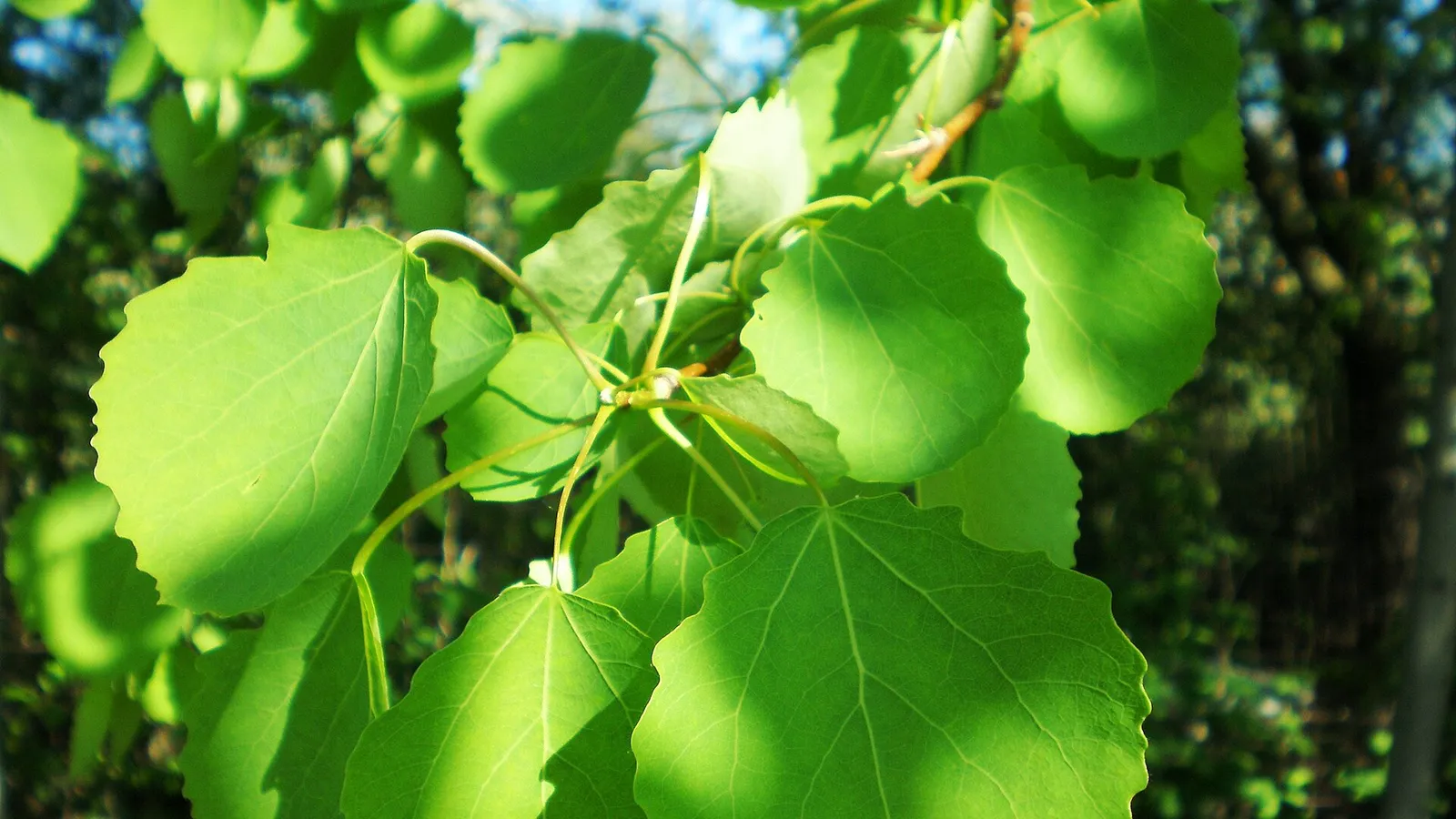

Aspen (Populus tremula)
Contents
TL;DR
- established Scotland's aspen woodlands support highly specialised dependent species, including the aspen hoverfly, which lays its eggs exclusively in wet, rotting aspen cambium where larvae feed on bacterial growth, and which the IUCN GB Red List now classifies as Critically Endangered, found at only around 12 known Highland sites — a specific, documented scale of rarity and dependency this article states directly rather than a vague claim that aspen "supports wildlife."
- established The aspen hoverfly stays remarkably close to its birthplace, with individuals documented to range on average no more than half a mile from the log where they hatched, meaning the species' survival depends on a continuous local supply of freshly fallen aspen deadwood rather than scattered, disconnected trees across a wide area — a specific, documented behavioural constraint this article names directly rather than treating deadwood availability as a general habitat requirement.
- established Aspen in Scotland reproduces only rarely from seed and instead regenerates primarily through root suckers, meaning a single cut-down tree typically does not regrow from seed but relies on vegetative shoots from its existing root system — a specific, documented reproductive limitation this article states directly rather than a vague reference to aspen "struggling to regenerate."
- established Two separate, compounding pressures restrict aspen's recovery in the Highlands: genuinely rare seed production, and new root-sucker shoots being repeatedly eaten by deer before they can mature into trees — this article names both mechanisms directly because either alone would already limit the species, and together they explain why so many aspen stands remain stuck as suppressed shoots rather than expanding into mature woodland.
- established Beyond the aspen hoverfly, the tree supports other specialised dependent species including the palisade sawfly, which feeds on aspen leaves, gall midges restricted specifically to the tree, and aspen bracket fungus — a specific, named set of dependent organisms this article states directly rather than treating aspen's biodiversity value as a single headline species.
Key Facts
- Scientific name
- Populus tremula
- Category
- Trees
- Reproduction
- Primarily vegetative, via root suckers; seed production rare
- Key dependent species
- Aspen hoverfly, palisade sawfly, aspen-specific gall midges, aspen bracket fungus
- Aspen hoverfly status
- Critically Endangered (IUCN GB Red List)
- Known aspen hoverfly sites
- ~12, all in the Scottish Highlands
- Aspen hoverfly typical range
- ~0.5 miles from natal log
- Primary regeneration threats
- Rare seed production; deer browsing of root-sucker shoots
Scottish Impact Index (SI Score)
- Scottish Significance
- 8/10
- Ecological Persistence
- 7/10
- Ecological Importance
- 9/10
- Botanical Distinctiveness
- 8/10
- Conservation Significance
- 9/10
- Recognition
- 7/10
48/60
Ranked =22nd of 45 in Flora
A Note on Claims and Evidence
Biodiversity, reproduction, dependent-species, and decline-cause details are drawn from Trees for Life's published assessment of aspen's ecological importance. Aspen hoverfly rarity status, dependency mechanism, and range behaviour details are drawn directly from the Cairngorms National Park Authority's published species account.
Timeline
Aspen is among the first trees to return to Britain, according to Richard Mabey.
Aspens are felled at Binsey near Oxford, prompting Gerard Manley Hopkins's poem "Binsey Poplars".
Aspen establishes itself across the Scottish Highlands as a genuinely foundational tree for specialised wildlife, supporting dependent species found on no other tree, including the aspen hoverfly, palisade sawfly, aspen-specific gall midges, and aspen bracket fungus.
Two separate pressures restrict aspen's natural recovery: genuinely rare seed production limits the tree's ability to colonise new ground, while new root-sucker shoots are repeatedly eaten by deer before they can mature, leaving many stands as suppressed shoots rather than expanding stands of mature trees; the aspen hoverfly's population, in parallel, declines to the point of being listed Critically Endangered on the IUCN GB Red List, now confirmed at only around 12 known Highland sites.
Trees for Life launches a dedicated aspen restoration project, including biodiversity surveys to document the tree's species relationships.
Tree guards are deployed to protect young root-sucker shoots from deer grazing, alongside stock fencing enclosures, grafting experimentation, and continued ecological research.
RSPB Insh Marshes contributes over 14 years of aspen hoverfly monitoring data, while the Rare Invertebrates in the Cairngorms partnership project develops targeted conservation measures, including selective felling to create deadwood reserves during years of low natural supply, and expansion of aspen groves through planting.
Aspen restoration continues across the Highlands, with conservation efforts specifically designed around the tree's own limited regeneration mechanism and around the precise, localised needs of its most specialised dependent species.
Details
A dependent species whose rarity is stated with its real documented scale
This article names the aspen hoverfly's status with real specificity rather than a vague claim that aspen "supports wildlife": it lays its eggs exclusively in wet, rotting aspen cambium, where larvae feed on bacterial growth, and is now classified Critically Endangered on the IUCN GB Red List, confirmed at only around 12 known Highland sites. This article states this precise figure and status because it demonstrates a genuinely severe, specific level of rarity, not a general impression that aspen hosts "some rare insects."
A behavioural constraint named with its real documented precision
This article states the aspen hoverfly's habitat requirement with real specificity rather than treating deadwood availability as a general need: individuals range on average no more than half a mile from the log where they hatched, meaning the species depends on a continuous local supply of freshly fallen aspen deadwood rather than scattered trees across a wide area. This article names this precise range because it clarifies why isolated or widely spaced aspen stands cannot sustain the species even if deadwood exists somewhere within the wider landscape.
A reproductive limitation explained through its real mechanism
This article names aspen's reproductive strategy in Scotland precisely rather than a vague reference to the tree "struggling to regenerate": it reproduces only rarely from seed, relying instead primarily on root suckers, meaning a felled tree typically does not regrow from seed but depends on vegetative shoots from its existing root system. This article states this mechanism directly because it clarifies why aspen recovery looks fundamentally different from that of seed-reproducing tree species.
Two compounding pressures, named rather than collapsed into one
This article states directly that aspen's restricted recovery in the Highlands results from two separate, compounding pressures: genuinely rare seed production, and new root-sucker shoots being repeatedly eaten by deer before they can mature into trees. This article names both mechanisms because treating aspen's decline as a single problem would understate how thoroughly its regeneration is constrained — either pressure alone limits the species, and together they explain why many stands remain stuck as suppressed shoots rather than expanding woodland.
A biodiversity role extending beyond a single headline species
This article names aspen's wider dependent-species community directly rather than treating its biodiversity value as resting on the aspen hoverfly alone: the palisade sawfly feeds on its leaves, gall midges are restricted specifically to the tree, and aspen bracket fungus is associated with it. This article states these additional named species because they demonstrate aspen's genuine status as a foundational habitat tree for several distinct specialised organisms, not a single celebrated insect.
The trembling tree in Flora Britannica (1996)
established The name and the sound. Richard Mabey, in Flora Britannica (1996), notes that aspen is known by, and named in Latin from, the way its leaves tremble (tremula). Other poplars share the habit, but aspen stands out because of its toothed leaf edges and the sound they make, which he likens to a rustling whisper "as if they were being spattered by rain". He cites Gerard Manley Hopkins's poem "Binsey Poplars", a lament for aspens felled near Oxford in 1879.
established A colonial tree. Mabey describes aspen as a colonial tree that spreads by suckers into groves that can be quite extensive, while individual stems rarely live more than about 50 years. This supports the picture above: a stand is often one long-lived root system renewing itself, which is why browsing of suckers is so damaging. He notes that aspen was one of the first trees to return to Britain after the Ice Age and that it does best in cool climates. In the uplands it grows in a wider range of places than in the lowlands, including rocky gorges and stream valleys; his own illustration is an aspen wood on the shore of Loch Torridon.
established Status in 1996. Mabey's entry says nothing about the aspen hoverfly or other specialist insects, which reflects how recently the Highland aspen's conservation importance has been recognised. His account is useful for the tree's character and cultural standing, not for its current status.
Did You Know?
- Aspen's Latin name, tremula, comes from its trembling leaves, whose sound Richard Mabey compared to a spattering of rain.
- Individual aspen stems rarely live more than about 50 years, but the root system that sends them up can be far older.
- The aspen hoverfly lays its eggs exclusively in wet, rotting aspen cambium and is now Critically Endangered, found at only around 12 known Highland sites.
- Aspen hoverflies typically range no more than half a mile from the log where they hatched.
- Aspen reproduces only rarely from seed in Scotland, relying mainly on root suckers for regeneration.
- Two separate pressures — rare seed production and deer browsing of young shoots — compound to restrict aspen's natural recovery.
- Beyond the aspen hoverfly, the tree supports the palisade sawfly, aspen-specific gall midges, and aspen bracket fungus.
- Trees for Life has run a dedicated aspen restoration project since 1991, including tree guards against deer since 1992.
- RSPB Insh Marshes has contributed over 14 years of aspen hoverfly monitoring data.
- Conservation managers sometimes selectively fell aspen specifically to create deadwood reserves during years of low natural supply.
FAQ
1Why is the aspen hoverfly so rare?
It's a Critically Endangered species confirmed at only around 12 known Highland sites, dependent entirely on wet, rotting aspen cambium for its larvae to develop.
2How far do aspen hoverflies travel?
Very little — on average no more than half a mile from the log where they hatched, which is why a continuous local supply of aspen deadwood is essential.
3Why doesn't aspen simply regrow from seed after being cut down?
Because aspen reproduces only rarely from seed in Scotland; it relies mainly on root suckers, vegetative shoots from the existing root system, for regeneration.
4What's stopping aspen from naturally expanding in the Highlands?
Two compounding pressures — genuinely rare seed production, and new root-sucker shoots being repeatedly eaten by deer before they mature.
5What other species depend specifically on aspen?
The palisade sawfly, which feeds on its leaves, gall midges restricted to the tree, and aspen bracket fungus.
6What conservation measures protect young aspen shoots?
Tree guards and stock fencing enclosures, in use since the early 1990s, to prevent deer from eating new root-sucker shoots before they mature.
7Why would conservationists deliberately fell an aspen tree?
To create deadwood reserves for species like the aspen hoverfly during years when natural deadwood supply is low.
8How long has aspen restoration been underway in Scotland?
Trees for Life launched a dedicated project in 1991, including biodiversity surveys and ongoing ecological research.
9Why do aspen leaves tremble?
Their long, flattened stalks let them flutter in the lightest breeze. Richard Mabey's Flora Britannica (1996) adds that aspen's toothed leaf edges give the movement its distinctive rain-like sound.
10How old is an aspen stand?
Individual stems rarely live much beyond 50 years, but a grove may be a single clone spread by suckers from one root system over a much longer period.
Sources and Further Reading
Primary/Institutional
Scholarly/Critical
- Aspen (European) — Scottish Wildlife Trust
- Genotypic variation in a foundation tree (Populus tremula L.) explains community structure of associated epiphytes — PMC
- Richard Mabey, Flora Britannica (Sinclair-Stevenson, 1996).
General
Caveats: Myths and Disputed Claims
- Clarification: This article does not treat aspen deadwood availability as a general habitat requirement; the aspen hoverfly's own documented range (around half a mile from its natal log) means isolated or widely spaced stands cannot sustain the species.
- Note: This article does not describe aspen's limited regeneration as caused by a single factor; rare seed production and deer browsing of root-sucker shoots are both named directly as compounding, separate pressures.
Card 014 · Flora