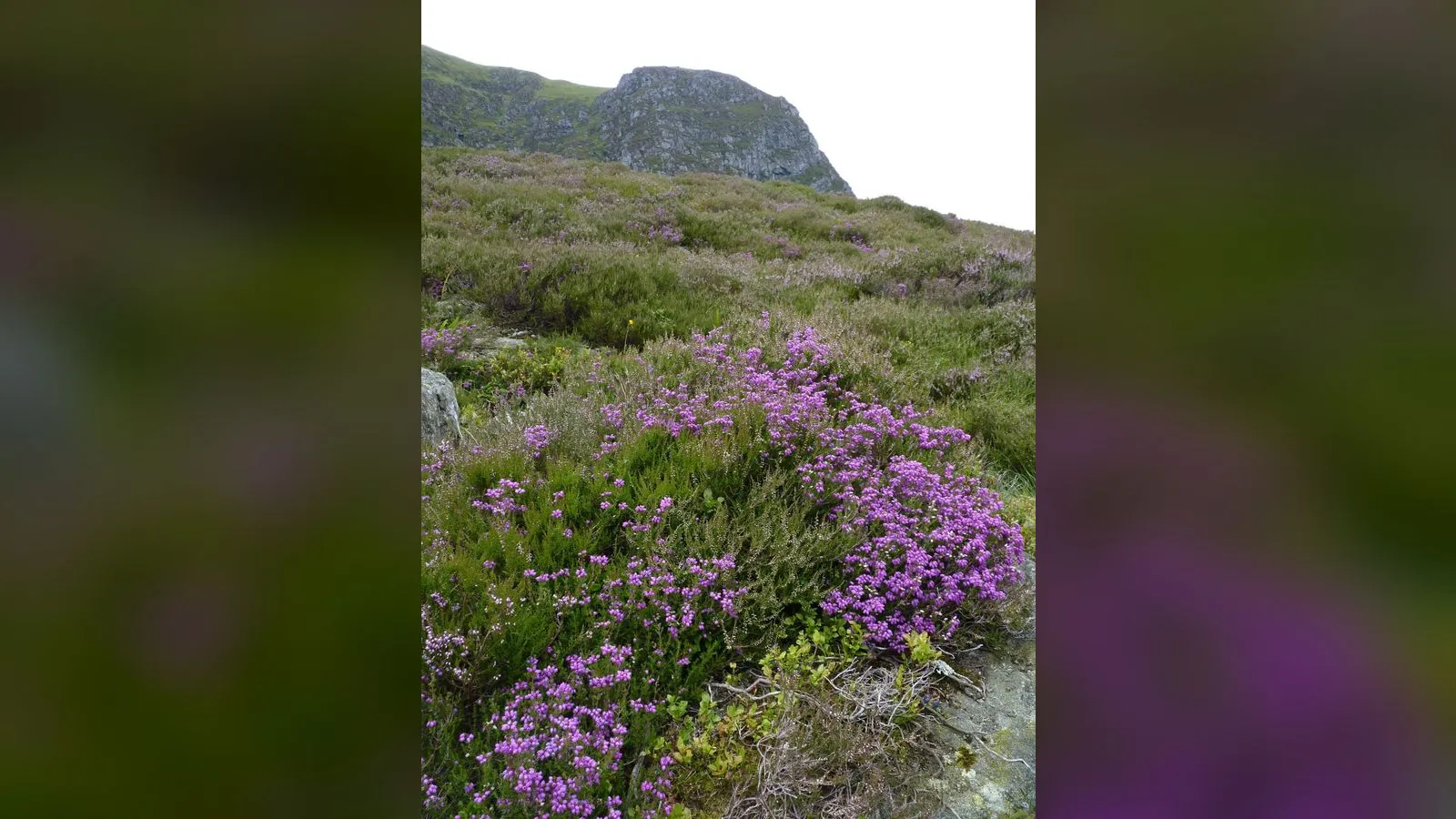

Bell Heather (Erica cinerea)
Contents
TL;DR
- established Bell heather ranked in the top five nectar-producing plants in a UK pollinator survey, making it one of the most significant nectar sources identified for insects anywhere in the country, feeding honey bees, buff-tailed and red-tailed bumblebees, ruby tiger moths, and the rare silver-studded blue butterfly — a specific, documented ecological ranking this article states directly rather than a vague claim that the plant is "good for pollinators."
- established Unlike heather (Calluna vulgaris, or ling), bell heather specifically favours dry, well-drained, acidic ground, including heathland, open woodland, coastal dune heath, and dune slack, a documented habitat preference distinguishing where the two commonly confused species actually grow — a specific, documented ecological distinction this article states directly rather than treating all plants called "heather" as occupying identical ground.
- established Bell heather is a calcifuge species, meaning it specifically dislikes alkaline or calcium-rich soils, which cause the plant iron deficiency, restricting it to acidic ground even where otherwise suitable open habitat exists nearby — a specific, documented physiological mechanism this article names directly rather than a vague claim that the plant "needs the right soil."
- established The genus name Erica derives from the Latin for heath, while the species name cinerea means "ash-coloured," a reference to the plant's foliage rather than its vivid purple-pink flowers — a specific, documented etymological detail this article states directly because it clarifies a name that might otherwise seem to mismatch the plant's actual flower colour.
- established Bell heather flowers between July and September, producing dark, fragrant heather honey as a direct consequence of its substantial nectar output, a specific seasonal and economic consequence of the plant's ecological significance this article names directly rather than treating heather honey production as incidental.
Key Facts
- Scientific name
- Erica cinerea
- Category
- Flora
- Growth height
- 15–60cm
- Flowering period
- July–September
- Key habitat
- Dry, acidic, well-drained heathland, open woodland, coastal dune
- Soil type
- Calcifuge (avoids alkaline/calcareous soils)
- Nectar ranking
- Top 5, UK pollinator survey
- Conservation status
- Least Concern (IUCN)
Scottish Impact Index (SI Score)
- Scottish Significance
- 8/10
- Ecological Persistence
- 9/10
- Ecological Importance
- 7/10
- Botanical Distinctiveness
- 8/10
- Conservation Significance
- 7/10
- Recognition
- 8/10
47/60
Ranked =24th of 45 in Flora
A Note on Claims and Evidence
Biology, flower structure, flowering period, nectar ranking, and pollinator relationships are drawn from the Scottish Wildlife Trust's published species account. Habitat requirements, calcifuge soil chemistry, and geographic distribution details are drawn from the species' Wikipedia-summarised research record.
Timeline
Bell heather establishes itself across western and central Europe, most abundantly in Britain, Ireland, France, northern Spain, and southern Norway, favouring dry, acidic, nutrient-poor ground distinct from the damper conditions tolerated by heather (Calluna vulgaris), including heathland, open woodland, coastal dune heath, and dune slack.
As a calcifuge species, bell heather's distribution remains constrained specifically to acidic ground, since alkaline or calcium-rich soils cause the plant iron deficiency, restricting its presence even in otherwise suitable open habitat with the wrong underlying soil chemistry.
Bell heather flowers between July and September, producing dark purple-pink, bell-shaped flowers that rank among the UK's top five nectar sources for insects, supporting honey bees, buff-tailed and red-tailed bumblebees, ruby tiger moths, and the rare silver-studded blue butterfly, and yielding dark, fragrant heather honey.
Bell heather remains common throughout the UK and Ireland, except in the East Midlands, classified as Least Concern, with specific Scottish populations recorded at reserves including Seaton Cliffs and Grey Hill Grasslands, continuing to serve as one of the country's most significant nectar sources for a wide range of pollinating insects.
Details
A nectar ranking stated with its real documented scale
This article names bell heather's ecological significance to pollinators with real specificity rather than a vague claim that the plant is "good for pollinators": it ranked in the top five nectar-producing plants in a UK pollinator survey, supporting honey bees, buff-tailed and red-tailed bumblebees, ruby tiger moths, and the rare silver-studded blue butterfly. This article states this specific ranking because it represents a genuinely measured, documented ecological significance, not a general impression of the plant's usefulness to insects.
A habitat distinction separating two commonly confused species
This article names bell heather's dry, acidic habitat preference directly rather than treating all plants called "heather" as occupying identical ground: unlike heather (Calluna vulgaris, or ling), bell heather specifically favours dry, well-drained, acidic conditions, including heathland, open woodland, coastal dune heath, and dune slack. This article states this distinction because conflating the habitat requirements of two commonly confused species under the shared name "heather" would misrepresent where each actually grows.
A soil chemistry constraint explained through its real physiological mechanism
This article names the specific mechanism restricting bell heather to acidic ground rather than a vague claim that the plant "needs the right soil": as a calcifuge species, it specifically dislikes alkaline or calcium-rich soils because they cause the plant iron deficiency. This article states this mechanism because it is the real, documented physiological reason behind the plant's narrow soil tolerance, not an arbitrary habitat preference.
A name clarified against a potential mismatch
This article names the etymology of Erica cinerea directly because it might otherwise seem to mismatch the plant's actual appearance: Erica derives from the Latin for heath, while cinerea means "ash-coloured," a reference to the plant's foliage rather than its vivid purple-pink flowers. This article states this clarification because a reader seeing the plant's bright blooms might otherwise wonder why its name references an ashen colour at all.
A honey product named as a direct, documented consequence
This article states that bell heather's substantial nectar output directly produces dark, fragrant heather honey, rather than treating this honey production as incidental or separate from the plant's ecological role. This article names this consequence because it connects the plant's documented nectar ranking to a tangible, recognisable product, making its ecological significance concrete rather than abstract.
Did You Know?
- Bell heather ranked in the top five nectar-producing plants in a UK pollinator survey.
- It's one of the key food sources for the rare silver-studded blue butterfly.
- Unlike heather (ling), bell heather specifically favours dry, well-drained, acidic ground rather than damper conditions.
- As a calcifuge plant, it specifically avoids alkaline soils, which cause it iron deficiency.
- The species name cinerea means "ash-coloured," referring to its foliage rather than its vivid purple-pink flowers.
- It flowers from July to September, producing dark, fragrant heather honey.
- Bell heather is common throughout the UK and Ireland, except the East Midlands, and is classified Least Concern.
FAQ
1Is bell heather the same as heather (ling)?
No — they're different species. Bell heather (Erica cinerea) favours dry, acidic, well-drained ground, while heather (Calluna vulgaris) tolerates damper conditions.
2How important is bell heather for pollinators?
Very — it ranked in the top five nectar-producing plants in a UK pollinator survey, feeding bees, bumblebees, moths, and the rare silver-studded blue butterfly.
3Why does bell heather only grow in certain soils?
It's a calcifuge species — alkaline or calcium-rich soils cause it iron deficiency, so it's restricted to acidic ground.
4What does the name Erica cinerea mean?
Erica comes from the Latin for heath; cinerea means "ash-coloured," referring to the plant's foliage rather than its purple-pink flowers.
5Does bell heather produce honey?
Yes — its substantial nectar output produces dark, fragrant heather honey.
6When does bell heather flower?
From July to September.
7Is bell heather rare in the UK?
No — it's common throughout the UK and Ireland, except the East Midlands, and classified Least Concern.
Sources and Further Reading
Primary/Institutional
Scholarly/Critical
General
Caveats: Myths and Disputed Claims
- Clarification: This article does not treat bell heather and heather (ling) as occupying the same habitat; bell heather specifically favours dry, acidic, well-drained ground, distinct from ling's tolerance of damper conditions.
- Note: This article does not describe cinerea as referring to the plant's flower colour; the name specifically references the ash-coloured foliage, not the vivid purple-pink blooms.
Card 035 · Flora