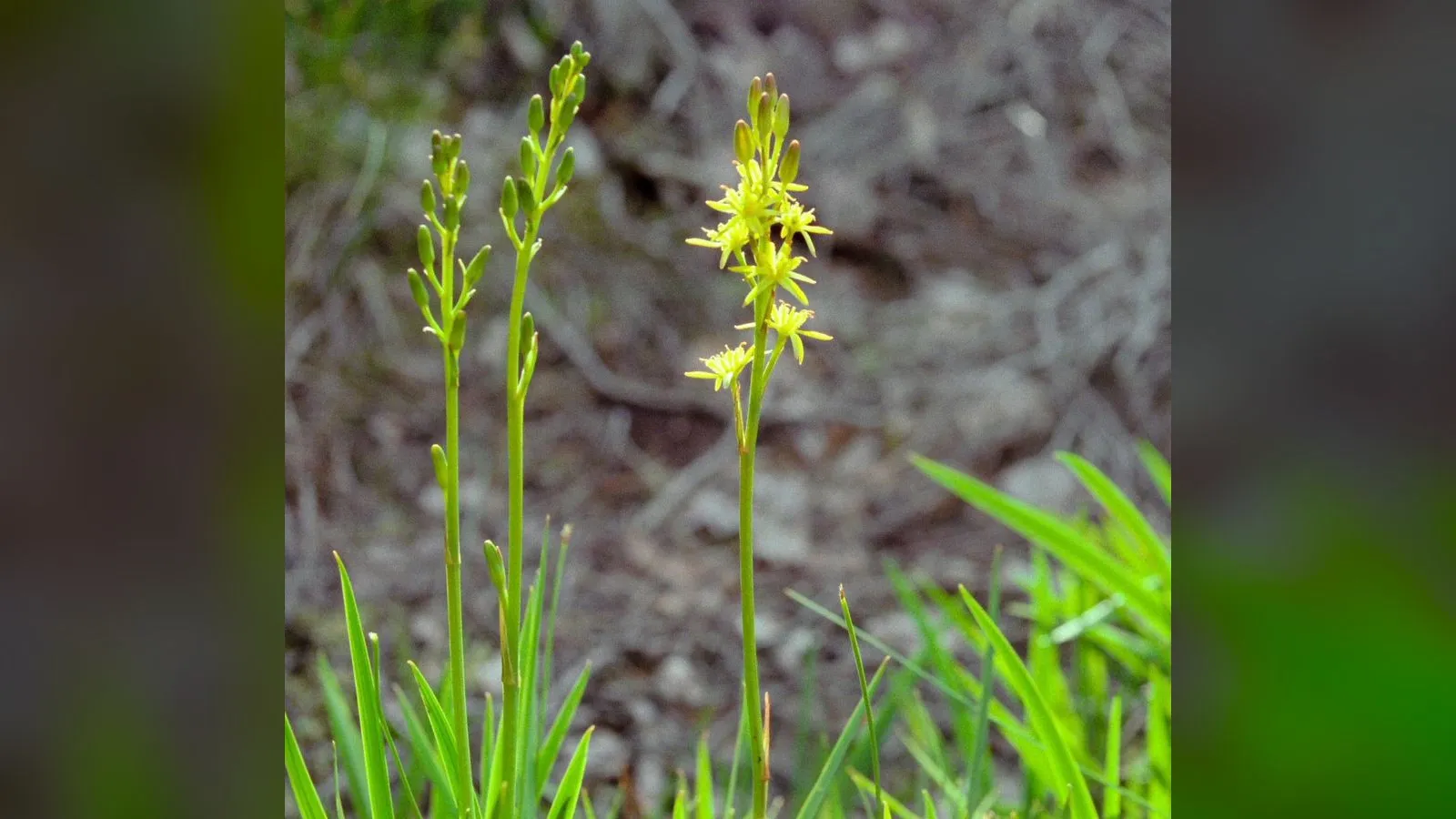

Bog Asphodel (Narthecium ossifragum)
Contents
TL;DR
- established Bog asphodel's Latin species name, ossifragum, means "bone-breaker," reflecting a historical belief that eating the plant itself caused sheep to develop brittle bones — but the real documented explanation is ecological rather than toxicological: the plant colonises calcium-poor, acidic bog soils, and it is the sheep's calcium-deficient diet on that same ground, not the plant, that causes the bone weakness — a specific, documented correction of folk cause-and-effect this article states directly rather than repeating the plant's name as if it described a genuine toxic mechanism.
- established Separately from the bone-breaking myth, bog asphodel does cause a real, documented toxic condition in livestock called photosensitization, known in Norway as "alveld" or "elf fire," in which affected animals develop serious skin damage triggered by sunlight exposure, with toxicity varying between plant populations and possibly linked to fungal infection of the plant — a specific, documented genuine toxicity this article names directly, kept clearly distinct from the unrelated and mistaken bone-breaking folklore.
- established Bog asphodel's deep orange fruits were historically used by Shetland Islanders as a substitute for saffron in cooking and dyeing, and the plant more broadly served as a traditional fabric dye across Scotland — a specific, documented practical use this article states directly rather than a vague reference to the plant's "traditional uses."
- shared Bog asphodel carries several distinct regional and Gaelic names reflecting local knowledge and use, including blioch or bliochan in Gaelic, "clove-flower" or "limerick" (limrek, limmerik: "limb-break") in Shetland, and "Lancashire asphodel", which Richard Mabey's Flora Britannica (1996) records as an early botanical name, Asphodelus Lancastriae; the often-repeated link between that name and hair-dyeing is unconfirmed — a specific, documented range of regional naming this article names directly rather than treating the plant as having one fixed common name.
- established Bog asphodel is adapted to rain-pollination, a specific, documented reproductive mechanism suited to its consistently wet, boggy habitat, this article states directly rather than assuming the plant relies on insect pollination like most flowering species.
Key Facts
- Scientific name
- Narthecium ossifragum
- Category
- Flora
- Gaelic name
- Blioch, bliochan
- Family
- Nartheciaceae
- Height
- Up to ~15cm (foliage), flower spikes taller
- Flowering period
- Summer
- Key habitat
- Bogs, wet heaths, flushes
- Livestock condition
- Photosensitization ("alveld"/"elf fire," Norway)
Scottish Impact Index (SI Score)
- Scottish Significance
- 8/10
- Ecological Persistence
- 8/10
- Ecological Importance
- 7/10
- Botanical Distinctiveness
- 9/10
- Conservation Significance
- 8/10
- Recognition
- 7/10
47/60
Ranked =24th of 45 in Flora
A Note on Claims and Evidence
Biology, etymology, the bone-breaking myth and its real ecological explanation, habitat, distribution, rain-pollination adaptation, and the documented alveld photosensitization condition are drawn from Wikipedia's published research record and cited toxicological literature on Narthecium ossifragum. Gaelic and regional naming and traditional dye and saffron-substitute uses are drawn from published Scottish botanical and folk-use sources.
Timeline
Bog asphodel establishes itself across wet, acidic bogs, wet heaths, and flushes throughout Scotland and the wider temperate oceanic regions of northern and western Europe, its bright yellow, star-shaped flowers adapted to rain-pollination, suited to its consistently wet habitat.
Observers note that sheep grazing on ground where bog asphodel grows develop brittle bones, leading to the belief that the plant itself causes this condition, reflected in Linnaeus's choice of the species name ossifragum, "bone-breaker"; separately, Shetland Islanders begin using the plant's deep orange fruits as a substitute for saffron, while communities across Scotland use the plant more broadly as a fabric dye, and regional names develop, including blioch/bliochan in Gaelic, "clove-flower" or "limerick" in Shetland, and "Lancashire asphodel", recorded among the plant's early botanical names.
Research clarifies that the bone-brittleness observed in grazing sheep is not caused by the plant itself but by the calcium-deficient diet available on the same acidic, low-calcium soils bog asphodel favours, correcting the folk explanation embedded in the plant's Latin name.
Separately from the bone-breaking myth, bog asphodel is confirmed to cause a genuine toxic condition in livestock, photosensitization, known in Norway as "alveld" or "elf fire," with research ongoing into variation in toxicity between plant populations and a possible link to fungal infection of the plant.
Bog asphodel remains a characteristic species of Scotland's wet bog and heath habitats, its documented ecology, genuine and mistaken toxicological reputations, and traditional dye and saffron-substitute uses all part of the current record.
Details
A name's folk explanation corrected against its real ecological cause
This article states directly that bog asphodel's species name, ossifragum ("bone-breaker"), reflects a historical belief that the plant itself caused sheep to develop brittle bones, while naming the real documented explanation: the plant colonises calcium-poor, acidic bog soils, and it is the sheep's calcium-deficient diet on that same ground, not the plant, that causes the bone weakness. This article states this correction directly because repeating the plant's name without clarifying the real mechanism would preserve a folk misattribution the species name itself still carries.
A genuine toxicity named and kept distinct from the mistaken one
This article names bog asphodel's real, documented toxic effect on livestock directly rather than conflating it with the unrelated bone-breaking myth: the plant causes photosensitization, known in Norway as "alveld" or "elf fire," a condition causing serious skin damage in animals triggered by sunlight exposure, with toxicity varying between plant populations and possibly linked to fungal infection. This article states this genuine toxicity separately because the plant does carry a real, documented risk to livestock, just not the one its Latin name describes.
A traditional use named with its real specific practice
This article names bog asphodel's historical use directly rather than a vague reference to "traditional uses": Shetland Islanders used the plant's deep orange fruits as a substitute for saffron in cooking and dyeing, and the plant more broadly served as a traditional fabric dye across Scotland. This article states these specific uses because they represent genuine, documented practical applications, not an assumed general folk significance.
A range of regional names named rather than treated as singular
This article states bog asphodel's several distinct regional and Gaelic names directly rather than treating the plant as having one fixed common name: blioch or bliochan in Gaelic, "clove-flower" or "limerick" in Shetland, and "Lancashire asphodel", an early botanical name (Asphodelus Lancastriae) sometimes linked to its use as a hair dye, though that link is unconfirmed. This article names this range of naming because it reflects genuine, documented regional variation in how different communities knew and used the plant.
A reproductive adaptation named rather than assumed generic
This article states directly that bog asphodel is adapted to rain-pollination, rather than assuming the plant relies on insect pollination like most flowering species. This article names this specific adaptation because it is the real, documented reproductive mechanism suited to the plant's consistently wet, boggy habitat.
Bog asphodel in Flora Britannica
shared Richard Mabey, in Flora Britannica (1996), supports the correction above. He explains that the name ossifragum, "bone-breaker", comes from the belief that grazing the plant made sheep's bones brittle, but that the real cause was the sour, calcium-poor pastures in which it grows. He also records that the plant was occasionally used as a substitute for saffron and as a yellow hair-dye in western and northern Britain. He does not say which part was used or name Shetland, so the Shetland detail above rests on the other sources cited.
established Peter Marren's appendix on Scottish vernacular plant names in the same book gives the Gaelic as bliochan and records that the plant is still sometimes called limrek or limmerik, especially in Shetland. Marren derives the name from "limb" and "break", which makes it a Shetland echo of the bone-breaker belief rather than anything to do with the Irish town. The "limerick" named above is the same word.
shared Mabey notes that early botanists treated it as a true, miniature asphodel, under names such as Asphodelus luteus and Asphodelus Lancastriae, the Lancashire asphodel. So "Lancashire asphodel" was a book name from early on. He does not connect it to hair-dyeing, and the link between the name and the dye given elsewhere in this article should be treated as unconfirmed.
established Mabey describes the yellow star-flowers as often the brightest colour on a peat-bog, and the whole plant turning tawny in autumn so that it colours large patches of valley bog. In 1996 he called it chiefly a species of western and northern Britain and recorded it declining throughout the lowlands as wetlands were drained. Current status should be taken from recent surveys.
A different plant, Scottish asphodel (Tofieldia pusilla), is a small mountain species. Marren records that it has been called lamb-lily.
Did You Know?
- Bog asphodel's Latin name, ossifragum, means "bone-breaker" — but it's not actually the plant that causes brittle bones in sheep; it's the calcium-poor soil it grows on.
- The plant does cause a real, separate toxic condition in livestock called "alveld," or "elf fire," which damages the skin when triggered by sunlight.
- Shetland Islanders traditionally used the plant's deep orange fruits as a substitute for saffron.
- Bog asphodel was traditionally used as a fabric dye across Scotland.
- "Lancashire asphodel" goes back to an early botanical name, Asphodelus Lancastriae; the plant was also used as a yellow hair-dye in western and northern Britain.
- The Shetland name limrek or limmerik is thought to come from "limb" and "break", echoing the bone-breaker belief.
- In autumn the whole plant turns tawny and can colour large patches of bog.
- In Gaelic, bog asphodel is known as blioch or bliochan.
- The plant is adapted to rain-pollination, suited to its permanently wet, boggy habitat.
FAQ
1Does bog asphodel really break sheep's bones?
No — the plant's name comes from this old belief, but the real cause is the calcium-poor soil the plant grows on, which leaves grazing sheep calcium-deficient.
2Is bog asphodel actually toxic to livestock?
Yes, in a different way — it can cause photosensitization, called "alveld" or "elf fire" in Norway, a condition that damages animals' skin when triggered by sunlight.
3What was bog asphodel traditionally used for in Scotland?
Shetland Islanders used its orange fruits as a saffron substitute, and the plant was more widely used as a fabric dye.
4What is bog asphodel called in Gaelic?
Blioch or bliochan.
5Why was it called "Lancashire asphodel"?
The name is old: Richard Mabey's Flora Britannica (1996) records Asphodelus Lancastriae among its early botanical names, from when it was thought to be a true asphodel. A link to its use as a hair dye is sometimes given but is not confirmed by Mabey.
6What does the Shetland name "limmerik" mean?
Peter Marren's appendix to Flora Britannica derives limrek or limmerik from "limb" and "break", the same belief behind the scientific name ossifragum.
7How is bog asphodel pollinated?
It's adapted to rain-pollination, suited to its consistently wet bog and heath habitat.
8Where does bog asphodel grow in Scotland?
In bogs, wet heaths, and flushes, favouring wet, acidic, low-calcium soils.
9Is bog asphodel the same as Scottish asphodel?
No. Scottish asphodel, Tofieldia pusilla, is a separate small mountain plant, which Peter Marren records has been called lamb-lily.
Sources and Further Reading
Primary/Institutional
Scholarly/Critical
- Photosensitisation of livestock grazing Narthecium ossifragum: current knowledge and future directions — ScienceDirect
- Accumulation of Sapogenin Conjugates and Histological Changes in the Liver and Kidneys of Lambs Suffering from Alveld — Springer
- Richard Mabey, Flora Britannica (Sinclair-Stevenson, 1996), including Peter Marren's appendix on Scottish vernacular plant names.
General
Caveats: Myths and Disputed Claims
- Myth corrected: This article does not treat bog asphodel's "bone-breaker" name as describing a real toxic mechanism; the brittle-bone effect in grazing sheep is caused by the calcium-poor soil the plant grows on, not by the plant itself.
- Clarification: This article does not conflate that mistaken bone-breaking reputation with the plant's genuine, separately documented toxicity, photosensitization ("alveld"), which is a real and distinct risk to livestock.
- Do not state as fact that "Lancashire asphodel" comes from hair-dyeing; the name is recorded as an early botanical name, Asphodelus Lancastriae.
- Do not confuse bog asphodel with Scottish asphodel, Tofieldia pusilla, a different plant.
Card 039 · Flora