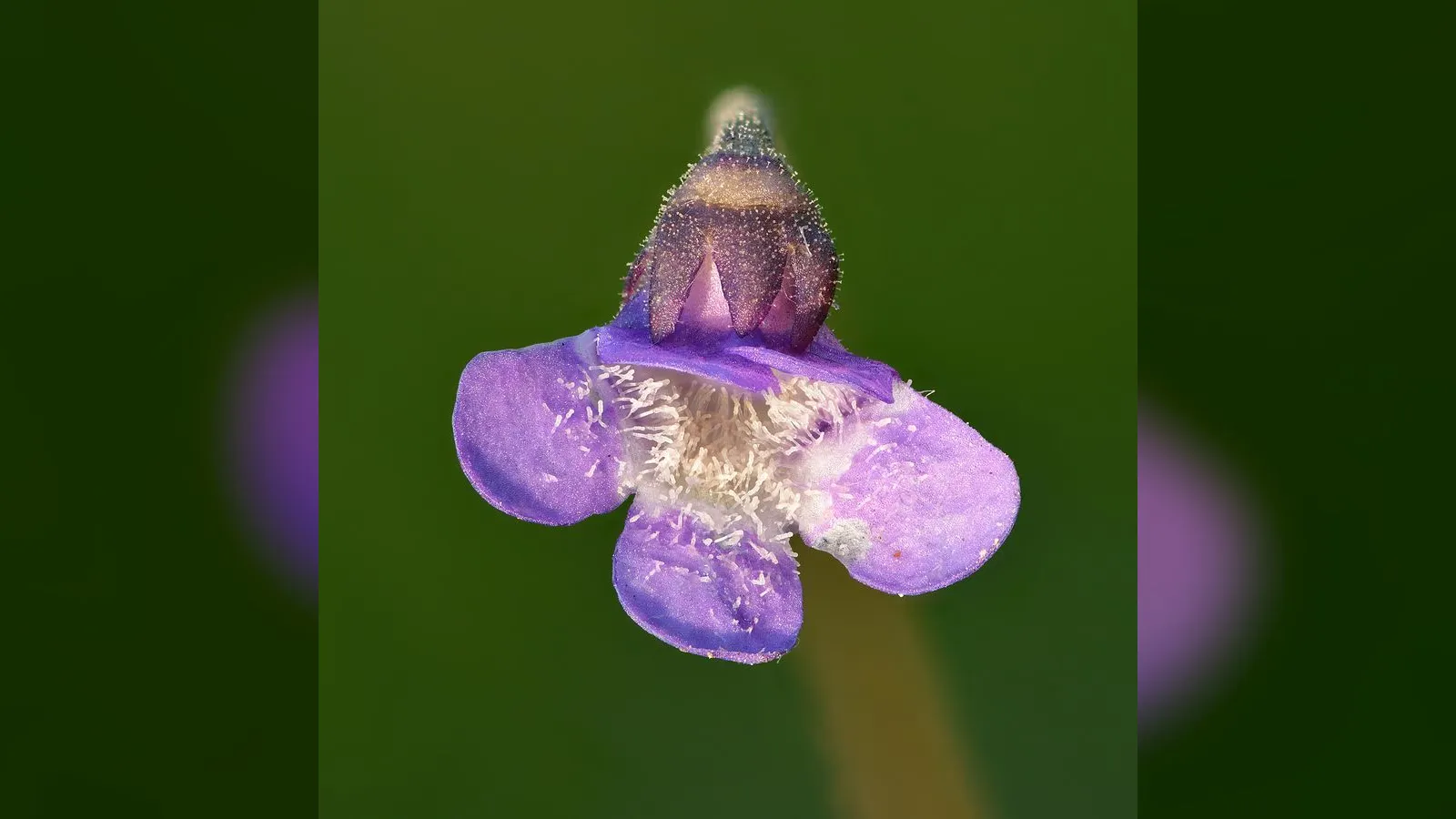

Common Butterwort (Pinguicula vulgaris)
Contents
TL;DR
- established Common butterwort captures insects using its star-shaped yellow-green leaves, which secrete a sticky fluid that traps prey, with the same glands then producing digestive enzymes to break the insects down, allowing the plant to supplement the nitrogen it cannot obtain from the nutrient-poor, acidic bogs, fens, and wet heaths it grows in — a specific, documented carnivorous mechanism this article states directly rather than a vague claim that the plant "eats insects."
- established The leaves of butterwort contain proteolytic (protein-digesting) enzymes strong enough to curdle milk, a property Carl Linnaeus himself documented in 1737, and Scandinavian communities traditionally exploited this by rubbing the leaves inside milk containers to produce tätmjölk, a long-fermented, thickened variant of filmjölk, using either butterwort or sundew leaves interchangeably — a specific, documented historical dairy practice this article names directly, and one that directly echoes round-leaved sundew's own digestive-enzyme biology covered elsewhere in this series.
- established In the Scottish islands, including Colonsay, butterwort carried real protective folklore: rubbing the plant on a cow's udders was believed to protect milk and butter from being spoiled or stolen by witches, while in the Western Isles, travellers carried nine butterwort roots wrapped in a handkerchief as a charm for a safe journey — specific, documented folk customs this article names directly rather than a vague reference to the plant's "magical reputation."
- established Butterwort's name itself derives from its historical use in curdling milk to make butter, a documented etymology this article states directly rather than treating the name as an unexplained historical label.
- established Common butterwort is classified as common and found throughout Scotland, with no specific conservation concern, a documented current status this article names directly rather than assuming the species shares the rarity of some of the other specialist bog plants covered in this series.
Key Facts
- Scientific name
- Pinguicula vulgaris
- Category
- Flora
- Plant type
- Carnivorous, sticky-leaf trap
- Height
- 3–20cm
- Flowering period
- May–July
- Key habitat
- Bogs, fens, wet heaths, damp rock crevices
- UK status
- Common throughout Scotland
- Traditional dairy use
- Leaf enzymes used to curdle milk (tätmjölk)
Scottish Impact Index (SI Score)
- Scottish Significance
- 7/10
- Ecological Persistence
- 8/10
- Ecological Importance
- 7/10
- Botanical Distinctiveness
- 9/10
- Conservation Significance
- 7/10
- Recognition
- 7/10
45/60
Ranked =29th of 45 in Flora
A Note on Claims and Evidence
Biology, carnivorous mechanism, habitat, and UK distribution are drawn from the Scottish Wildlife Trust's and Wikipedia's published species accounts. The Scandinavian tätmjölk dairy tradition, including Linnaeus's 1737 documentation, is drawn from the published historical record on Nordic fermented milk products. Scottish island folklore, including the Colonsay witch-protection custom and the Western Isles travel charm, is drawn from published folklore history sources.
Timeline
Common butterwort establishes itself across damp, nutrient-poor habitats throughout Scotland and the wider circumboreal region, its star-shaped leaves secreting sticky fluid to trap insects and digestive enzymes to break them down, supplementing the nitrogen scarce in its acidic bog and fen habitats.
Scandinavian communities discover that butterwort's leaf enzymes are strong enough to curdle milk, developing the practice of rubbing leaves inside containers to produce tätmjölk, a thickened, long-fermented variant of filmjölk, using butterwort or sundew leaves interchangeably; separately, in the Scottish islands, including Colonsay, butterwort becomes associated with protective folklore, rubbed on cow udders to guard milk and butter from witches, while in the Western Isles travellers carry nine butterwort roots as a charm for safe passage.
Carl Linnaeus documents the Scandinavian milk-curdling practice, recording that any species of butterwort could be used to make it.
Common butterwort remains common throughout Scotland, its carnivorous biology, historical dairy use, and island folklore all part of the documented record, even as the tätmjölk tradition itself has become a historical rather than everyday practice.
Details
A carnivorous mechanism explained through its real process
This article names butterwort's insect-capture method precisely rather than a vague claim that the plant "eats insects": its star-shaped yellow-green leaves secrete a sticky fluid that traps prey, with the same glands then producing digestive enzymes to break the insects down, allowing the plant to supplement nitrogen it cannot obtain from its nutrient-poor, acidic habitat. This article states this specific mechanism because it is the real, documented biological process behind the plant's carnivory, not an assumed general feeding behaviour.
A dairy tradition named with its real documented history, and its real cross-link
This article states directly that butterwort's leaves contain proteolytic enzymes strong enough to curdle milk, a property Carl Linnaeus documented in 1737, and that Scandinavian communities traditionally rubbed the leaves inside milk containers to produce tätmjölk, using either butterwort or sundew leaves interchangeably. This article names this specific historical practice, and its direct echo of round-leaved sundew's own digestive-enzyme biology covered elsewhere in this series, because it represents a genuine, documented historical use grounded in the same biological property that makes the plant carnivorous, not an unrelated folk curiosity.
Protective folklore named with its real specific customs
This article names butterwort's Scottish island folklore directly rather than a vague reference to the plant's "magical reputation": on Colonsay, rubbing the plant on a cow's udders was believed to protect milk and butter from witches, while in the Western Isles, travellers carried nine butterwort roots wrapped in a handkerchief as a charm for a safe journey. This article states these specific customs because they are the real, documented folk practices associated with the plant, not an invented or generalised sense of "old superstition."
A name explained through its real historical origin
This article states directly that butterwort's name derives from its historical use in curdling milk to make butter, rather than treating the name as an unexplained historical label. This article names this etymology because it connects the plant's common name directly to the same proteolytic-enzyme property documented in its Scandinavian dairy use.
A conservation status stated honestly against the wider series
This article names common butterwort's current status directly as common throughout Scotland, with no specific conservation concern, rather than assuming the species shares the rarity profile of some of the specialist bog plants covered elsewhere in this series. This article states this status because it reflects the plant's real, documented current distribution, not an assumption carried over from other carnivorous or bog-specialist species.
Did You Know?
- Butterwort's sticky, star-shaped leaves trap insects and then digest them using the plant's own enzymes, supplementing nitrogen scarce in its boggy habitat.
- Those same leaf enzymes are strong enough to curdle milk — Carl Linnaeus documented this Scandinavian practice in 1737.
- Scandinavian communities traditionally rubbed butterwort or sundew leaves inside milk containers to make tätmjölk, a thickened, long-fermented milk product.
- On Colonsay, rubbing butterwort on a cow's udders was believed to protect the milk and butter from witches.
- In the Western Isles, travellers carried nine butterwort roots wrapped in a handkerchief as a charm for a safe journey.
- The plant's name comes directly from its historical use in curdling milk to make butter.
- Common butterwort is found throughout Scotland and is classified as common, with no particular conservation concern.
FAQ
1How does butterwort actually catch insects?
Its star-shaped leaves secrete a sticky fluid that traps prey, and the same glands produce digestive enzymes to break the insects down, supplementing nitrogen scarce in its boggy habitat.
2Is it true butterwort can curdle milk?
Yes — its leaves contain proteolytic enzymes strong enough to curdle milk, a property Carl Linnaeus documented in 1737, traditionally used in Scandinavia to make tätmjölk.
3Where does the name "butterwort" come from?
From its historical use in curdling milk to make butter.
4What folklore surrounds butterwort in Scotland?
On Colonsay, it was rubbed on cow udders to protect milk and butter from witches; in the Western Isles, travellers carried nine roots as a safe-journey charm.
5Is butterwort rare in Scotland?
No — it's classified as common and found throughout Scotland.
6Is butterwort related to round-leaved sundew?
They're different genera, but both are carnivorous bog plants that digest prey using their own enzymes — and both were historically used in Scandinavia to curdle milk for the same reason.
7When does butterwort flower?
May to July, producing purple, funnel-shaped flowers on slender stems.
Sources and Further Reading
Primary/Institutional
Scholarly/Critical
General
Caveats: Myths and Disputed Claims
- Clarification: This article does not present butterwort's milk-curdling property as folklore alone; it is a documented biochemical effect of the plant's own proteolytic digestive enzymes, historically recorded by Linnaeus in 1737.
- Note: This article does not treat the Colonsay and Western Isles folk customs as universal Scottish practice; they are documented as specific, localised island traditions.
Card 038 · Flora